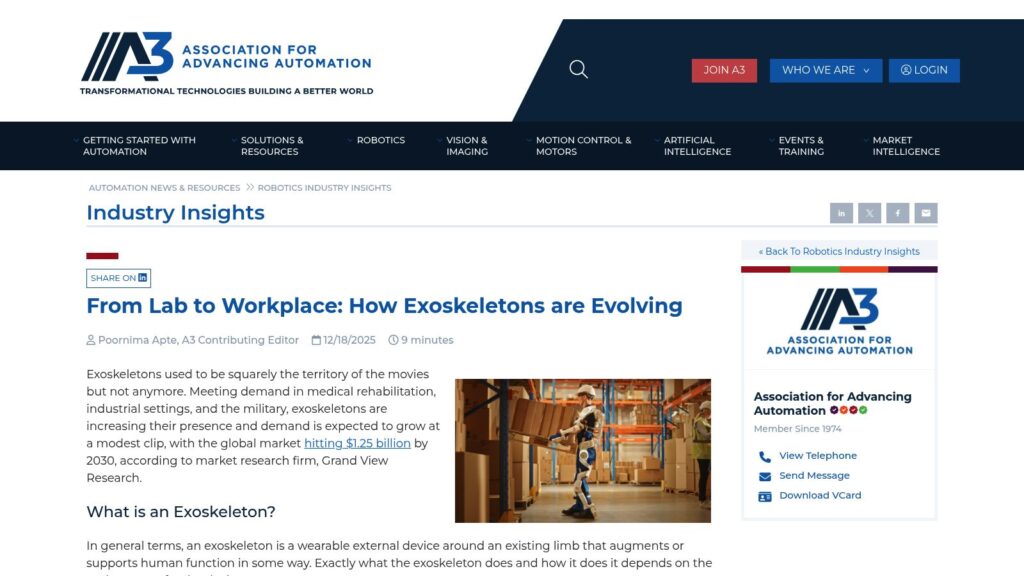
Exoskeletons are evolving from sci-fi to practical applications in healthcare, manufacturing, and the military, with the market expected to reach $1.25 billion by 2030. They help support or augment human function, available in passive (no power needed) and active (motorized) types. Use cases include medical rehabilitation for spinal cord injuries and physical augmentation for workers in repetitive motion jobs, as well as military aid for carrying loads. Adoption faces challenges like perceived weight, comfort, effectiveness, and lack of established standards for workplace compliance. As technology and machine learning improve, exoskeletons may expand into consumer markets, enhancing mobility for the elderly and individuals recovering from injuries.
From Lab to Workplace: How Exoskeletons Are Evolving