ai agent

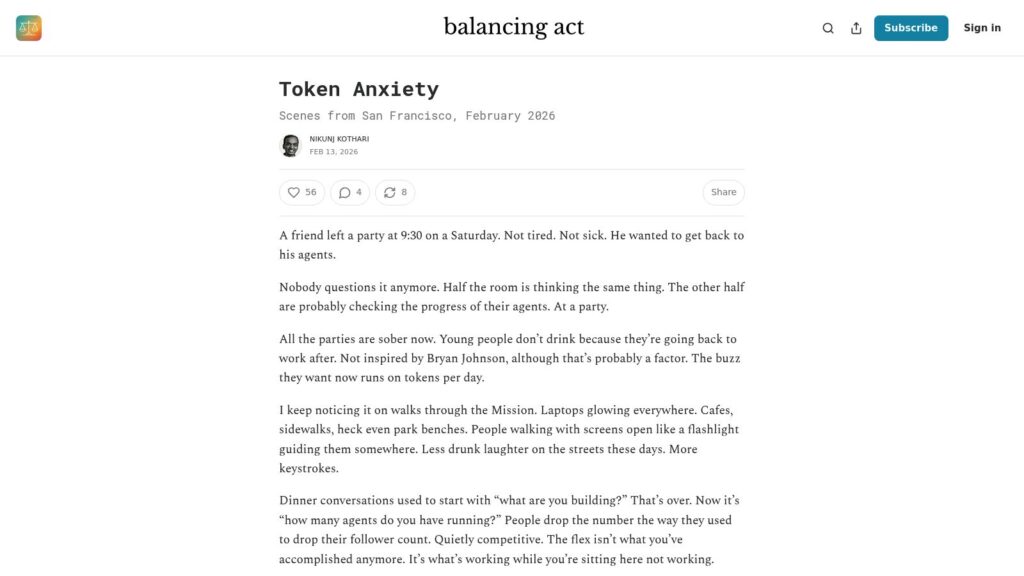
Token Anxiety

In 2026, San Francisco’s social scene is dominated by people obsessed with their AI agents, who constantly monitor and optimize their performance. The pressure to innovate and stay ahead is intense, leading to a culture of constant productivity and a fear of falling behind. This obsession permeates daily life, blurring the lines between work and leisure, and leaving little room for relaxation or reflection.

https://writing.nikunjk.com/p/token-anxiety

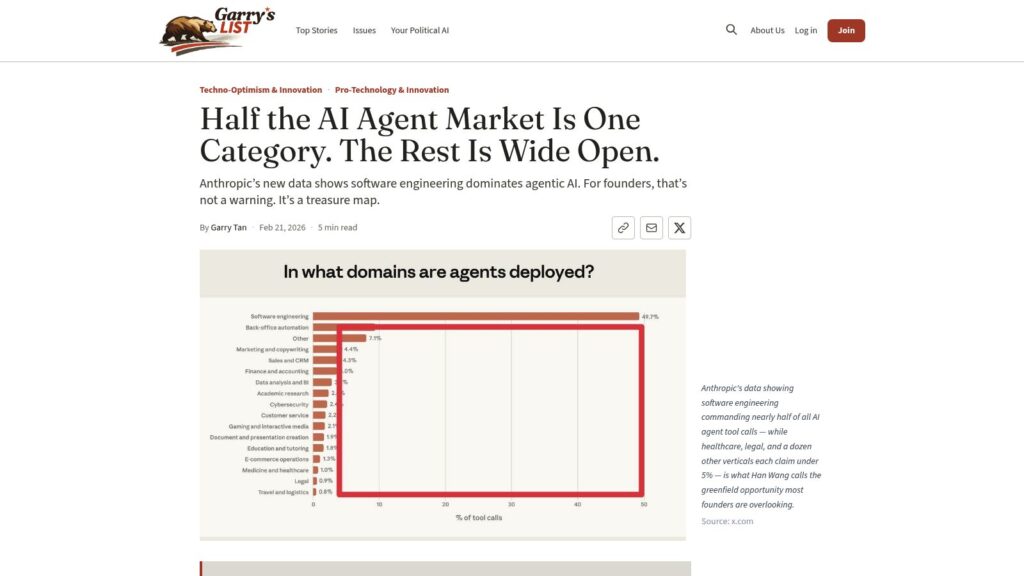
Half the AI Agent Market Is One Category the Rest Is Wide Open

Software engineering dominates AI agent usage at nearly 50%, while sectors like healthcare and legal remain under 5%, showcasing untapped opportunities. Founders should target these verticals for AI innovation, leveraging domain expertise and user trust in automating specialized workflows. The AI’s potential is significantly higher than current deployment, indicating room for growth and new ventures.

https://garryslist.org/posts/half-the-ai-agent-market-is-one-category-the-rest-is-wide-open

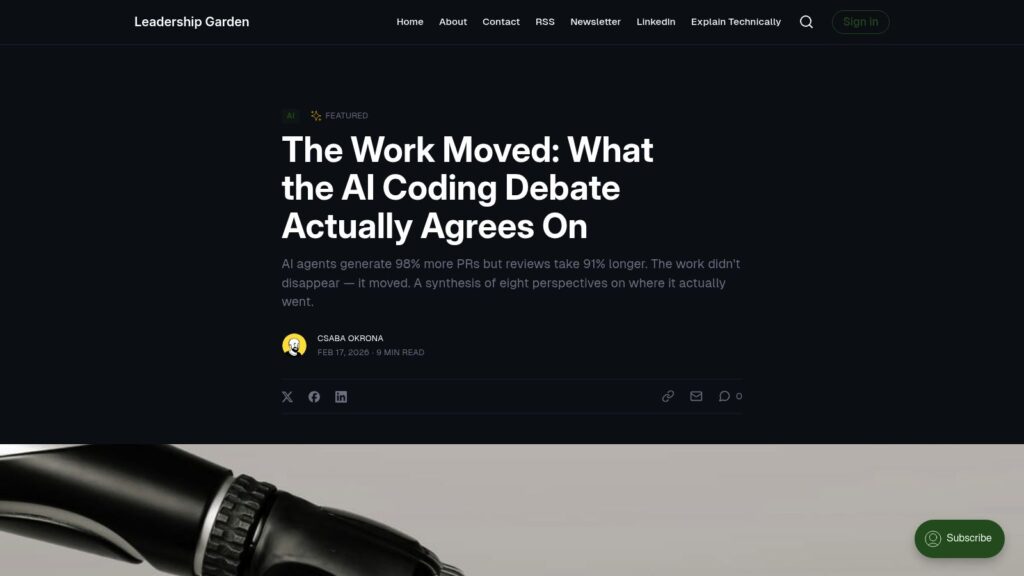
The Work Moved: What the AI Coding Debate Actually Agrees On

AI coding increased PR generation by 98% but slowed reviews by 91%, shifting work from coding to oversight and design. Perspectives vary on AI’s impact; while some highlight productivity gains, others see risks like “comprehension debt.” Best practices emphasize structured workflows and clear guardrails to mitigate risks of AI-generated code. The debate illustrates that the real work has shifted, and thus, understanding this transition is crucial for engineering teams.

https://leadership.garden/ai-the-work-moved/

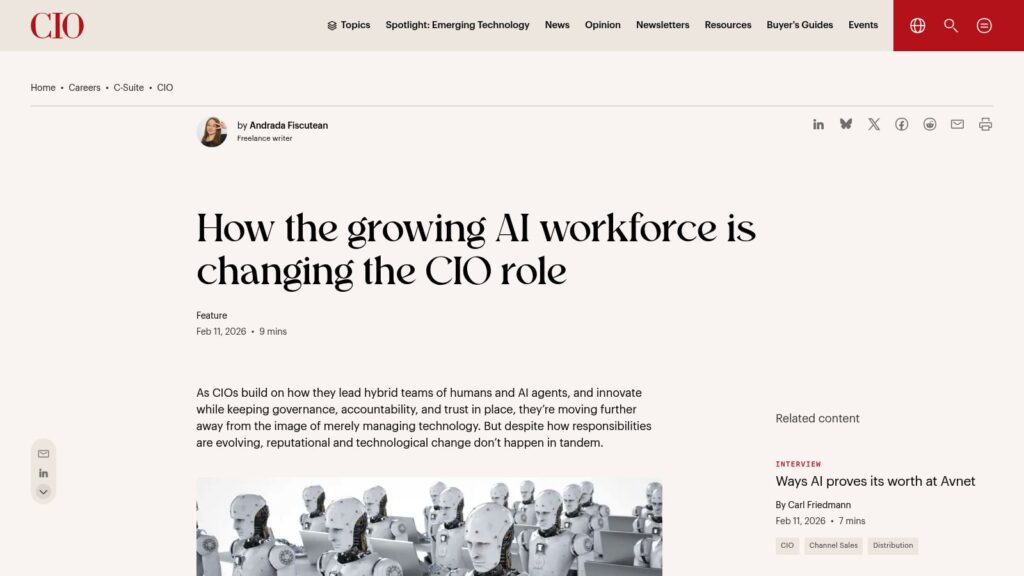
How the Growing AI Workforce Is Changing the CIO Role

CIOs are evolving from managing technology to orchestrating hybrid teams of humans and AI agents, as AI adoption grows in enterprises. While AI agents can automate tasks, CIOs must strategically decide their applications, focusing on well-defined, low-risk tasks. Measuring AI agents’ productivity should account for reliability and human capacity freed rather than just cost. CIOs face challenges like governance, risk management, and employee resistance while integrating AI, necessitating a shift in organizational culture and accountability frameworks. Beginning with small pilot projects and ensuring proper governance and monitoring are crucial for successful AI implementation.

https://www.cio.com/article/4126383/how-the-growing-ai-workforce-is-changing-the-cio-role.html

How CEOs Bringing AI Agents to Work Are Preparing Customers and Employees

CEOs are integrating AI agents in the workplace to enhance customer service and employee productivity, but challenges include addressing worker fears of job loss and measuring effectiveness. Successful implementations treat AI as an enhancement, not a replacement. Companies like Walmart are leveraging AI for shopping assistance, while others emphasize AI’s role in workflow without job displacement. As concerns grow about AI-led layoffs, companies are encouraged to position AI as collaborative tools within the workforce, ultimately reshaping job roles and productivity.

https://www.cnbc.com/2026/01/29/how-ceos-bringing-ai-agents-to-work-are-preparing-customers-employees.html

Stop Managing Your AI ‘workforce’

AI adoption requires rethinking workflow architecture rather than framing agents as digital co-workers. Historical insights from Toyota show that integrating new capabilities necessitates reorganizing production systems to fully utilize their potential. As AI capabilities evolve, human roles will shift, necessitating dynamic management of human skill value and capability sensing. Leaders must view agentic systems as strategic investments, reframing their approach to organizational structure and competitive advantage.

https://www.kyndryl.com/us/en/institute/2026/01/ai-workforce

8 CIO Recommendations for ERP Implementation in 2026

Agentic AI is transforming ERP systems, enabling proactive, end-to-end business process management across finance, supply chain, manufacturing, HR, and customer service. CIOs should develop a clear business plan for agentic AI adoption, engage with ERP vendors, and establish frameworks for human-AI collaboration, risk mitigation, and governance. The focus should be on balancing incremental process optimization with transformative business reinvention, leveraging mature data and process foundations for a broader approach.

https://www.informationweek.com/software-platforms/8-cio-recommendations-for-erp-implementation-in-2026-think-agentic

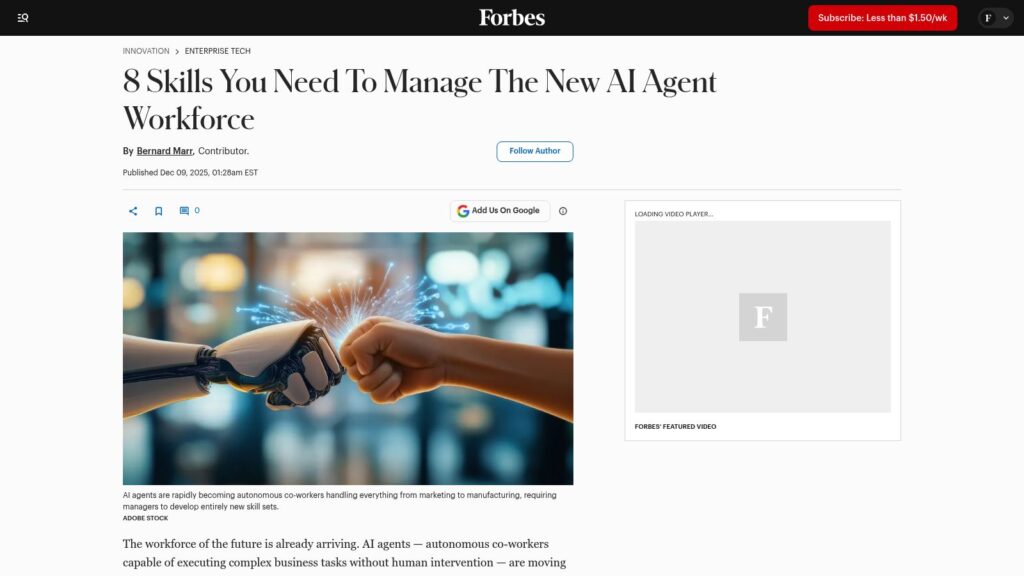
8 Skills You Need To Manage The New AI Agent Workforce

AI agents are now widely used in business, autonomously handling complex tasks to free humans for creative and strategic work. Managing them demands eight key skills: strategic thinking, AI literacy, responsible AI use, workflow design, strong communication, change management, data governance, and ongoing learning. These skills help businesses maximize the benefits of AI agents while ensuring human workers remain central, supporting a blend of human-machine collaboration and opening new business opportunities.

https://www.forbes.com/sites/bernardmarr/2025/12/09/8-skills-you-need-to-manage-the-new-ai-agent-workforce/

Agentic AI: The Autonomous Force Redefining Work and Power Structures

Agentic AI represents a shift from traditional chatbots to autonomous systems capable of independent decision-making, driven by companies like Microsoft and Amazon. These systems promise to enhance productivity across industries, potentially unlocking trillions in value, while raising ethical and workforce concerns due to their capacity to automate complex tasks and eliminate entry-level jobs. As enterprise platforms evolve to integrate agentic AI, businesses must adapt to its implications on work structures and the need for workforce reskilling.

https://www.webpronews.com/agentic-ai-the-autonomous-force-redefining-work-and-power-structures/

Scroll to Top