culture

How Social Media Impacts Culture Change

Research by INSEAD faculty reveals that enterprise social media facilitates organizational culture change by making cultural norms visible but also poses challenges, as leaders often focus on major cultural shifts while overlooking smaller reactions that can undermine change. This visibility double-edged sword highlights the complexity of sustaining culture change amid increased transparency. Additional studies discussed address strategic implications of algorithmic pricing, the psychological drivers of sustainability engagement, the influence of inter-team competition on job crafting, and how demand uncertainty affects manufacturing firms in less developed economies.

https://knowledge.insead.edu/leadership-organisations/how-social-media-impacts-culture-change

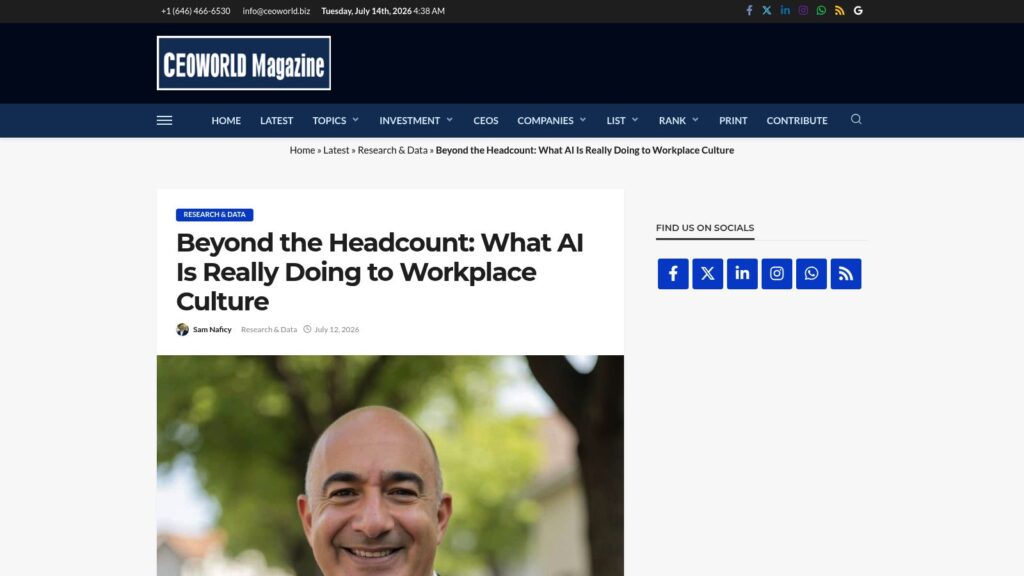
Beyond the Headcount: What AI Is Really Doing to Workplace Culture

AI-driven automation reshapes workplace culture by shifting communication patterns, thinning collaboration, and increasing employees’ cognitive load as remaining workers take on new responsibilities managing AI systems without additional support or compensation. Organizations often overlook these cultural impacts, focusing instead on headcount reductions and cost savings, while informal AI literacy roles emerge among socially connected employees who lack formal recognition, posing retention risks. Effective leadership requires acknowledging these changes, redefining roles and performance metrics, and investing in human-AI collaboration to sustain productivity and organizational cohesion.

https://ceoworld.biz/2026/07/12/beyond-the-headcount-what-ai-is-really-doing-to-workplace-culture/

Why HR Must Lead the AI Culture Shift

HR must lead the AI culture shift by embedding AI into people operations to reduce administrative burdens and enable more strategic work such as retention, coaching, and leadership development. Rather than replacing human judgment, AI augments execution by automating time-consuming tasks like compensation analysis, performance reviews, and recruiting processes, allowing HR teams to focus on building trust and culture. Thoughtful AI adoption can help alleviate HR burnout and preserve the human aspects of leadership in the evolving workplace.

https://hrexecutive.com/why-hr-must-lead-the-ai-culture-shift/

The Dearth of Company-Culture Events

When companies cut culture-building events to save costs, they lose critical opportunities for connection that accelerate trust, collaboration, and onboarding. Such events enable employees to quickly build relationships beyond day-to-day transactional interactions, fostering more efficient teamwork and faster decision-making. Eliminating these gatherings shifts the burden of building alignment and trust onto other parts of the organization, resulting in slower integration and higher hidden costs.

https://www.fastcompany.com/91567043/the-dearth-of-company-culture-events

How HR Can Detect Cultural Drift Before It Becomes a Crisis

The article highlights the importance for HR professionals to proactively identify cultural drift within organizations before it escalates into a crisis. It suggests that monitoring employee feedback, engagement metrics, and alignment with core values can help detect early signs of cultural misalignment, enabling timely interventions to maintain a healthy organizational culture.

https://www.shrm.org/topics-tools/news/organizational-employee-development/how-hr-can-detect-cultural-drift-before-crisis

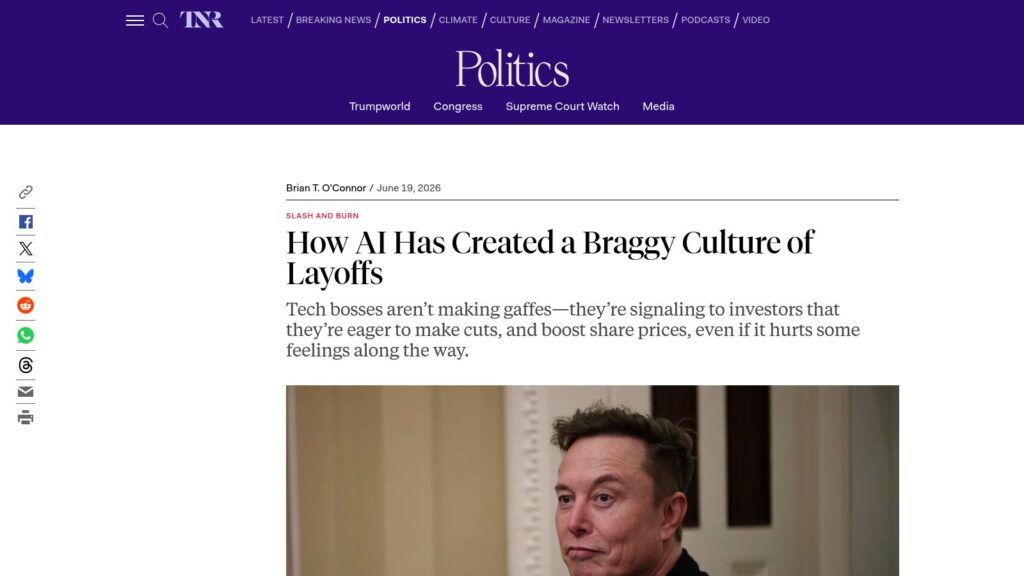
How AI Has Created a Braggy Culture of Layoffs

Tech CEOs increasingly boast about AI-driven layoffs as a strategy to signal to investors their commitment to cutting costs and boosting share prices, even at the expense of employee morale. This shift toward a more aggressive, performative language around workforce reductions reflects a power imbalance where executives prioritize market performance over employee wellbeing, contributing to a culture that normalizes and even celebrates job cuts enabled by automation.

https://newrepublic.com/article/211359/ceos-artificial-intelligence-tech-layoffs

Exclusive: Avanade CTO Says AI Conversations Are Now More Cultural Than Technical

Avanade’s CTO Aaron Reich emphasizes that current AI conversations focus more on cultural and behavioral changes within organizations than purely technical issues, highlighting the importance of reskilling tailored to different roles. While AI understanding among customers is generally strong, the main challenge lies in managing the pace of AI adoption and integrating tools like Microsoft Copilot into business processes, governance, and talent management holistically.

https://www.crn.com.au/news/2026/ai/avanade-cto-says-ai-conversations-are-now-more-cultural-than-technical

AI in HR: How Human-Centered Leadership Can Close the Influence Gap at Work

The article discusses how human-centered leadership is essential in integrating AI within HR to close the influence gap at work. It emphasizes that while AI can enhance efficiency and decision-making, leaders must prioritize supporting human judgment, critical thinking, and well-being to ensure technology strengthens rather than undermines expertise and collaboration.

https://www.adp.com/spark/articles/2026/05/ai-in-hr-how-human-centered-leadership-can-close-the-influence-gap-at-work.aspx?q1=ES_FY25_SparkSubscribePopup&q1=ES_FY25_SparkSubscribePopup

AI Will Replace Far Fewer Jobs Than Ignorance Will

Stephen Edginton argues that AI will transform work by amplifying existing technologies and reshaping job roles rather than replacing large numbers of jobs, emphasizing the importance of continuous learning and strategic adaptation. He highlights that organizations must foster a culture of experimentation, ownership, and agility to leverage AI’s full potential, warning that ignorance and slow adaptation pose greater risks than the technology itself.

https://www.cio.com/article/4177209/ai-will-replace-far-fewer-jobs-than-ignorance-will.html

Why AI Success Depends on Culture, Not Code

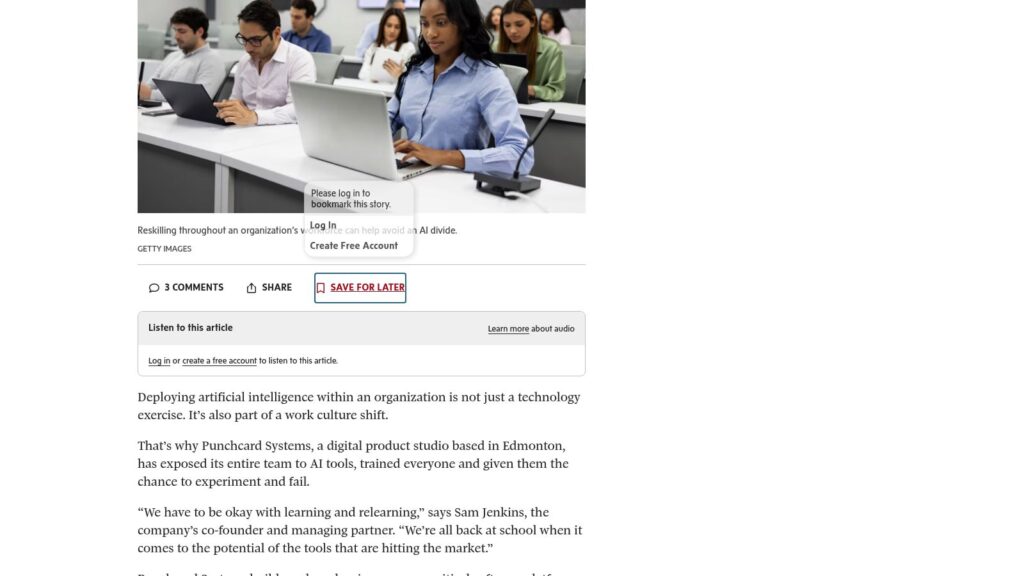
The success of AI adoption in organizations depends more on fostering a culture of continuous learning and psychological safety than on the technology itself. Punchcard Systems, an Edmonton-based company, exemplifies this by training all employees to use AI tools, encouraging experimentation, and promoting reskilling to prevent an “AI divide” among staff. Experts emphasize that AI accelerates execution but does not solve fundamental business challenges, making cultural readiness and adaptability crucial for leveraging AI effectively.

https://www.theglobeandmail.com/business/article-why-ai-success-depends-on-culture-not-code/

A Meta Employee Gets Real About the Horror of Working There Right Now

A longtime Meta employee describes the intense stress and anxiety faced amid impending layoffs of 8,000 workers, roughly 10% of Meta’s global workforce, driven by rapid AI developments. Despite being asked to train AI tools that may replace them, employees experience a lack of empathy from leadership, pervasive surveillance like key-logging, and widespread mental health struggles, reflecting a significant shift in the tech workplace environment compared to a decade ago.

https://sfstandard.com/pacific-standard-time/2026/05/15/meta-employee-gets-real-horror-working-right-now/

‘On the Precipice’: Is Your Organization Close to a Culture Collapse?

A Cambridge University study warns that corporate culture in complex organizations is fragile and can collapse suddenly from small disruptions like leadership changes, causing productivity to drop to zero. Heidi Hauver of Ranovus emphasizes transparent communication, psychological safety with accountability, and intentional investment in people as key practices to build cultural resilience and navigate organizational shocks effectively.

https://www.hrreporter.com/focus-areas/culture-and-engagement/on-the-precipice-is-your-organization-close-to-a-culture-collapse/394402

Beyond Change Fatigue: Turning Adaptability Into a Cultural Constant

The article argues that “change fatigue” is not caused by too much change itself, but by how change is implemented—often too large, vague, or poorly timed—leading to resistance and stress. It highlights the success of the “Change the World Tuesday” approach, which introduced frequent, predictable, and smaller changes to build a culture of adaptability, making change a normal, manageable part of work rather than a disruptive event. Leaders are encouraged to create regular change rhythms, break initiatives into smaller steps, communicate clearly, and foster an environment where experimentation and small failures are accepted to build organizational resilience.

https://www.staffingindustry.com/editorial/staffing-stream/beyond-change-fatigue-turning-adaptability-into-a-cultural-constant

The Workforce Is Changing, Culture Must Too

The article emphasizes that fostering an inclusive organizational culture is essential as the workforce becomes more diverse across generations, backgrounds, and expectations. It highlights that inclusion drives employee engagement, which in turn improves productivity, retention, and overall business performance, especially critical in an evolving work environment shaped by AI, automation, and hybrid models.

https://etedge-insights.com/featured-insights/people-and-organizations/the-workforce-is-changing-culture-must-too/

Gen Z Retention Relies on Building a Robust Learning Culture: 3 Ways to Get It Right

Gen Z employees value continuous learning opportunities and tend to stay only about 1.1 years at a job, often leaving when career growth feels limited. To improve retention, organizations should focus on effective onboarding that clearly maps out learning and growth paths, actively involve managers in new hire integration, and provide continuous feedback to build employee confidence. These strategies align with Gen Z’s expectations for development and can help reduce turnover within this group.

https://www.shrm.org/topics-tools/news/gen-z-retention-relies-on-building-robust-learning-culture

Scroll to Top