coding

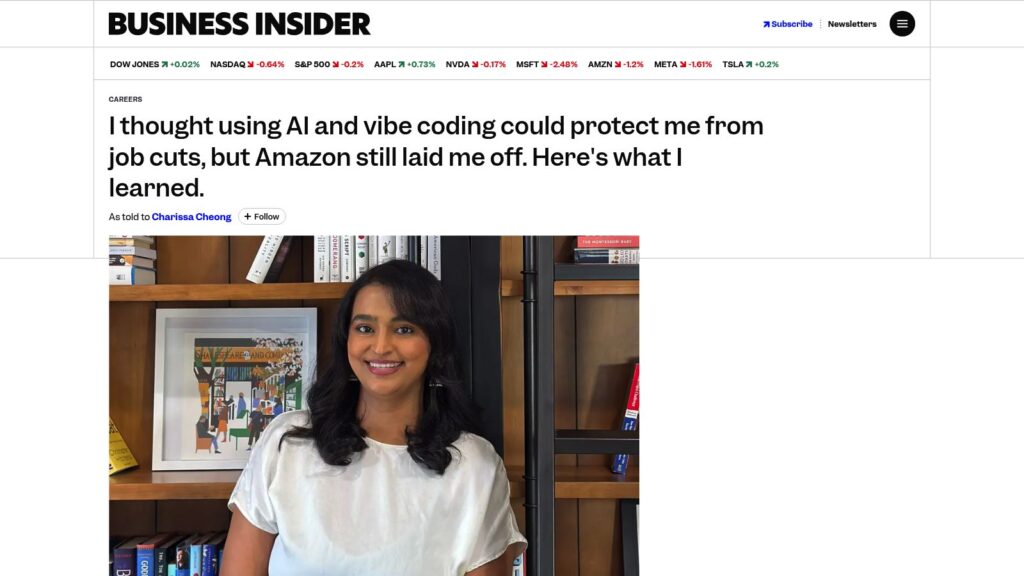
I Was Laid Off by Amazon. Using AI and Vibe Coding Didn’t Save My Job — but I Learned an Important Lesson.

Tejal Rives, an Amazon product marketer who upskilled in AI and vibe coding to try to protect her job during tech layoffs, was nonetheless laid off in October 2025 as part of a 14,000-person reduction. Although disappointed, she found value in learning prompt engineering, an important AI skill, and now focuses on her career coaching business while advising professionals to reskill in AI to adapt to the changing workforce.

https://www.businessinsider.com/laid-off-amazon-use-ai-protect-job-vibe-coding-lesson-2026-3

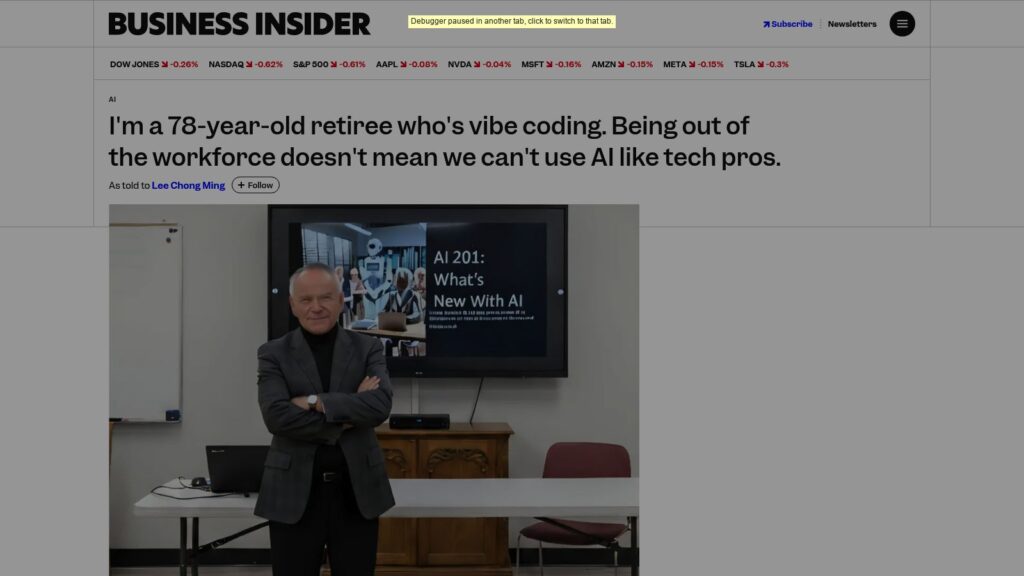
I’m a 78-year-old Retiree Who’s Vibe Coding. Being Out of the Workforce Doesn’t Mean We Can’t Use AI Like Tech Pros.

78-year-old Lewis Dickson, a semi-retired tech consultant, engages in vibe coding and teaches AI to seniors, demonstrating that age does not hinder tech proficiency. He enjoys using AI for personal projects and empowering older individuals to utilize technology for practical tasks, like creating newsletters and identifying plants. His extensive experience enhances his strategic application of AI, countering stereotypes about seniors and tech skills.

https://www.businessinsider.com/retiree-vibe-coding-seniors-ai-lewis-dickson-2026-2

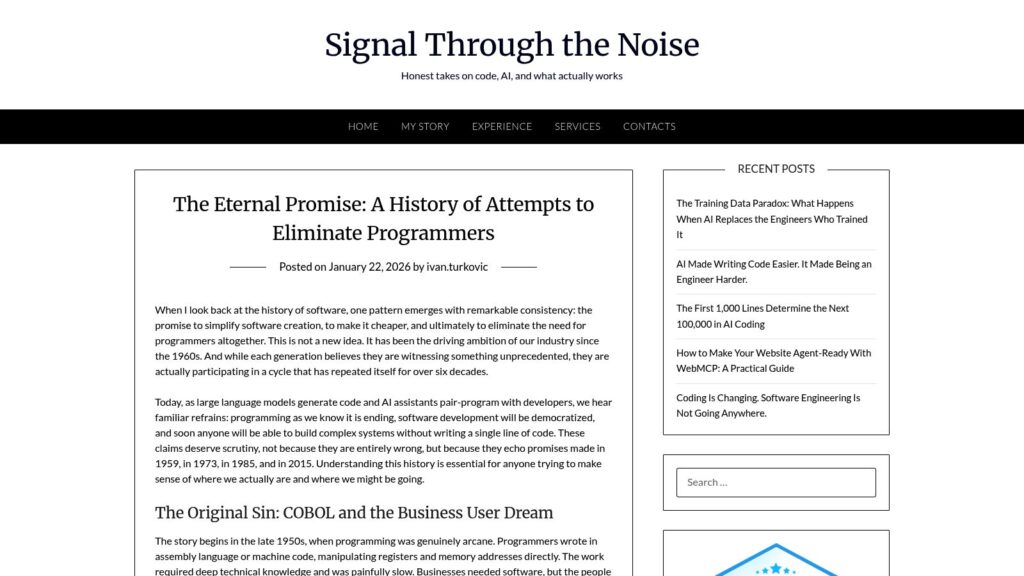
The Eternal Promise: a History of Attempts to Eliminate Programmers

Software simplification trends in history reveal a persistent cycle of attempts to reduce the need for programmers since the 1960s. Each generation, from COBOL to AI tools, promised democratization of software creation but ultimately created demand for specialized skills. Tools (like no-code platforms and large language models) improved efficiency but did not eliminate complex programming challenges. Understanding software principles remains crucial as human judgment is essential in navigating the complexities of development. The future will likely see evolving roles for developers rather than their obsolescence, reinforcing the enduring value of deep understanding in software engineering.

https://www.ivanturkovic.com/2026/01/22/history-software-simplification-cobol-ai-hype/

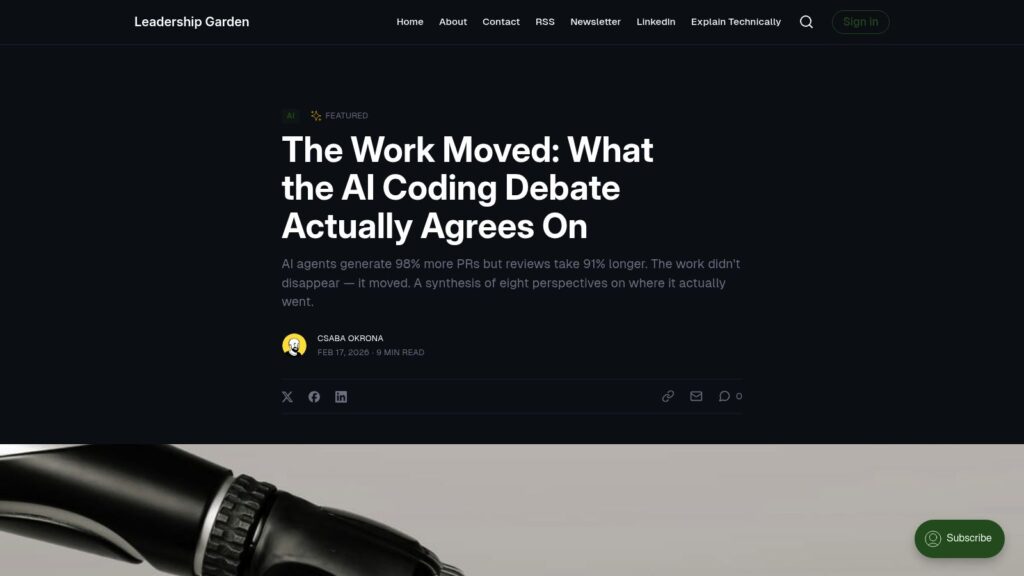
The Work Moved: What the AI Coding Debate Actually Agrees On

AI coding increased PR generation by 98% but slowed reviews by 91%, shifting work from coding to oversight and design. Perspectives vary on AI’s impact; while some highlight productivity gains, others see risks like “comprehension debt.” Best practices emphasize structured workflows and clear guardrails to mitigate risks of AI-generated code. The debate illustrates that the real work has shifted, and thus, understanding this transition is crucial for engineering teams.

https://leadership.garden/ai-the-work-moved/

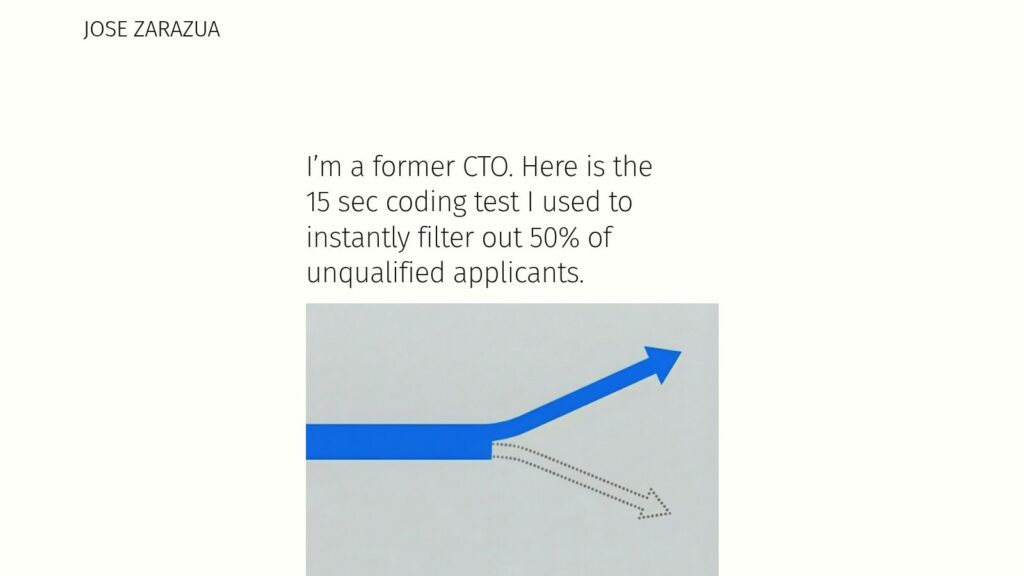
I’m a Former CTO. Here Is the 15 Sec Coding Test I Used to Instantly Filter Out 50% of Unqualified Applicants.

Former CTO Jose Zarazua shares a simple coding test to filter out unqualified applicants in recruitment. The test involves a code snippet that many will answer incorrectly if they copy-paste rather than think through, allowing a quick assessment of programming skills. This method helped identify 50% of candidates using AI/Interpreter answers and revealed that only 3% answered incorrectly, effectively streamlining the hiring process.

https://josezarazua.com/im-a-former-cto-here-is-the-15-sec-coding-test-i-used-to-instantly-filter-out-50-of-unqualified-applicants/

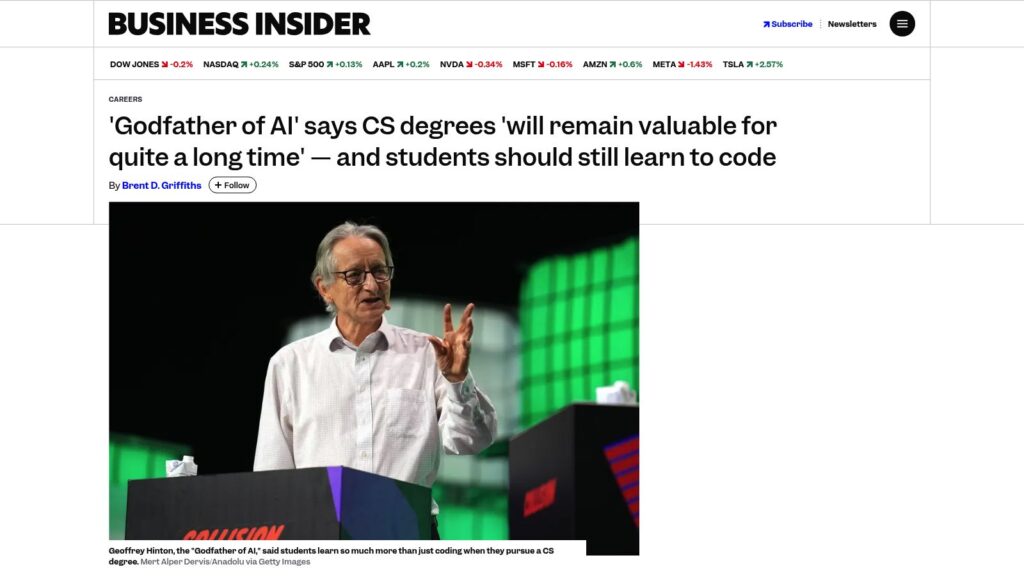
‘Godfather of AI’ Geoffrey Hinton Says Computer Science Degrees ‘will Remain Valuable’ — and Students Should Learn to Code

“Godfather of AI” Geoffrey Hinton asserts that computer science (CS) degrees remain valuable beyond just coding skills, emphasizing critical thinking and systems understanding. Despite AI advancements, he suggests students should learn to code, likening it to the intellectual benefits of learning Latin. Hinton advises focusing on foundational skills like math and statistics, which will always be relevant in tech fields.

https://www.businessinsider.com/godfather-ai-geoffrey-hinton-cs-degrees-valuable-learn-to-code-2025-12

Scroll to Top