research

Research: Why Some Junior Employees Work Well with AI—and Others Don’t
Research indicates that as AI increasingly handles routine, analytical tasks once performed by junior employees, the key to value creation lies in how individuals complement AI with judgment, domain expertise, and decision-ready outputs. Organizations must understand why some early-career employees adapt well to AI integration, leveraging it to enhance their work, while others struggle, as generative AI raises the baseline for acceptable performance in knowledge work. This dynamic highlights the evolving role of junior talent in AI-augmented professional environments.

https://hbr.org/2026/07/research-why-some-junior-employees-work-well-with-ai-and-others-dont
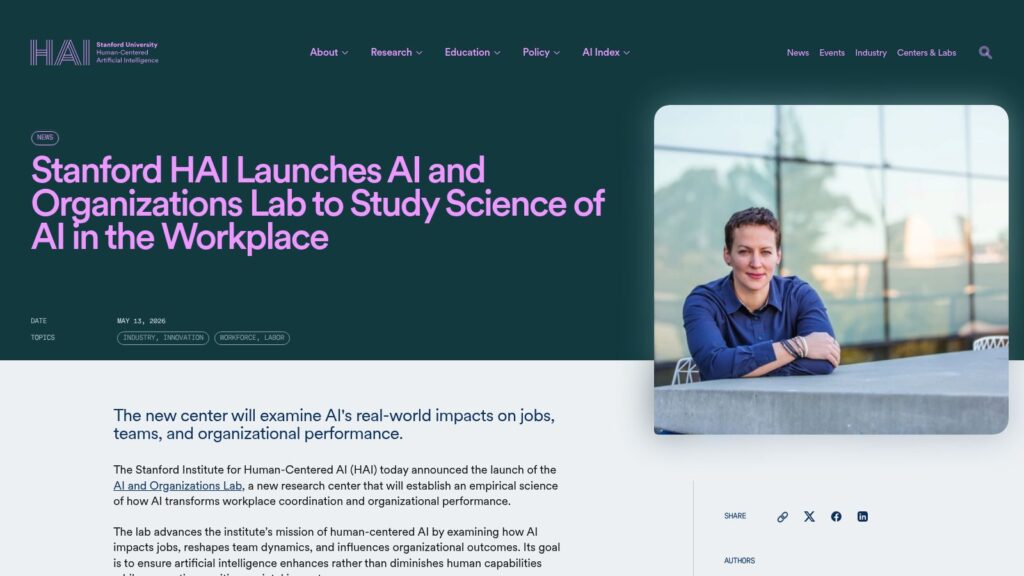
Stanford HAI Launches AI and Organizations Lab to Study Science of AI in the Workplace

Stanford’s Institute for Human-Centered AI (HAI) has launched the AI and Organizations Lab to conduct empirical research on how AI transforms workplace coordination, team dynamics, and organizational performance. Led by Melissa Valentine and other faculty, the lab aims to develop evidence-based insights that help organizations implement AI in ways that enhance human capabilities and generate positive societal impacts.

https://hai.stanford.edu/news/stanford-hai-launches-ai-and-organizations-lab-to-study-science-of-ai-in-the-workplace

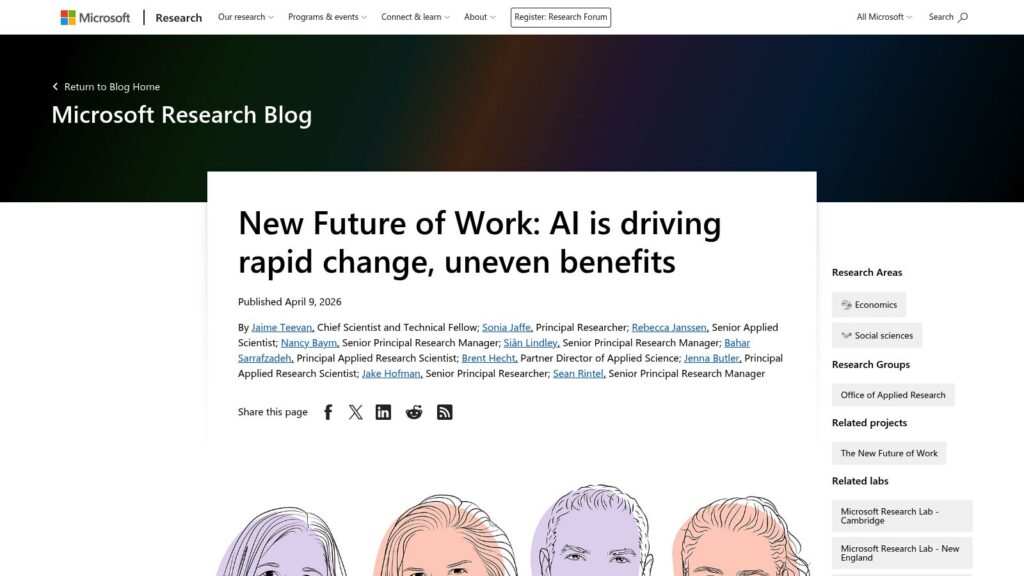
AI Is Driving Rapid Workplace Changes, but Uneven Benefits

The Microsoft Research blog’s “New Future of Work” report highlights that generative AI is rapidly transforming workplaces by reshaping collaboration, decision-making, and learning rather than merely speeding tasks. While AI adoption is uneven across sectors and regions, it is prompting shifts in job roles, skills, and team dynamics, with human expertise becoming more critical as people transition to guiding and refining AI outputs. The report emphasizes that the future of work depends on collective choices to harness AI as a collaborative partner and to ensure benefits are broadly shared.

https://www.microsoft.com/en-us/research/blog/new-future-of-work-ai-is-driving-rapid-change-uneven-benefits/

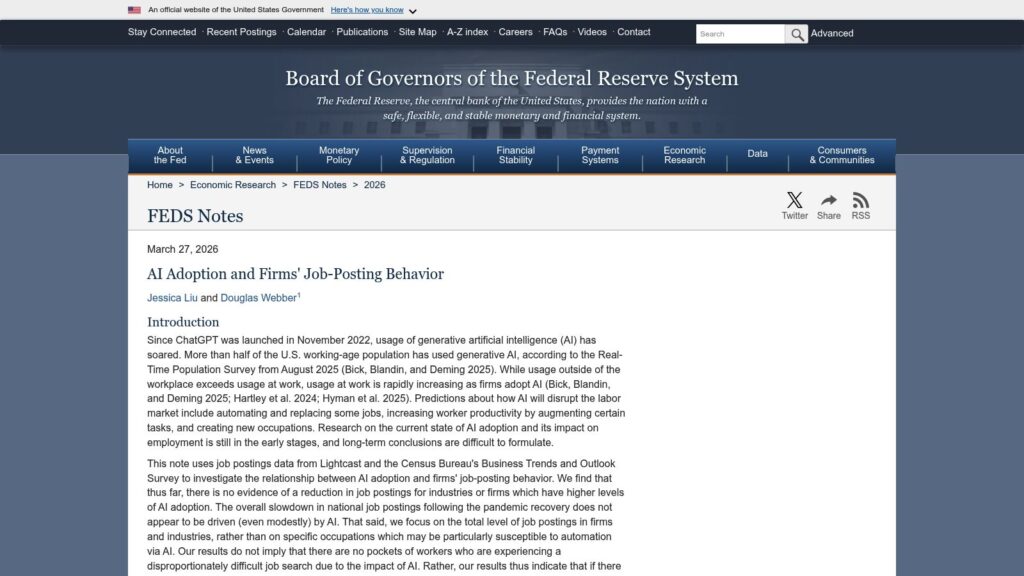
AI Adoption and Firms’ Job-Posting Behavior

The study investigates the relationship between AI adoption and firms’ job-posting behavior using data from Lightcast and the Census Bureau’s Business Trends and Outlook Survey. The findings suggest that, thus far, there is no evidence of a reduction in job postings for industries or firms with higher levels of AI adoption. While the overall slowdown in national job postings post-pandemic is not driven by AI, the study emphasizes the need for ongoing monitoring of potential labor market impacts.

https://www.federalreserve.gov/econres/notes/feds-notes/ai-adoption-and-firms-job-posting-behavior-20260327.html

Research on AI and the Labor Market Is Still in the First Inning

PIIE is a nonprofit research organization focused on global economic welfare through analysis and policy solutions. It covers diverse economic topics like globalization, finance, trade, and regional challenges. Recent studies on AI’s labor market impact reveal inconclusive findings, indicating a need for more comprehensive research into productivity, labor supply, and transition dynamics. Early research focuses heavily on labor demand, with significant variations in occupational exposure and usage of AI. Future research must consider these complexities and provide clear data for policymakers and stakeholders to understand AI’s effects on labor markets.

https://www.piie.com/blogs/realtime-economics/2026/research-ai-and-labor-market-still-first-inning

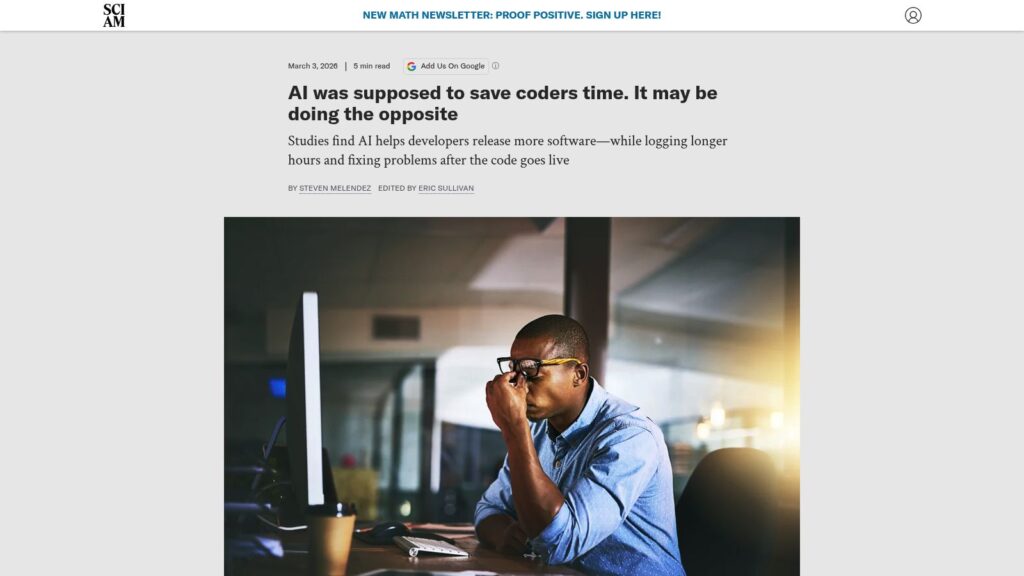
Why Developers Using AI Are Working Longer Hours

AI in coding is increasing software development speed but leading to longer hours and more post-release fixes. While AI tools enhance productivity, they also raise “software delivery instability,” resulting in more rollbacks and patches. Developers still need to verify AI-generated code, and reliance on AI may hinder skill development, especially among less experienced programmers. AI adoption may intensify workplace pressure, contributing to burnout. Overall, effective management of AI’s impact is crucial to maintain workforce well-being and professional growth.

https://www.scientificamerican.com/article/why-developers-using-ai-are-working-longer-hours/

Early U.S. Evidence Of AI Impacts On Jobs In The College Educated Workforce

FII Institute’s annual Global Survey captures insights from 50,000 citizens across 24 countries to identify emerging priorities for global leaders. A new report by Prof. Jeffrey Sachs examines generative AI’s impact on entry-level jobs for college-educated workers, revealing wage stagnation and economic anxiety as AI automates tasks.

https://fii-institute.org/publication/early-u-s-evidence-of-ai-impacts-on-jobs-in-the-college-educated-workforce

LSU Research Insights: Shaping the Future of Work With AI That Elevates People

LSU explores AI’s impact on workplaces, focusing on human resource development (HRD). Research emphasizes ethical AI use, employee collaboration, and continuous learning. Key challenges include AI literacy and change management. Future research should address AI’s effects on well-being and competence development. Exciting prospects include personalized learning and organizational analytics. HRD is vital in balancing technology with human needs, promoting collaboration across disciplines.

https://www.lsu.edu/blog/2026/01/ri-hr-ai-park.php

What Harvard Researchers Learned About Use of AI in White-collar Work at Top Companies

Harvard researchers analyzed AI use in white-collar jobs at Procter & Gamble and Boston Consulting Group. Findings indicate AI boosts productivity and performance, especially when integrated into collaborative teams. While AI enhances speed and performance for lower-skilled workers, it risks homogenizing ideas and potentially reduces junior roles. Proper management of AI technology is lacking, with current leaders needing more training to effectively oversee AI systems. Companies must strategically redesign roles to fully leverage AI benefits while protecting human jobs.

https://www.cnbc.com/2025/12/16/harvard-research-ai-office-work-job-risks.html

Scroll to Top