communication

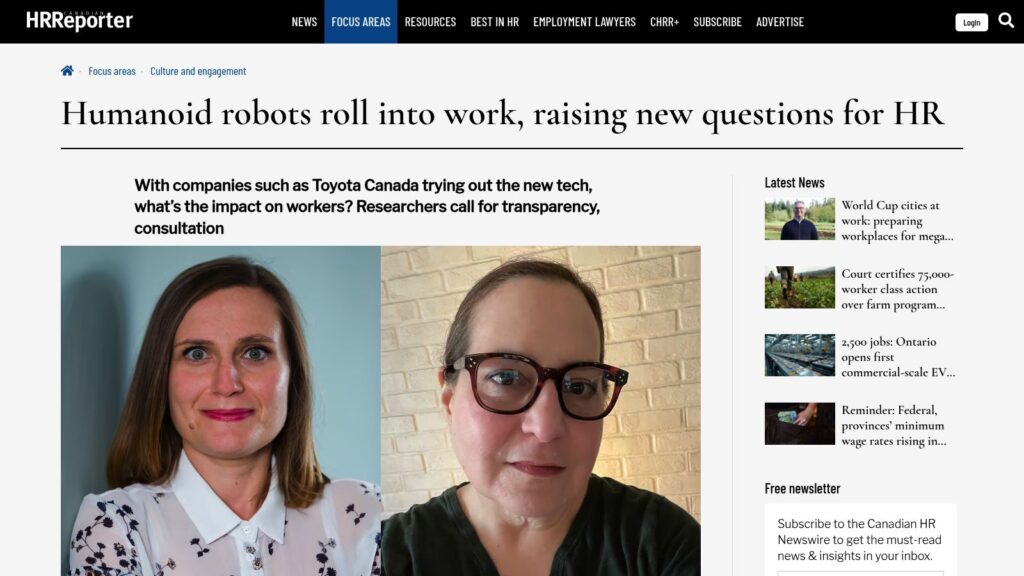
Humanoid Robots Roll Into Work, Raising New Questions for HR

Humanoid robots are entering workplaces, prompting HR concerns about employee impacts. Companies like Toyota and Canadian Tire are testing robots to reduce physical labor and allow staff to focus on higher-value tasks. Researchers emphasize the importance of transparency, worker consultation, and proper integration metrics to ensure technology enhances job satisfaction. However, potential issues include job insecurity, diminished social interaction, and the need for clear policies on interactions with robots. The success of these implementations hinges on effective communication between management and staff regarding the goals and impacts of automation.

https://www.hrreporter.com/focus-areas/culture-and-engagement/humanoid-robots-roll-into-work-raising-new-questions-for-hr/394146

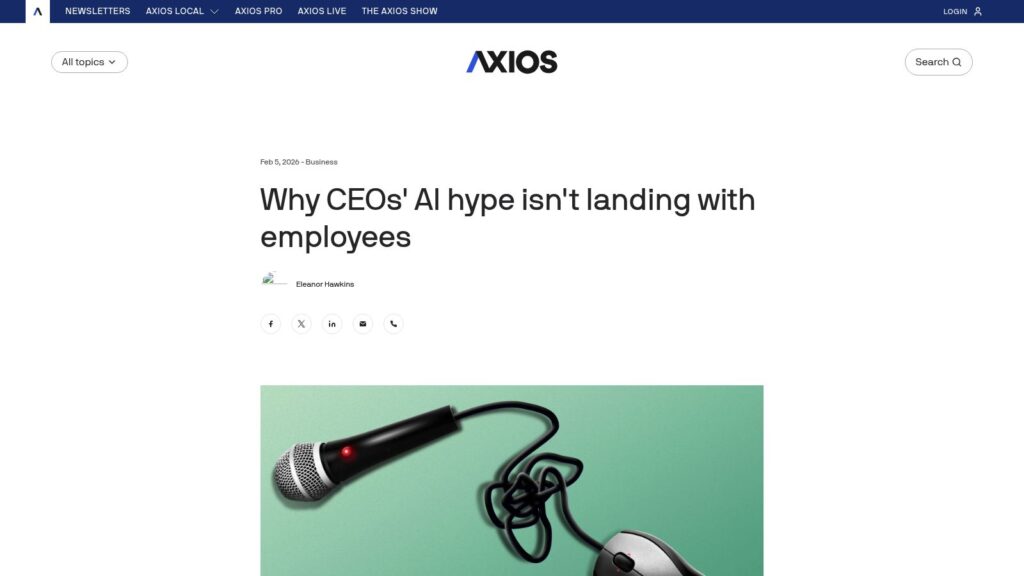
Why CEOs’ AI Hype Isn’t Landing With Employees

CEOs struggle to communicate AI benefits amid employee skepticism and unclear implementation, hindering productivity gains. Despite high investments, a study shows 95% of businesses see no AI return, with communication gaps and fears of job loss fueling resistance. Executives are urged to build trust and focus on AI training to bridge the divide, as poor messaging risks backlash in political spheres.

https://www.axios.com/2026/02/05/ai-adoption-messaging-gap

Mind the Skills Gap: Communication

Communication Skills Gap: LSE emphasizes developing communication skills, crucial for career success. Employers report that graduates lack essential communication abilities. Faculty and alumni suggest practice through societies, mock interviews, and board-style presentations. Workshops and networking events are offered to enhance interpersonal skills. Communication is framed as a “muscle,” needing constant enhancement for effective workplace engagement.

https://blogs.lse.ac.uk/management/2026/01/27/mind-the-skills-gap-communication/

Scroll to Top