trends

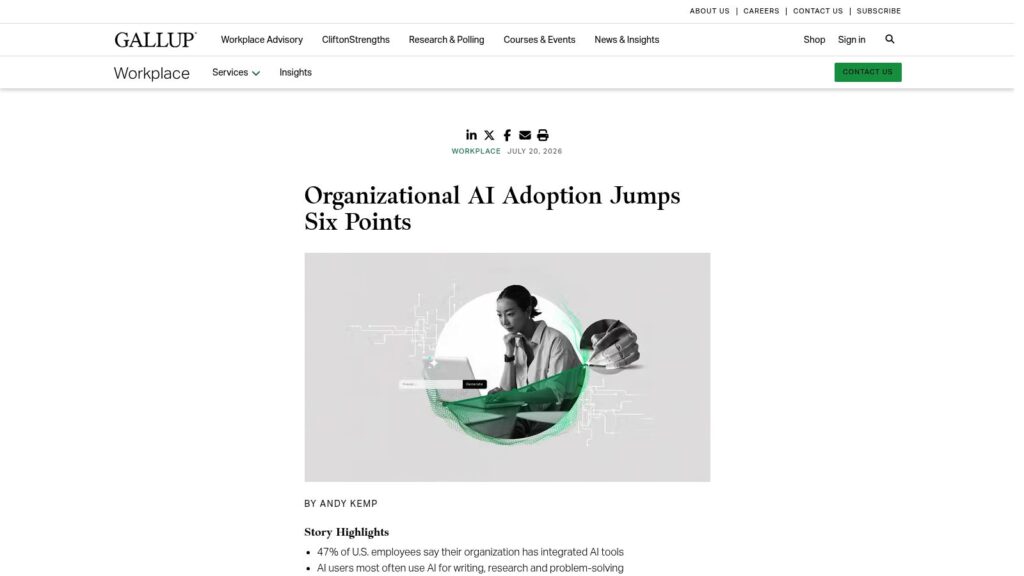
Organizational AI Adoption Jumps Six Points

Organizational adoption of AI in U.S. workplaces increased from 41% to 47% in Q2 2026, with 52% of employees now using AI in their roles, mostly for writing, research, and problem-solving. Productivity gains are highest among employees using AI for specialized tasks like coding, automation, and data analytics, and workers who use AI for a broader variety of functions report greater productivity improvements. These findings suggest that supporting employees to apply AI across multiple job-relevant tasks can enhance organizational productivity more than limited or occasional AI use.

https://www.gallup.com/workplace/712736/organizational-adoption-jumps-six-points.aspx

How Social Media Impacts Culture Change

Research by INSEAD faculty reveals that enterprise social media facilitates organizational culture change by making cultural norms visible but also poses challenges, as leaders often focus on major cultural shifts while overlooking smaller reactions that can undermine change. This visibility double-edged sword highlights the complexity of sustaining culture change amid increased transparency. Additional studies discussed address strategic implications of algorithmic pricing, the psychological drivers of sustainability engagement, the influence of inter-team competition on job crafting, and how demand uncertainty affects manufacturing firms in less developed economies.

https://knowledge.insead.edu/leadership-organisations/how-social-media-impacts-culture-change

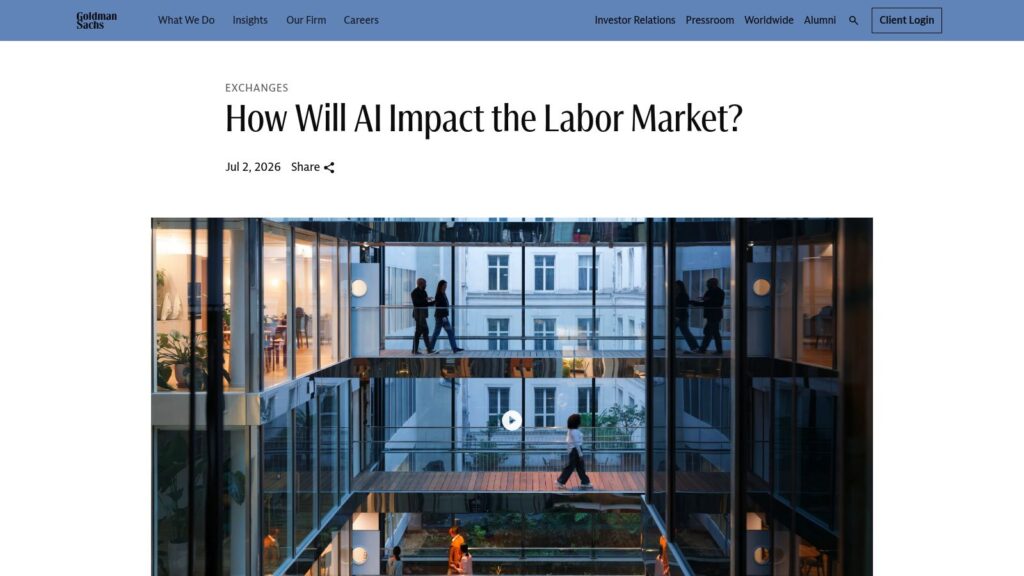
How Will AI Impact the Labor Market?

Goldman Sachs hosted a discussion with economists from MIT and its own research team examining AI’s impact on the labor market. They project that AI-driven automation could displace about 9% of U.S. workers over a decade but emphasize historical patterns suggest new jobs will be created to offset losses, mitigating permanent unemployment risks. Experts highlight that adoption rates, task complexity, and whether AI complements or replaces workers will shape outcomes, with uncertainty remaining on the long-term net effects on jobs and wages across different sectors.

https://www.goldmansachs.com/insights/goldman-sachs-exchanges/how-will-ai-impact-the-labor-market

The AI Jobs Debate Just Got Messier

A recent report by Ramp and Revelio Labs shows that companies heavily investing in AI have increased headcount by over 10%, including in entry-level roles, suggesting AI can contribute to firm expansion rather than just job displacement. While AI-related layoffs have impacted many workers, especially younger and entry-level employees, growth is strongest in tech-forward firms where AI lowers production costs and boosts output, potentially widening the gap between well-resourced companies and others. The findings challenge broad assumptions that AI universally eliminates jobs, highlighting its complex impact on workforce dynamics.

https://techcrunch.com/2026/06/29/the-ai-jobs-debate-just-got-messier/

The 11 Hardest IT Roles to Fill in 2026 — and What’s Changed

The hardest IT roles to fill in 2026 remain AI/machine learning and cybersecurity, with a growing emphasis on hybrid professionals skilled in AI deployment, governance, and risk management rather than just model building. The evolving demand favors upskilling current employees in these hybrid and agentic AI roles, as well as in automation and risk management, while cloud-related positions have become easier to fill due to market maturity. This shift reflects the need for IT talent who combine technical expertise with business understanding to navigate rapid AI advancements and increasing security challenges.

https://www.cio.com/article/4184685/the-11-hardest-it-roles-to-fill-in-2026-and-whats-changed.html

Amazon Launches Worker Robot That Takes Conversational Instructions

Amazon has introduced Proteus, a warehouse robot that can be directed through plain conversational language by any worker on the floor, shifting entry-level warehouse roles toward supervisory judgment and changing job competencies and pay structures. This launch highlights challenges in workforce adaptation and upskilling amid advancing robotics, as Amazon simultaneously faces workforce reductions due to automation, underscoring the need for proactive role redesign and compliance with emerging AI regulations.

https://www.hcamag.com/us/specialization/transformation/amazon-launches-worker-robot-that-takes-conversational-instructions/577829

Tech Jobs Grew in May Despite AI Layoffs

Despite significant AI-driven layoffs by major tech companies like Meta and Cisco, technology job openings in the U.S. increased by 69,000 in May, marking continued growth in sectors such as cloud infrastructure and IT services. This reflects a shifting tech labor market where companies are simultaneously reducing roles impacted by AI while investing in new positions to support AI deployment, data, and cybersecurity, resulting in a complex, uneven hiring landscape focused on skills tied to immediate operational impact.

https://www.ciodive.com/news/technology-hiring-may-AI-layoffs/822163/

Remote Work — Not AI — Has Sidelined Recent College Graduates, Research Finds

Research from the Federal Reserve Bank of New York reveals that remote work, rather than AI, has contributed significantly to higher unemployment rates among younger college graduates since the pandemic. The shift to remote work has made employers reluctant to hire and mentor recent graduates, who typically need more on-the-job training, resulting in a 20% rise in unemployment for those under 29 in “remotable” jobs, while unemployment for older graduates has decreased slightly.

https://www.npr.org/2026/06/01/nx-s1-5843076/remote-work-college-graduates-unemployment-ai

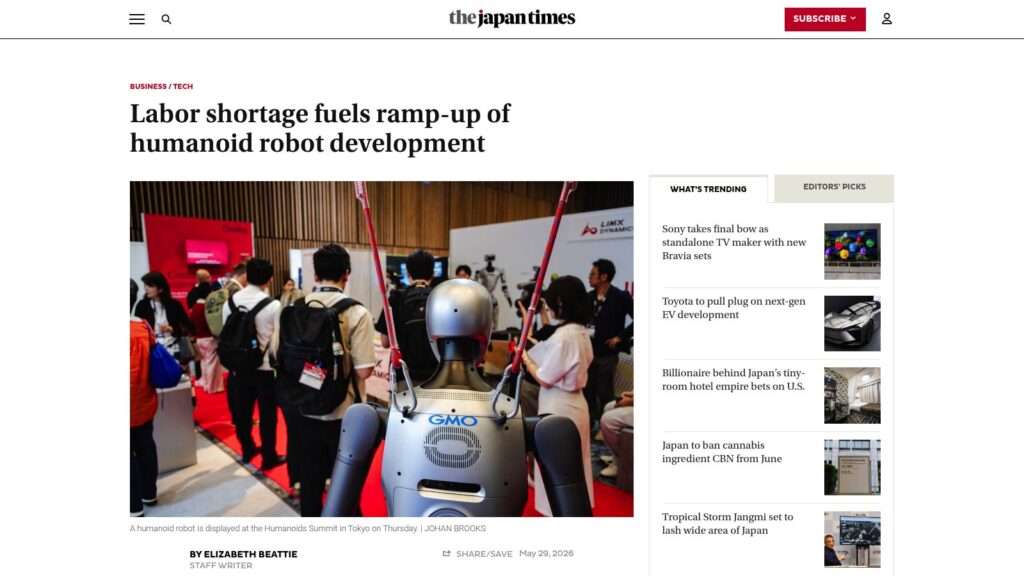
Labor Shortage Fuels Ramp-up of Humanoid Robot Development

Amid global labor shortages driven by declining birth rates, humanoid robots are increasingly being developed and considered as viable solutions to fill workforce gaps. This was a key topic at the recent Humanoids Summit in Tokyo, where experts highlighted the urgent need for physical AI to address the shrinking labor pool in countries like Japan and the United States.

https://www.japantimes.co.jp/business/2026/05/29/tech/humanoids-summit-labor-shortages/

A Reality Check on the AI Jobs Hysteria

The article from MIT Technology Review provides a measured perspective on widespread fears that artificial intelligence will lead to massive job losses. It emphasizes that while AI will transform many industries and displace certain roles, it will also create new types of employment and opportunities, urging policymakers and the public to focus on adaptation rather than alarmism.

https://www.technologyreview.com/2026/05/26/1137855/a-reality-check-on-the-ai-jobs-hysteria/

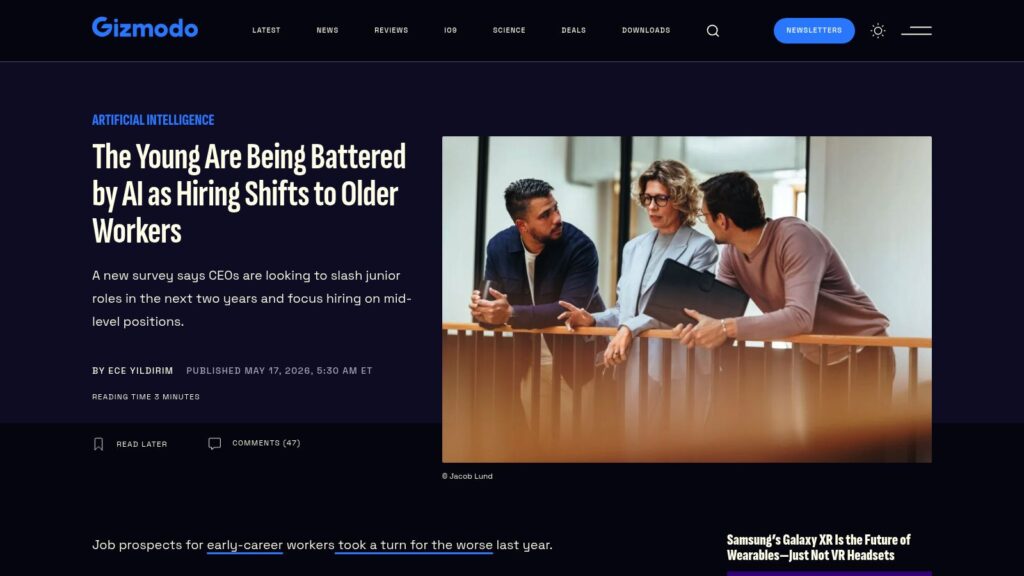
The Young Are Being Battered by AI as Hiring Shifts to Older Workers

A recent global survey by Oliver Wyman reveals that CEOs plan to reduce junior roles and shift hiring focus toward mid-level and older workers over the next two years, driven largely by AI automation replacing tasks typically done by early-career employees. This trend is contributing to a harsh job market for young workers, potentially jeopardizing their career growth and the future talent pipeline, even as many companies have yet to see substantial productivity gains from AI investments.

https://gizmodo.com/the-young-are-being-battered-by-ai-as-hiring-shifts-to-older-workers-2000759608

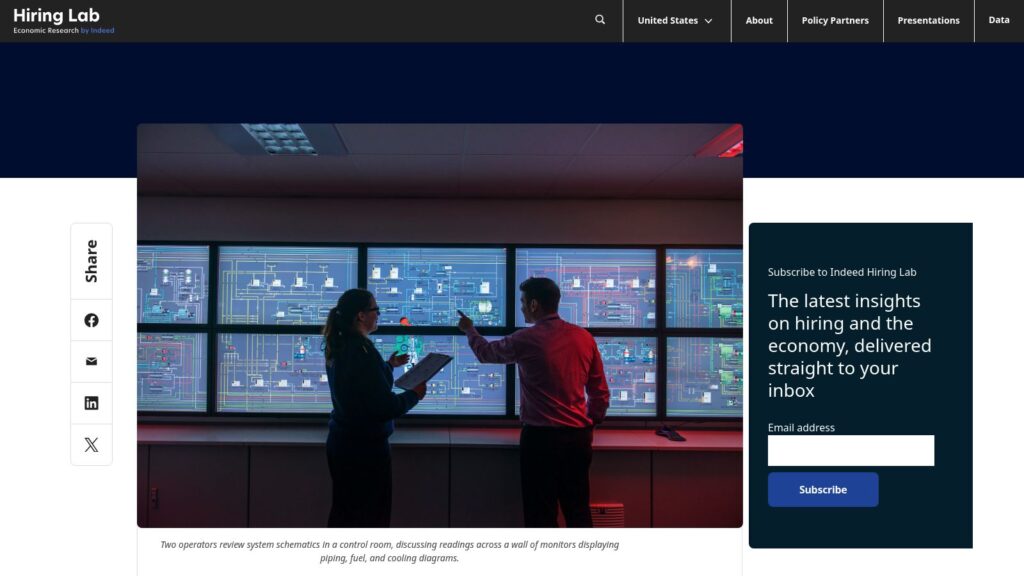
The Great Mismatch: How a Shrinking Workforce, AI, and Labor Reallocation Will Define the Next 15 Years – Indeed Hiring Lab

The U.S. labor market faces a significant challenge over the next 15 years due to a shrinking workforce driven by aging, retirements, and reduced immigration, alongside the uneven impact of AI, which mainly affects high-wage, white-collar jobs rather than sectors with acute worker shortages like healthcare and construction. This will create a structural mismatch between worker skills and job vacancies, increasing unemployment and requiring focused efforts on labor reallocation through upskilling, credential reform, and improved job matching to align workers with available opportunities.

https://www.hiringlab.org/2026/05/14/how-a-shrinking-workforce-ai-and-labor-reallocation-will-define-the-next-15-years/

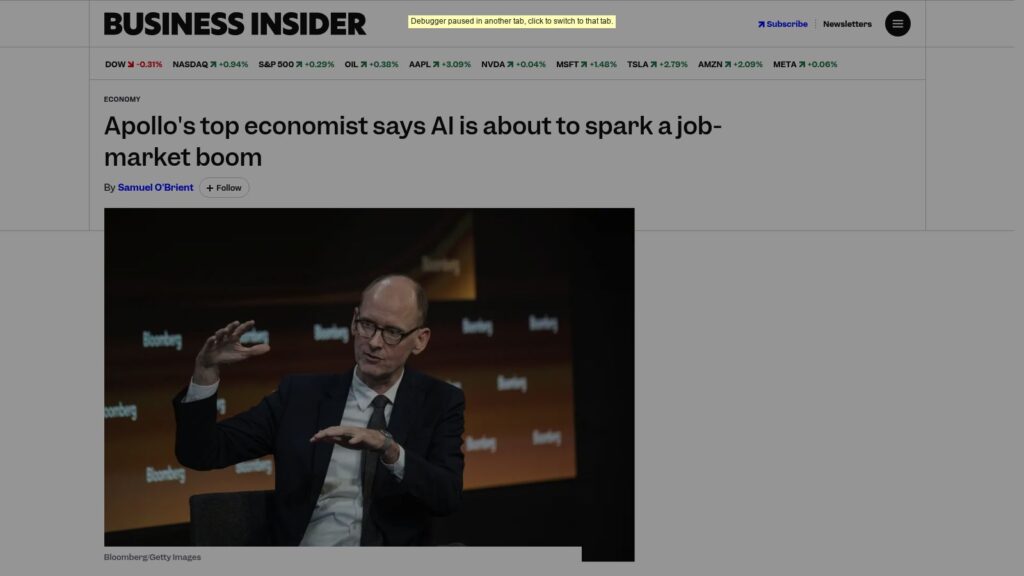
Apollo’s Top Economist Says AI Is About to Spark a Massive Job Market Boom

Apollo’s top economist, Torsten Sløk, believes AI will spark a job-market boom. He argues AI could increase employment rather than reduce it, applying the concept of Jevons paradox, where greater efficiency lowers costs and expands demand. As AI makes services like legal and financial work cheaper, more people and businesses can use them, which may lead companies to grow and hire more workers. The main point is that AI-driven productivity gains could expand industries and create jobs, challenging predictions of widespread unemployment.

https://www.businessinsider.com/ai-job-market-labor-unemployment-jevons-paradox-apollo-torsten-slok-2026-4

A Robot Economy: Who Gets Rich, Who Gets Left Behind

The article discusses the rising impact of humanoid robots on the economy, highlighting that robots leased at $300 per month are already significantly cheaper than human labor and operate continuously without costs like benefits or turnover. While this technological shift promises increased corporate profits and an “age of abundance” with cheaper goods, it risks exacerbating economic inequality, as the benefits primarily accrue to capital owners, deepening the existing K-shaped economy where wealth concentrates at the top and many workers face stagnation or displacement.

https://seekingalpha.com/article/4897346-robot-economy-who-gets-rich-who-gets-left-behind

Workplace AI Growth Continues Despite Limited System Change

Artificial intelligence usage in the U.S. workplace has become common, with about half of employees reporting some AI use in their roles, primarily boosting productivity and efficiency in individual tasks. Despite these gains, AI has yet to fundamentally transform organizational work structures, though it is influencing job content and prompting workforce changes such as expansions, reductions, and reorganizations.

https://nationalcioreview.com/articles-insights/extra-bytes/workplace-ai-growth-continues-despite-limited-system-change/

Scroll to Top