career

The AI Jobs Debate Just Got Messier

A recent report by Ramp and Revelio Labs shows that companies heavily investing in AI have increased headcount by over 10%, including in entry-level roles, suggesting AI can contribute to firm expansion rather than just job displacement. While AI-related layoffs have impacted many workers, especially younger and entry-level employees, growth is strongest in tech-forward firms where AI lowers production costs and boosts output, potentially widening the gap between well-resourced companies and others. The findings challenge broad assumptions that AI universally eliminates jobs, highlighting its complex impact on workforce dynamics.

https://techcrunch.com/2026/06/29/the-ai-jobs-debate-just-got-messier/

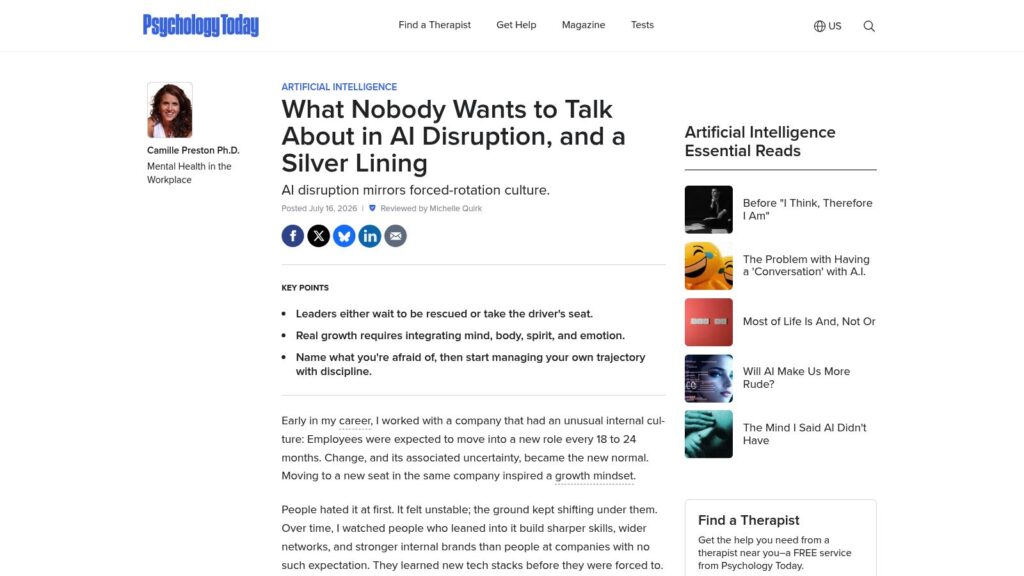
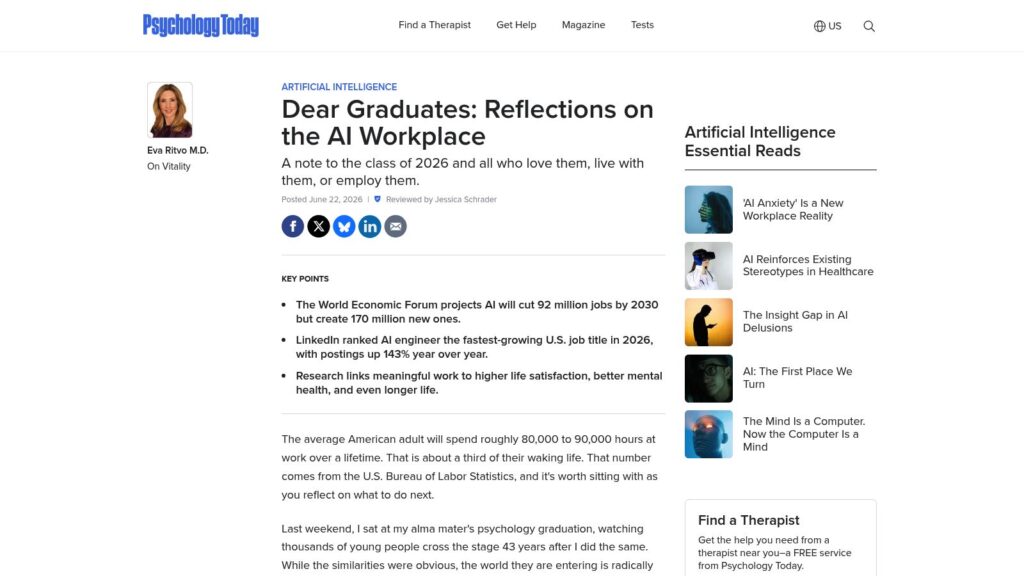
Dear Graduates: Reflections on the AI Workplace

The article addresses the class of 2026, emphasizing that while AI is reshaping the workforce by displacing an estimated 92 million jobs but creating 170 million new ones by 2030, meaningful work remains essential for well-being and identity. It encourages graduates to seek roles that align with their values and strengths, adapt alongside AI rather than compete with it, and continuously learn, highlighting growth in AI-related fields, healthcare, and other areas reliant on human empathy and judgment. The piece underscores the importance of job crafting and cautions against pursuing prestige over meaning in a rapidly evolving labor market.

https://www.psychologytoday.com/us/blog/on-vitality/202606/dear-graduates-reflections-on-the-ai-workplace

Is My Job Bullshit? Why AI Might Actually Have the Answer

The article explores the notion of “bullshit jobs” as defined by anthropologist David Graeber and considers how AI automation challenges the meaningfulness of work, especially in compliance and audit professions. It emphasizes the need for humans to focus on uniquely human skills—such as resilience, curiosity, empathy, leadership, and analytical thinking—to add value beyond what AI can automate, highlighting the critical role of human judgment and ethics in evolving workplaces.

https://www.corporatecomplianceinsights.com/is-my-job-bullshit-why-ai-might-have-answer/

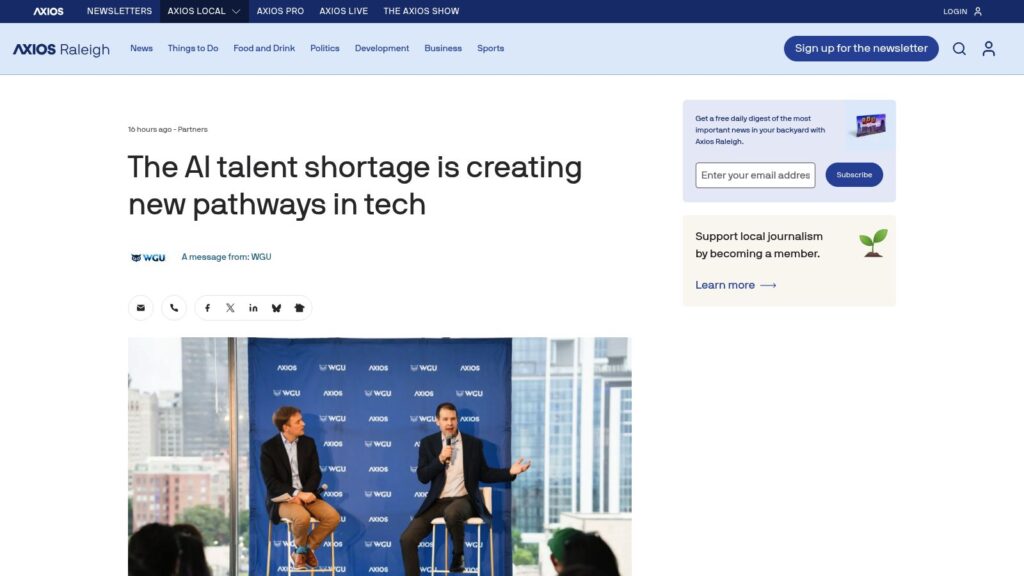
The AI Talent Shortage Is Creating New Pathways in Tech

The growing shortage of AI talent is pushing businesses to create new pathways in tech, as companies struggle to find qualified workers to deploy AI systems despite rapid adoption. Programs like Western Governors University’s Bachelor of Science in AI Engineering aim to address this gap by focusing on practical AI deployment skills, helping workers develop competencies needed to build and manage AI-powered systems in real-world applications.

https://www.axios.com/local/raleigh/sponsored/the-ai-talent-shortage-is-creating-new-pathways-in-tech

Remote Work — Not AI — Has Sidelined Recent College Graduates, Research Finds

Research from the Federal Reserve Bank of New York reveals that remote work, rather than AI, has contributed significantly to higher unemployment rates among younger college graduates since the pandemic. The shift to remote work has made employers reluctant to hire and mentor recent graduates, who typically need more on-the-job training, resulting in a 20% rise in unemployment for those under 29 in “remotable” jobs, while unemployment for older graduates has decreased slightly.

https://www.npr.org/2026/06/01/nx-s1-5843076/remote-work-college-graduates-unemployment-ai

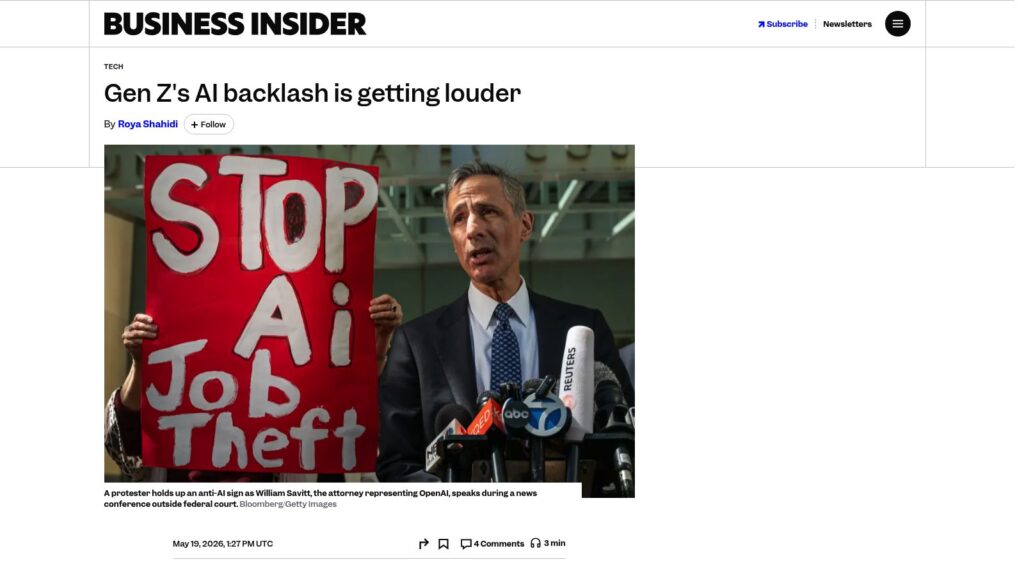
Gen Z’s AI Backlash Is Getting Louder

During the 2026 graduation season, Gen Z’s backlash against AI has become increasingly vocal, with students booing speakers who praise AI technology due to fears of job displacement and economic uncertainty. Surveys show a decline in excitement and a rise in anger toward AI among young people, who face a worsening job market partly attributed to AI-driven layoffs, highlighting a growing generational divide on the technology’s impact.

https://www.businessinsider.com/gen-z-graduates-ai-backlash-commencement-speeches-anxiety-job-market-2026-5

Public Have More Fear Than Hope on AI and Future of Work, Study Finds

A study by King’s College London finds that a majority of the UK public fear the economic impacts of AI, with seven in ten worried about job losses and over half believing AI will eliminate more jobs than it creates, particularly affecting entry-level roles and young people. While employers and some groups show more optimism about AI’s potential benefits and productivity gains, most people express concern about AI’s societal effects and support government intervention, regulation, and retraining programs to prepare for the AI-driven changes in the workforce.

https://www.kcl.ac.uk/news/one-in-five-britons-think-ai-will-create-civil-unrest-study-finds

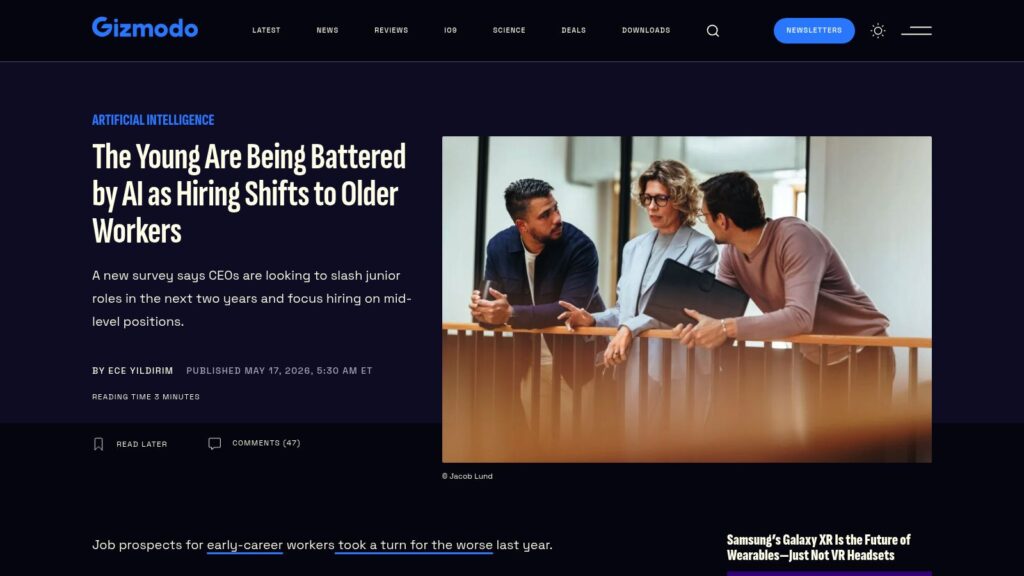
The Young Are Being Battered by AI as Hiring Shifts to Older Workers

A recent global survey by Oliver Wyman reveals that CEOs plan to reduce junior roles and shift hiring focus toward mid-level and older workers over the next two years, driven largely by AI automation replacing tasks typically done by early-career employees. This trend is contributing to a harsh job market for young workers, potentially jeopardizing their career growth and the future talent pipeline, even as many companies have yet to see substantial productivity gains from AI investments.

https://gizmodo.com/the-young-are-being-battered-by-ai-as-hiring-shifts-to-older-workers-2000759608

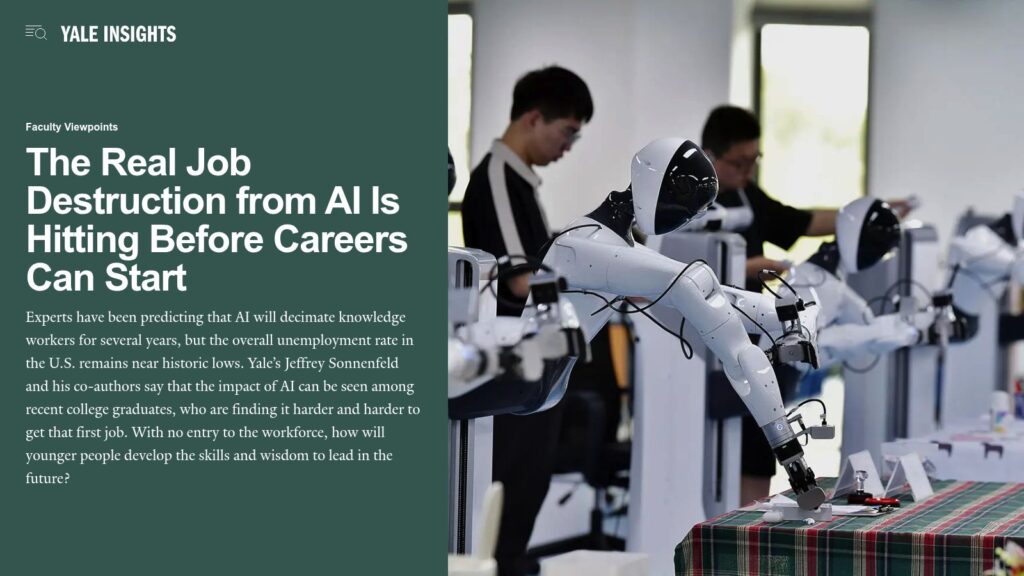
The Real Job Destruction From AI Is Hitting Before Careers Can Start

Yale’s Jeffrey Sonnenfeld and colleagues highlight that while AI’s impact on overall U.S. unemployment appears limited, it is significantly reducing entry-level job opportunities for recent college graduates, making it harder for them to start careers and gain essential experience. This subtle labor market shift is driven by the rise of agentic AI systems that automate workflows and routine tasks, prompting companies to slow hiring rather than lay off current employees, which could undermine future workforce development and career progression.

https://insights.som.yale.edu/insights/the-real-job-destruction-from-ai-is-hitting-before-careers-can-start

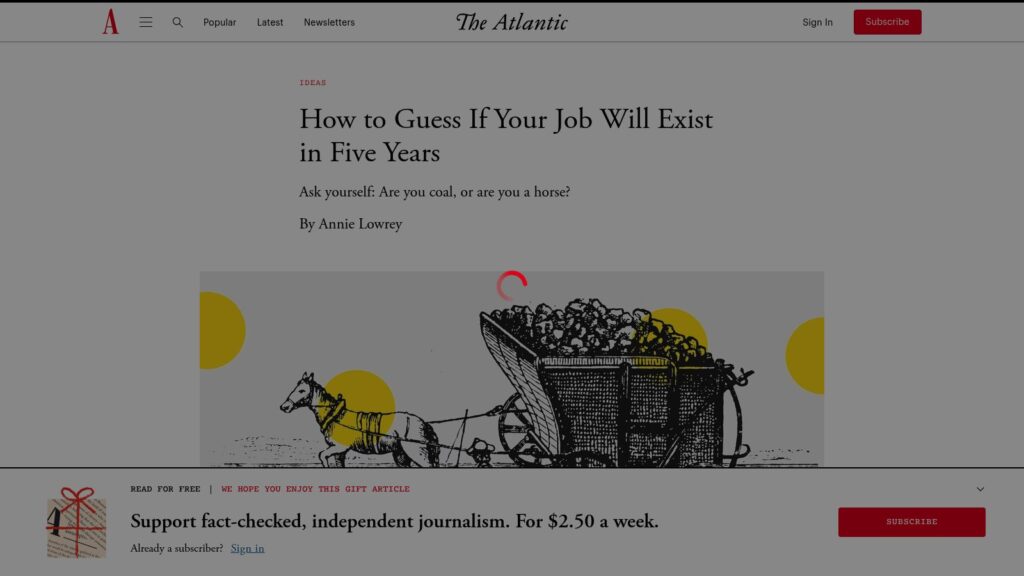
How to Guess If Your Job Will Exist in Five Years

In the face of AI advancements, many white-collar workers worry about job obsolescence, but the article suggests a useful analogy: are workers “coal” (replaceable by technology) or “horses” (adaptable and enduring)? Drawing on the historical example of horses replaced by tractors in agriculture and the Jevons paradox—which shows that efficiency can increase overall demand—the author argues that while some jobs may disappear, many roles will evolve or be complemented by AI, highlighting the complex, uneven impact of technology on employment.

https://www.theatlantic.com/ideas/2026/03/ai-job-loss-jevons-paradox/686520/?gift=j9r7avb6p-KY8zdjhsiSZxEaMJJtr_JVWzViUlGY2MY

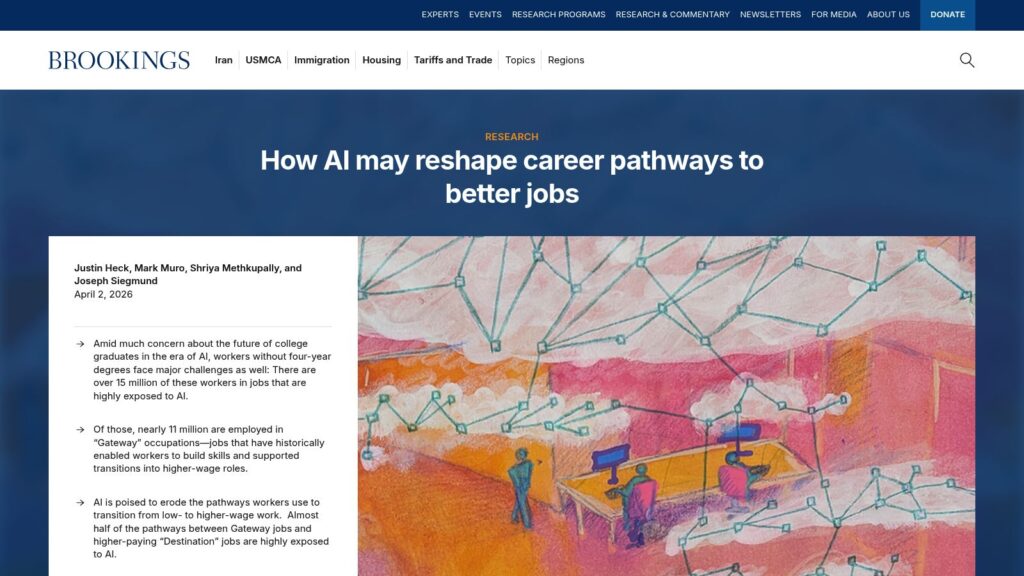
How AI May Reshape Career Pathways to Better Jobs

The article discusses how AI is poised to disrupt not only individual jobs but also the career pathways that enable workers without four-year degrees—termed STARs—to advance to better-paying roles. It highlights that nearly 11 million STARs occupy “Gateway” jobs critical for upward mobility, many of which are highly exposed to AI, potentially threatening these established pathways, particularly in administrative and clerical roles in regions like the Northeast and Sun Belt. The authors emphasize the importance of regional, coordinated workforce strategies to ensure AI strengthens rather than weakens economic mobility for these workers.

https://www.brookings.edu/articles/how-ai-may-reshape-career-pathways-to-better-jobs/

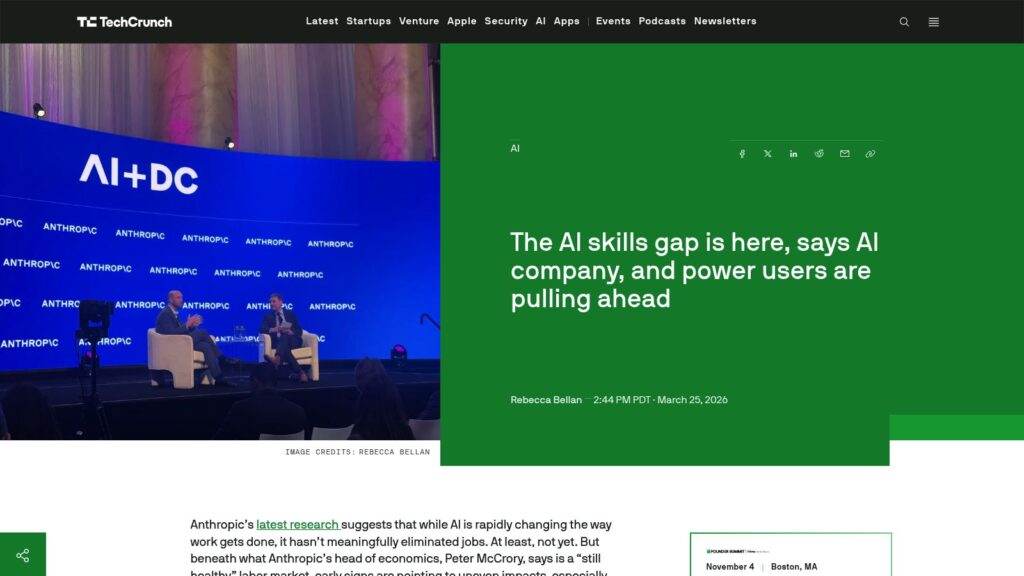
The AI Skills Gap Is Here, Says AI Company, and Power Users Are Pulling Ahead

Anthropic’s latest research shows that AI has not yet caused significant job displacement, though there are early signs of an emerging skills gap between power users and new adopters. The report highlights that those who effectively integrate AI into their work are pulling ahead, with adoption concentrated among higher-income, knowledge-based workers, suggesting potential widening inequalities as AI use expands.

https://techcrunch.com/2026/03/25/the-ai-skills-gap-is-here-says-ai-company-and-power-users-are-pulling-ahead/

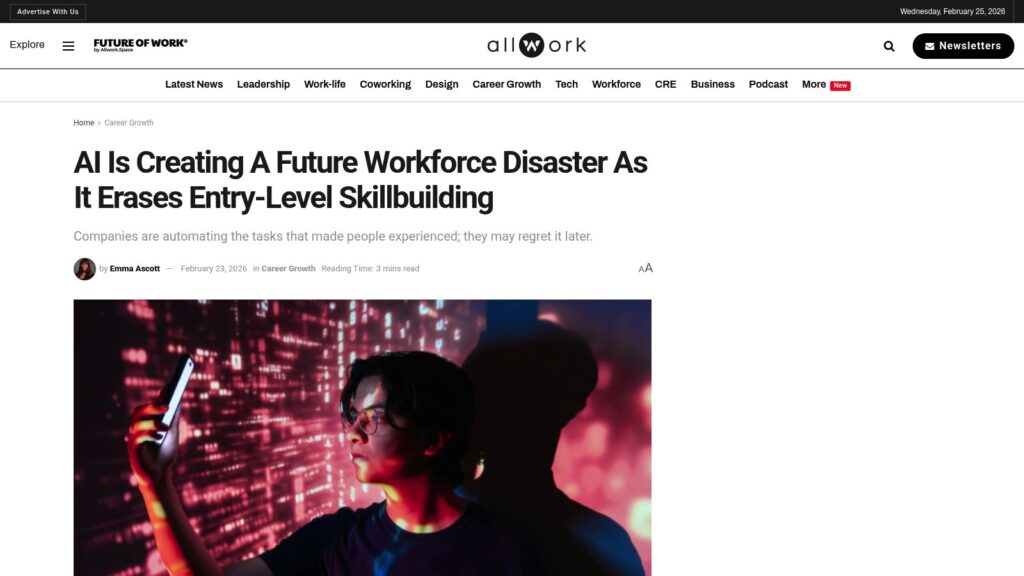
AI Is Creating a Future Workforce Disaster As It Erases Entry-Level Skillbuilding

AI is automating entry-level tasks, eliminating foundational job experiences and creating future talent shortages. This reduces opportunities for young workers, as companies prioritize efficiency over skill development. While productivity increases, independent thinking and professional instincts decline, leading to potential long-term workforce issues. Employers may face a talent gap, lacking capable individuals to fill senior roles, as essential on-the-job training disappears. AI also impacts workplace collaboration, weakening mentorship and informal learning among junior employees. The trend signifies a structural shift in career progression, where fewer workers gain necessary experience to advance.

https://allwork.space/2026/02/ai-is-creating-a-future-workforce-disaster-as-it-erases-entry-level-skillbuilding/

I Guess I Kinda Get Why People Hate AI

User reflects on anxiety regarding AI’s impact on employment while on vacation in Hawaii. The author shares their history in startups and initial optimism about AI, now tempered by concerns of job loss due to AI advancements. They note unusual marketing strategies by AI companies, emphasizing problems like potential job automation and misinformation. Despite personal use of AI being productive, the overall experience for many people is negative, leading to a prevalent distrust of AI. The author urges AI firms to address these issues proactively to avoid societal backlash.

https://anthony.noided.media/blog/ai/programming/2026/02/14/i-guess-i-kinda-get-why-people-hate-ai.html

Robotization and Occupational Mobility

Robotization and AI affect workers’ long-term career trajectories beyond job losses and wage declines. Since 2000, fewer workers transition to higher-paying jobs due to automation, impacting earnings and reducing investments in housing and education. Policies should address the broader implications of technology, not just job displacement, as many workers face diminished career advancement opportunities, particularly in high-manufacturing areas affected by industrial robots. The study highlights the need for policies to consider the long-term career effects of automation on all workers, not just those directly displaced.

https://www.brookings.edu/articles/robotization-and-occupational-mobility/

Scroll to Top