work

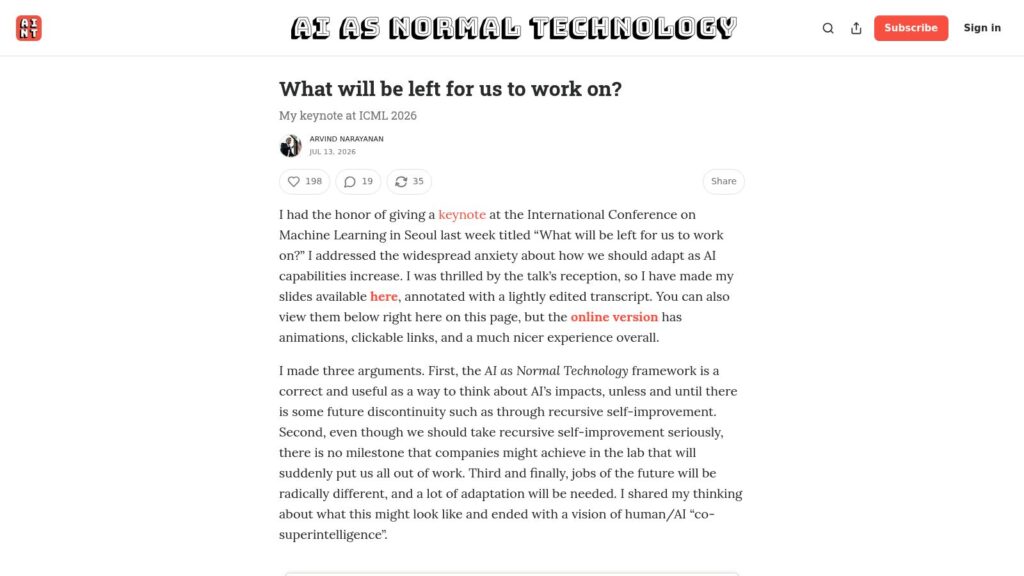
What Will Be Left for Us to Work On?

Arvind Narayanan discusses the evolving role of human work amid increasing automation and AI advances, questioning what tasks will remain uniquely human. He argues that while many routine and even some complex tasks are becoming automated, humans will continue to be needed for roles involving creativity, empathy, ethical judgment, and complex social interactions. This shift calls for adapting workforce skills and organizational approaches to focus on areas where human qualities and oversight remain essential.

https://www.normaltech.ai/p/what-will-be-left-for-us-to-work

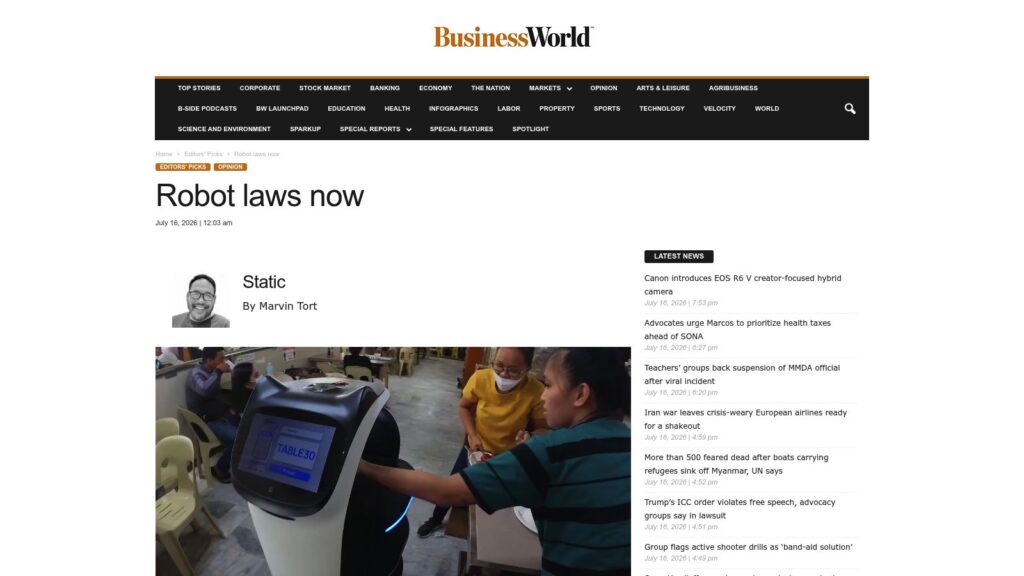
Robot Laws Now

Robots are rapidly advancing from simple machines to sophisticated AI-enabled humanoids used in industries like construction, logistics, airports, and public transport across countries such as Japan, Singapore, and China. The Philippines, however, lacks dedicated legislation to govern the deployment, safety, cybersecurity, and labor impacts of robots, creating urgency for a legal framework that includes risk classification, firmware transparency, workforce transition plans, and adoption of international safety standards. As robots move from novelty to critical infrastructure, establishing clear regulations is essential to manage technological integration and protect public safety and labor interests.

https://bworldonline.com/opinion/2026/07/16/763693/robot-laws-now/

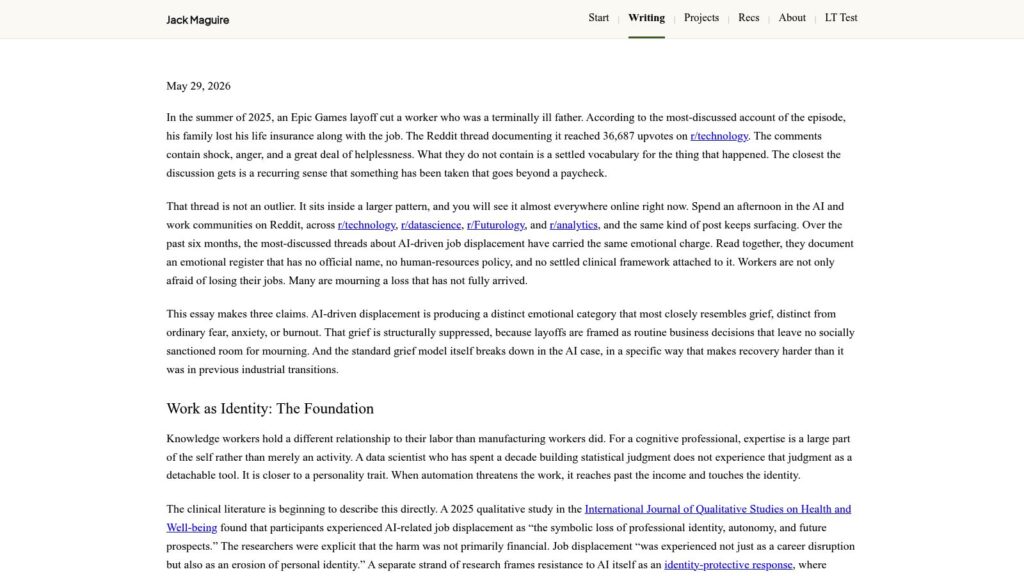
AI Job Grief: The Unnamed Psychological Crisis Hitting Tech Workers

AI-driven job displacement is causing a unique form of psychological grief among tech workers that extends beyond typical fear or anxiety, as it threatens their professional identity and sense of self. This grief is often disenfranchised, lacking social acknowledgment or institutional support, which complicates emotional processing and recovery, especially as AI continues to evolve rapidly, leaving no stable endpoint for acceptance. The resulting emotional distress manifests in symptoms like anxiety and depression and affects workforce behavior, including sabotage of AI implementations, while existing models of grief and institutional responses fail to adequately address this ongoing crisis.

https://jackmaguire.org/blog/ai-job-grief/

AI Is Changing Work. It Might Also Be Limiting How Expertise Is Built

As organizations adopt AI to automate entry-level tasks, Deloitte research highlights a “broken skills ladder” where fewer entry-level hires lead to diminished opportunities for workers to develop expertise over time. This shift risks long-term shortages of proficient, experienced talent, emphasizing the need for public sector involvement to rebuild pathways that support skill development and expertise growth.

https://www.deloitte.com/us/en/insights/industry/government-public-sector-services/ai-future-of-work-reskilling.html

Computer Scientist on Why He Believes Mass Layoffs Due to AI Is a ‘Convenient Excuse’

Princeton computer scientist Sayash Kapoor argues that many corporate layoffs attributed to AI are actually driven by other factors like post-pandemic overhiring and shareholder pressure, making AI a “convenient excuse” rather than a primary cause. He believes AI will reshape job roles by automating certain tasks but not cause mass job losses, though the reduction in entry-level hiring could pose challenges for workforce development.

https://www.npr.org/2026/06/30/nx-s1-5864243/computer-scientist-on-why-he-believes-mass-layoffs-due-to-ai-is-a-convenient-excuse

3 Ways You’re Working Wrong, According to Scientists

Scientific research shows that multitasking reduces productivity because switching between tasks incurs time and error costs, especially with complex tasks. Open office layouts decrease face-to-face interactions and increase stress, undermining productivity rather than enhancing collaboration. Furthermore, group brainstorming is less effective than individual ideation, and virtual meetings add cognitive burdens that hinder creative idea generation.

https://www.popsci.com/diy/productivity-myths-open-offices-brainstorming/

Dear Graduates: Reflections on the AI Workplace

The article addresses the class of 2026, emphasizing that while AI is reshaping the workforce by displacing an estimated 92 million jobs but creating 170 million new ones by 2030, meaningful work remains essential for well-being and identity. It encourages graduates to seek roles that align with their values and strengths, adapt alongside AI rather than compete with it, and continuously learn, highlighting growth in AI-related fields, healthcare, and other areas reliant on human empathy and judgment. The piece underscores the importance of job crafting and cautions against pursuing prestige over meaning in a rapidly evolving labor market.

https://www.psychologytoday.com/us/blog/on-vitality/202606/dear-graduates-reflections-on-the-ai-workplace

Is My Job Bullshit? Why AI Might Actually Have the Answer

The article explores the notion of “bullshit jobs” as defined by anthropologist David Graeber and considers how AI automation challenges the meaningfulness of work, especially in compliance and audit professions. It emphasizes the need for humans to focus on uniquely human skills—such as resilience, curiosity, empathy, leadership, and analytical thinking—to add value beyond what AI can automate, highlighting the critical role of human judgment and ethics in evolving workplaces.

https://www.corporatecomplianceinsights.com/is-my-job-bullshit-why-ai-might-have-answer/

AI Agents Lag Far Behind Human Workers, Research Shows. So, Why Are Tech Companies Laying Off the Humans?

Tech companies are laying off human workers while investing heavily in AI agents that are touted to replace human labor, despite research showing these AI agents fail to produce professionally acceptable work over 95% of the time. Analysts and experts suggest that the technology is overhyped and often used as an excuse for layoffs, with AI agents currently unable to reliably perform complex, end-to-end tasks without human supervision.

https://www.cbc.ca/news/world/ai-agents-tech-company-layoffs-9.7221069

Remote Work — Not AI — Has Sidelined Recent College Graduates, Research Finds

Research from the Federal Reserve Bank of New York reveals that remote work, rather than AI, has contributed significantly to higher unemployment rates among younger college graduates since the pandemic. The shift to remote work has made employers reluctant to hire and mentor recent graduates, who typically need more on-the-job training, resulting in a 20% rise in unemployment for those under 29 in “remotable” jobs, while unemployment for older graduates has decreased slightly.

https://www.npr.org/2026/06/01/nx-s1-5843076/remote-work-college-graduates-unemployment-ai

Luddite Lab

The Luddite Lab Resource Hub offers unions, labor organizations, and worker-organizers resources to combat AI and automation impacts in the workplace. It provides strategies for worker-led governance and oversight of new technology through case studies, applied research primers, and a comprehensive resource library.

https://labor.dair-institute.org/

Work Becomes More Human in the Age of AI

University of Rochester experts emphasize that artificial intelligence (AI) is reshaping work by handling repetitive cognitive tasks, thereby freeing humans to focus on empathy, creativity, and judgment—qualities machines cannot replicate. They argue that AI should be viewed as a collaborative tool that enhances human ideas and connections, especially in emotionally demanding fields like healthcare, while ethical oversight remains critical to ensure AI benefits society responsibly.

https://www.rochester.edu/newscenter/work-becomes-more-human-with-artificial-intelligence-704332/

Are Humanoid Robots the End of Human Work?

Despite advances in humanoid robotics and AI, experts at a recent conference overwhelmingly believe these machines will not replace most human workers by 2050 due to current limitations in dexterity and autonomous capabilities. Historical perspectives also suggest that while technology disrupts jobs, it typically creates new ones, and humanoid robots are seen more as tools to augment human labor—especially in care roles—rather than replace it entirely.

https://nautil.us/are-humanoid-robots-the-end-of-human-work-1281110

Public Have More Fear Than Hope on AI and Future of Work, Study Finds

A study by King’s College London finds that a majority of the UK public fear the economic impacts of AI, with seven in ten worried about job losses and over half believing AI will eliminate more jobs than it creates, particularly affecting entry-level roles and young people. While employers and some groups show more optimism about AI’s potential benefits and productivity gains, most people express concern about AI’s societal effects and support government intervention, regulation, and retraining programs to prepare for the AI-driven changes in the workforce.

https://www.kcl.ac.uk/news/one-in-five-britons-think-ai-will-create-civil-unrest-study-finds

‘I Didn’t Want to Be the Guinea Pig’: Inside Tech’s AI-fueled Manager Purge

Tech companies like Meta, Amazon, Block, and Coinbase are increasingly using AI to restructure by cutting middle management layers, aiming to boost efficiency and reduce bureaucracy. This AI-fueled management purge is reshaping managers’ roles—expanding responsibilities and requiring them to both supervise and produce—while raising concerns about diminished human mentorship, increased job stress, and potential negative impacts on workplace culture and product quality.

https://www.theguardian.com/technology/2026/may/15/ai-manager-purge-tech

Scroll to Top