robotization

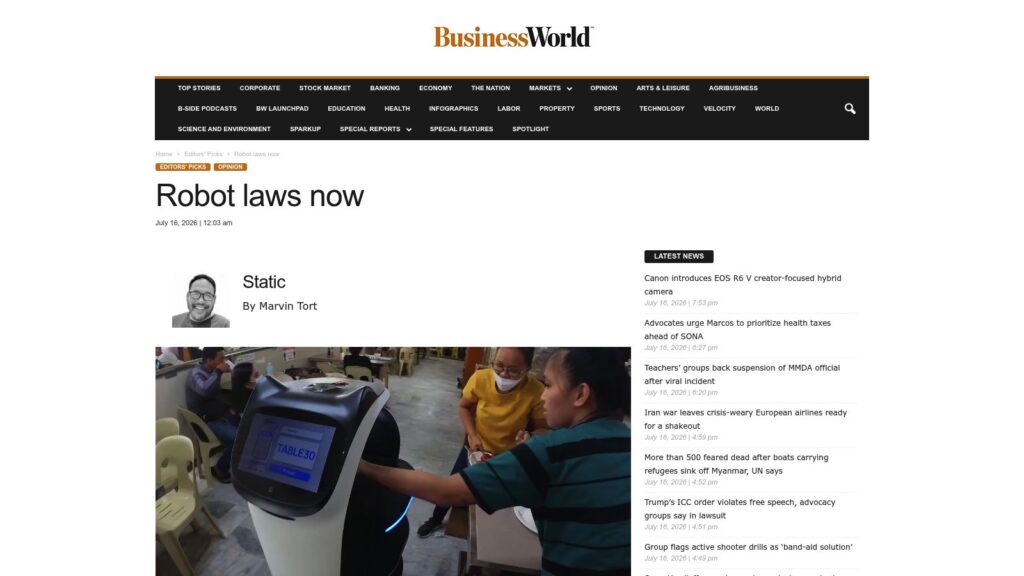
Robot Laws Now

Robots are rapidly advancing from simple machines to sophisticated AI-enabled humanoids used in industries like construction, logistics, airports, and public transport across countries such as Japan, Singapore, and China. The Philippines, however, lacks dedicated legislation to govern the deployment, safety, cybersecurity, and labor impacts of robots, creating urgency for a legal framework that includes risk classification, firmware transparency, workforce transition plans, and adoption of international safety standards. As robots move from novelty to critical infrastructure, establishing clear regulations is essential to manage technological integration and protect public safety and labor interests.

https://bworldonline.com/opinion/2026/07/16/763693/robot-laws-now/

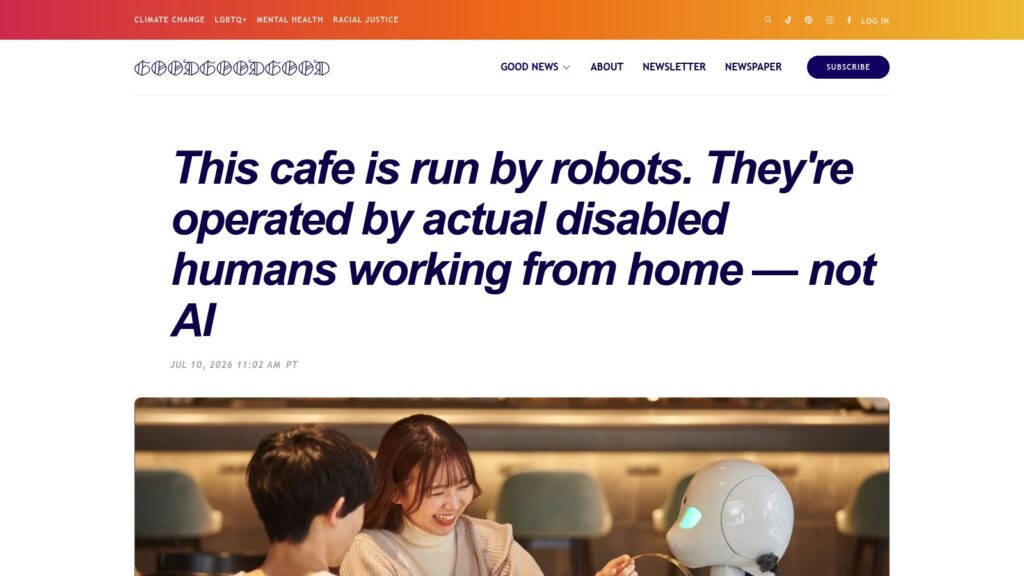
This Cafe Is Run by Robots. They’re Controlled by Actual Disabled Humans Working From Home — Not AI

The Dawn Avatar Robot Cafe in Tokyo employs disabled workers who operate robots remotely from their homes, enabling them to participate actively in the workforce despite physical limitations. Founded by Ory Yoshifuji, who was inspired by his own illness, the cafe allows these “pilots” to control robots that interact with customers in real time, offering a new model of inclusive, technology-enhanced employment. This approach challenges fears about AI replacing jobs by demonstrating how robotics can create meaningful work opportunities and social engagement for people with disabilities.

https://www.goodgoodgood.co/articles/tokyo-dawn-robot-cafe-disabled-workers

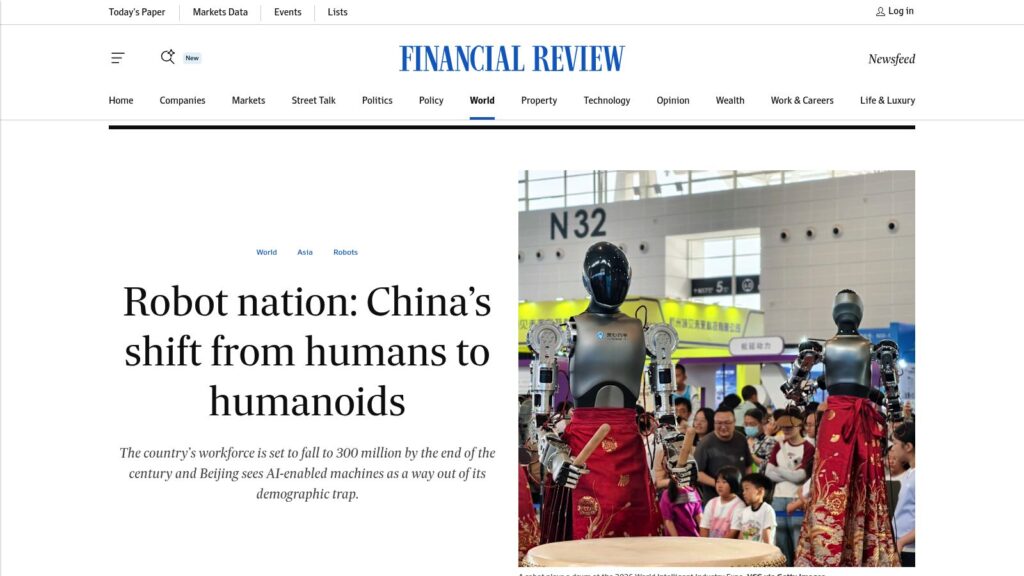
Robot Nation: China’s Shift From Humans to Humanoids

China is increasingly replacing human workers with AI-enabled robots and humanoids in industries like manufacturing to address its shrinking workforce, which is projected to fall to 300 million by the end of the century due to demographic decline. This shift toward automation reflects Beijing’s strategy to counter labor shortages and sustain economic productivity amid an aging population.

https://www.afr.com/world/asia/robot-nation-china-s-bid-to-beat-its-demographic-decline-20260630-p60b7u

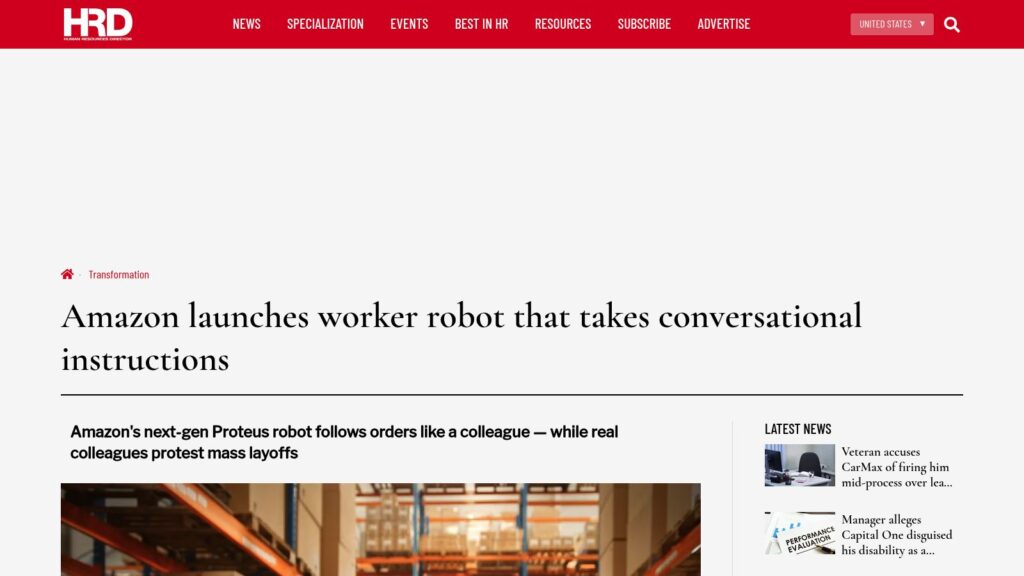
Amazon Launches Worker Robot That Takes Conversational Instructions

Amazon has introduced Proteus, a warehouse robot that can be directed through plain conversational language by any worker on the floor, shifting entry-level warehouse roles toward supervisory judgment and changing job competencies and pay structures. This launch highlights challenges in workforce adaptation and upskilling amid advancing robotics, as Amazon simultaneously faces workforce reductions due to automation, underscoring the need for proactive role redesign and compliance with emerging AI regulations.

https://www.hcamag.com/us/specialization/transformation/amazon-launches-worker-robot-that-takes-conversational-instructions/577829

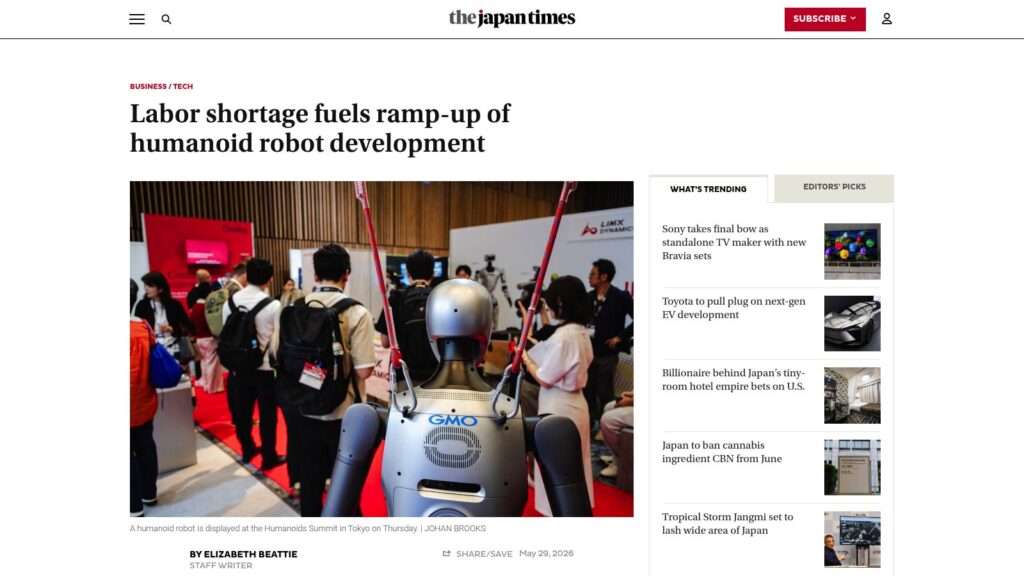
Labor Shortage Fuels Ramp-up of Humanoid Robot Development

Amid global labor shortages driven by declining birth rates, humanoid robots are increasingly being developed and considered as viable solutions to fill workforce gaps. This was a key topic at the recent Humanoids Summit in Tokyo, where experts highlighted the urgent need for physical AI to address the shrinking labor pool in countries like Japan and the United States.

https://www.japantimes.co.jp/business/2026/05/29/tech/humanoids-summit-labor-shortages/

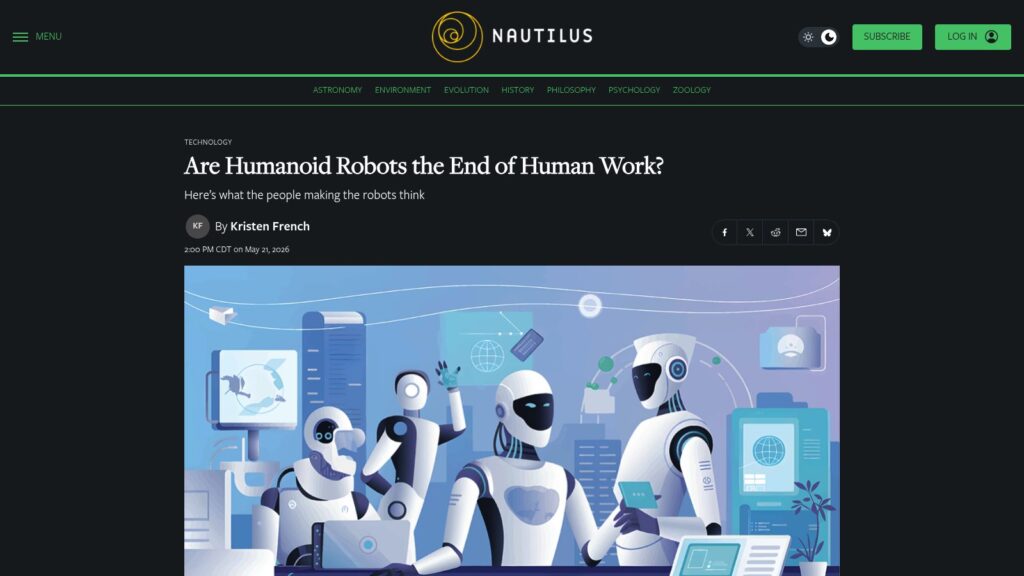
Are Humanoid Robots the End of Human Work?

Despite advances in humanoid robotics and AI, experts at a recent conference overwhelmingly believe these machines will not replace most human workers by 2050 due to current limitations in dexterity and autonomous capabilities. Historical perspectives also suggest that while technology disrupts jobs, it typically creates new ones, and humanoid robots are seen more as tools to augment human labor—especially in care roles—rather than replace it entirely.

https://nautil.us/are-humanoid-robots-the-end-of-human-work-1281110

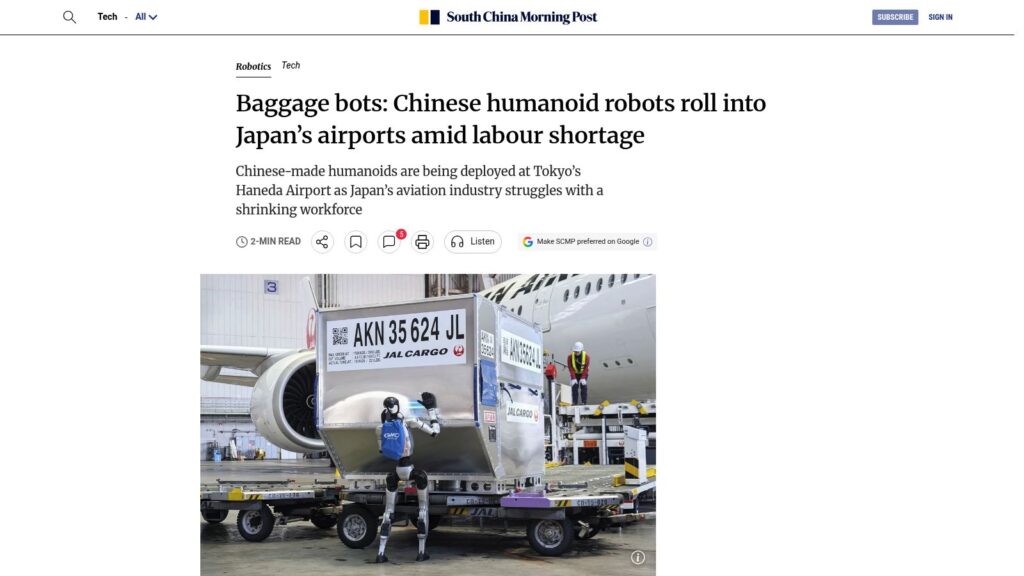
Baggage Bots: Chinese Humanoids Clock on at Japanese Airports Amid Labour Crunch

Japan Airlines is launching a two-year trial using Chinese-made humanoid robots from Unitree and UBTech at Tokyo’s Haneda Airport to handle baggage, cargo, aircraft towing, and cabin cleaning. The initiative highlights the adoption of Chinese robotics technology in Japan amid a severe labor shortage in the aviation industry.

https://www.scmp.com/tech/article/3352626/baggage-bots-chinese-humanoid-robots-roll-japans-airports-amid-labour-shortage

A Robot Economy: Who Gets Rich, Who Gets Left Behind

The article discusses the rising impact of humanoid robots on the economy, highlighting that robots leased at $300 per month are already significantly cheaper than human labor and operate continuously without costs like benefits or turnover. While this technological shift promises increased corporate profits and an “age of abundance” with cheaper goods, it risks exacerbating economic inequality, as the benefits primarily accrue to capital owners, deepening the existing K-shaped economy where wealth concentrates at the top and many workers face stagnation or displacement.

https://seekingalpha.com/article/4897346-robot-economy-who-gets-rich-who-gets-left-behind

Are Robots Really Taking All the Manufacturing Jobs?

The article discusses the misconception that robots and automation take away manufacturing jobs, clarifying that automation often replaces dull, dirty, and dangerous tasks, allowing workers to transition into safer, higher-skilled roles. It highlights the significant workforce shortage in the manufacturing sector, driven by digital transformation and retiring baby boomers, and emphasizes the need for collaborative efforts among legislative, academic, and corporate entities to upskill workers and attract new talent.

https://www.automate.org/robotics/blogs/robots-manufacturing-jobs

Can a Robot Really Do Your Job?

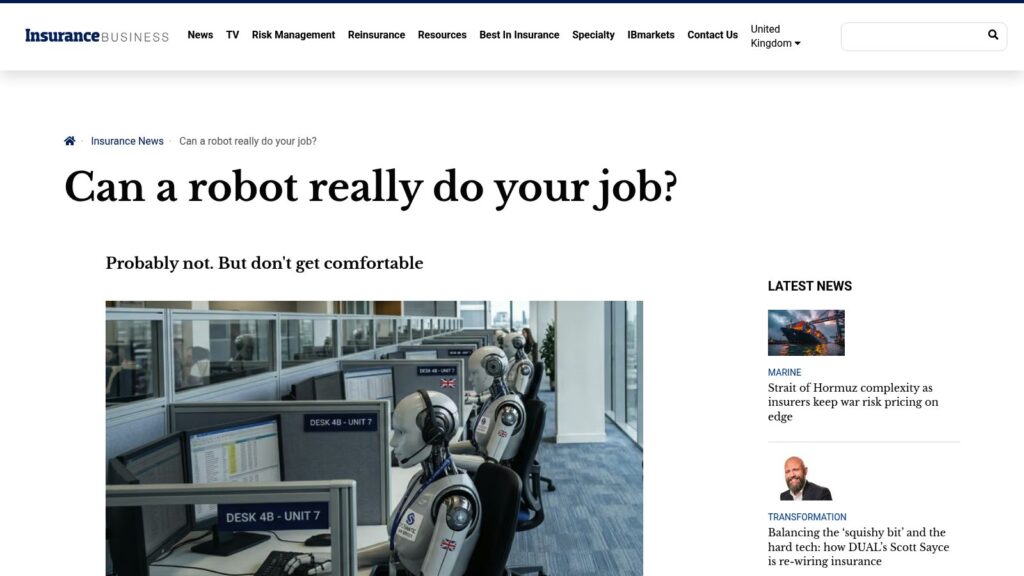
A recent report highlights a growing talent crisis in the insurance industry, with a shrinking young workforce and declining graduate interest, while suggesting AI may help but is unlikely to fully replace experienced professionals soon. The study emphasizes that AI is more capable of automating entry-level and administrative tasks, potentially threatening the traditional training pipeline for future experts, but roles requiring judgment, relationships, and expertise are expected to remain resilient. Overall, the industry’s key challenge lies in addressing this demographic shift and talent shortage, with AI playing a secondary role.

https://www.insurancebusinessmag.com/uk/news/breaking-news/can-a-robot-really-do-your-job-570868.aspx

Robot Density Surges in Europe, Asia, and Americas

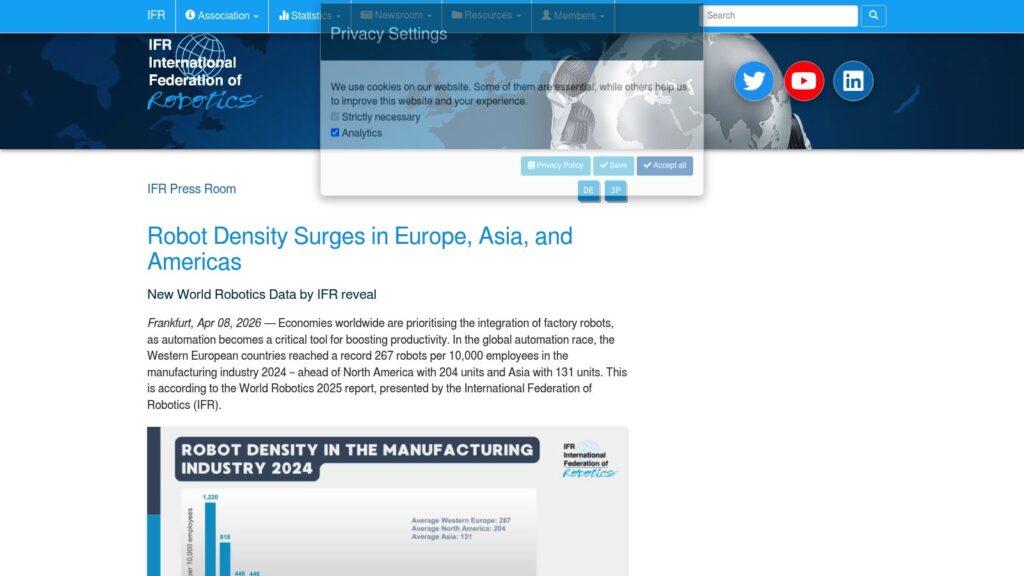
The International Federation of Robotics (IFR) reports a surge in robot density worldwide, with Western Europe leading at 267 robots per 10,000 manufacturing employees in 2024, followed by North America with 204, and Asia with 131. South Korea has the highest robot density globally, while China—despite ranking 22nd by robot density—has the largest operational stock with around 2 million industrial robots, reflecting its significant manufacturing scale and rapid automation growth.

https://ifr.org/ifr-press-releases/news/robot-density-surges-in-europe-asia-and-americas

In Japan, the Robot Isn’t Coming for Your Job; It’s Filling the One Nobody Wants

Japan is rapidly advancing physical AI and robotics to address critical labor shortages caused by its declining and aging population, aiming to sustain industrial productivity and social services. Leveraging its strengths in high-precision hardware components, Japan is fostering a hybrid ecosystem where large corporations provide scale while startups drive innovation in software and system integration, supported by substantial government investment to transition from pilot projects to real-world deployments across manufacturing, logistics, and defense.

https://techcrunch.com/2026/04/05/japan-is-proving-experimental-physical-ai-is-ready-for-the-real-world/

What Are the Next Key Advancements in Robotics? Experts Explain

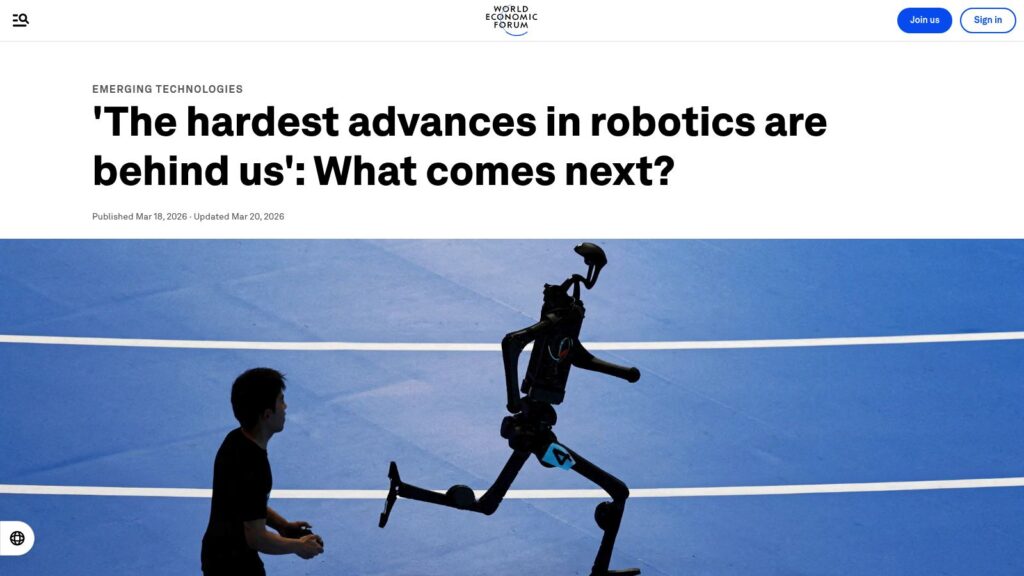
After a decade of foundational breakthroughs, autonomous robots have successfully moved from controlled industrial environments like ports and factories into large-scale real-world operations, with experts at the World Economic Forum’s 2026 Annual Meeting asserting that the hardest technical advances are behind us. The next phase focuses on developing robots that can handle unstructured environments such as homes by improving manipulation, risk assessment, and contextual reasoning, which will enable robots to work safely and effectively alongside humans beyond predictable settings.

https://www.weforum.org/stories/2026/03/advances-in-autonomous-robotics-what-comes-next/

Robot Dogs Are Protecting Data Centers. Operators Are Seeing Payoffs.

Boston Dynamics and Ghost Robotics are deploying robot dogs at AI data centers to enhance security and operational inspections, with these quadrupeds patrolling perimeter fences, monitoring equipment, and detecting anomalies. Data center operators benefit from these robots’ ability to perform round-the-clock surveillance without fatigue, achieving cost savings that often pay off within 18 to 24 months while augmenting rather than replacing human guards. This deployment addresses the growing need for efficient security and maintenance across the rapidly expanding, large-scale data center infrastructure driven by AI demand.

https://www.businessinsider.com/robot-dogs-quadruped-data-center-security-boston-dynamics-ghost-robotics-2026-3

These Robots Are Coming for the Jobs No One Wants — and Could Fill Workforce Gaps

Agility Robotics’ humanoid robot, Digit, is being deployed in manufacturing to address labor shortages for repetitive tasks. Many manufacturers struggle to find workers willing to perform mundane jobs, despite having numerous vacancies. As the workforce ages, automation is increasingly seen as essential to meet demand. Major automakers are investing in such robots for assembly lines, aiming to enhance efficiency in factories without extensive redesigns.

https://www.businessinsider.com/agility-robotics-humanoid-robots-labor-shortage-aging-workforce-2026-3

Scroll to Top