productivity

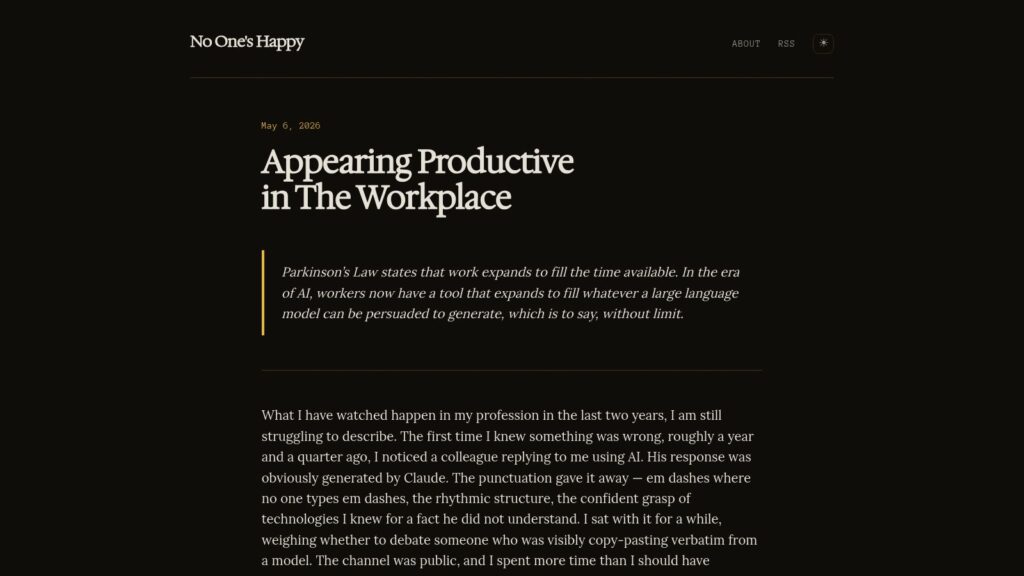
Appearing Productive in The Workplace

The article discusses how generative AI in the workplace allows novices to produce work that appears expert without the necessary understanding, leading to significant risks when people impersonate expertise outside their training. It highlights the decoupling of output quality from actual competence, resulting in flawed work accepted due to management’s eagerness for apparent productivity, and warns that the lack of human judgment in reviewing AI-generated work undermines quality control and professional development.

https://nooneshappy.com/article/appearing-productive-in-the-workplace/

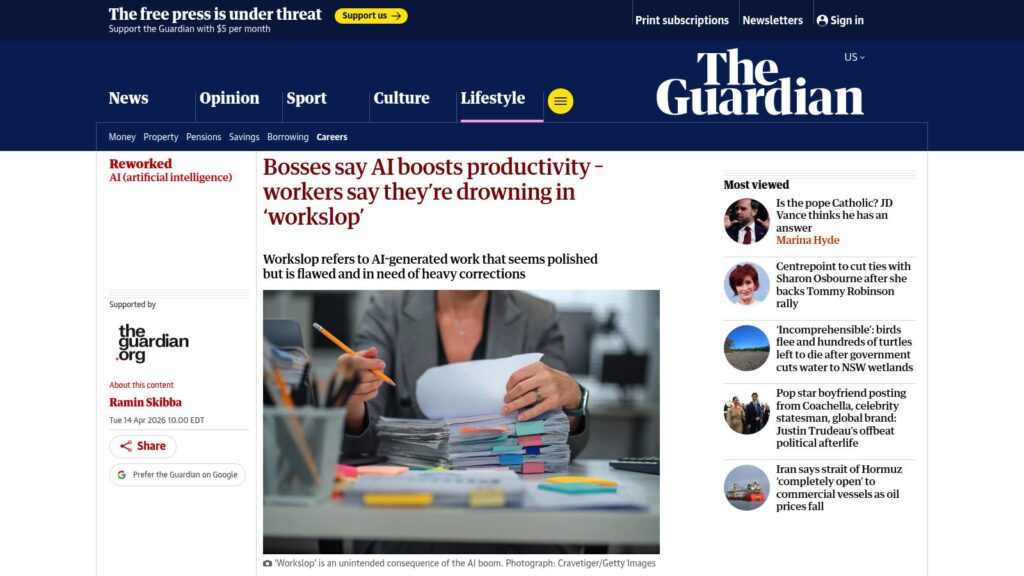
Bosses Say AI Boosts Productivity – Workers Say They’re Drowning in ‘Workslop’

The article discusses the rise of “workslop,” a term describing AI-generated work that appears polished but is flawed and requires extensive correction, leading to decreased productivity and morale among workers. Despite executives’ claims that AI boosts efficiency, many employees report spending more time fixing AI errors, highlighting a disconnect between management’s expectations and workers’ experiences with AI in the workplace.

https://www.theguardian.com/technology/2026/apr/14/ai-productivity-workplace-errors

Survey: AI Adoption Widespread, Productivity Gains Modest but Rising

A recent survey by the National Bureau of Economic Research found that a majority of firms have invested in artificial intelligence, experiencing modest but positive productivity gains, particularly in high-skill sectors like finance, with expectations for acceleration in 2026. The study indicates these gains stem more from innovation and improved processes rather than traditional capital investment, highlighting AI’s role in reshaping job functions rather than replacing workers.

https://www.psca.org/news/psca-news/2026/3/survey-ai-adoption-widespread-productivity-gains-modest-but-rising/?ite=50902&ito=1694

Why Hasn’t AI Made Work Easier?

Cal Newport discusses how, despite promises, AI has not made work easier but rather intensified activity in many tasks without increasing high-value, focused work. Citing a study by ActivTrak, he highlights that AI usage leads to more time spent on emails and messaging but a decline in deep, uninterrupted concentration, mirroring past patterns seen with technologies like email and mobile computing.

https://calnewport.com/why-hasnt-ai-made-work-easier/

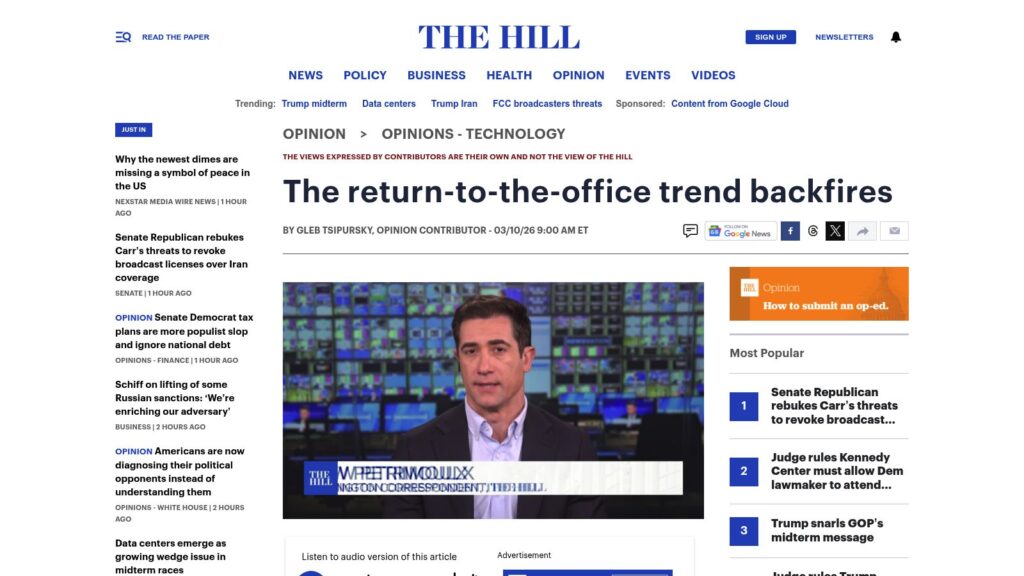
The Return-to-the-office Trend Backfires

Research shows that remote-first work models, characterized by flexibility and trust, lead to higher productivity, engagement, and growth compared to mandate-driven return-to-office policies. These models enable organizations to attract a wider talent pool, improve employee well-being, and sustain trust. While return-to-office mandates may seem like a solution for collaboration and innovation, they often lead to decreased employee satisfaction and talent attrition.

https://thehill.com/opinion/technology/5775420-remote-first-productivity-growth/

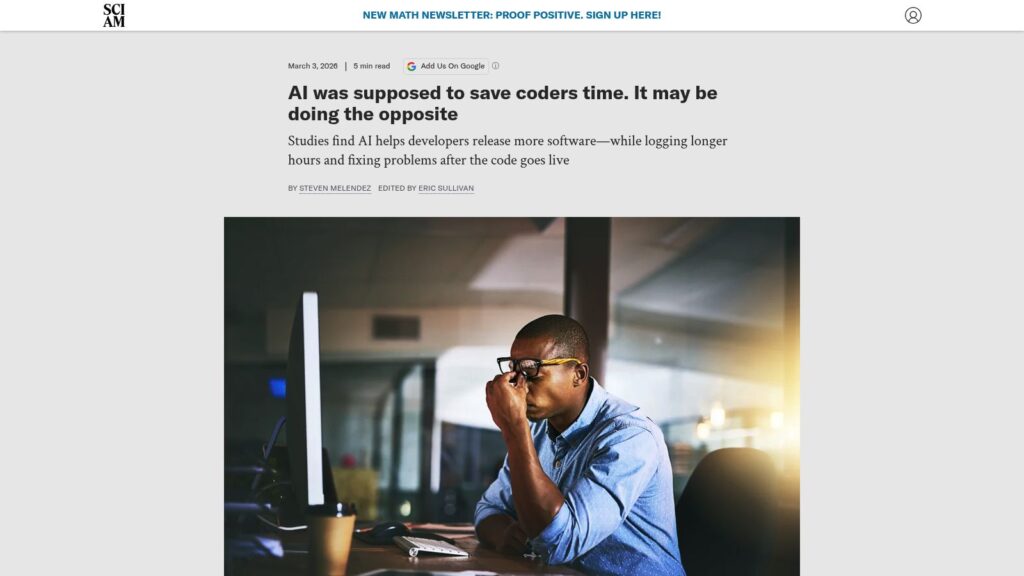
Why Developers Using AI Are Working Longer Hours

AI in coding is increasing software development speed but leading to longer hours and more post-release fixes. While AI tools enhance productivity, they also raise “software delivery instability,” resulting in more rollbacks and patches. Developers still need to verify AI-generated code, and reliance on AI may hinder skill development, especially among less experienced programmers. AI adoption may intensify workplace pressure, contributing to burnout. Overall, effective management of AI’s impact is crucial to maintain workforce well-being and professional growth.

https://www.scientificamerican.com/article/why-developers-using-ai-are-working-longer-hours/

Can Advanced AI Lead to Negative Economic Growth?

The essay explores the potential for negative economic growth due to advanced AI automation. It argues that if automation displaces most workers and reduces their income, thereby decreasing demand for goods and services, the economy could shrink despite increased production capacity. The author examines two scenarios: one in which satiated preferences and income redistribution from workers to capital owners lead to a demand collapse, and another in which automation reduces savings and the capital stock, affecting future generations.

https://aleximas.substack.com/p/will-advanced-ai-lead-to-negative

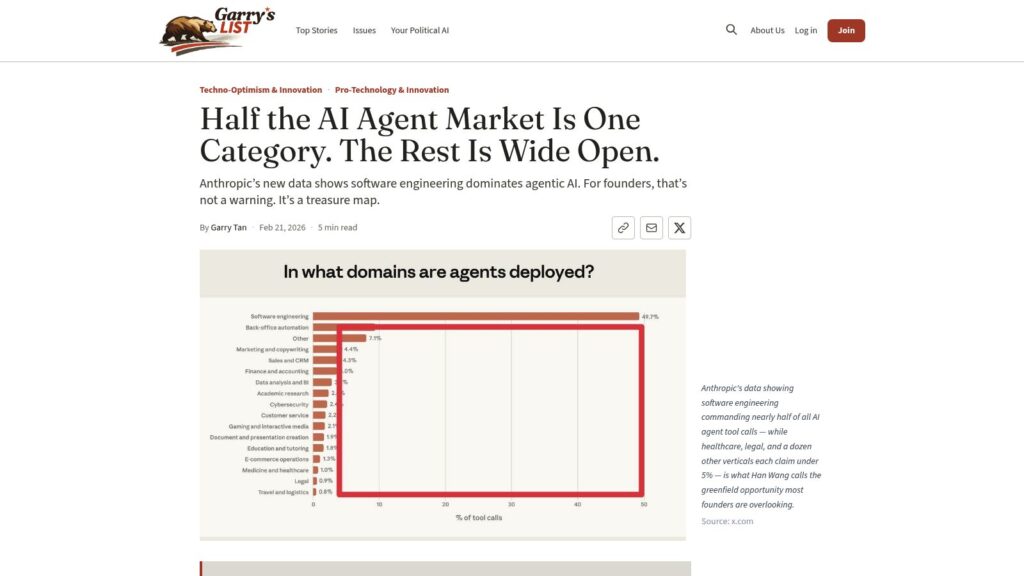
Half the AI Agent Market Is One Category the Rest Is Wide Open

Software engineering dominates AI agent usage at nearly 50%, while sectors like healthcare and legal remain under 5%, showcasing untapped opportunities. Founders should target these verticals for AI innovation, leveraging domain expertise and user trust in automating specialized workflows. The AI’s potential is significantly higher than current deployment, indicating room for growth and new ventures.

https://garryslist.org/posts/half-the-ai-agent-market-is-one-category-the-rest-is-wide-open

How AI Is Affecting Productivity and Jobs in Europe

AI adoption in Europe boosts labor productivity by 4% without short-term job losses, but benefits favor larger firms capable of investing in complementary assets. Disparities exist, as medium and large firms gain more than smaller ones, highlighting the need for policies aiding smaller firm growth. Policymakers should foster financial markets and promote investments in skill development and integration for AI. Concerns remain about long-term impacts, particularly on income inequality.

https://cepr.org/voxeu/columns/how-ai-affecting-productivity-and-jobs-europe

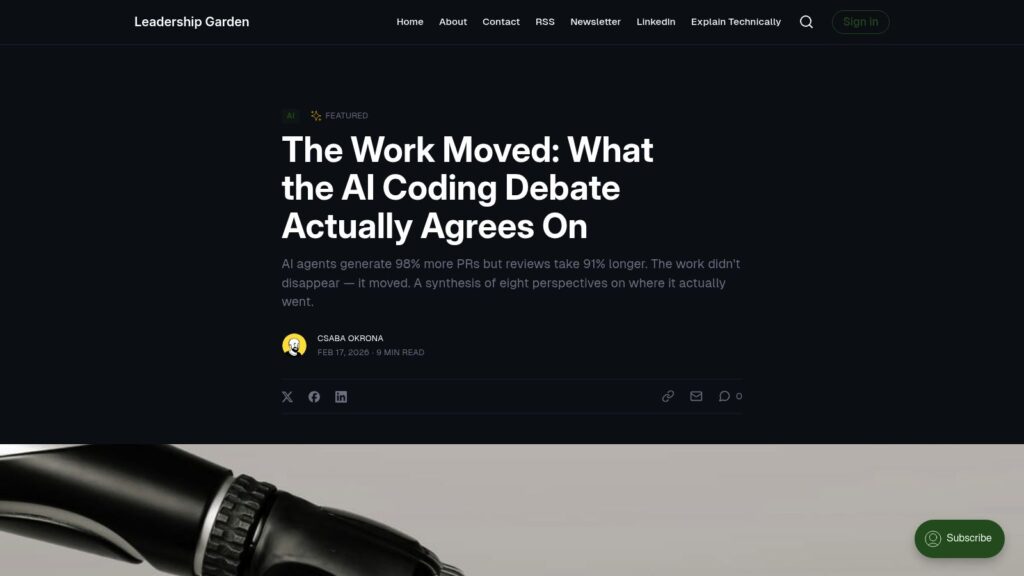
The Work Moved: What the AI Coding Debate Actually Agrees On

AI coding increased PR generation by 98% but slowed reviews by 91%, shifting work from coding to oversight and design. Perspectives vary on AI’s impact; while some highlight productivity gains, others see risks like “comprehension debt.” Best practices emphasize structured workflows and clear guardrails to mitigate risks of AI-generated code. The debate illustrates that the real work has shifted, and thus, understanding this transition is crucial for engineering teams.

https://leadership.garden/ai-the-work-moved/

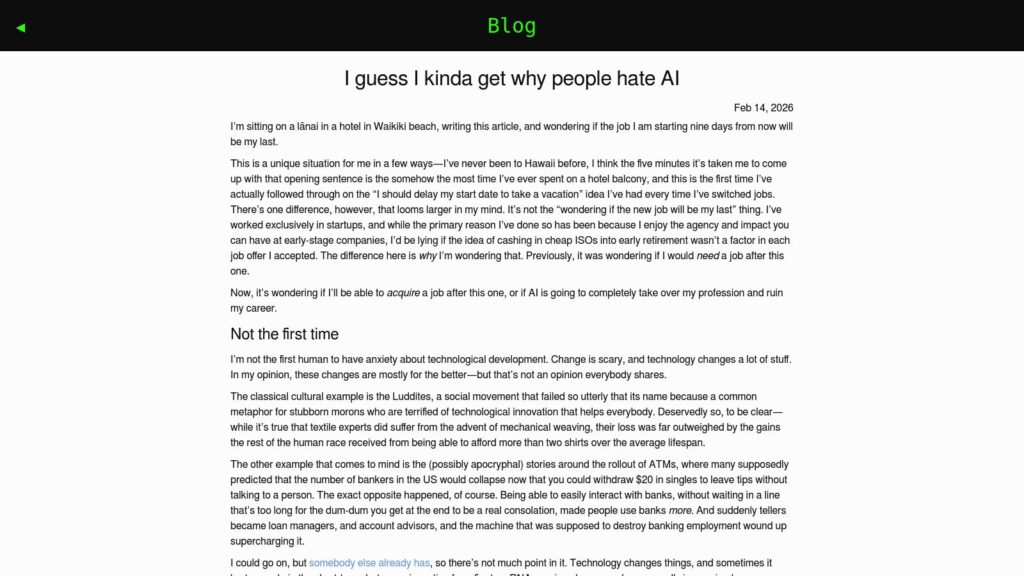
I Guess I Kinda Get Why People Hate AI

User reflects on anxiety regarding AI’s impact on employment while on vacation in Hawaii. The author shares their history in startups and initial optimism about AI, now tempered by concerns of job loss due to AI advancements. They note unusual marketing strategies by AI companies, emphasizing problems like potential job automation and misinformation. Despite personal use of AI being productive, the overall experience for many people is negative, leading to a prevalent distrust of AI. The author urges AI firms to address these issues proactively to avoid societal backlash.

https://anthony.noided.media/blog/ai/programming/2026/02/14/i-guess-i-kinda-get-why-people-hate-ai.html

Why More Companies Are Recognizing the Benefits of Keeping Older Employees

Companies are recognizing the benefits of older workers, shown by successful experiments at B&Q and BMW that increased productivity and reduced turnover. Despite aging populations and the need for experienced talent, many organizations still push older employees out prematurely. Studies show that firms with older workers perform better due to their judgment and experience, countering the “albatross theory” that views them as liabilities. As life expectancy increases and workforce demographics shift, companies should adapt strategies to retain older employees and serve an aging customer base. Investors are starting to see the financial importance of this shift, and businesses must design careers that leverage the value of older workers to maintain competitiveness.

https://longevity.stanford.edu/why-more-companies-are-recognizing-the-benefits-of-keeping-older-employees/

Why the Impact of AI Is Being Underestimated, and How It Will Transform Business Productivity

AI’s impact on business is underappreciated; it boosts productivity and creates new roles despite fears of job loss. Younger employees are crucial in adopting AI, enhancing workplace collaboration. Historical patterns show that those who embrace change early reap the most rewards. AI is transformative, reshaping how work is done, and those who take initiative in learning AI skills will lead in the evolving job market. The velocity of business is accelerating, urging a proactive approach to career development.

https://www.hrleader.com.au/tech/27821-why-the-impact-of-ai-is-being-underestimated-and-how-it-will-transform-business-productivity

The Dutch Love Four-day Working Weeks, but Are They Sustainable?

The Netherlands has widely adopted a four-day workweek, enhancing employee well-being without reducing pay. Companies that switched report improved productivity, lower sick leave, and increased job retention. However, the OECD warns that maintaining high productivity remains a challenge due to stagnating growth and an aging workforce. Calls for more women to work full-time could help, but barriers like childcare and societal norms persist. The sustainability of this work model is under scrutiny as it may not be economically viable long-term.

https://www.bbc.com/news/articles/cx2y85xdyw3o

How the Growing AI Workforce Is Changing the CIO Role

CIOs are evolving from managing technology to orchestrating hybrid teams of humans and AI agents, as AI adoption grows in enterprises. While AI agents can automate tasks, CIOs must strategically decide their applications, focusing on well-defined, low-risk tasks. Measuring AI agents’ productivity should account for reliability and human capacity freed rather than just cost. CIOs face challenges like governance, risk management, and employee resistance while integrating AI, necessitating a shift in organizational culture and accountability frameworks. Beginning with small pilot projects and ensuring proper governance and monitoring are crucial for successful AI implementation.

https://www.cio.com/article/4126383/how-the-growing-ai-workforce-is-changing-the-cio-role.html

Scroll to Top