hr

From Regulatory Constraint to Strategic Compass: Why the EU AI Act Can Strengthen Organisations and HR

The EU AI Act, initially seen as a compliance burden, can be a strategic tool for organizations, particularly in HR. It encourages a shift from fragmented AI initiatives to a purpose-driven approach that emphasizes transparency, fairness, and human oversight. By aligning with the Act, organizations can modernize their HR technology, redefine work and skills, and position HR as a strategic governance partner.

https://www.marsh.com/en-gb/services/risk-consulting/insights/eu-ai-act-strenghten-organisations-hr.html

How the EU AI Act Impacts Global Standards for AI in Hiring: Expert Insights

The EU Artificial Intelligence Act introduces regulations for AI systems used in hiring, requiring transparency and meaningful human oversight to ensure accountability and reduce legal risks, especially for companies operating within the EU or employing EU-based candidates. Dimitri Boylan, CEO of Avature, emphasizes that while existing laws address many concerns, the Act clarifies governance responsibilities and promotes evidence-based management of AI hiring tools, helping large enterprises mitigate regulatory and social risks.

https://hrexecutive.com/how-the-eu-ai-act-impacts-global-standards-for-ai-in-hiring-expert-insights/

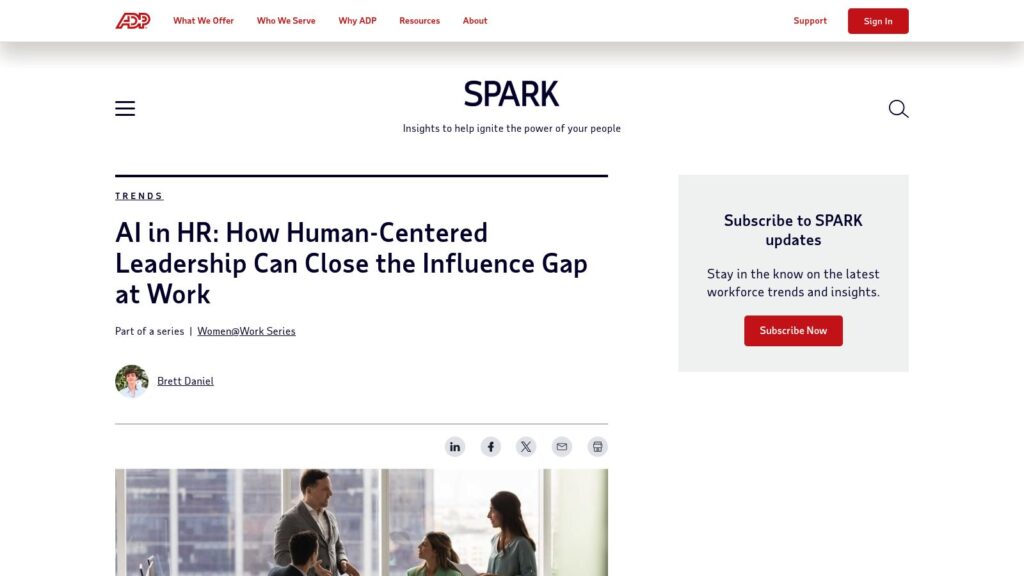
AI in HR: How Human-Centered Leadership Can Close the Influence Gap at Work

The article discusses how human-centered leadership is essential in integrating AI within HR to close the influence gap at work. It emphasizes that while AI can enhance efficiency and decision-making, leaders must prioritize supporting human judgment, critical thinking, and well-being to ensure technology strengthens rather than undermines expertise and collaboration.

https://www.adp.com/spark/articles/2026/05/ai-in-hr-how-human-centered-leadership-can-close-the-influence-gap-at-work.aspx?q1=ES_FY25_SparkSubscribePopup&q1=ES_FY25_SparkSubscribePopup

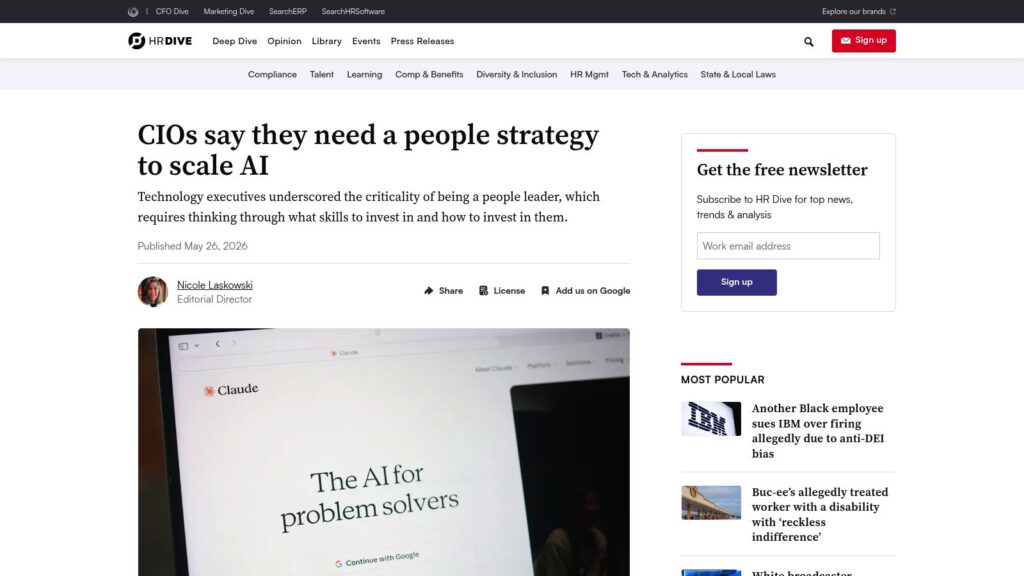
CIOs Say They Need a People Strategy to Scale AI

CIOs emphasize the necessity of a strong people strategy to successfully scale AI within organizations, highlighting the importance of investing in skills, culture, and employee engagement. They note that for every dollar spent on AI technology, companies should invest three dollars in people, focusing on human-centric skills and overcoming employees’ fear of obsolescence to drive sustainable AI adoption.

https://www.hrdive.com/news/cio-people-strategy-scaling-ai/821080/

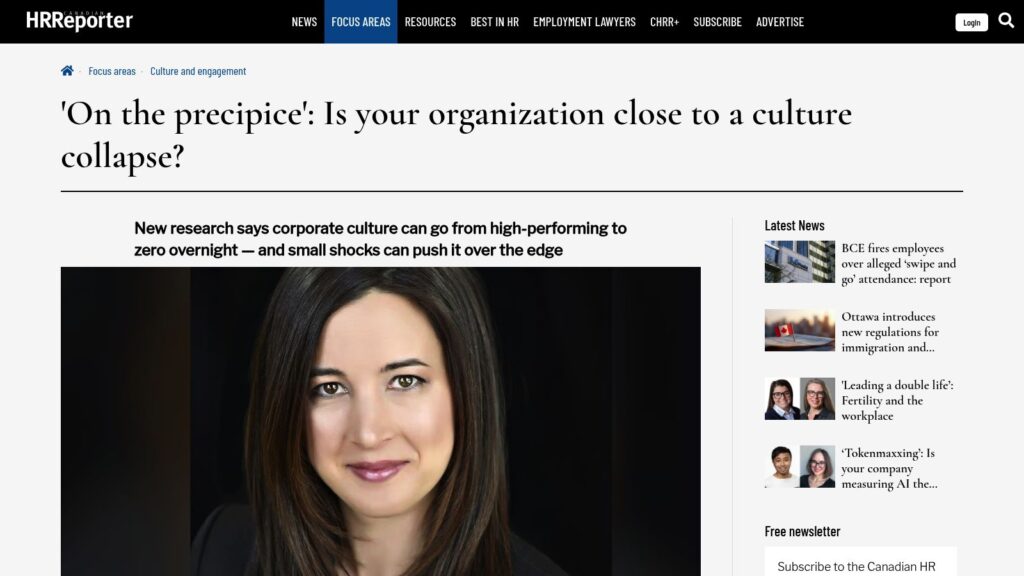
‘On the Precipice’: Is Your Organization Close to a Culture Collapse?

A Cambridge University study warns that corporate culture in complex organizations is fragile and can collapse suddenly from small disruptions like leadership changes, causing productivity to drop to zero. Heidi Hauver of Ranovus emphasizes transparent communication, psychological safety with accountability, and intentional investment in people as key practices to build cultural resilience and navigate organizational shocks effectively.

https://www.hrreporter.com/focus-areas/culture-and-engagement/on-the-precipice-is-your-organization-close-to-a-culture-collapse/394402

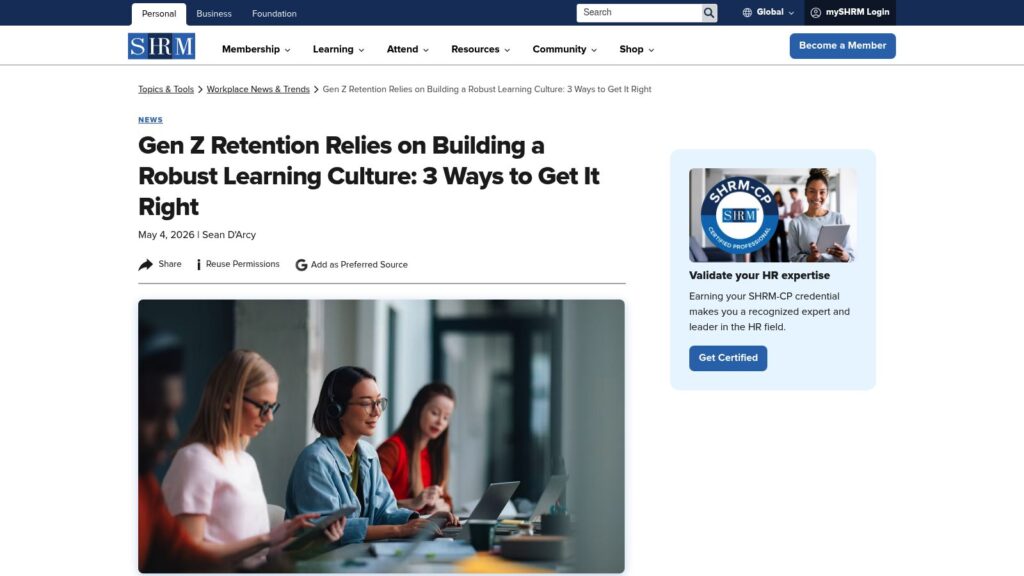
Gen Z Retention Relies on Building a Robust Learning Culture: 3 Ways to Get It Right

Gen Z employees value continuous learning opportunities and tend to stay only about 1.1 years at a job, often leaving when career growth feels limited. To improve retention, organizations should focus on effective onboarding that clearly maps out learning and growth paths, actively involve managers in new hire integration, and provide continuous feedback to build employee confidence. These strategies align with Gen Z’s expectations for development and can help reduce turnover within this group.

https://www.shrm.org/topics-tools/news/gen-z-retention-relies-on-building-robust-learning-culture

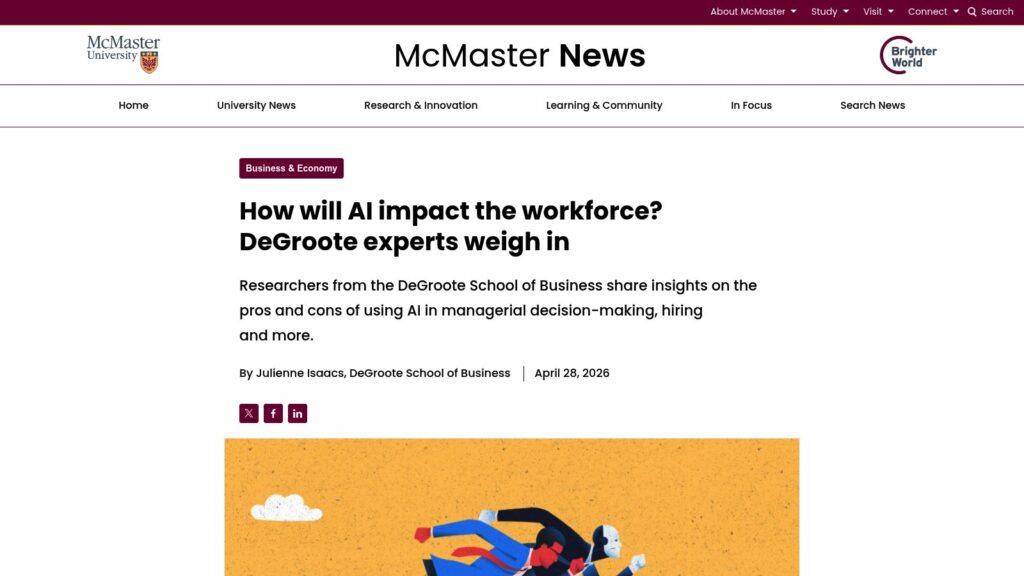
How Will AI Impact the Workforce? DeGroote Experts Weigh In

Researchers at McMaster’s DeGroote School of Business examine the impact of AI on the workforce, highlighting that AI should support human judgment rather than replace it. They emphasize the ethical deployment of AI in areas like hiring and management, cautioning against AI assuming authoritative roles over humans while recognizing AI’s potential to improve efficiency, fairness, and decision-making when used responsibly with human oversight.

https://news.mcmaster.ca/how-will-ai-impact-the-workforce-degroote-experts-weigh-in/

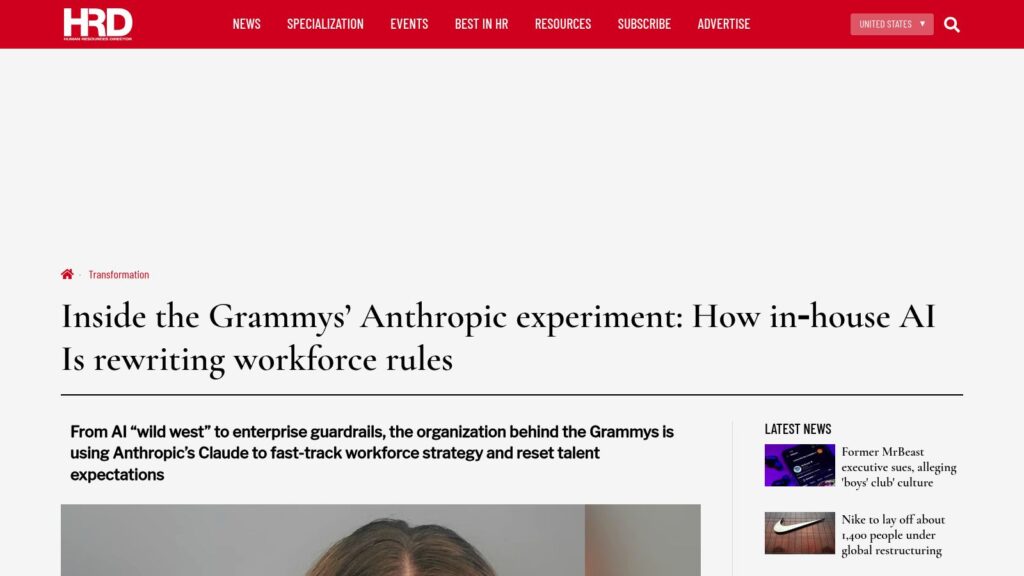
Inside the Grammys’ Anthropic Experiment: How In‑house AI Is Rewriting Workforce Rules

The Recording Academy, which organizes the Grammys, is piloting Anthropic’s AI tool Claude to transform workforce strategy by enhancing efficiency and modernizing HR functions. Guided by strong leadership support, the Academy is developing structured AI usage policies to balance innovation with data security while focusing on upskilling staff and addressing workforce concerns about AI.

https://www.hcamag.com/us/specialization/transformation/inside-the-grammys-anthropic-experiment-how-inhouse-ai-is-rewriting-workforce-rules/572890

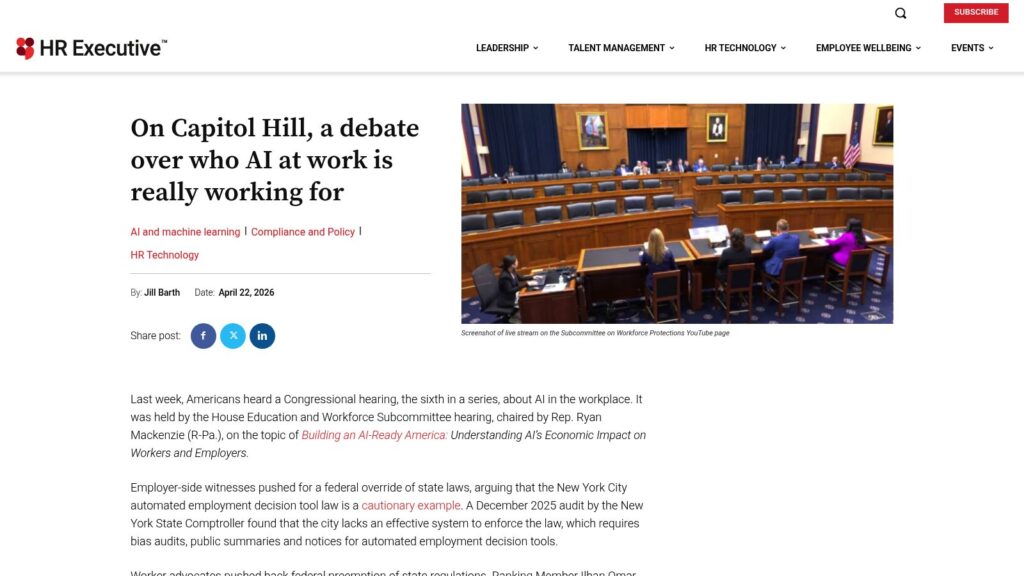
On Capitol Hill, a Debate Over Who AI at Work Is Really Working For

A recent Congressional hearing by the House Education and Workforce Subcommittee debated AI’s impact on workers and employers, focusing on federal versus state regulation of AI in the workplace. Employer representatives advocated for a federal framework to reduce conflicting state laws, while worker advocates warned against federal preemption, highlighting risks like increased surveillance and data privacy concerns. Witnesses emphasized AI’s potential to aid compliance and governance but also called for transparency, accountability, and better data to guide policy development.

https://hrexecutive.com/on-capitol-hill-a-debate-over-who-ai-at-work-is-really-working-for/

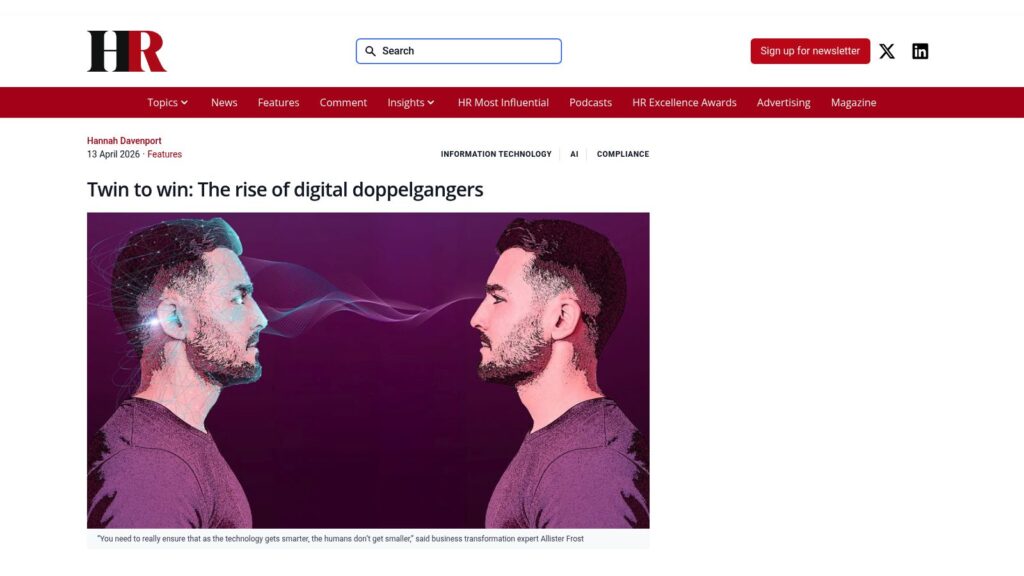
Twin to Win: The Rise of Digital Doppelgangers – HR Magazine

Digital doppelgangers—AI-powered digital replicas of employees—are emerging as a significant future-of-work trend, with organisations exploring their use for knowledge retention, productivity, and mentoring. Examples include Peterborough City Council’s chatbot based on a long-serving employee and UBS’s AI analyst avatars, illustrating both the potential benefits and challenges, such as data protection, ethical concerns, and the need for human oversight. While the technology advances rapidly, HR leaders must carefully address legal, ethical, and employee relations issues as digital twins become more common in the workplace.

https://www.hrmagazine.co.uk/content/features/twin-to-win-the-rise-of-digital-doppelgangers

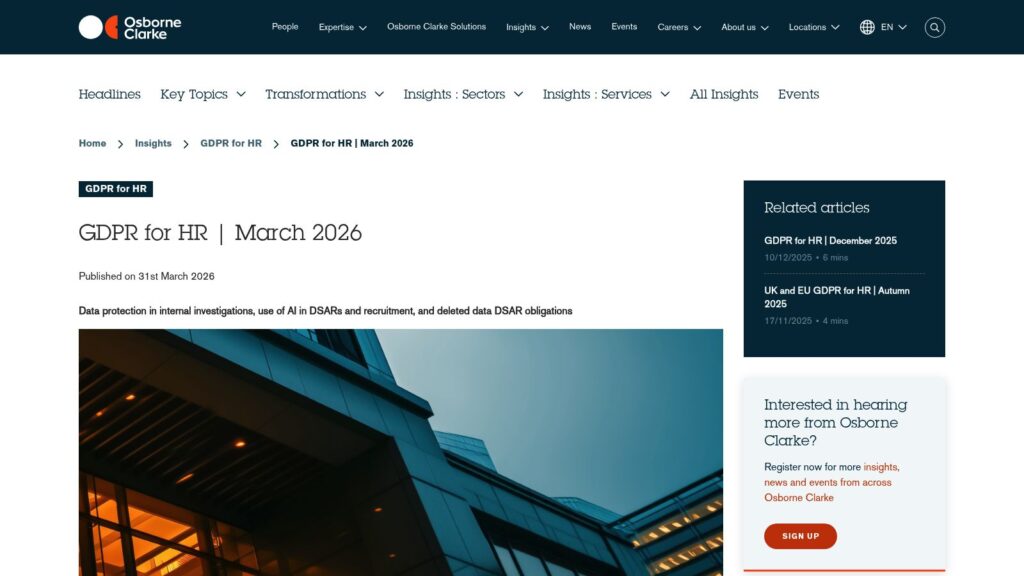
GDPR for HR | March 2026

The article discusses the significant data protection challenges faced by HR in handling internal investigations, data subject access requests (DSARs), and the use of AI, highlighting that data protection considerations should be integrated from the outset of investigations. It also addresses regulatory scrutiny on AI in recruitment, the rise in tactical DSAR use in employment disputes, and clarifies obligations regarding deleted data and recipients under recent EU court rulings, providing practical guidance for UK employers to ensure compliance amid evolving legal frameworks.

https://www.osborneclarke.com/insights/gdpr-hr-march-2026

80% of Orgs Are Missing This Key AI Opportunity

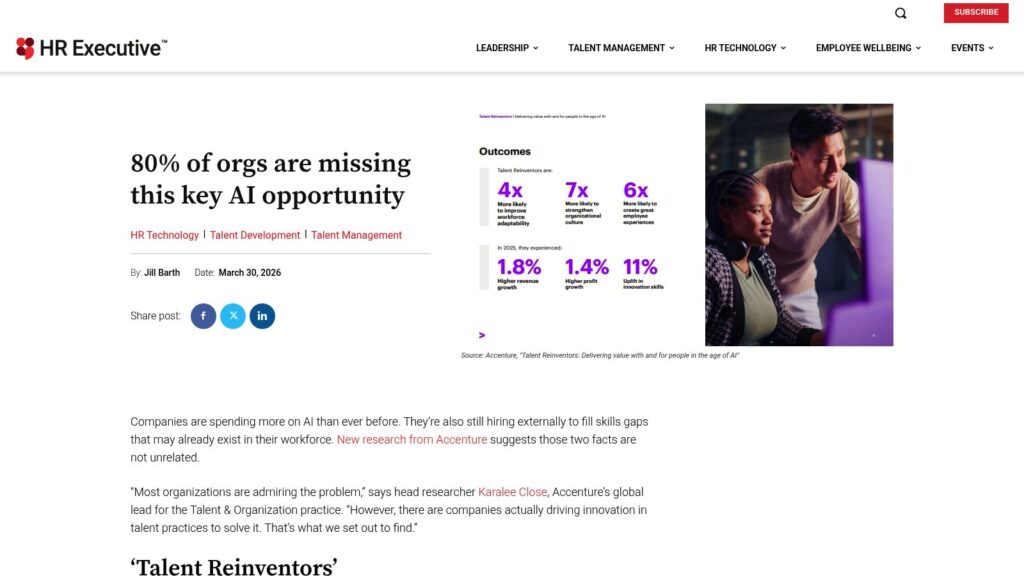
New research from Accenture reveals that 80% of organizations miss out on the opportunity to use AI-enabled internal talent mobility strategies, relying heavily on external hiring despite having existing workforce skills. An elite group called “Talent Reinventors,” making up only 18% of companies surveyed, successfully leverage AI to maintain dynamic skills inventories and match employees to roles and learning opportunities, resulting in faster revenue growth, stronger culture, and greater workforce adaptability.

https://hrexecutive.com/80-of-orgs-are-missing-this-key-ai-opportunity/

Talent Reinventors: Value in the Age of AI

Accenture’s “Talent Reinventors” report highlights how organizations combining human talent with AI are achieving superior growth and workforce adaptability by reshaping work around shared goals powered by data and AI. The report identifies six key characteristics of these leaders—including clarity, intelligent teaming, talent mobility, co-learning, breakthrough leadership, and personalized experiences—that enable companies like Volkswagen, Microsoft, and Caterpillar to successfully integrate AI and people strategies, resulting in higher revenue, stronger cultures, and better employee experience in the rapidly evolving digital economy.

https://www.accenture.com/us-en/insights/consulting/talent-reinventors-delivering-value-people-age-ai?c=acn_glb_thefuture-readymediarelations_14261455&n=mrl_0226

America’s HR Leaders Say We’re Thinking About AI Agents All Wrong

Human resources leaders at major U.S. companies, including IBM and Microsoft, argue that AI agents should not be treated like human employees with names, job titles, or individual performance metrics, as this mindset undermines the technology’s full potential. They emphasize focusing on integrating AI into enterprise workflows for large-scale process improvement rather than managing AI as standalone “digital workers,” highlighting that accountability for AI-driven decisions must remain with humans.

https://www.wsj.com/cio-journal/americas-hr-leaders-say-were-thinking-about-ai-agents-all-wrong-7d8f1439

‘AI Workforce Reset’: Why Job Losses Don’t Tell the Full Story for HR Leaders

Australian HR leaders face a challenging paradox as AI-driven redundancies at major tech firms garner headlines, yet experts argue AI is reshaping rather than eliminating work, urging organizations to focus on upskilling and redesigning workforces for flexibility and psychological safety. HR specialists recommend shifting to skills-based hiring, promoting internal mobility, investing in targeted AI training, and fostering trust to manage workforce transitions effectively and turn the “AI workforce reset” into a strategic opportunity.

https://www.hcamag.com/au/specialisation/hr-technology/ai-workforce-reset-why-job-losses-dont-tell-the-full-story-for-hr-leaders/569556

Scroll to Top