automation

MuleRun Launches Self-Evolving AI Workforce, Signaling a Shift Toward the ‘Digital Employee’ Era

San Francisco-based MuleRun has launched a self-evolving personal AI platform that provides each user with a dedicated, always-on cloud virtual machine, enabling a proactive and persistent digital workforce rather than reactive AI tools. Designed to operate 24/7 and adapt to individual workflows, MuleRun aims to transform industries such as game development, ecommerce, and finance by automating complex tasks and enabling continuous independent AI operation.
https://venturebeat.com/business/mulerun-launches-self-evolving-ai-workforce-signaling-a-shift-toward-the

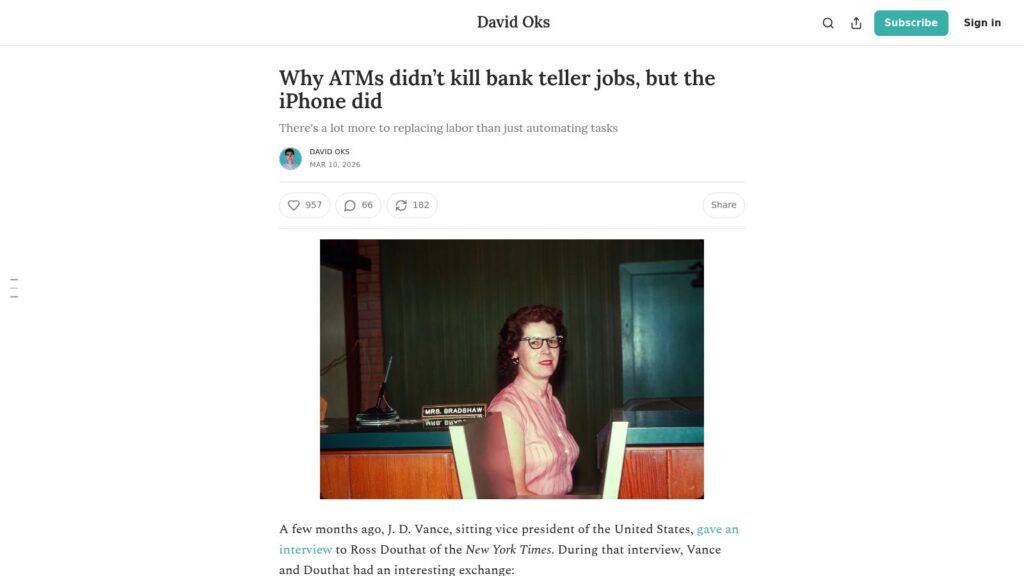
Why ATMs Didn’t Kill Bank Teller Jobs, but the iPhone Did

The article explains that automation does not automatically eliminate jobs, illustrated by the example of bank tellers after the introduction of ATMs. ATMs reduced the cost of operating branches, allowing banks to open more locations. As a result, the number of teller jobs initially remained stable, while their duties shifted toward customer service and sales. Job losses occurred later, with the rise of online and mobile banking, which changed how banking itself worked. The conclusion is that employment declines primarily when technology replaces an entire system, rather than when it merely automates individual tasks.

https://davidoks.blog/p/why-the-atm-didnt-kill-bank-teller

Building Pro-worker AI

Summary: AI can either displace workers or enhance their capabilities. Pro-worker AI technologies increase the value of human skills. However, most AI development focuses on automation rather than augmenting workers. Policy recommendations for promoting pro-worker AI include emphasizing its use in sectors like healthcare, enhancing government expertise in AI, fostering competition, and protecting worker rights.

https://www.brookings.edu/articles/building-pro-worker-ai/

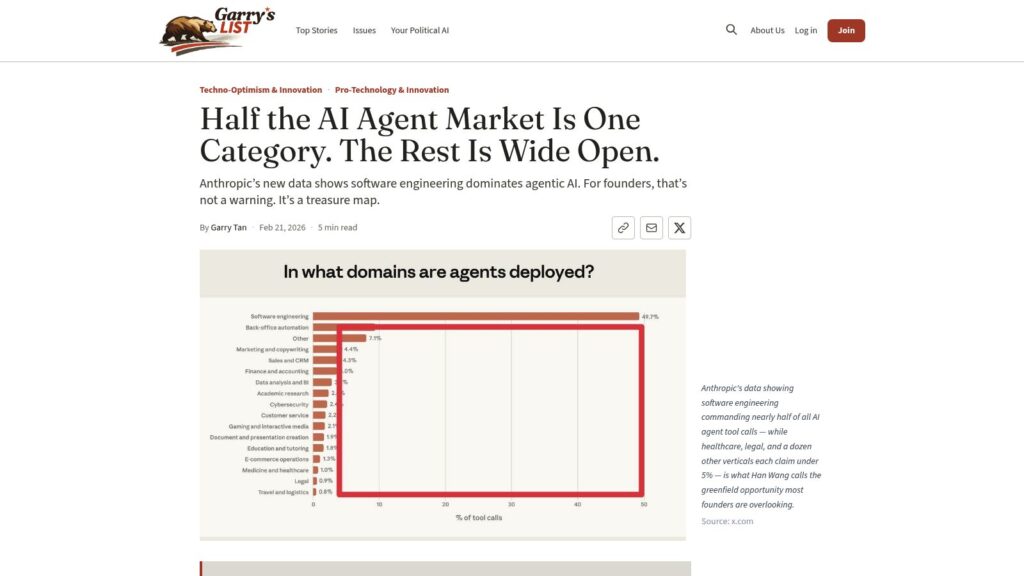
Half the AI Agent Market Is One Category the Rest Is Wide Open

Software engineering dominates AI agent usage at nearly 50%, while sectors like healthcare and legal remain under 5%, showcasing untapped opportunities. Founders should target these verticals for AI innovation, leveraging domain expertise and user trust in automating specialized workflows. The AI’s potential is significantly higher than current deployment, indicating room for growth and new ventures.

https://garryslist.org/posts/half-the-ai-agent-market-is-one-category-the-rest-is-wide-open

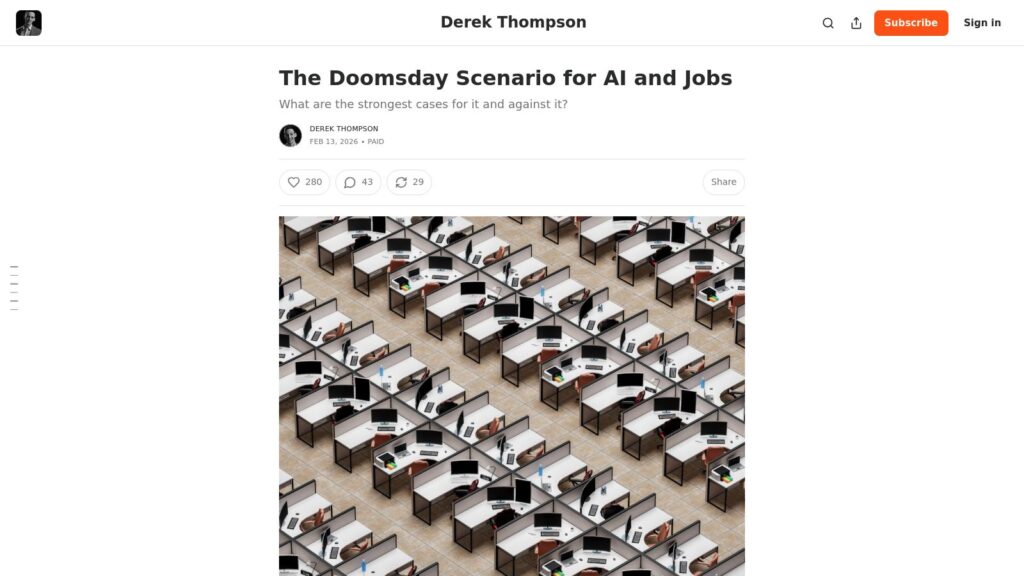
The Doomsday Scenario for AI and Jobs

AI debate is polarized, with extremes on its utility, cognitive capability, economic impact, and morality. Four divides exist: usefulness, whether AI can think, if it’s a bubble, and its societal impact (good or bad). Current labor market shows minimal effects of AI, despite dire predictions. Scenarios range from AI’s slow integration boosting jobs to rapid displacement. History suggests AI won’t destroy jobs, as new tech usually enhances roles, but pressure from Wall Street favors quick cost-cutting measures. Politics around AI complicates bipartisan support, highlighting ideological divisions on job implications and technological governance.

https://www.derekthompson.org/p/568334c2-4122-4fe9-9435-5b2bdedae769

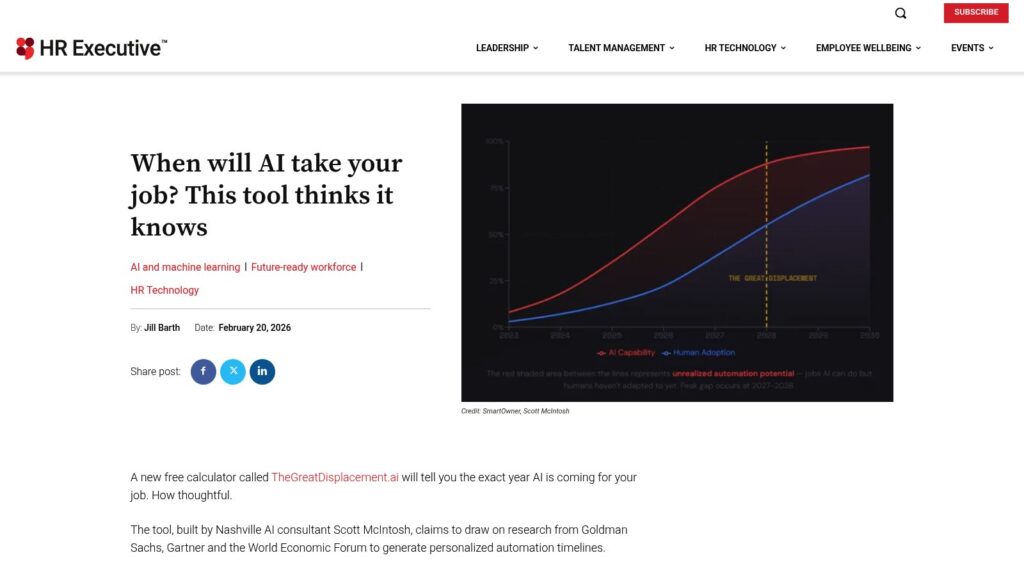
When Will AI Take Your Job? This Tool Thinks It Knows

AI job displacement tool predicts when AI might replace jobs, indicating potential for 300 million jobs affected globally. While 20% of organizations may reduce middle management, an estimated 170 million new jobs could emerge by 2030. HR leaders must adapt to AI integration, as only a small percentage of workers currently use AI in their roles.

https://hrexecutive.com/when-will-ai-take-your-job-this-tool-thinks-it-knows/

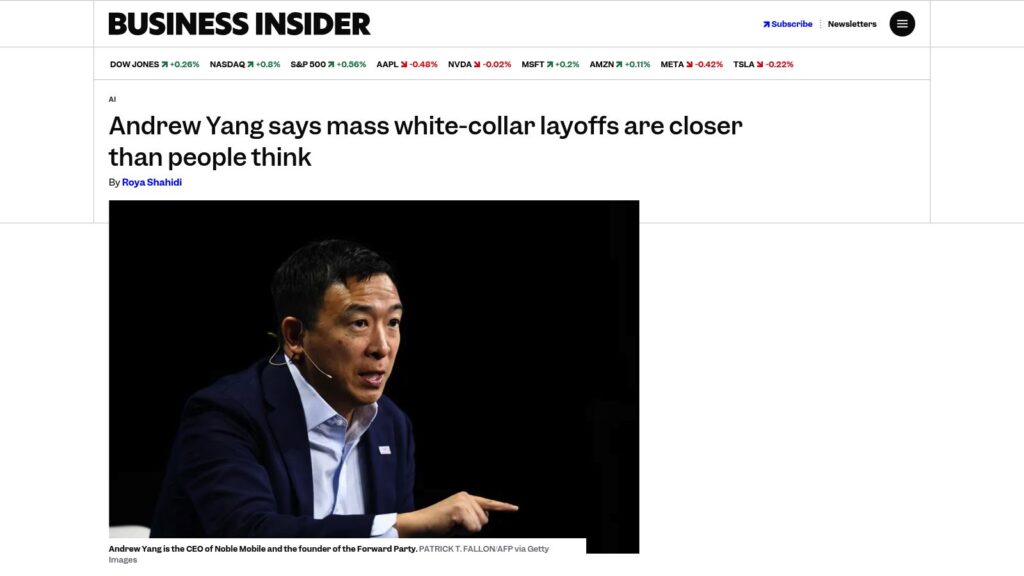
Andrew Yang Says AI Will Wipe Out Millions of White-collar Jobs in the Next 12 to 18 Months

Andrew Yang warns AI will cause mass layoffs of white-collar jobs in 12-18 months, affecting mainly desk jobs like managers and marketers. Yang believes companies will competitively cut staff to please the stock market. The layoffs could impact local businesses serving affected workers. January saw record layoffs, with some companies citing AI as a reason.

https://www.businessinsider.com/andrew-yang-mass-layoffs-ai-closer-than-people-think-2026-2

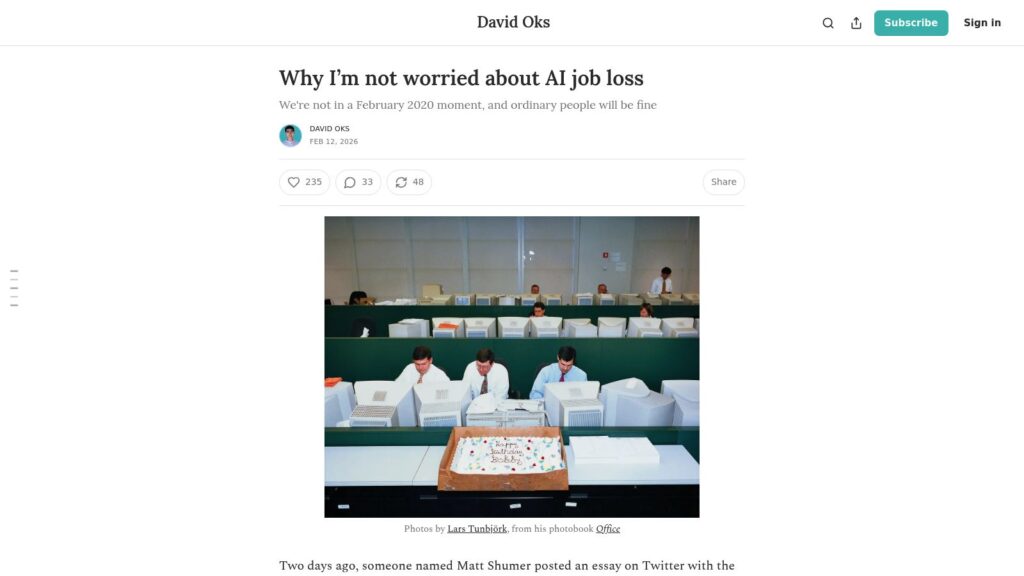
Why I’m Not Worried About AI Job Loss

AI won’t cause mass job loss; current fears are exaggerated. While AI is advancing rapidly, substitution of human labor is complex, as comparative advantages matter. Human bottlenecks persist, leading to ongoing complementarity with AI, especially as demand for human-produced goods remains elastic. Transition will be smoother than many expect, with opportunities for new job creation despite some displacement. Ordinary workers should adapt without excessive worry; a backlash against AI might emerge due to fear, not necessity.

https://davidoks.blog/p/why-im-not-worried-about-ai-job-loss

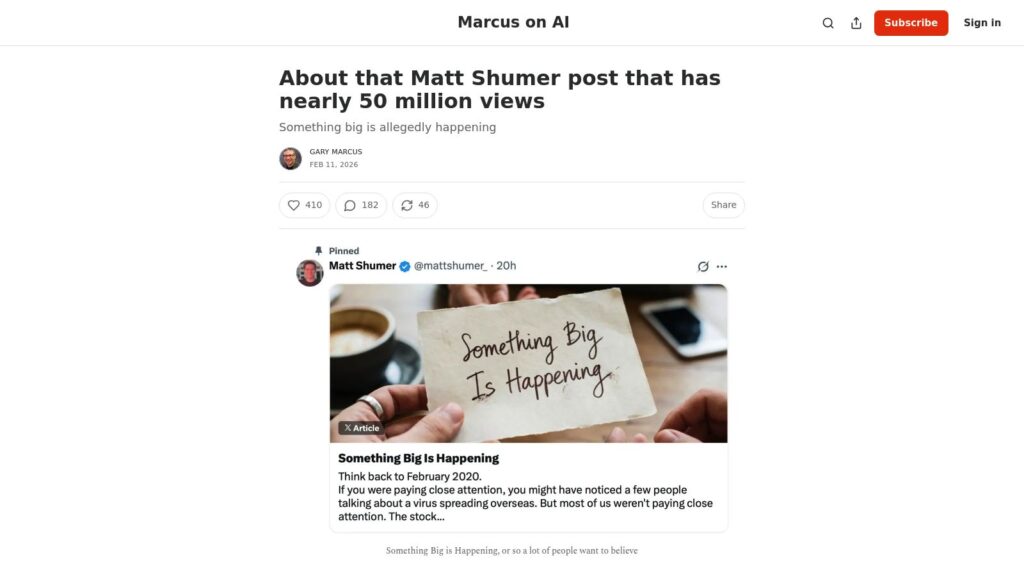
About That Matt Shumer Post That Has Nearly 50 Million Views

Gary Marcus critiques Matt Shumer’s viral blog post with nearly 50 million views, calling it hype with misleading claims about AI’s coding capabilities. He argues that Shumer’s assertions lack data and ignore issues like error rates and user experiences. Marcus highlights five points of concern, including potential user burnout and security risks of AI-generated code, while cautioning against overconfidence in AI’s reliability. He concludes that despite some improvements, Shumer’s perspective is overly optimistic and unrealistic.

https://garymarcus.substack.com/p/about-that-matt-shumer-post-that

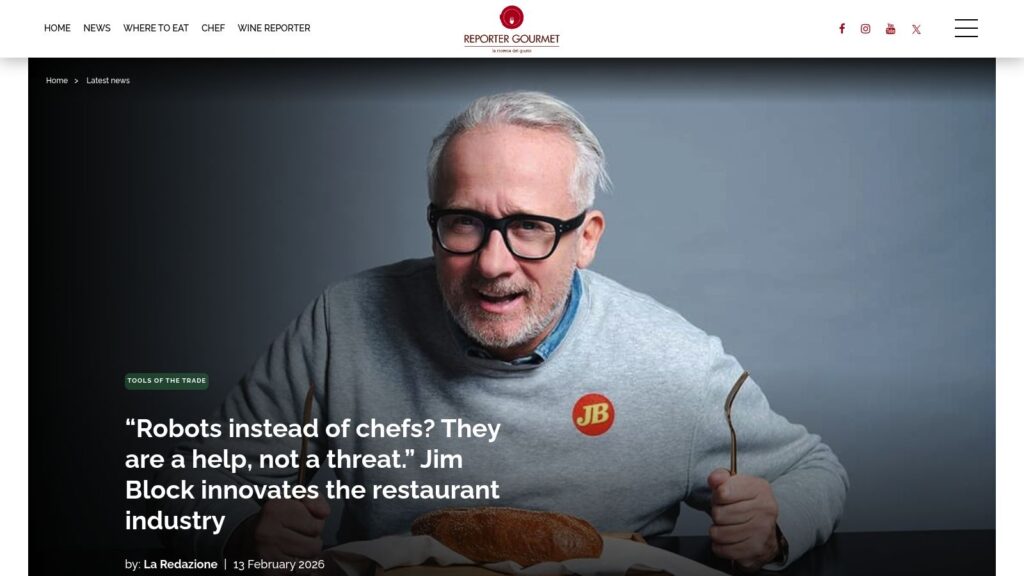
“Robots Instead of Chefs? Faster and More Precise: They Are an Aid to Business, Not a Threat.”

Jim Block’s CEO promotes automation in restaurants as a helpful ally, enhancing efficiency without losing human connection. Humanoid robots assist with repetitive tasks like frying and assembling food, allowing staff to focus on customer service. This collaboration aims for precision and speed while preserving the personal touch essential to hospitality. Thus, future quality fast food combines robotic efficiency with human warmth.

https://reportergourmet.com/en/news/9767-robots-instead-of-chefs-they-are-a-help-not-a-threat-jim-block-innovates-the-restaurant-industry

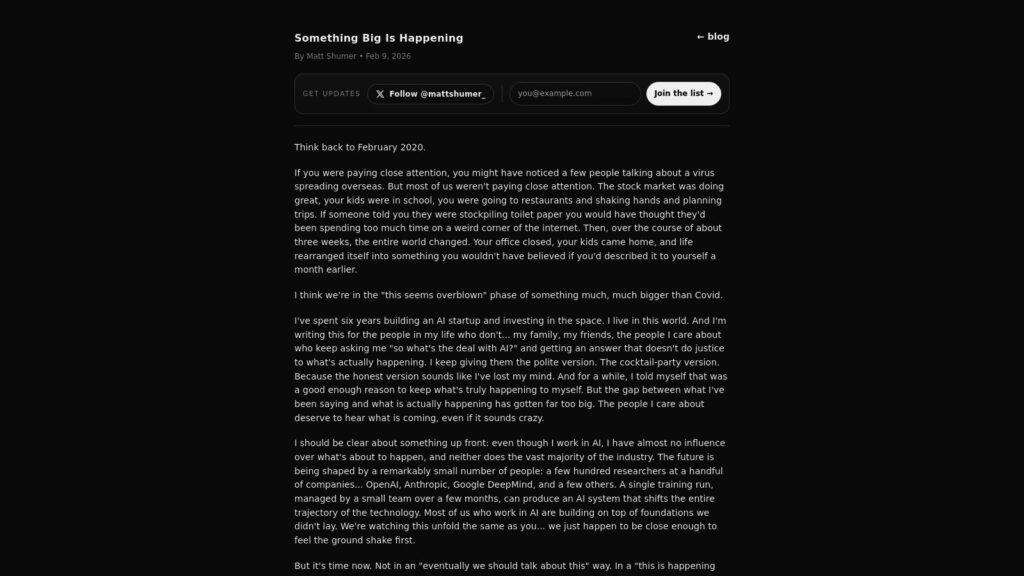
Something Big Is Happening

AI is rapidly advancing, transforming how work is done. Major breakthroughs, such as model GPT-5.3, have made AI increasingly competent in tasks that once needed human expertise. Many tech workers already feel AI’s impact, observing that it can outperform them in coding and other areas. This shift is not gradual; it’s accelerating, with predictions that AI can replace up to 50% of entry-level white-collar jobs within 1-5 years. The implications are vast, affecting fields like law, finance, writing, and customer service, as AI develops decision-making capabilities similar to human judgment. To adapt to these changes, individuals should actively engage with AI tools, understanding their potential and leveraging them to enhance productivity. Continuous learning and an openness to change are critical to thrive in this evolving landscape. The next few years will be crucial for those willing to embrace AI as it reshapes various industries.

https://shumer.dev/something-big-is-happening

Stop Managing Your AI ‘workforce’

AI adoption requires rethinking workflow architecture rather than framing agents as digital co-workers. Historical insights from Toyota show that integrating new capabilities necessitates reorganizing production systems to fully utilize their potential. As AI capabilities evolve, human roles will shift, necessitating dynamic management of human skill value and capability sensing. Leaders must view agentic systems as strategic investments, reframing their approach to organizational structure and competitive advantage.

https://www.kyndryl.com/us/en/institute/2026/01/ai-workforce

Redefining Talent Through human-AI Integration

The rise of AI and automation threatens traditional entry-level roles, which are crucial for developing leadership skills. Organizations must intentionally redesign early-career work to preserve and accelerate human capability development, integrating AI literacy with leadership fundamentals and creating opportunities for critical thinking and co-responsibility in AI system improvement.

https://www.ey.com/en_gl/megatrends/why-shared-intelligence-will-redefine-talent

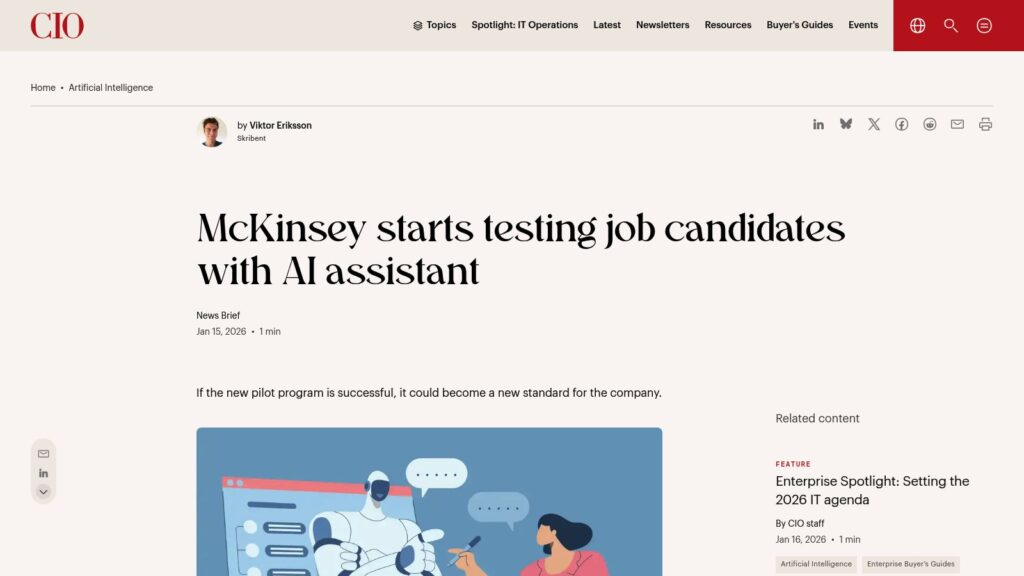
McKinsey Starts Testing Job Candidates With AI Assistant

McKinsey is testing a new hiring method where candidates use the firm’s AI assistant, Lilli, during interviews. This pilot program evaluates candidates on their ability to engage with the AI while analyzing cases, aiming to reflect future consulting practices. If successful, this approach may standardize AI use in recruitment.

https://www.cio.com/article/4117688/mckinsey-begins-testing-candidates-with-an-ai-assistant.html

8 CIO Recommendations for ERP Implementation in 2026

Agentic AI is transforming ERP systems, enabling proactive, end-to-end business process management across finance, supply chain, manufacturing, HR, and customer service. CIOs should develop a clear business plan for agentic AI adoption, engage with ERP vendors, and establish frameworks for human-AI collaboration, risk mitigation, and governance. The focus should be on balancing incremental process optimization with transformative business reinvention, leveraging mature data and process foundations for a broader approach.

https://www.informationweek.com/software-platforms/8-cio-recommendations-for-erp-implementation-in-2026-think-agentic

Scroll to Top