software development

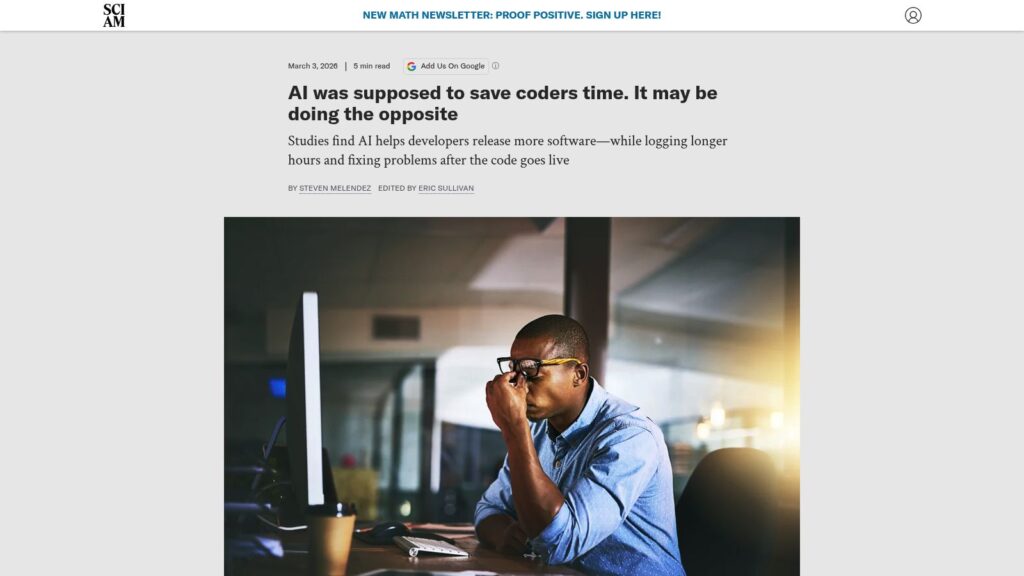
Why Developers Using AI Are Working Longer Hours

AI in coding is increasing software development speed but leading to longer hours and more post-release fixes. While AI tools enhance productivity, they also raise “software delivery instability,” resulting in more rollbacks and patches. Developers still need to verify AI-generated code, and reliance on AI may hinder skill development, especially among less experienced programmers. AI adoption may intensify workplace pressure, contributing to burnout. Overall, effective management of AI’s impact is crucial to maintain workforce well-being and professional growth.

https://www.scientificamerican.com/article/why-developers-using-ai-are-working-longer-hours/

The Eternal Promise: a History of Attempts to Eliminate Programmers

Software simplification trends in history reveal a persistent cycle of attempts to reduce the need for programmers since the 1960s. Each generation, from COBOL to AI tools, promised democratization of software creation but ultimately created demand for specialized skills. Tools (like no-code platforms and large language models) improved efficiency but did not eliminate complex programming challenges. Understanding software principles remains crucial as human judgment is essential in navigating the complexities of development. The future will likely see evolving roles for developers rather than their obsolescence, reinforcing the enduring value of deep understanding in software engineering.

https://www.ivanturkovic.com/2026/01/22/history-software-simplification-cobol-ai-hype/

The Work Moved: What the AI Coding Debate Actually Agrees On

AI coding increased PR generation by 98% but slowed reviews by 91%, shifting work from coding to oversight and design. Perspectives vary on AI’s impact; while some highlight productivity gains, others see risks like “comprehension debt.” Best practices emphasize structured workflows and clear guardrails to mitigate risks of AI-generated code. The debate illustrates that the real work has shifted, and thus, understanding this transition is crucial for engineering teams.

https://leadership.garden/ai-the-work-moved/

The Coordination Tax

TLDR: Traditional companies face competition from small firms leveraging AI to reduce coordination overhead, leading to fewer employees needed for similar outputs. Most executive roles may focus on coordination rather than irreplaceable judgment, as AI can replicate many decision-making tasks. Companies with fewer people supported by AI will have significant cost advantages. The future favors smaller teams where the value lies in decision-making, not coordination. Executives must reassess their roles and the true extent of their judgment against AI capabilities.

https://codegood.co/writing/the-coordination-tax

Scroll to Top