eu

From Regulatory Constraint to Strategic Compass: Why the EU AI Act Can Strengthen Organisations and HR

The EU AI Act, initially seen as a compliance burden, can be a strategic tool for organizations, particularly in HR. It encourages a shift from fragmented AI initiatives to a purpose-driven approach that emphasizes transparency, fairness, and human oversight. By aligning with the Act, organizations can modernize their HR technology, redefine work and skills, and position HR as a strategic governance partner.
https://www.marsh.com/en-gb/services/risk-consulting/insights/eu-ai-act-strenghten-organisations-hr.html

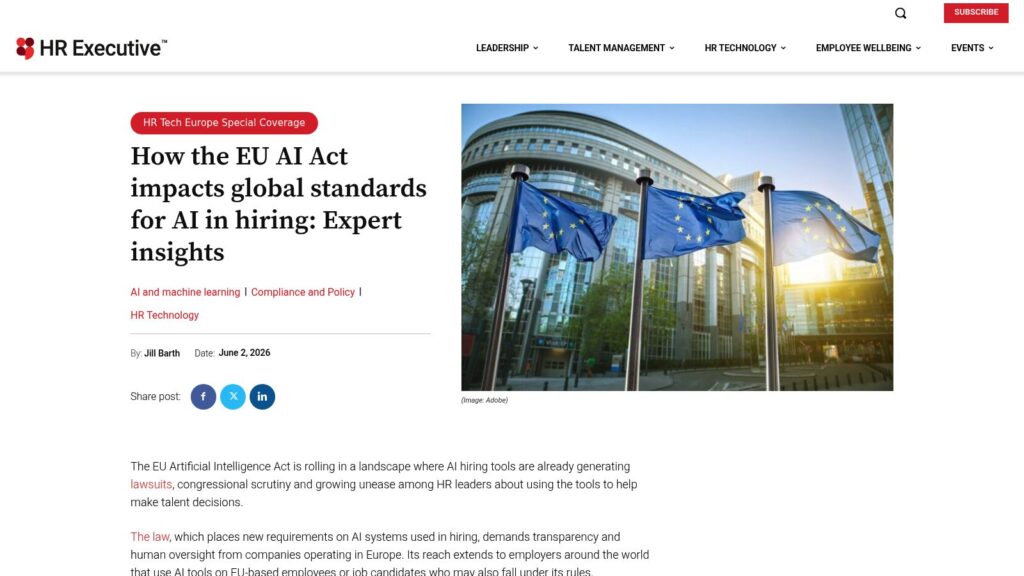
How the EU AI Act Impacts Global Standards for AI in Hiring: Expert Insights

The EU Artificial Intelligence Act introduces regulations for AI systems used in hiring, requiring transparency and meaningful human oversight to ensure accountability and reduce legal risks, especially for companies operating within the EU or employing EU-based candidates. Dimitri Boylan, CEO of Avature, emphasizes that while existing laws address many concerns, the Act clarifies governance responsibilities and promotes evidence-based management of AI hiring tools, helping large enterprises mitigate regulatory and social risks.

https://hrexecutive.com/how-the-eu-ai-act-impacts-global-standards-for-ai-in-hiring-expert-insights/

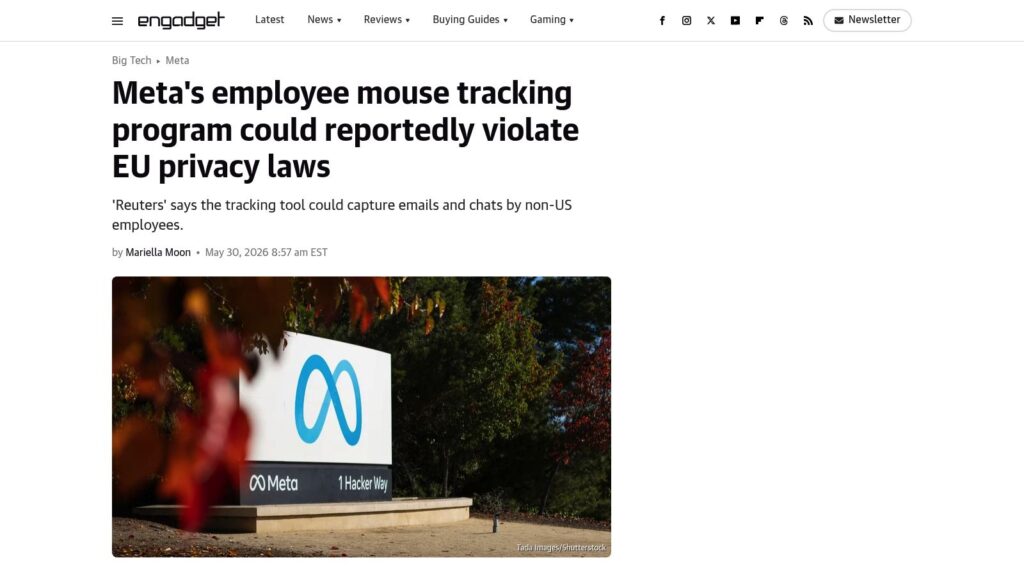
Meta’s Employee Mouse Tracking Program Could Reportedly Violate EU Privacy Laws

Meta’s employee mouse tracking program, called the Model Capability Initiative (MCI), could potentially violate the European Union’s GDPR privacy laws by capturing data, including emails and chats, not only of US employees but also involving non-US colleagues. While Meta claims it has mitigated privacy risks and notified affected employees, legal experts warn that even limited data collection of EU employees without proper disclosure and legal basis may breach regulations. Additionally, employees have raised concerns about the tool’s impact on their data usage and its role in training AI models that could replace them.

https://www.engadget.com/2184241/meta-mouse-tracking-employees-mci-eu-privacy-rules-gdpr/

How AI Is Affecting Productivity and Jobs in Europe

AI adoption in Europe boosts labor productivity by 4% without short-term job losses, but benefits favor larger firms capable of investing in complementary assets. Disparities exist, as medium and large firms gain more than smaller ones, highlighting the need for policies aiding smaller firm growth. Policymakers should foster financial markets and promote investments in skill development and integration for AI. Concerns remain about long-term impacts, particularly on income inequality.

https://cepr.org/voxeu/columns/how-ai-affecting-productivity-and-jobs-europe

Who Uses AI in Europe

EU invests in AI adoption, but usage remains uneven. 64% of Europeans see AI literacy as crucial by 2030. AI use has increased 12.3% since 2021, with 32.7% of Europeans using AI tools. Adoption varies by country, with generative AI in education low at 9.8%. Denmark leads in AI business adoption (42.03%), while Hungary lags behind (1.31%). The EU should focus on sector-specific AI deployment and measurable KPIs for effective support.

https://eutechloop.com/who-uses-ai-in-europe-and-where-its-still-taboo/

AI Literacy Training: From Best Practice to Legal Requirement Under the New EU AI Act

EU AI Act mandates AI literacy training, evolving from best practice to legal obligation. Effective Feb 2026, compliance is essential for all organizations deploying AI affecting people in the EU. Training must cover AI fundamentals, legal requirements, and practical applications while addressing ethics. Ongoing, structured education is crucial for maintaining compliance and adapting to evolving regulations globally.

https://blog.knowbe4.com/ai-literacy-training-from-best-practice-to-legal-requirement-under-the-new-eu-ai-act

Scroll to Top