management

How AI Is Reshaping Teamwork and Communication in the Workplace
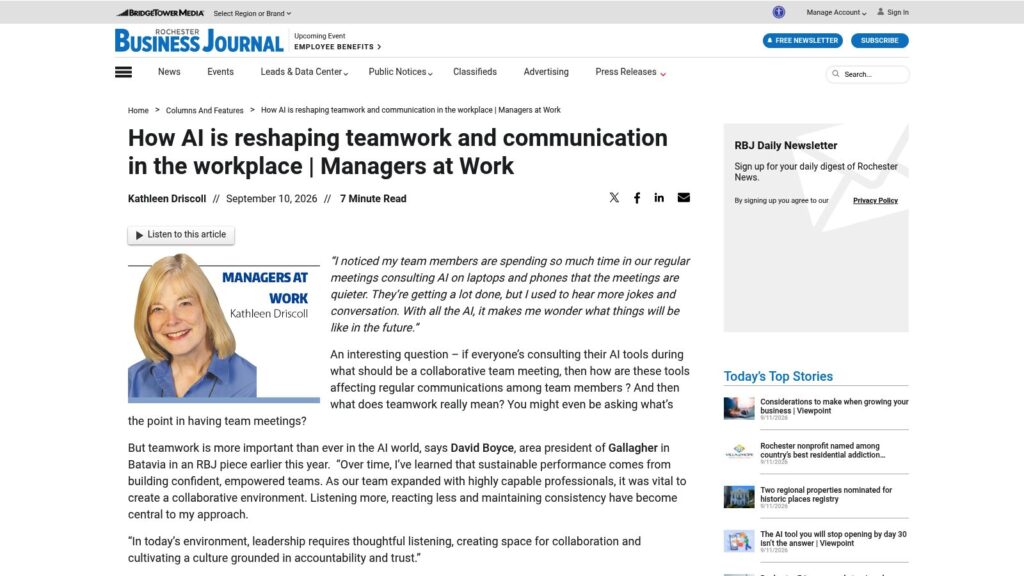
AI is transforming workplace communication and teamwork by enabling employees to independently access information and make decisions, reducing spontaneous interactions and traditional collaborative exchanges among colleagues. While AI enhances productivity and self-sufficiency, experts emphasize that organizational culture and intentional boundaries are crucial to maintain human connection, trust, and shared understanding, with recommendations including establishing AI usage guidelines and fostering authentic human skills alongside AI adoption. Managers are encouraged to adapt practices that balance AI efficiency with opportunities for meaningful team bonding and open communication to sustain collaboration in evolving work environments.

https://rbj.net/2026/09/10/how-ai-is-reshaping-teamwork-and-communication/

Using AI More Does Not Reassure Workers, Managers Do

A Gallup study reveals that employees who frequently use AI are more than twice as likely to fear job displacement within five years compared to infrequent users, with heightened anxiety linked to lower engagement, satisfaction, and higher burnout and turnover intent. However, supportive management practices—particularly when employees feel cared for and respected—significantly reduce this fear, especially among frequent AI users. The findings highlight the importance for leaders to prioritize clear communication, targeted support for AI-exposed workers, and ongoing engagement monitoring to mitigate AI-related job anxiety and its impacts on workforce stability.

https://www.gallup.com/workplace/713231/ai-not-reassure-workers-managers-do.aspx

Managers Say They Don’t Feel Ready to Lead an AI-fluent Workforce

A recent survey by Indeed and YouGov reveals that 43% of managers feel unprepared to lead AI-fluent workforces, with a gap between employer expectations for AI use and employee comfort with the technology. While 52% of workers report inadequate AI training and ethical concerns hinder upskilling, companies are accelerating AI adoption faster than developing necessary skills and leadership readiness. The findings highlight a pressing need for organizations to focus on building AI-capable leaders to fully leverage AI’s workforce potential.

https://www.hrdive.com/news/managers-say-they-dont-feel-ready-to-lead-an-ai-fluent-workforce/826354/

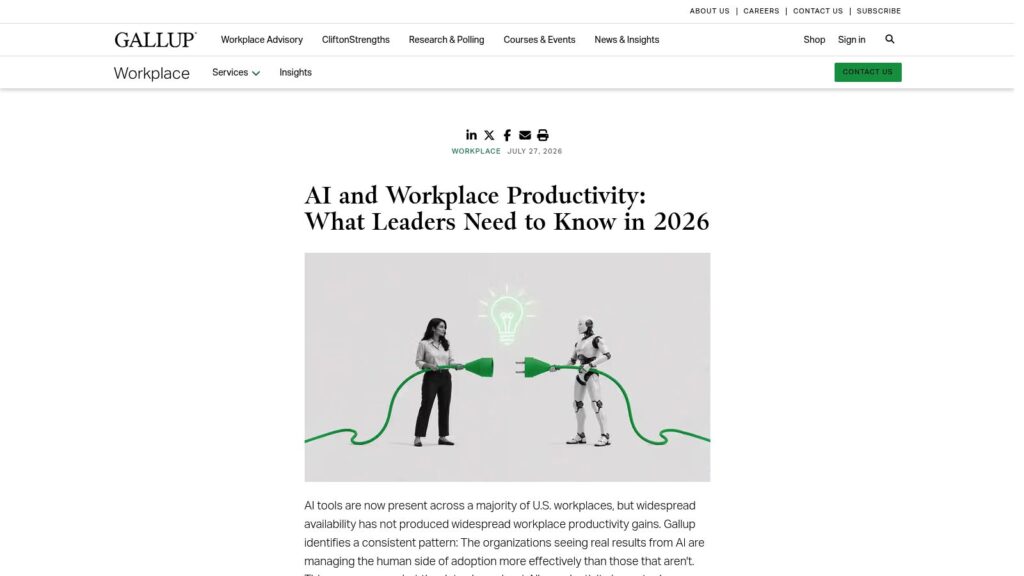
AI and Workplace Productivity: What Leaders Need to Know in 2026

Gallup’s data show that while AI tools have improved individual employee productivity, they have yet to deliver transformational gains at the organizational level due to limited workflow redesign and uneven adoption. The key factor driving frequent AI use and stronger productivity outcomes is active manager support, which shapes employee engagement through clear communication, hands-on modeling, and addressing concerns about AI ethics and job security. Additionally, despite widespread anxiety about AI-driven job loss, direct displacement remains rare, but effective management of employee wellbeing and adoption challenges is essential to maximize AI’s benefits and mitigate workforce disruption.

https://www.gallup.com/workplace/713063/ai-workplace-productivity.aspx

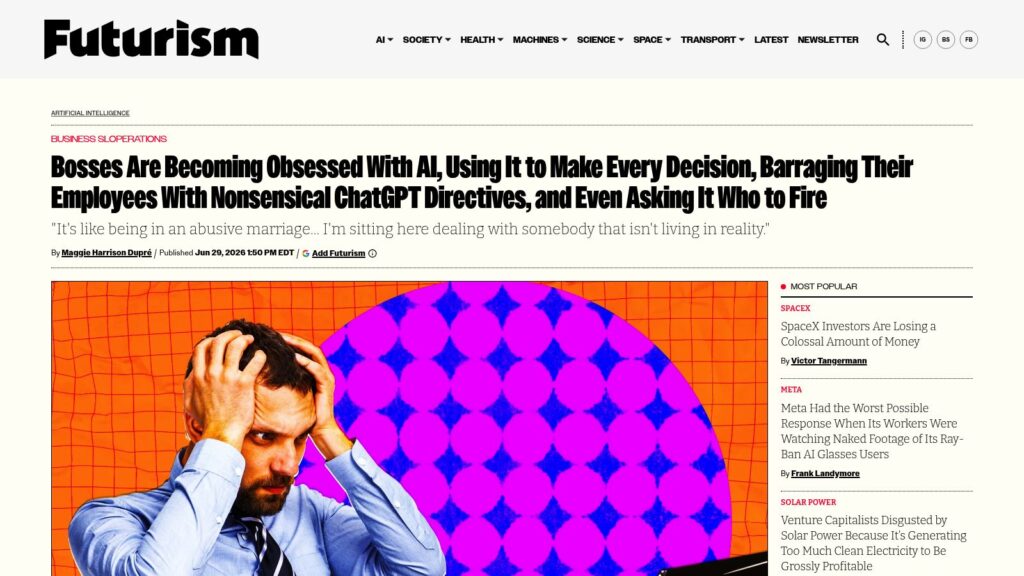
Bosses Are Becoming Obsessed With AI, Using It to Make Every Decision, Barraging Their Employees With Nonsensical ChatGPT Directives, and Even Asking It Who to Fire

An increasing number of bosses are excessively relying on AI tools like ChatGPT to make every business decision, impose unrealistic directives, and even determine employee hirings or firings, creating toxic and unproductive workplaces. Employees report constant shifts in responsibilities and strategies based solely on AI interactions, diminished human input, and a disconnect from workplace realities, often leading to frustration, reduced morale, and resignations. This trend highlights the challenges organizations face in integrating AI without undermining human judgment and effective workforce management.

https://futurism.com/artificial-intelligence/bosses-obsessed-with-ai

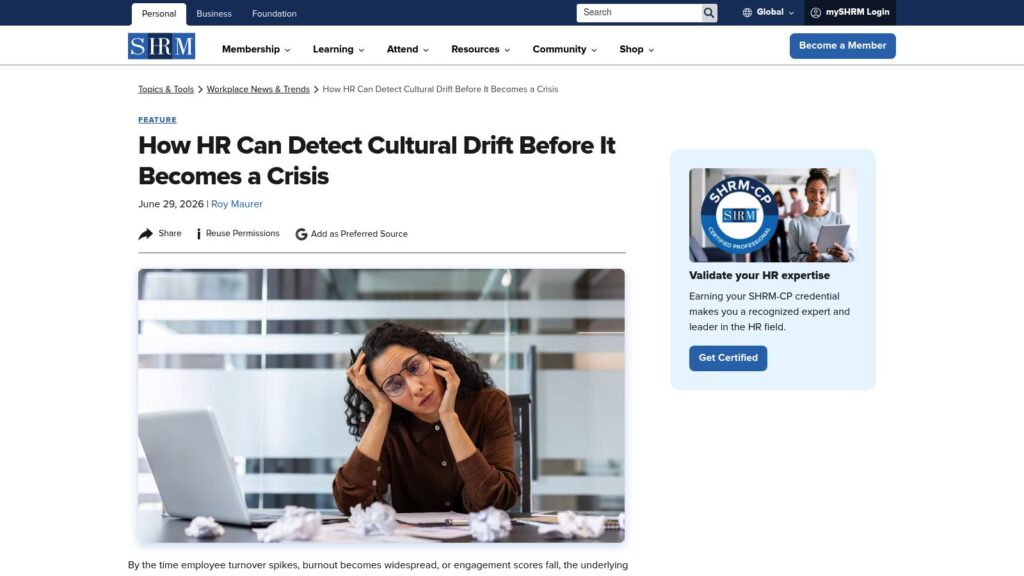
How HR Can Detect Cultural Drift Before It Becomes a Crisis

The article highlights the importance for HR professionals to proactively identify cultural drift within organizations before it escalates into a crisis. It suggests that monitoring employee feedback, engagement metrics, and alignment with core values can help detect early signs of cultural misalignment, enabling timely interventions to maintain a healthy organizational culture.

https://www.shrm.org/topics-tools/news/organizational-employee-development/how-hr-can-detect-cultural-drift-before-crisis

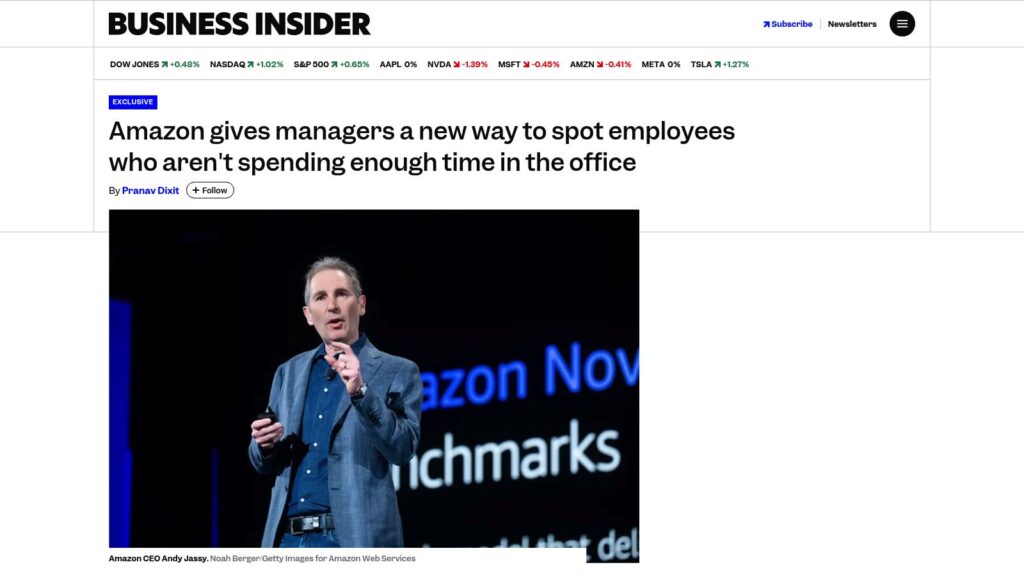
Amazon Flags ‘Low-Time’ and ‘Zero Badgers’ as It Cracks Down on RTO

Amazon has introduced a manager dashboard to monitor employee office attendance, categorizing staff into “Low-Time Badgers,” “Zero Badgers,” and “Unassigned Building Badgers.” This aims to enforce return-to-office policies, increasing surveillance of white-collar workers. The dashboard tracks how often employees are in the office, the duration of their visits, and their locations, with the intention of promoting in-person collaboration. Similar practices are being adopted by other companies to track compliance with office attendance rules.

https://www.businessinsider.com/amazon-flags-employees-rto-office-2026-1

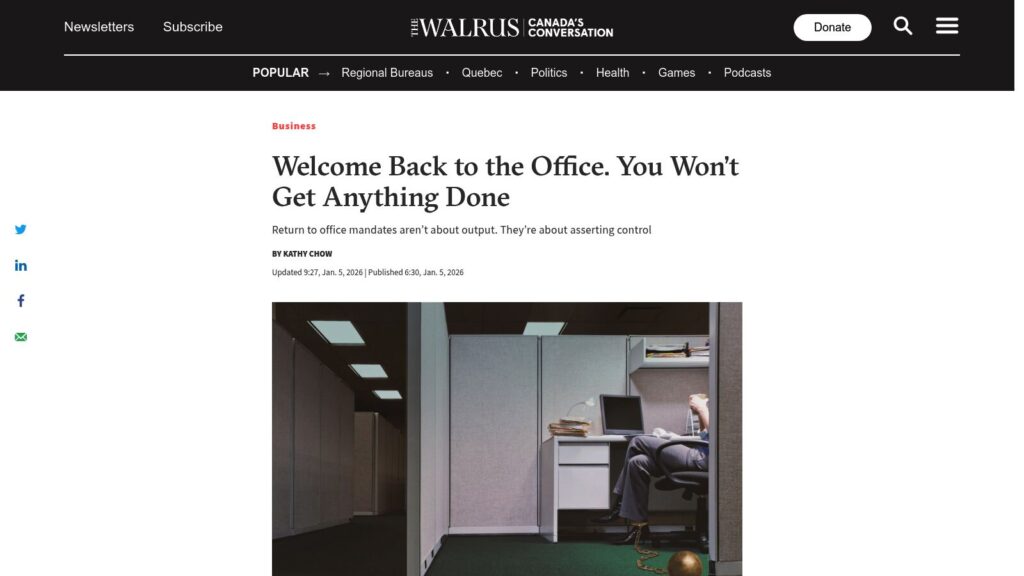
Welcome Back to the Office. You Won’t Get Anything Done

Return-to-office (RTO) mandates are not about productivity but about control. Despite studies showing that hybrid work does not impact productivity, many companies are implementing RTO mandates, citing productivity and company culture as reasons. However, the real motivation behind these mandates is likely to exert control over employees and reduce staff size without paying severance.

https://thewalrus.ca/return-to-office-mandates/

Scroll to Top