cybersecurity

The Shadow AI Workforce: When Employees Go Rogue With Tech

Shadow AI Workforce: Employees use AI tools (e.g., ChatGPT) unsanctioned by organizations, mirroring past ‘shadow IT’ trends. This raises concerns over data security and compliance while revealing a need for HR to create policies that guide usage and harness innovation. HR must balance oversight with encouragement, fostering a culture of transparency and adapting training to align with new skill demands. Ignoring or excessively restricting these practices risks stifling creativity and mitigating productivity. Organizations should develop AI governance frameworks to transform potential risks into strategic advantages.

https://www.hrkatha.com/features/hr-pops-features/the-shadow-ai-workforce-when-employees-go-rogue-with-technology/

The Cybersecurity Paradox: Training the Next-gen Workforce

Cybersecurity now centers on securing human-AI interactions as AI becomes integral to workplaces. Workforce Trust Management is essential to address vulnerabilities from AI adoption, which brings both benefits and threats. Four pillars of security—Reliability, Accountability, Transparency, and Ethical Alignment—are crucial. Organizations must foster employee AI literacy and develop rapid response protocols to safeguard against potential breaches, ensuring a strong cybersecurity foundation while embracing AI’s potential.

https://www.weforum.org/stories/2026/01/cybersecurity-paradox-training-the-next-generation-workforce/

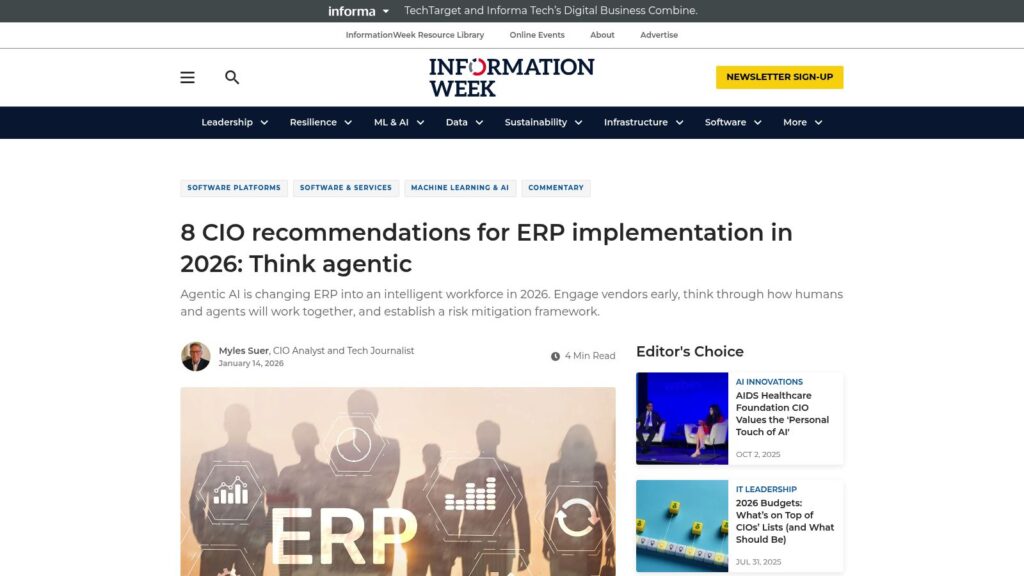
8 CIO Recommendations for ERP Implementation in 2026

Agentic AI is transforming ERP systems, enabling proactive, end-to-end business process management across finance, supply chain, manufacturing, HR, and customer service. CIOs should develop a clear business plan for agentic AI adoption, engage with ERP vendors, and establish frameworks for human-AI collaboration, risk mitigation, and governance. The focus should be on balancing incremental process optimization with transformative business reinvention, leveraging mature data and process foundations for a broader approach.

https://www.informationweek.com/software-platforms/8-cio-recommendations-for-erp-implementation-in-2026-think-agentic

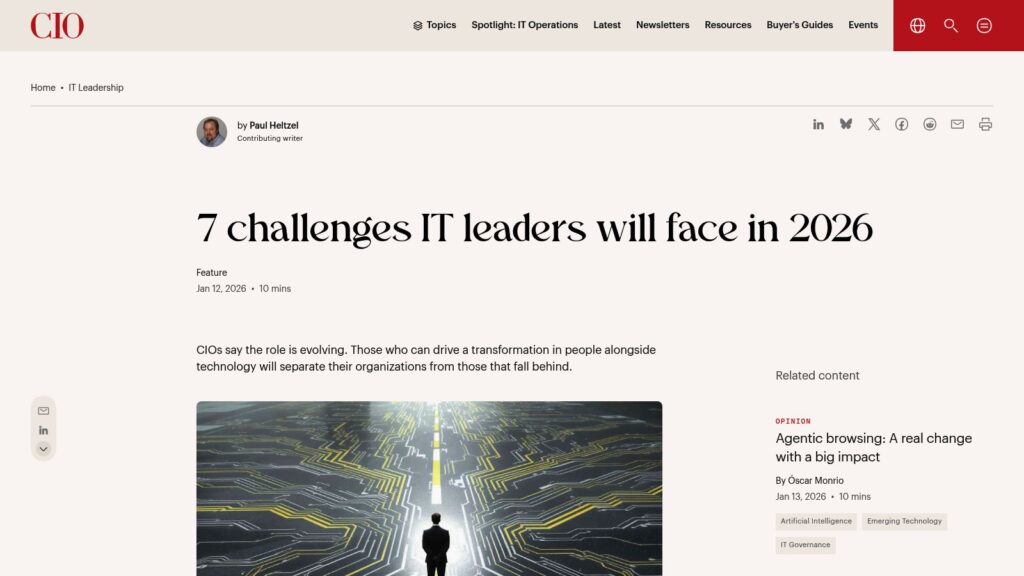
7 Challenges IT Leaders Will Face in 2026

Challenges for CIOs in 2026 include talent shortages, AI integration, governance, cybersecurity threats, and balancing costs while ensuring agile operations. Key strategies involve investing in training, fostering a culture of continuous learning, aligning technology with business objectives, and implementing robust governance frameworks for AI.

https://www.cio.com/article/4114004/7-challenges-it-leaders-will-face-in-2026.html

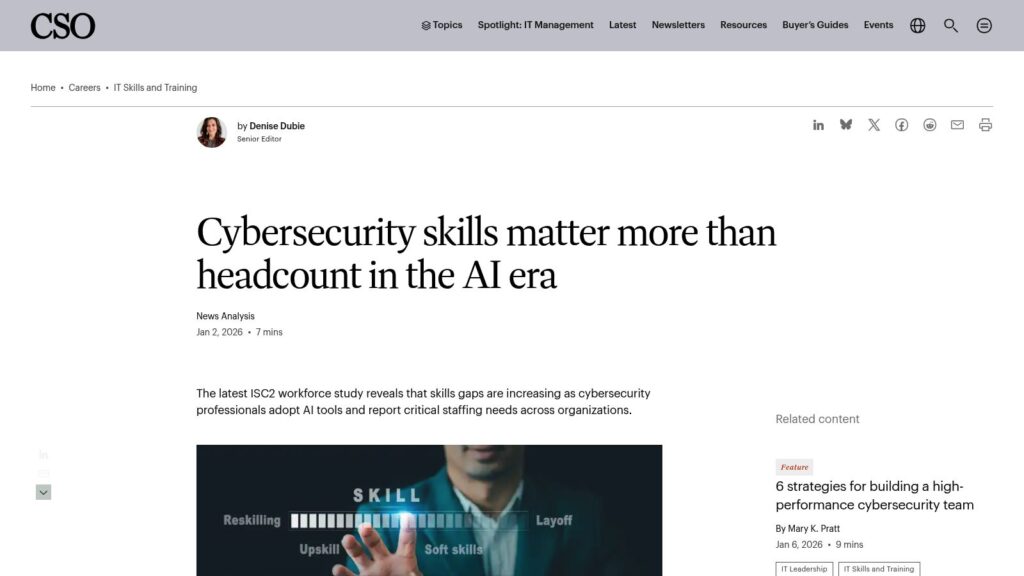
Cybersecurity Skills Matter More Than Headcount in the AI Era

Cybersecurity professionals face increasing skills shortages, outweighing headcount concerns, per ISC2’s 2025 workforce study. Despite budget restrictions stabilizing, 33% of professionals report insufficient resources, with 88% experiencing significant cybersecurity breaches due to skills gaps. The study highlights a pressing need for AI and cloud security skills, as nearly 69% of respondents are adopting AI tools, viewing them as essential for productivity and career advancement. High job satisfaction persists, but many express exhaustion from keeping up with evolving threats. Continued investment in skills training is crucial.

https://www.csoonline.com/article/4108270/cybersecurity-skills-matter-more-than-headcount-in-the-ai-era.html

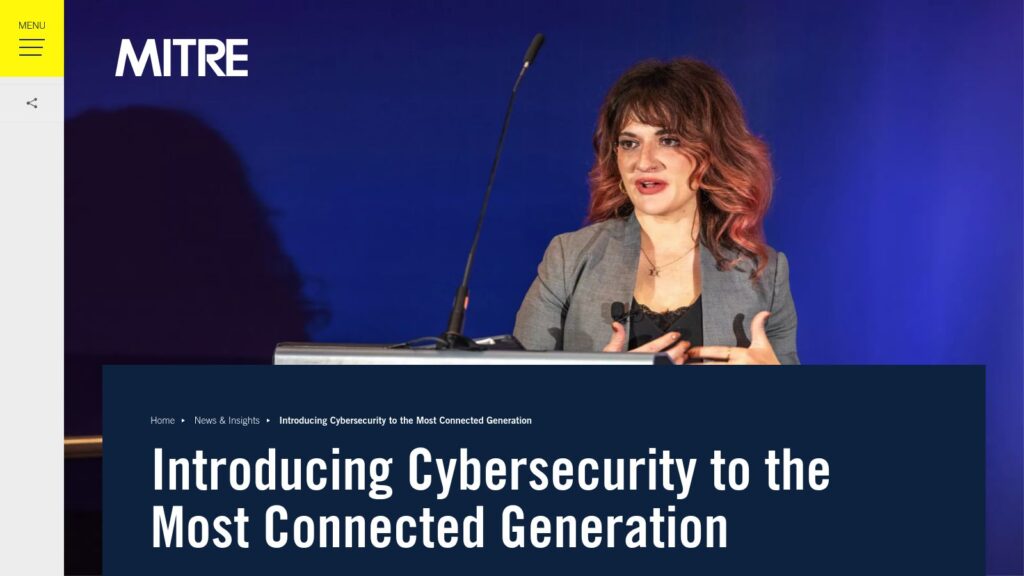
Introducing Cybersecurity to the Most Connected Generation

MITRE introduces cybersecurity concepts to younger audiences using the ATT&CK framework, aiming to raise awareness about online threats. Experts present at schools, emphasizing the importance of understanding adversary tactics for personal and professional safety. Hands-on sessions help demystify cybersecurity, highlight the sophistication of online threats, and encourage interest in the field. ATT&CK serves as a valuable resource for both novices and professionals, fostering communication and knowledge sharing in cybersecurity.

https://www.mitre.org/news-insights/impact-story/introducing-cybersecurity-most-connected-generation

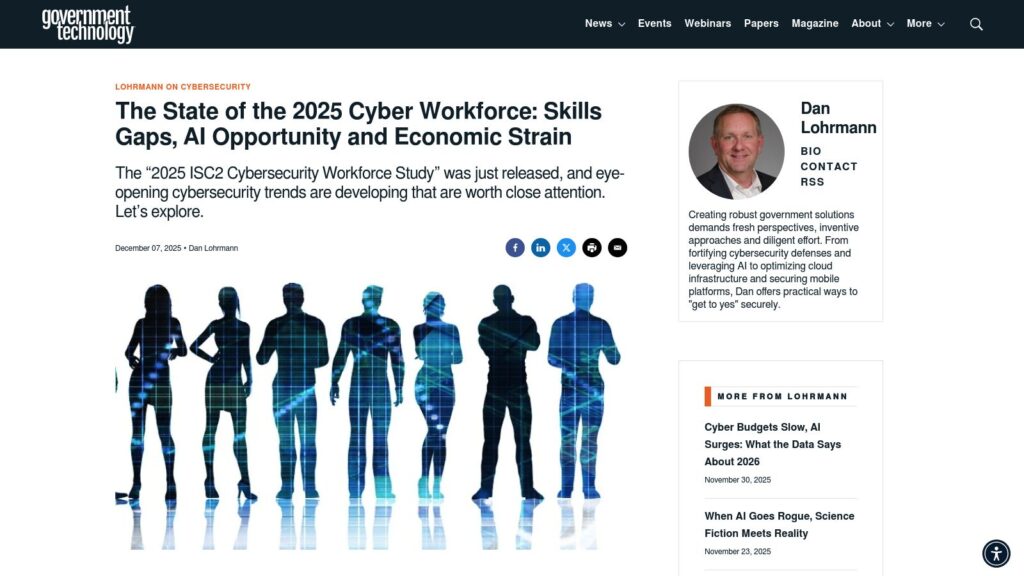
The State of the 2025 Cyber Workforce: Skills Gaps, AI Opportunity and Economic Strain

TLDR: The 2025 ISC2 Cybersecurity Workforce Study highlights key trends: budget cuts and hiring freezes increase security risks; skills deficits challenge resilience; AI’s growth creates new job opportunities; job satisfaction remains high despite organizational issues. Investing in workforce skills is crucial for cybersecurity strength.

https://www.govtech.com/blogs/lohrmann-on-cybersecurity/the-state-of-the-2025-cyber-workforce-skills-gaps-ai-opportunity-and-economic-strain

North Korea Lures Engineers to Rent Identities in Fake IT Worker Scheme

North Korea’s Famous Chollima recruiting group is targeting developers to rent their identities for illicit activities, using deception such as deep fake videos and AI. They trick real engineers into acting as fronts for remote interviews with Fortune 500 companies, offering financial compensation. Researchers documented these tactics, revealing the use of AI tools to automate job applications and capture private information. The operation highlights the risks for compromised engineers, who bear the consequences of any wrongdoing while posing as legitimate candidates.

https://www.bleepingcomputer.com/news/security/north-korea-lures-engineers-to-rent-identities-in-fake-it-worker-scheme/

How to Build Forward-thinking Cybersecurity Teams for Tomorrow

Microsoft’s security strategy emphasizes the need for adaptive, innovative teams in the evolving landscape of AI-powered cyber threats. Traditional cybersecurity roles must evolve beyond technical expertise to include critical thinking and diverse skill sets. Organizations should rethink recruitment practices, onboarding processes, and continuous training to build resilient teams equipped to tackle sophisticated threats. Emphasizing cognitive diversity and collaboration will enhance defenses against AI-driven attacks, as the next major cyber breach could stem from inadequate talent adaptation to this new era. Future-proofing cybersecurity talent is crucial for organizational success.

https://www.microsoft.com/en-us/security/blog/2025/12/02/how-to-build-forward-thinking-cybersecurity-teams-for-tomorrow/

When Hackers Wear Suits: Protecting Your Team From Insider Cyber Threats

Threat: Hackers impersonate IT professionals to gain insider access in organizations, leading to data theft and financial fraud. They use deepfakes, fabricated identities, and social engineering to secure jobs.

Defenses: Implement advanced HR checks, multi-factor authentication, and continuous security training to prevent breaches from insider threats. Stay vigilant against insider impersonation signs, especially in remote hiring. Cybersecurity is critical; a breach can have catastrophic consequences.

https://www.bleepingcomputer.com/news/security/when-hackers-wear-suits-protecting-your-team-from-insider-cyber-threats/

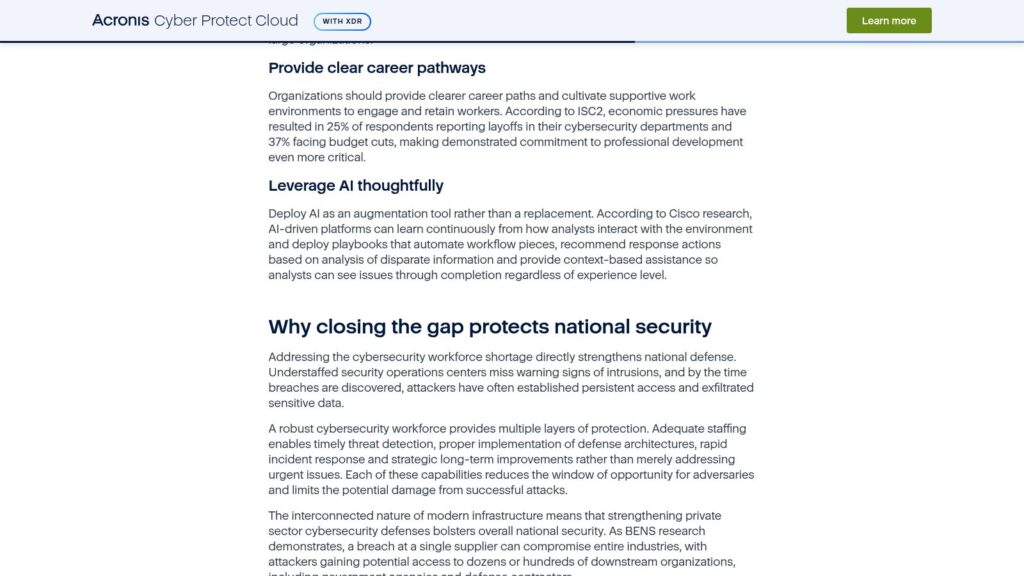
AI and the Cybersecurity Skills Gap: a Double-edged Sword for National Security

AI boosts cybersecurity by addressing workforce shortages but risks worsening the issue by creating new skill demands. The global skills gap is growing, with millions of unfilled positions, leading to heightened vulnerabilities in national security. While AI can improve efficiency and support talent development, it also complicates workforce planning as skill requirements evolve. Organizations should develop clear AI strategies, prioritize transferable skills, invest in continuous learning, diversify recruitment, and implement robust governance to leverage AI effectively while securing national interests.

https://www.acronis.com/en/blog/posts/ai-and-the-cybersecurity-skills-gap-a-double-edged-sword-for-national-security/

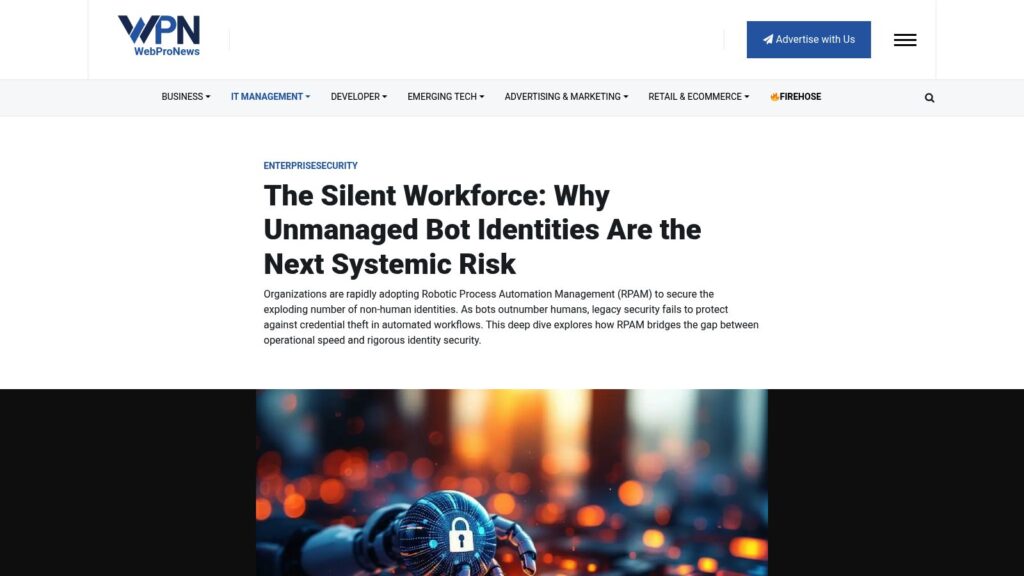
The Silent Workforce: Why Unmanaged Bot Identities Are the Next Systemic Risk

Organizations increasingly use Robotic Process Automation Management (RPAM) to secure growing non-human identities (bots) that now outnumber humans 45 to 1, exposing critical security gaps. Bots often operate under high privileges with static credentials, creating vulnerabilities if compromised. RPAM provides dynamic credential management, enforcing least privilege, auditing, and compliance, helping prevent breaches and manage operational efficiency as automation scales. As regulations tighten, RPAM is essential for future-proofing automated workforces and safeguarding against systemic risks.

https://www.webpronews.com/the-silent-workforce-why-unmanaged-bot-identities-are-the-next-systemic-risk/

As Gen Z Enters Cybersecurity, Jury Out on AI’s Impact

Gen Z is entering cybersecurity as AI reshapes the field. While AI threatens some entry-level roles by automating repetitive tasks, it also offers analysts opportunities to focus on creative and strategic work. Bandana Kaur, a Gen Z researcher, advocates using AI as a learning tool and stresses that curiosity and self-study are more valuable than formal credentials. AI adoption by both attackers and defenders is expanding, and many hiring barriers stem from unrealistic job requirements rather than genuine job scarcity. Kaur’s experience shows that curiosity, practical engagement, and online resources can help overcome career challenges in cybersecurity.

https://www.darkreading.com/cybersecurity-operations/gen-z-cybersecurity-jury-out-ai-impact

Scroll to Top