leadership

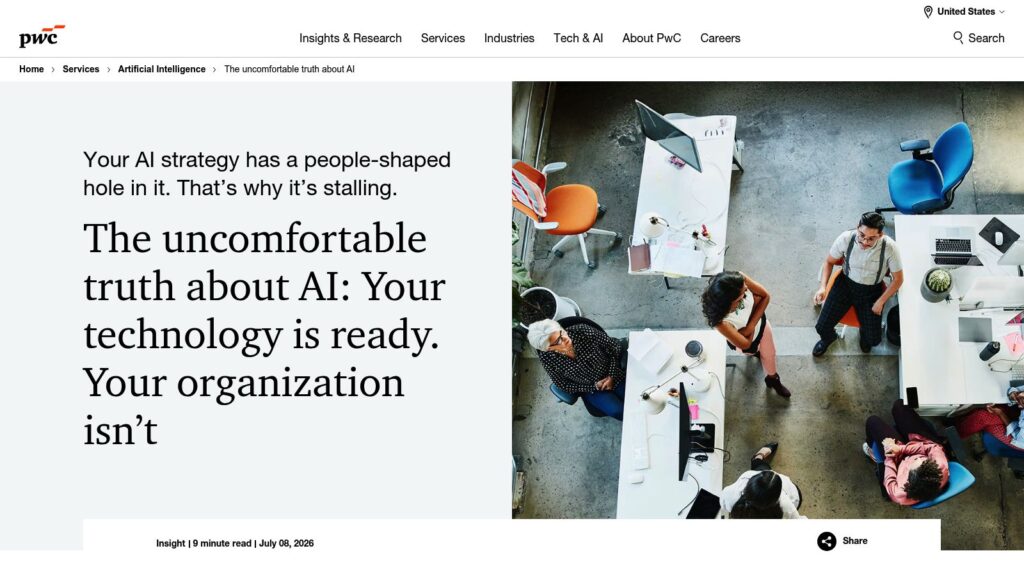
The Uncomfortable Truth About AI: Your Technology Is Ready. Your Organization Isn’t

PwC warns that while AI adoption can boost productivity and create new job opportunities, it will also lead to significant workforce disruptions, including job displacements and skill mismatches. Organizations must proactively invest in reskilling and upskilling initiatives to help employees adapt to changing roles and leverage AI effectively.

https://www.pwc.com/us/en/services/ai/uncomfortable-truth-about-ai-workforce-transformation.html

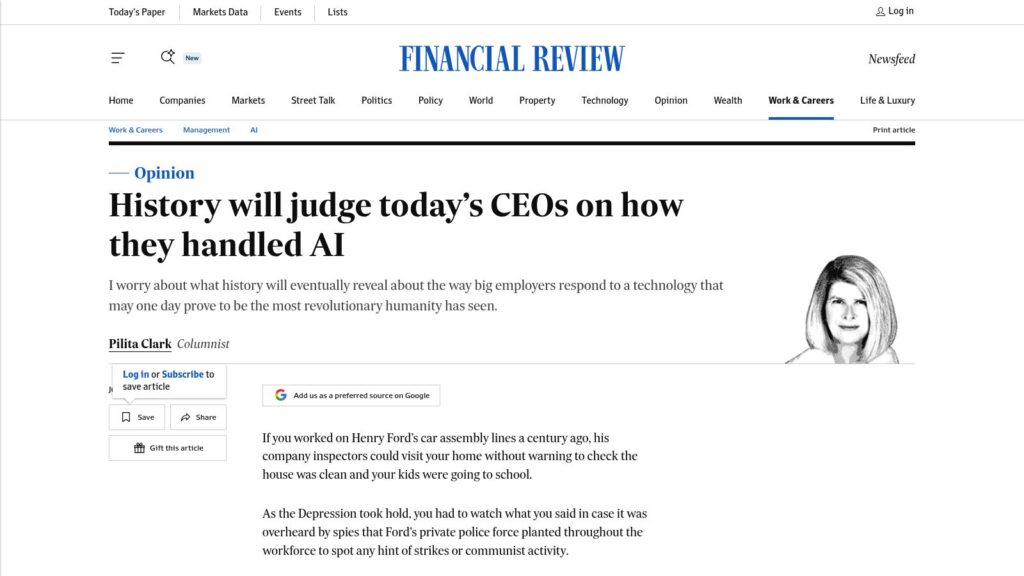
History Will Judge Today’s CEOs on How They Handled AI

The article reflects on how history will evaluate today’s CEOs based on their management of artificial intelligence, highlighting AI as a potentially transformative technology for humanity. It emphasizes the significant test leaders face in guiding their workforce through the disruptions caused by AI, drawing historical parallels to past industrial labor challenges.

https://www.afr.com/work-and-careers/management/history-will-judge-today-s-ceos-on-how-they-handled-ai-20260615-p606xm

CEOs Who Think AI Replaces Their Employees Are Just Bad CEOs

The article argues that CEOs who believe AI can simply replace their employees misunderstand the technology and the nature of work, labeling them ineffective. It highlights that while AI tools can enhance productivity when workers willingly adopt them, building reliable, scalable, and compliant products requires nuanced human expertise beyond what AI prototypes alone can provide. The piece stresses that successful AI integration depends on CEOs appreciating both AI’s capabilities and its limitations, rather than using AI as an excuse for widespread layoffs.

https://www.techdirt.com/2026/06/09/ceos-who-think-ai-replaces-their-employees-are-just-bad-ceos/

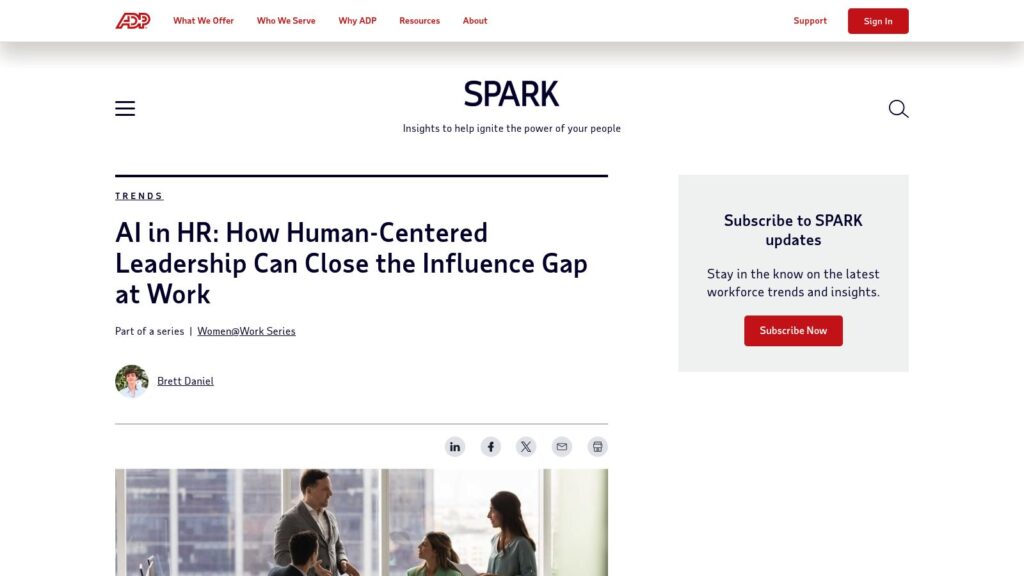
AI in HR: How Human-Centered Leadership Can Close the Influence Gap at Work

The article discusses how human-centered leadership is essential in integrating AI within HR to close the influence gap at work. It emphasizes that while AI can enhance efficiency and decision-making, leaders must prioritize supporting human judgment, critical thinking, and well-being to ensure technology strengthens rather than undermines expertise and collaboration.

https://www.adp.com/spark/articles/2026/05/ai-in-hr-how-human-centered-leadership-can-close-the-influence-gap-at-work.aspx?q1=ES_FY25_SparkSubscribePopup&q1=ES_FY25_SparkSubscribePopup

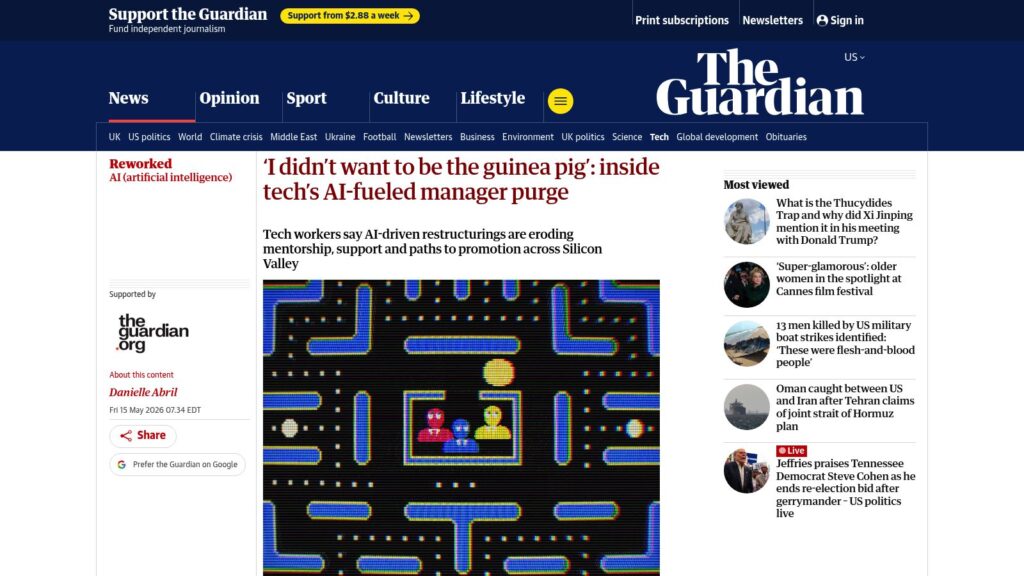
‘I Didn’t Want to Be the Guinea Pig’: Inside Tech’s AI-fueled Manager Purge

Tech companies like Meta, Amazon, Block, and Coinbase are increasingly using AI to restructure by cutting middle management layers, aiming to boost efficiency and reduce bureaucracy. This AI-fueled management purge is reshaping managers’ roles—expanding responsibilities and requiring them to both supervise and produce—while raising concerns about diminished human mentorship, increased job stress, and potential negative impacts on workplace culture and product quality.

https://www.theguardian.com/technology/2026/may/15/ai-manager-purge-tech

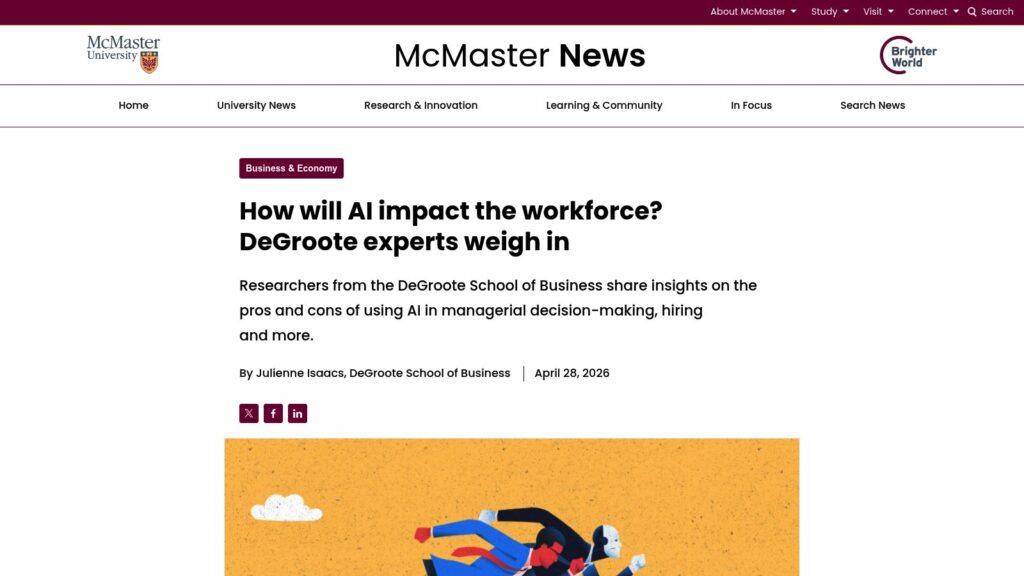
How Will AI Impact the Workforce? DeGroote Experts Weigh In

Researchers at McMaster’s DeGroote School of Business examine the impact of AI on the workforce, highlighting that AI should support human judgment rather than replace it. They emphasize the ethical deployment of AI in areas like hiring and management, cautioning against AI assuming authoritative roles over humans while recognizing AI’s potential to improve efficiency, fairness, and decision-making when used responsibly with human oversight.

https://news.mcmaster.ca/how-will-ai-impact-the-workforce-degroote-experts-weigh-in/

How AI Is Reshaping the Future of Work

Artificial intelligence is fundamentally transforming work by enhancing daily workflows, decision-making, and organizational structures, but the impact depends heavily on leadership that integrates AI responsibly with clear governance and ethical oversight. Stanford Graduate School of Business Executive Education programs prepare leaders to navigate these changes by focusing on AI-enabled organizational design, human-AI collaboration, reskilling, and balancing automation with human judgment to build adaptable, ethical, and high-performing organizations.

https://www.gsb.stanford.edu/exec-ed/difference/how-ai-reshaping-future-work

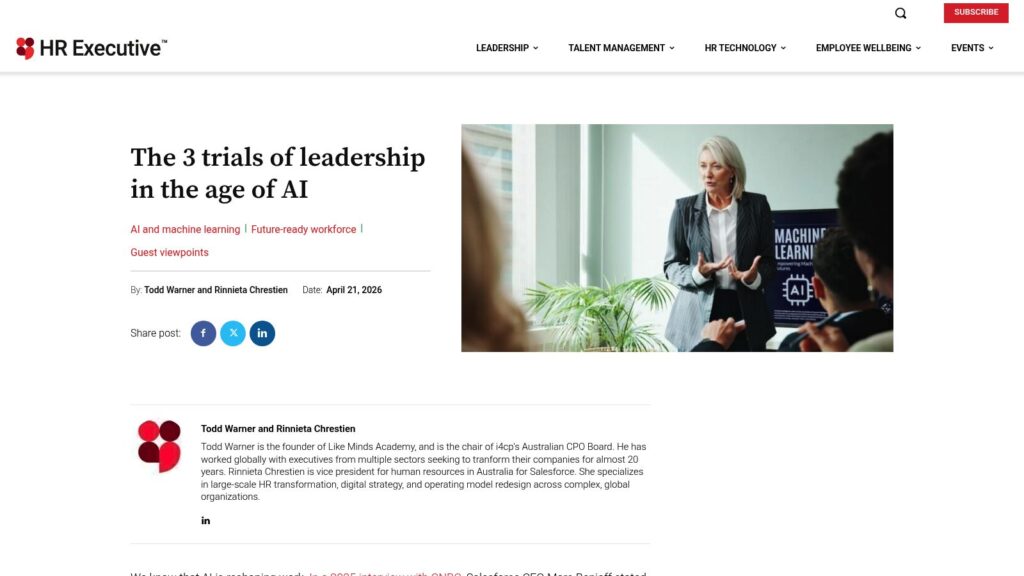
The 3 Trials of Leadership in the Age of AI

The article outlines three major leadership challenges posed by AI’s integration into the workplace: the Leadership Trial of Identity, which demands a shift toward prioritizing soft skills like empathy and creativity over traditional hard skills; the Leadership Trial of Technique, requiring leaders to manage blended teams of humans and AI with new performance metrics and risk management approaches; and the Leadership Trial of Governance, highlighting the need for boards to update their composition and oversight capabilities to effectively govern AI-related risks. These trials signify a fundamental transformation in leadership identity, methods, and governance necessary for organizations to thrive in the AI era.

https://hrexecutive.com/the-3-trials-of-leadership-in-the-age-of-ai/

What It Really Takes to Build an AI-First Workforce

Cisco emphasizes that successful AI adoption is a workforce transformation relying on leadership creating supportive environments and employees bringing the right mindset. The company highlights that AI complements human judgment, encouraging experimentation, measuring more than productivity, and reinvesting gained capacity into learning and innovation to achieve meaningful business impact.

https://blogs.cisco.com/customerexperience/what-it-really-takes-to-build-an-ai-first-workforce

How CIOs Run and Rebuild the Business in the AI Era

In the AI era, CIOs must simultaneously run and transform their businesses by partnering closely with HR and enterprise architects to address changing work roles, evolving systems, and essential skills for relevance. They need to identify which tasks can be automated or augmented by AI, redesign jobs and processes accordingly, and foster 12 key skills, including AI fluency, ethical responsibility, adaptability, and business acumen, among workers to succeed in this rapidly evolving landscape.

https://www.informationweek.com/ai-innovations/how-cios-run-and-rebuild-the-business-at-the-same-time-in-the-ai-era

How Can Tech Workforce and AI Strategies Impact Digital Readiness?

Deloitte’s system dynamics simulation explores how cutting technology workforce without proportionate investments in data and AI modernization can harm an enterprise’s digital capability and organizational readiness. The study found that workforce reductions may slow tech modernization and reduce change adoption capacity, while advancing data and AI maturity can improve performance; however, combining layoffs with AI investments often causes short-term disruptions before stability returns. This highlights the critical balance organizations must manage between tech talent and AI initiatives to sustain agility and growth.

https://www.deloitte.com/us/en/insights/topics/technology-management/tech-workforce-ai-strategies.html

80% of Orgs Are Missing This Key AI Opportunity

New research from Accenture reveals that 80% of organizations miss out on the opportunity to use AI-enabled internal talent mobility strategies, relying heavily on external hiring despite having existing workforce skills. An elite group called “Talent Reinventors,” making up only 18% of companies surveyed, successfully leverage AI to maintain dynamic skills inventories and match employees to roles and learning opportunities, resulting in faster revenue growth, stronger culture, and greater workforce adaptability.

https://hrexecutive.com/80-of-orgs-are-missing-this-key-ai-opportunity/

Talent Reinventors: Value in the Age of AI

Accenture’s “Talent Reinventors” report highlights how organizations combining human talent with AI are achieving superior growth and workforce adaptability by reshaping work around shared goals powered by data and AI. The report identifies six key characteristics of these leaders—including clarity, intelligent teaming, talent mobility, co-learning, breakthrough leadership, and personalized experiences—that enable companies like Volkswagen, Microsoft, and Caterpillar to successfully integrate AI and people strategies, resulting in higher revenue, stronger cultures, and better employee experience in the rapidly evolving digital economy.

https://www.accenture.com/us-en/insights/consulting/talent-reinventors-delivering-value-people-age-ai?c=acn_glb_thefuture-readymediarelations_14261455&n=mrl_0226

Larry Fink Warns Leaders on AI’s Workforce Impact

BlackRock CEO Larry Fink warns that artificial intelligence is rapidly disrupting the workforce, potentially causing high unemployment among new college graduates due to shifts in demand for skills and roles. In response, BlackRock has launched a US$100 million Future Builders Initiative to connect workers with skilled trades training, addressing the growing need for skilled labor to support infrastructure modernization and AI-related industries.

https://businesschief.com/news/larry-fink-warns-leaders-on-ais-workforce-impact

HR Should Lead — Not Follow — Work’s Massive AI Transition

HR professionals must lead the charge in preparing their workforces for the AI transition. This involves identifying the underlying constraints that jobs are designed to solve and preparing for new constraints that emerge from AI integration. HR should prioritize training employees to work effectively alongside AI, focusing on skills such as emotional intelligence, decision-making, and managing AI tools.

https://www.shrm.org/topics-tools/news/hr-should-lead-not-follow-works-massive-ai-transition

Scroll to Top