regulation

From Regulatory Constraint to Strategic Compass: Why the EU AI Act Can Strengthen Organisations and HR

The EU AI Act, initially seen as a compliance burden, can be a strategic tool for organizations, particularly in HR. It encourages a shift from fragmented AI initiatives to a purpose-driven approach that emphasizes transparency, fairness, and human oversight. By aligning with the Act, organizations can modernize their HR technology, redefine work and skills, and position HR as a strategic governance partner.

https://www.marsh.com/en-gb/services/risk-consulting/insights/eu-ai-act-strenghten-organisations-hr.html

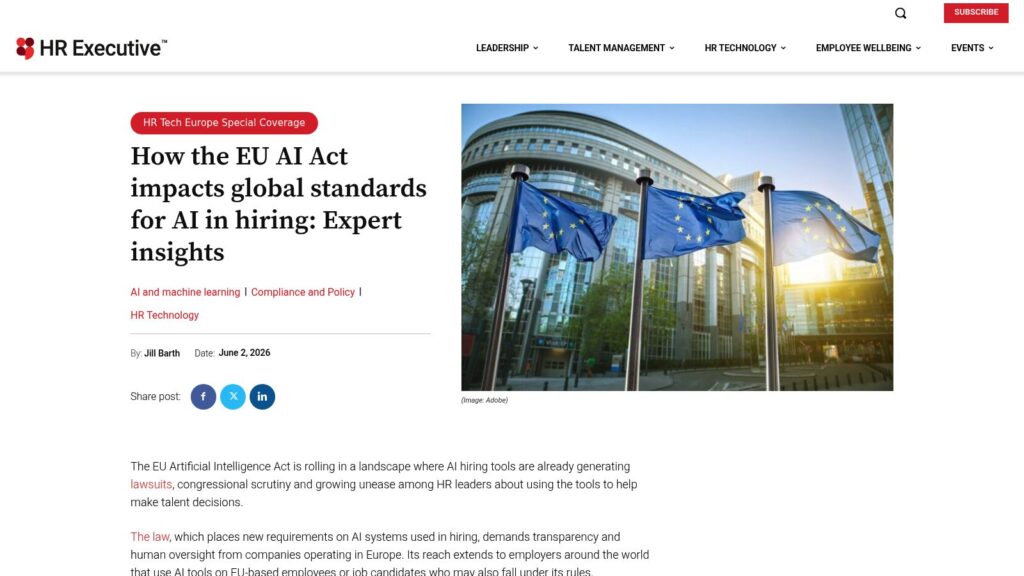
How the EU AI Act Impacts Global Standards for AI in Hiring: Expert Insights

The EU Artificial Intelligence Act introduces regulations for AI systems used in hiring, requiring transparency and meaningful human oversight to ensure accountability and reduce legal risks, especially for companies operating within the EU or employing EU-based candidates. Dimitri Boylan, CEO of Avature, emphasizes that while existing laws address many concerns, the Act clarifies governance responsibilities and promotes evidence-based management of AI hiring tools, helping large enterprises mitigate regulatory and social risks.

https://hrexecutive.com/how-the-eu-ai-act-impacts-global-standards-for-ai-in-hiring-expert-insights/

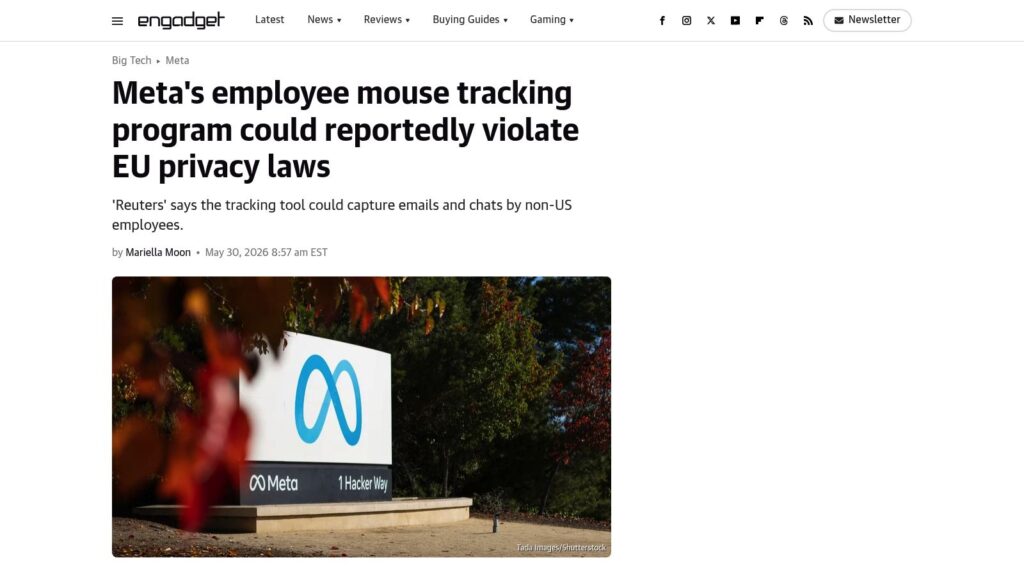
Meta’s Employee Mouse Tracking Program Could Reportedly Violate EU Privacy Laws

Meta’s employee mouse tracking program, called the Model Capability Initiative (MCI), could potentially violate the European Union’s GDPR privacy laws by capturing data, including emails and chats, not only of US employees but also involving non-US colleagues. While Meta claims it has mitigated privacy risks and notified affected employees, legal experts warn that even limited data collection of EU employees without proper disclosure and legal basis may breach regulations. Additionally, employees have raised concerns about the tool’s impact on their data usage and its role in training AI models that could replace them.

https://www.engadget.com/2184241/meta-mouse-tracking-employees-mci-eu-privacy-rules-gdpr/

Want to Understand the Current State of AI? Check Out These Charts.

The 2026 AI Index from Stanford reveals that AI development is rapidly advancing, with top models outperforming human experts in many domains and adoption outpacing previous technologies like the internet. While the US and China lead in AI capabilities, the technology’s fast growth is challenging regulation, testing standards, and labor markets, with AI beginning to impact jobs and raising mixed public sentiments about its benefits and risks.

https://www.technologyreview.com/2026/04/13/1135675/want-to-understand-the-current-state-of-ai-check-out-these-charts/

What the March 20 ‘National AI Legislative Framework’ Means for US Employers Right Now

On March 20, 2026, the White House released a “National AI Legislative Framework” recommending Congress develop a unified federal AI law prioritizing innovation and preempting restrictive state laws without imposing immediate legal obligations on employers. Until such federal legislation is enacted, existing state and local AI regulations remain fully enforceable, requiring employers to navigate a complex multi-jurisdictional compliance landscape for AI use in employment decisions.

https://www.theemployerreport.com/2026/03/what-the-march-20-national-ai-legislative-framework-means-for-us-employers-right-now/

Why AI Policy Is Really a Workforce Question For Higher Education

The article argues that debates about AI policy in higher education are fundamentally workforce issues, because AI is rapidly changing the skills students need and the types of jobs universities must prepare them for. Government policy, funding decisions, and institutional strategy will determine whether colleges can adapt programs, expand training, and close skill gaps fast enough. The article concludes that higher education must align AI policy with labor-market needs, redesign curricula, and build stronger links with employers to ensure graduates remain employable in an AI-driven economy. 

https://www.forbes.com/sites/avivalegatt/2026/03/24/why-ai-policy-is-really-a-workforce-question-for-higher-education/

Companies Work to Navigate Operational, Legal Challenges Associated With AI in HR Systems

AI in HR faces operational, legal challenges as firms adopt tools for hiring and analytics. Compliance concerns arise, especially with regulatory scrutiny over automated decision-making and data governance. The EU’s AI Act and GDPR mandate transparency and human oversight. U.S. states push similar regulations, increasing compliance risks. Organizations must ensure legal involvement in AI processes and vendor management while understanding technology limitations for effective oversight.

https://iapp.org/news/a/companies-work-to-navigate-operational-legal-challenges-associated-with-ai-in-hr-systems

AI News: Italy Sets the Rules for AI in the Workplace

Italy’s AI Act, effective October 2025, outlines compliance rules for AI usage in workplaces, emphasizing data transparency and employee rights. It mandates clear communication about AI functionalities, human oversight, and protects against discrimination. Employers face fines for non-compliance, and a new Oversight Committee will monitor AI’s employment impact. The Act reinforces GDPR obligations, ensuring lawful handling of personal data. Companies must assess AI systems, update practices, and align with legal requirements for continued operation.

https://www.klgates.com/AI-News-Italy-Sets-the-Rules-for-AI-in-the-Workplace-2-20-2026

I Guess I Kinda Get Why People Hate AI

User reflects on anxiety regarding AI’s impact on employment while on vacation in Hawaii. The author shares their history in startups and initial optimism about AI, now tempered by concerns of job loss due to AI advancements. They note unusual marketing strategies by AI companies, emphasizing problems like potential job automation and misinformation. Despite personal use of AI being productive, the overall experience for many people is negative, leading to a prevalent distrust of AI. The author urges AI firms to address these issues proactively to avoid societal backlash.

https://anthony.noided.media/blog/ai/programming/2026/02/14/i-guess-i-kinda-get-why-people-hate-ai.html

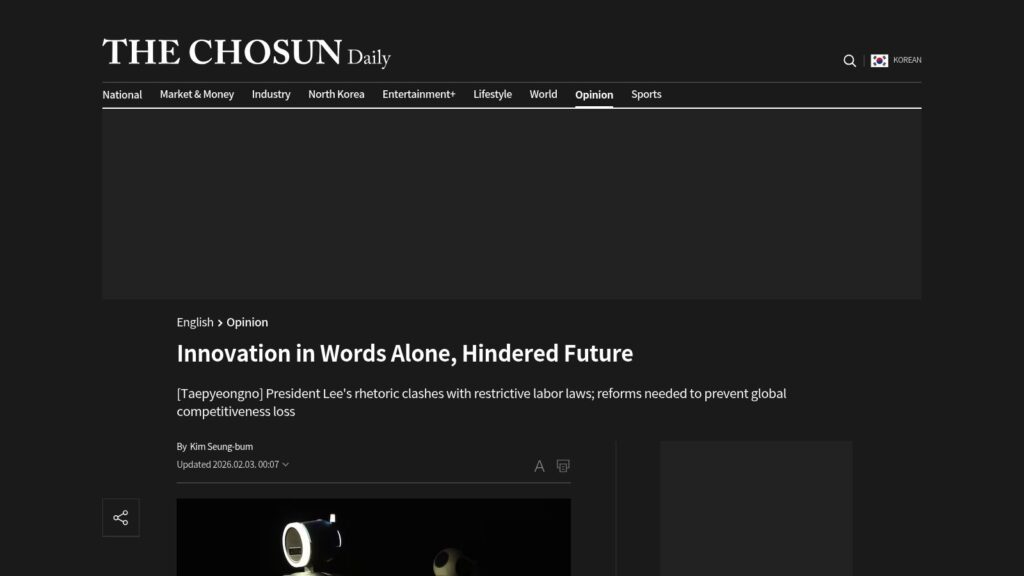
Innovation in Words Alone, Hindered Future

Hyundai’s Atlas robot represents industry innovation but faces labor conflict with unions fearing job loss. President Lee Jae Myung emphasizes adapting to the future amidst restrictive labor laws, creating tension between corporate needs and union demands. The ‘yellow envelope bill’ complicates this, potentially hampering competitiveness. Critics argue without substantial reform, Lee’s stance risks becoming mere rhetoric, hindering true progress. Urgent dialogue on the impact of automation on employment and meaningful labor reforms is essential to support innovation and avoid disputes.

https://www.chosun.com/english/opinion-en/2026/02/02/ZVRQN5N32BBOTC3XV65R6GAXZY/

AI Literacy Training: From Best Practice to Legal Requirement Under the New EU AI Act

EU AI Act mandates AI literacy training, evolving from best practice to legal obligation. Effective Feb 2026, compliance is essential for all organizations deploying AI affecting people in the EU. Training must cover AI fundamentals, legal requirements, and practical applications while addressing ethics. Ongoing, structured education is crucial for maintaining compliance and adapting to evolving regulations globally.

https://blog.knowbe4.com/ai-literacy-training-from-best-practice-to-legal-requirement-under-the-new-eu-ai-act

What the AI Executive Order Means for the Workplace

Executive Order aims to standardize AI use in workplaces by challenging restrictive state laws. It tasks federal agencies to identify and address burdensome regulations on AI, especially in hiring. The order promotes a unified approach to AI, reducing compliance difficulties for companies. Currently, state laws remain effective until legally challenged.

https://www.psca.org/news/psca-news/2025/12/what-the-ai-executive-order-means-for-the-workplace/

Scroll to Top