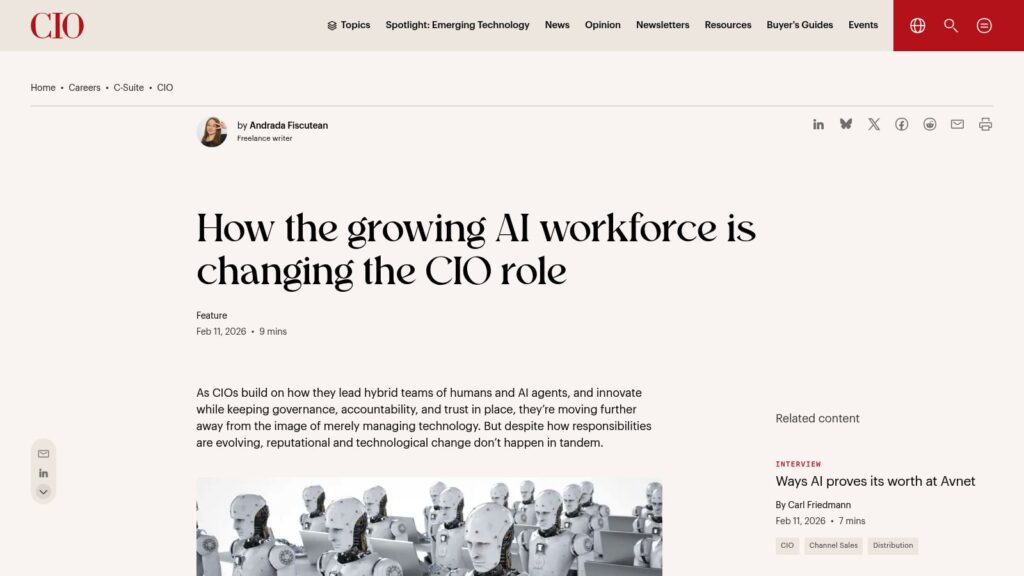
Why AI Agents Won’t Replace Government Workers Anytime Soon

AI agents can’t replace government workers soon; they lag in completing complex tasks essential for public-sector work. Current AI technology struggles with nuance, compliance, and multitasking, as shown by benchmarks proving low task success rates. Instead, AI should complement human efforts, enhancing productivity by assisting with specific tasks under human oversight. This ensures quality, accountability, and adherence to compliance standards unique to government operations.

https://federalnewsnetwork.com/commentary/2025/12/why-ai-agents-wont-replace-government-workers-anytime-soon/

CIOs Keep Buying Tools. Workers Keep Burning Out. Here’s the Disconnect

CIOs are introducing more tools for digital transformation, but employees are experiencing burnout due to the rapid pace of change. Continuous updates and overlapping initiatives overwhelm teams, leading to stress and fatigue. The disconnect arises from a failure to balance technology adoption with human capacity to adapt. Effective CIOs are recognizing the need for better sequencing of changes, providing stabilization periods, and enhancing communication to support their teams through transformations. Addressing this disconnect is crucial for maintaining productivity and preventing burnout as modernization efforts persist.

https://www.cio.com/article/4111139/cios-keep-buying-tools-workers-keep-burning-out-heres-the-disconnect.html

AI Won’t Save Your Company, But Technology Leadership Will

AI’s rise in the workplace necessitates genuine differentiation over mere application. Companies must transition from superficial “AI-loving” to innovative use, as market consolidation looms. Many will face job loss, particularly early-career workers, while experienced staff can enhance productivity with AI. Leadership’s role is crucial in bridging the skill gap, fostering ethical AI use, and guiding employee adaptation.

https://www.inc.com/will-swarts/ai-wont-save-your-company-but-technology-leadership-will/91280923

The HBR Charts That Help Explain 2025

The year 2025 saw a wobbly economy, breakthroughs and disappointments with AI, and a disconnect between consumer sentiment and economic indicators. Charts help explain these trends, including the increasing use of generative AI for personal purposes, the impact of AI-generated “workslop” on workplace productivity, and the importance of cultivating joy in busy lives. Additionally, charts highlight the need for businesses to monitor specific economic indicators and provide guidance on effective leadership and coaching.

https://hbr.org/2025/12/the-hbr-charts-that-help-explain-2025

Preparing the Workforce for a Robotic Construction Era

Construction faces labor shortages and safety issues, creating demand for robotic automation. Human-robot collaboration is essential due to site complexities. A study by Virginia Tech and the University of Illinois identifies core competencies for effective collaboration, focusing on safety, skills, and knowledge areas needed in construction. The resulting framework guides education and training for a robot-ready workforce.

https://www.newswise.com/articles/preparing-the-workforce-for-a-robotic-construction-era

The 2026 Talent Reckoning: Beyond Degrees and Certifications

By 2026, CIOs will prioritize skills over degrees in hiring, favoring adaptability and learning agility. Traditional degree requirements are declining as employers seek candidates with practical skills and microcredentials that demonstrate ongoing learning. Hiring assessments will shift focus to real-world experience and emotional intelligence, with strategies like skills assessments and job simulations gaining prominence. This transition aims to expand talent pools and tackle retention challenges in a tech-driven environment, emphasizing the need for continuous workforce development and a hybrid culture that values employee engagement amidst AI integration.

https://www.techtarget.com/searchcio/feature/The-talent-reckoning-Beyond-degrees-and-certifications

Who Teaches AI? Why the ‘human in the Loop’ Is the New Gold Collar Job

AI’s future relies on ‘human-in-the-loop’ (HITL) systems, where skilled professionals manage AI’s outputs to prevent errors. This shift creates “gold collar” workers who ensure AI accuracy, countering costly mistakes from AI hallucinations, which cost enterprises $67.4 billion in 2024. Professionals in high-demand fields, like medicine and finance, serve as crucial overseers, shifting from execution to management of AI systems. As AI evolves, companies prioritize enhanced training for staff, adopting robust frameworks to bridge the skills gap and maintain oversight, making human judgment essential in the AI era.

https://sea.peoplemattersglobal.com/article/workforce-planning/who-teaches-ai-why-the-human-in-the-loop-is-the-new-gold-collar-job-47857

Despite Crackdown on Activism, Tech Employees Are Still Picking Fights

Tech employees are increasingly viewing themselves as traditional workers amid rising job insecurities, despite a crackdown on activism from companies like Google and Amazon. A notable union strike at Kickstarter led to a new minimum salary formula and the preservation of a four-day workweek. This reflects a shift in identity among tech workers, who are now more engaged in collective action as layoffs mount. The changing dynamics suggest a growing recognition of their role as vulnerable employees instead of privileged professionals.

https://www.nytimes.com/2025/12/26/business/tech-employees-activism-kickstarter.html?unlocked_article_code=1._k8.i1jm.–rmDV9g42A6

China’s Robot Revolution – Over 2 Million Machines Powering the World’s Manufacturing Superpower

China leads global manufacturing automation with over 2 million industrial robots, significantly enhancing efficiency. In 2024, it accounted for 54% of new global installations, driven by initiatives like “Made in China 2025.” The transition to automation addresses labor shortages and rising costs, evolving job roles towards tech support and innovation. Despite concerns about job displacement, training programs aim to upskill workers. Continued growth in robot installations is expected, reshaping supply chains and improving product quality. China’s robotic revolution signals a collaborative future between humans and technology.

https://vocal.media/geeks/china-s-robot-revolution-over-2-million-machines-powering-the-world-s-manufacturing-superpower

AI Was Behind Over 50,000 Layoffs in 2025 — Here Are the Top Firms to Cite It for Job Cuts

In 2025, AI was linked to nearly 55,000 layoffs in the U.S., contributing to a total of 1.17 million job cuts, the highest since 2020. Major companies like Amazon and Microsoft cited AI as a key factor in their layoffs, part of broader cost-cutting efforts amid economic challenges. Critics suggest companies may be using AI as a scapegoat for overhiring during the pandemic.

https://www.cnbc.com/2025/12/21/ai-job-cuts-amazon-microsoft-and-more-cite-ai-for-2025-layoffs.html

How AI Will Transform the Workplace in 2026

AI will transform workplaces in 2026 through ‘Connected Intelligence,’ integrating people, AI, and data. Key changes include:

  1. Collaboration: Human-to-AI and AI-to-AI interactions will enhance teamwork.
  2. Infrastructure: Networks will evolve to support increased AI traffic and threats.
  3. Simplified IT: AI will streamline network management, enabling focus on strategy.
  4. Customer Experience: AI will redefine interactions between brands and customers, emphasizing hybrid teamwork.
  5. Security & Leadership: Organizations will prioritize trust and adaptive security as they manage human and AI workers.

The future emphasizes collaboration, simplified management, and trust.

https://newsroom.cisco.com/c/r/newsroom/en/us/a/y2025/m12/how-ai-will-transform-the-workplace-in-2026.html

85% of Workers Say AI Will Improve Their Jobs: The Conference Board

85% of workers believe AI will enhance their jobs in two years, despite concerns about job loss. A survey reveals 91% have seen task changes due to AI, with 87% noting productivity boosts and 57% increased job satisfaction. However, many companies lack an effective AI strategy; over half of leaders see a disconnect between AI initiatives and business goals. HR’s current role is often limited to training rather than participating in strategic decisions, and a significant skills gap exists. The Conference Board recommends organizations engage employees in AI redesign, invest in upskilling, and adapt talent models to leverage AI’s potential effectively.

https://www.staffingindustry.com/news/global-daily-news/85-of-workers-say-ai-will-improve-their-jobs-the-conference-board

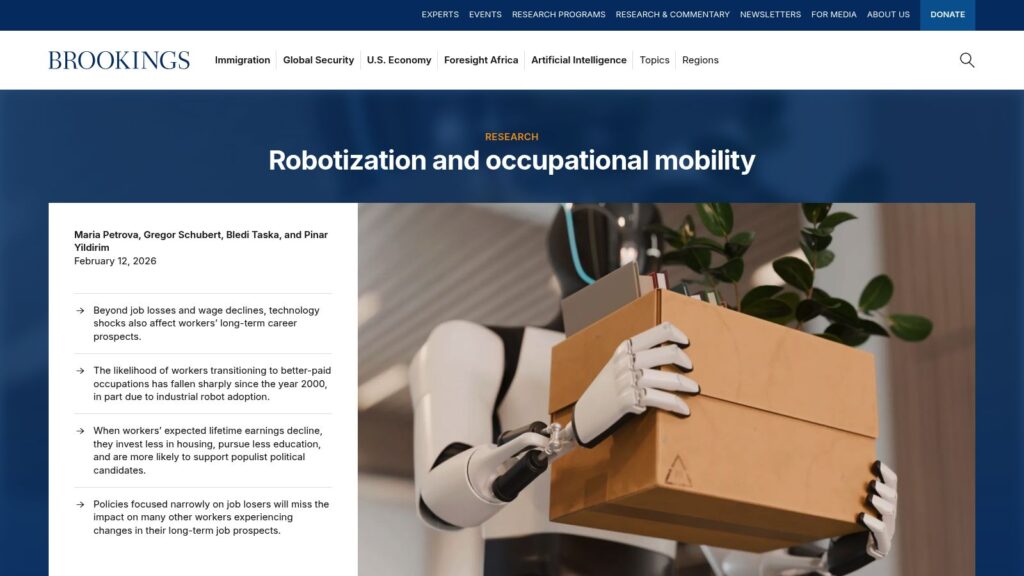
A Humanoid-robot Revolution Is Coming. Don’t Worry — Here’s Why It Will Take a While.

Humanoid robots are poised for a $5 trillion market, but full autonomy is years away due to complexities in development, reliability, and safety. Current sales in the U.S. are expected to remain under 1 million annually until after 2036. While some startups are progressing, challenges include replicating human dexterity and enhancing AI capabilities. Humanoid robots must optimize task efficiency, with early prototypes costing between $5,000 to $30,000, yet practical use remains limited. Overall, the path to widespread deployment is slow and complex.

https://www.marketwatch.com/story/a-humanoid-robot-revolution-is-coming-dont-worry-heres-why-it-will-take-a-while-8e2b1d08

HR in 2026: Three Shifts Already Reshaping the Workplace

HR in 2026 will focus on proactive responses to new employment legislation, AI integration in daily operations, and managing a multi-generational workforce. Anticipation of changes is crucial, shifting from reactive strategies to early engagement with policies and system designs. Emphasizing collaboration across generational strengths is essential for resilience and innovation. Success hinges on preparing for these shifts now rather than later.

https://www.thehrdirector.com/features/hr-in-business/hr-2026-three-shifts-already-reshaping-workplace/

Scroll to Top