I’m a Former CTO. Here Is the 15 Sec Coding Test I Used to Instantly Filter Out 50% of Unqualified Applicants.

Former CTO Jose Zarazua shares a simple coding test to filter out unqualified applicants in recruitment. The test involves a code snippet that many will answer incorrectly if they copy-paste rather than think through, allowing a quick assessment of programming skills. This method helped identify 50% of candidates using AI/Interpreter answers and revealed that only 3% answered incorrectly, effectively streamlining the hiring process.

https://josezarazua.com/im-a-former-cto-here-is-the-15-sec-coding-test-i-used-to-instantly-filter-out-50-of-unqualified-applicants/

Beyond the Inflection Point: The New Forces Shaping the Transformation of Work

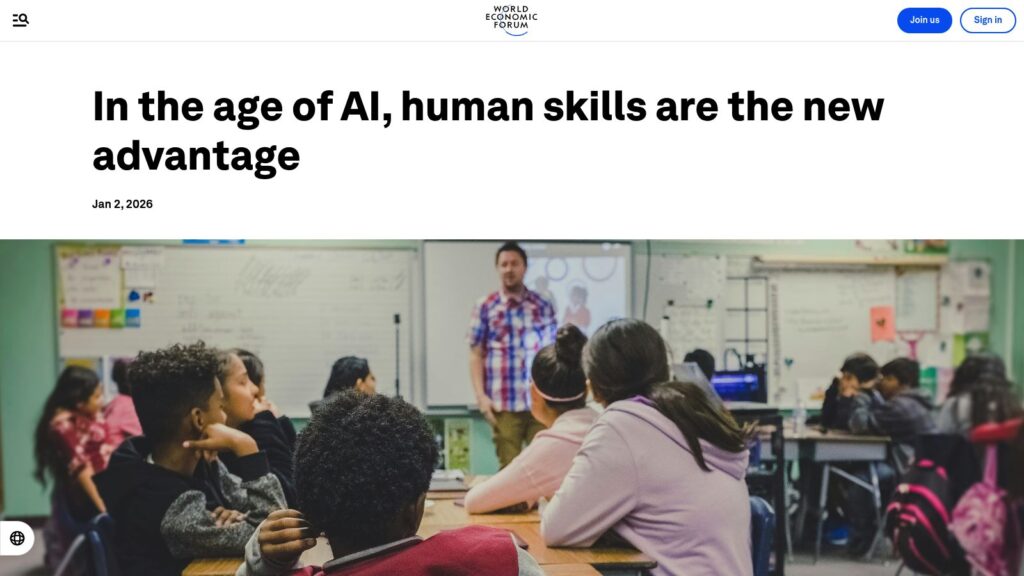
Rapid workplace changes, influenced by demographic shifts, deglobalization, and AI, necessitate proactive leadership and a reevaluation of skills and employment structures. There’s a significant skills scarcity as multiple generations work, yet roles remain unfilled despite automation. AI transforms job requirements, necessitating continuous reskilling. Entry-level job prospects for Gen Z decline due to automation, economic changes, and an oversupply of graduates, highlighting a mismatch between education and job market demands. Stronger connections between education and the labor market are essential to ensure students are prepared for evolving roles, promoting inclusive growth through proactive leadership and effective policy.

https://www.weforum.org/stories/2025/12/work-transformation-skills-agility-growth/

Perspective: What Anthropic’s Internal Study Suggests About the Future of Work

AI boosts productivity (20%-50% gains) but may atrophy essential human skills, prompting concerns about skill loss among workers, such as engineers. As AI takes over tasks, human roles shift from execution to judgment, necessitating ongoing skill retention and training. The challenge is maintaining vital skills while adapting to increasingly automated workplaces.

https://www.deseret.com/opinion/2025/12/13/future-of-work-ai-anthropic-study/

Why Humanoid Robots and Embodied AI Still Struggle in the Real World

Humanoid robots struggle in real-world situations due to a lack of physical intuition and embodied knowledge, unlike humans who learn from extensive real-life experiences. Despite advancements, these robots can’t perform everyday tasks like chores effectively, as they are limited by factors like uneven surfaces and complex movements. Current robot designs excel in controlled environments, but general-purpose humanoids remain elusive. Robotics researchers are exploring techniques like human demonstration and simulation, yet challenges persist, leaving humanoids in developmental stages with uncertain timelines for practical deployment.

https://www.scientificamerican.com/article/why-humanoid-robots-and-embodied-ai-still-struggle-in-the-real-world/

2026 and the Rise of Humanoid Robots: Looking at Trust, Privacy and the Future of Work

Humanoid robots are expected to become more prevalent in homes and workplaces in 2026, but the industry faces challenges. Safety concerns, privacy issues, and the need for human teleoperation in some cases raise questions about public acceptance. Additionally, the high cost of these robots and their potential impact on the labor market are concerns.

https://www.cnet.com/tech/computing/2026-and-the-rise-of-humanoid-robots-looking-at-trust-privacy-and-the-future-of-work/

AI Is Changing How We Learn at Work

AI is transforming work, but its impact on human learning and development is uncertain. Leaders are concerned that AI might disrupt traditional pathways to mastery, overwhelm with excessive content, diminish opportunities to develop empathy, and erode personal choice and agency. To ensure AI enhances rather than hinders human growth, leaders must engage in “sense-making conversations” to explore these challenges and design AI-enabled systems that prioritize human development.

https://hbr.org/2025/12/ai-is-changing-how-we-learn-at-work

AI and the Ironies of Automation

AI automates work but introduces complexities, necessitating human oversight to prevent errors. Insights from Lisanne Bainbridge’s 1983 paper on automation reveal challenges like decision-making under stress and training needs for operators, highlighting the irony that successful systems require significant investment in human skill development. As AI becomes more advanced, reevaluating UI/UX for operator interfaces and proactive leadership for AI agents is crucial for effective supervision.

https://www.ufried.com/blog/ironies_of_ai_2/

AI and the Ironies of Automation

AI automation leads to paradoxes where human skills deteriorate due to reduced engagement, causing inefficiency and knowledge gaps. Humans become overseers, losing expertise needed for monitoring automated systems effectively. This raises risks of errors going unnoticed, as attention wanes in low-activity scenarios. Future automation may create unqualified operators lacking necessary knowledge. The reliance on AI without maintaining human skills and awareness is unsustainable, demanding a reevaluation of monitoring roles and potential new job profiles to mitigate these issues.

https://www.ufried.com/blog/ironies_of_ai_1/

From Lab to Workplace: How Exoskeletons Are Evolving

Exoskeletons are evolving from sci-fi to practical applications in healthcare, manufacturing, and the military, with the market expected to reach $1.25 billion by 2030. They help support or augment human function, available in passive (no power needed) and active (motorized) types. Use cases include medical rehabilitation for spinal cord injuries and physical augmentation for workers in repetitive motion jobs, as well as military aid for carrying loads. Adoption faces challenges like perceived weight, comfort, effectiveness, and lack of established standards for workplace compliance. As technology and machine learning improve, exoskeletons may expand into consumer markets, enhancing mobility for the elderly and individuals recovering from injuries.

https://www.automate.org/robotics/industry-insights/from-lab-to-workplace-how-exoskeletons-are-evolving

“Empowering People and Building Digital Skills Are Essential for Accelerating the Adoption of AI and Robotics in the Workplace”

Empowering workforce and enhancing digital skills are crucial for advancing AI and robotics adoption in workplaces, as discussed at the Rockwell Automation Fair 2025. Key insights include the importance of skilled employees, intuitive human-machine interactions, and the integration of Autonomous Mobile Robots (AMRs) in manufacturing environments. Experts emphasized the need for safety measures and thoughtful factory designs to harmonize human-robot collaboration. AI-driven automation and machine learning are transforming operational efficiency. Effective coordination of robots within existing operations is essential for realizing the full potential of robotics technologies.

https://emag.directindustry.com/2025/12/18/rockwell-automation-ai-robotics-workplace-amr/

New Study Highlights Safety, Reliability, and Performance as the Key Drivers of Trust

A new study by QNX reveals that 77% of global technology leaders trust robotics for essential workplace functions, with safety, reliability, and performance key drivers of that trust. While executives are comfortable with robots handling menial tasks, trust decreases for tasks requiring human interaction. Despite the growing adoption of robotics, concerns remain about workplace preparedness and security risks.

https://www.automate.org/robotics/news/qnx-research-reveals-77-of-global-technology-leaders-trusting-of-robotics-in-the-workplace

Board Oversight Of AI-Driven Workforce Displacement

Boards must reassess oversight roles in response to AI-driven workforce changes, notably layoffs. Legal obligations exist mainly around financial disclosures and WARN Act compliance, but fiduciary responsibilities are emerging that emphasize the importance of human capital and company culture. Governing bodies are encouraged to consider AI’s impact on employees, aligning technology adoption with long-term corporate strategy rather than short-term cost-cutting. Ethical considerations also mandate directors to prioritize worker welfare and align with corporate values, while fostering management accountability in AI deployment decisions.

https://corpgov.law.harvard.edu/2025/12/18/board-oversight-of-ai-driven-workforce-displacement/

Fear of Losing Your Job Is No Way to Get Employees on Board With AI

Companies pushing AI adoption through fear are using the wrong motivator. Fear-driven mandates create performative compliance that limits growth, while open communication and collaboration unlock AI’s potential. Effective leadership redirects attention outward, fostering trust, creativity, and problem-solving, rather than inward fear and rigidity.

https://www.morningstar.com/news/marketwatch/20251218179/fear-of-losing-your-job-is-no-way-to-get-employees-on-board-with-ai

The AI Efficiency Illusion: Why Cutting 1.1 Million Jobs Will Stifle, Not Scale, Your Strategy

TLDR: In 2025, U.S. companies cut over 1.17 million jobs, claiming efficiency through AI. However, this approach erodes human capital, stifles innovation, and increases operational errors among remaining employees. Layoffs disproportionately affect women and people of color, worsening systemic inequities. Companies must prioritize human-centric strategies, ensuring diversity and governance to optimize AI’s benefits rather than cutting jobs. This holistic approach will lead to long-term profitability and equity.

https://fortune.com/2025/12/18/the-ai-efficiency-illusion-why-cutting-1-1-million-jobs-will-stifle-not-scale-your-strategy/

Scroll to Top