Superagency in the Workplace: Empowering People to Unlock AI’s Full Potential

Superagency Report Summary: AI in the Workplace – January 2025

AI is poised to transform workplaces significantly, yet only 1% of companies view their AI integration as mature. Employees are eager and ready for AI adoption, but leadership hesitancy is the main barrier. There’s potential for $4.4 trillion in productivity growth if AI is effectively harnessed. Most organizations plan to increase AI investments, but leaders must make bold moves to foster maturity. Employees already actively use AI and expect it to impact their roles significantly. The report emphasizes that the challenge lies not in the technology but in aligning leadership and shaping workplace culture to embrace AI effectively.

https://www.mckinsey.com/capabilities/tech-and-ai/our-insights/superagency-in-the-workplace-empowering-people-to-unlock-ais-full-potential-at-work

Anthropic Turns Inward to Show How AI Affects Its Own Workforce

Anthropic examined how its AI tool, Claude, affects its own workforce by surveying employees and analyzing internal data. The findings show that AI significantly changes developers’ jobs, making them more productive and allowing for faster learning, but also raising concerns about loss of technical skills, reduced collaboration, and possible job risks. Although AI can free workers to do new tasks, some spend longer on tasks due to the need for debugging and understanding AI output. Notably, overall efficiency doesn’t always improve, and thoughtful measurement of real workplace impact is essential rather than relying on time-based metrics alone.

https://www.inc.com/kit-eaton/anthropic-turns-inward-to-show-how-ai-affects-its-own-workforce/91273789

North Korea Lures Engineers to Rent Identities in Fake IT Worker Scheme

North Korea’s Famous Chollima recruiting group is targeting developers to rent their identities for illicit activities, using deception such as deep fake videos and AI. They trick real engineers into acting as fronts for remote interviews with Fortune 500 companies, offering financial compensation. Researchers documented these tactics, revealing the use of AI tools to automate job applications and capture private information. The operation highlights the risks for compromised engineers, who bear the consequences of any wrongdoing while posing as legitimate candidates.

https://www.bleepingcomputer.com/news/security/north-korea-lures-engineers-to-rent-identities-in-fake-it-worker-scheme/

How to Build Forward-thinking Cybersecurity Teams for Tomorrow

Microsoft’s security strategy emphasizes the need for adaptive, innovative teams in the evolving landscape of AI-powered cyber threats. Traditional cybersecurity roles must evolve beyond technical expertise to include critical thinking and diverse skill sets. Organizations should rethink recruitment practices, onboarding processes, and continuous training to build resilient teams equipped to tackle sophisticated threats. Emphasizing cognitive diversity and collaboration will enhance defenses against AI-driven attacks, as the next major cyber breach could stem from inadequate talent adaptation to this new era. Future-proofing cybersecurity talent is crucial for organizational success.

https://www.microsoft.com/en-us/security/blog/2025/12/02/how-to-build-forward-thinking-cybersecurity-teams-for-tomorrow/

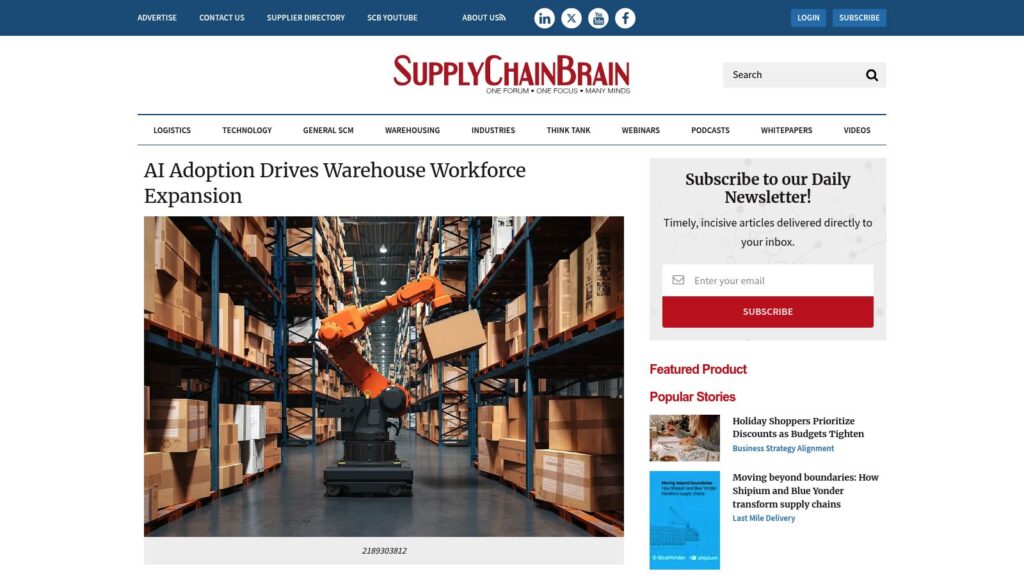
AI Adoption Drives Warehouse Workforce Expansion

AI adoption in logistics boosts warehouse workforce and productivity, report by Mecalux and MIT reveals. Over 50% of logistics leaders expanded workforce, with AI seen as a core productivity driver. 90% utilize AI, allocating 11%-30% of tech budgets, planning increases. Challenges include expertise and costs, but benefits include faster, smoother operations with a payback period of 2-3 years.

https://www.supplychainbrain.com/articles/42919-ai-adoption-drives-warehouse-workforce-expansion

The New Jobs AI Is Creating for the Workforce

AI is creating new jobs like decision designer and AI experience officer that focus on human-AI collaboration, blending technical skills with psychology and ethics. As AI adoption matures, companies are shifting from retrofitting existing roles to creating uniquely AI-focused positions to ensure effective collaboration and ethical implementation, while maintaining human oversight in decision-making processes.

https://www.businessinsider.com/new-jobs-ai-creates-workforce-decision-designer-experience-officer-2025-12

78% of IT Job Postings Already Require AI Skills

IT job markets increasingly require AI skills, with 78% of postings demanding them. As AI reshapes roles, reskilling is critical, and soft skills gain importance. By 2030, AI proficiency may be as essential as PC skills today, highlighting the need for adaptability and new competencies. Concerns about rising automation and job displacement persist, yet opportunities for younger talent are expected to grow. Companies must rethink entry-level roles amidst these changes.

https://www.cio.com/article/4094687/without-ai-the-it-job-market-would-hardly-be-possible-anymore.html

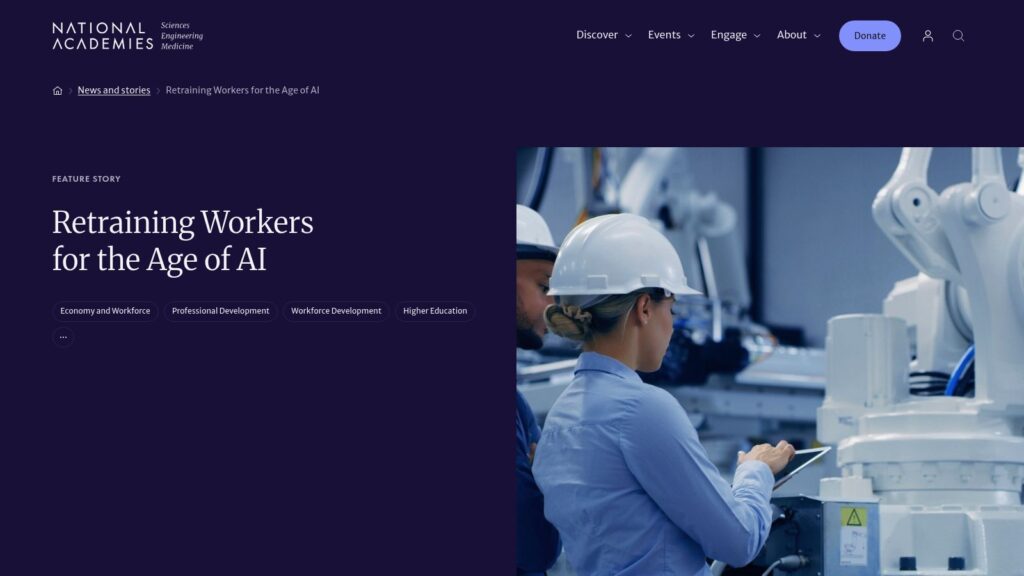
Retraining Workers for the Age of AI

AI tool usage among workers is rising sharply, leading to workplace stress and pressure to adapt. The U.S. lacks sufficient funding for workforce development to retrain displaced workers due to technology changes, which affects long-term outcomes for individuals and communities. Training must target new “frontier” jobs, evolving “retooled” roles, and support for “legacy” jobs while considering the aging workforce. AI can enhance learning opportunities, but individual support is vital, especially for those in the gig economy. Lastly, increased awareness of job vulnerability due to AI may foster empathy for affected workers.

https://www.nationalacademies.org/news/retraining-workers-for-the-age-of-ai

When Hackers Wear Suits: Protecting Your Team From Insider Cyber Threats

Threat: Hackers impersonate IT professionals to gain insider access in organizations, leading to data theft and financial fraud. They use deepfakes, fabricated identities, and social engineering to secure jobs.

Defenses: Implement advanced HR checks, multi-factor authentication, and continuous security training to prevent breaches from insider threats. Stay vigilant against insider impersonation signs, especially in remote hiring. Cybersecurity is critical; a breach can have catastrophic consequences.

https://www.bleepingcomputer.com/news/security/when-hackers-wear-suits-protecting-your-team-from-insider-cyber-threats/

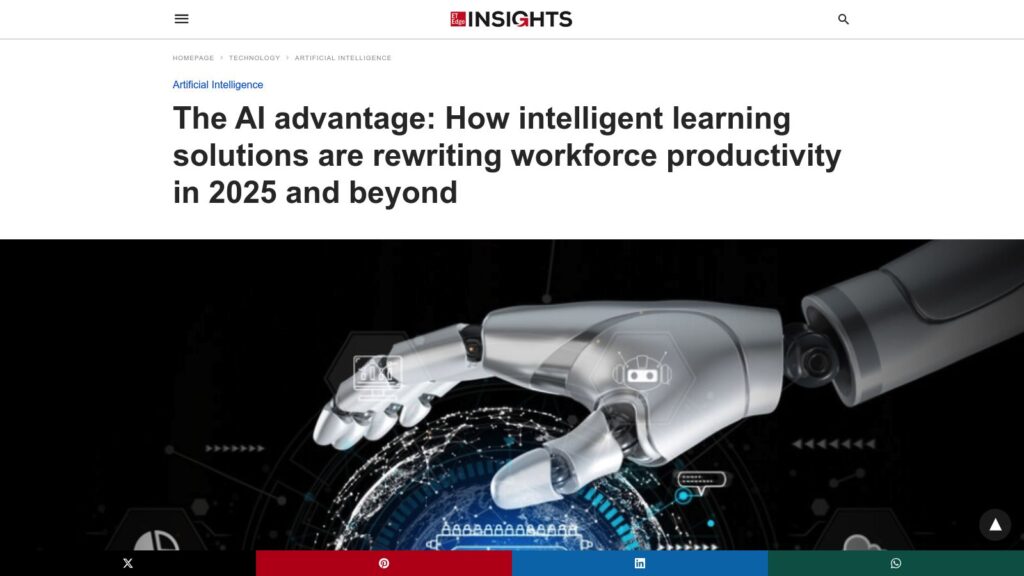
The AI Advantage: How Intelligent Learning Solutions Are Rewriting Workforce Productivity in 2025 and Beyond

AI transforms workforce productivity in 2025 via personalized learning ecosystems. It enhances skill development with adaptive learning, generative content creation, and predictive analytics, moving away from traditional training methods. Benefits include faster skill acquisition, better retention, and improved productivity. AI democratizes learning, empowers employees, and aligns workforce capabilities with business strategies. The future of work relies on organizations embracing AI-driven learning as a continually evolving system for competitive advantage.

https://etedge-insights.com/technology/artificial-intelligence/the-ai-advantage-how-intelligent-learning-solutions-are-rewriting-workforce-productivity-in-2025-and-beyond/amp/

Your Workers Probably Distrust AI More Than You Do, This Study Says

Workers distrust AI more than managers; many prefer human involvement in hiring and performance evaluations. A report reveals 74% believe AI use harms perceptions of companies, while just 27% trust employers to use AI responsibly. Despite interest in AI skills, lack of guidance from employers breeds uncertainty. Overall, workers favor transparency and human oversight in AI applications impacting careers.

https://www.inc.com/kit-eaton/your-workers-probably-distrust-ai-more-than-you-do-this-study-says/91270982

AI Is Taking the Lead: Now Managers Must Make People More Valuable, Not Replaceable

AI’s integration demands leaders emphasize human value over replaceability. Employees use AI to enhance productivity and prefer its logical approach in management. However, they still value human leaders for emotional intelligence, urging a balance of AI for fairness and humans for inspiration.

https://www.hcamag.com/us/specialization/hr-technology/ai-is-taking-the-lead-now-managers-must-make-people-more-valuable-not-replaceable/558323

Scroll to Top