ai

AI Robots May Outnumber Workers in a Few Decades as Firms Ramp up Investment

AI robots may outnumber human workers in decades due to increased corporate investment and profitability focus. Former Citi executive predicts AI robots’ rapid growth, estimating 1.3 billion by 2035 and 4 billion by 2050. Robots often pay for themselves rapidly, making them more cost-effective than humans. McKinsey reports the workforce will soon balance between humans and AI agents. AI’s impact on jobs will be significant, creating concerns over worker displacement while also promising high-tech job opportunities.

https://www.cnbc.com/2026/02/23/ai-robots-outnumber-workers-agents-few-decades-citi.html

Professional AI Adoption Could Unlock up to $4.1 Trillion Capacity for US

LinkedIn’s report reveals that adopting AI could boost the U.S. economy by $4.1 trillion, enhancing efficiency in sectors like manufacturing and education. However, U.S. AI adoption lags behind countries like India, with only 28% of working-age Americans utilizing AI tools. The report suggests upskilling employees and government support for AI programs to optimize benefits, highlighting that many businesses currently see limited impact from AI.

https://www.socialmediatoday.com/news/professional-ai-adoption-could-unlock-up-to-41-trillion-capacity-for-us/812915/

The Human Work Behind Humanoid Robots Is Being Hidden

AI advancements in humanoid robots often hide the significant human labor involved. Companies, driven by hype, create unrealistic expectations about robot capabilities. As robots learn from human actions, workers are reduced to data gatherers, raising privacy concerns and reflecting gig-work dynamics. Transparency is lacking, and without it, the real limitations of robotic intelligence are obscured, leading to potential misunderstandings and risks, such as those seen in automotive technologies.

https://www.technologyreview.com/2026/02/23/1133508/the-human-work-behind-humanoid-robots-is-being-hidden/

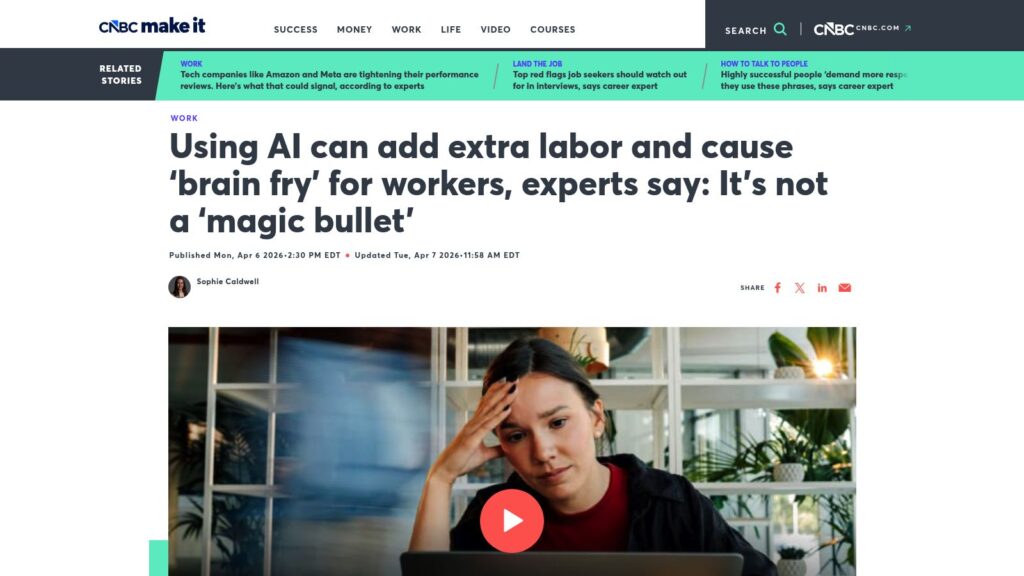
AI Will Either Save Work or Destroy It. Apparently.

The future of work and AI is uncertain, with opinions ranging from AI being a productivity savior to a job destroyer. While some argue AI will create new jobs, others worry about job downgrading and increased inequality. The key to navigating this uncertainty lies in improving AI literacy, upskilling, and experimenting with AI tools to ensure they enhance human work rather than replace it.

https://workplaceinsight.net/ai-will-either-save-work-or-destroy-it-apparently/

Fears About AI Taking Our Jobs Are Understandable

Fears that AI will replace jobs are understandable but harmful. While anxiety about job loss due to AI is widespread and can negatively impact workers’ mental health and decision-making, AI hasn’t caused mass unemployment yet. The fear itself can lead to disengagement and feelings of alienation. It’s essential to integrate AI thoughtfully into workplaces, involving workers in the process to mitigate these fears and preserve dignity. Addressing the risks of AI should focus on societal intervention to prevent anxiety from becoming a larger crisis.

https://theconversation.com/fears-about-ai-taking-our-jobs-are-understandable-but-harmful-276245

Token Anxiety

In 2026, San Francisco’s social scene is dominated by people obsessed with their AI agents, who constantly monitor and optimize their performance. The pressure to innovate and stay ahead is intense, leading to a culture of constant productivity and a fear of falling behind. This obsession permeates daily life, blurring the lines between work and leisure, and leaving little room for relaxation or reflection.

https://writing.nikunjk.com/p/token-anxiety

AI Could Cause Workers to Rise Up Against the Corporations Driving Them Into Poverty

AI may unite workers against corporations exploiting them, potentially reviving unions. As AI threatens jobs, discontent rises, suggesting the possibility of larger labor movements. Concerns over layoffs and a desire for union representation are growing, prompting business leaders to call for de-escalation amid unrest. Workers have a choice in how to use AI, which could either exploit or empower them.

https://futurism.com/artificial-intelligence/ai-labor-workers-movement

AI Isn’t Failing, People Are Failing With AI

The article emphasizes that AI projects fail not due to the technology itself, but from improper application and lack of understanding. Success with tools like BERT and GPT relies on domain expertise and a structured approach to deployment, particularly in data-heavy industries like healthcare and finance. A risk-based framework is recommended for assessing AI applications. In summary, effective AI use hinges on comprehension of technology, data management, and strategic application.

https://www.cio.com/article/4135361/ai-isnt-failing-people-are-failing-with-ai.html

Building Pro-worker AI

Summary: AI can either displace workers or enhance their capabilities. Pro-worker AI technologies increase the value of human skills. However, most AI development focuses on automation rather than augmenting workers. Policy recommendations for promoting pro-worker AI include emphasizing its use in sectors like healthcare, enhancing government expertise in AI, fostering competition, and protecting worker rights.

https://www.brookings.edu/articles/building-pro-worker-ai/

The AI Workforce Myth: Why Training Won’t Deliver Readiness

Organizations investing in AI readiness find that training alone does not produce business impact because it doesn’t change how work gets done or how AI is adopted. Structural barriers—outdated processes, missing governance, and roles not aligned with AI—limit adoption. Leading organizations redefine operating models by integrating AI into workflows, updating job descriptions, establishing governance, and creating performance-based incentives. They conclude readiness requires organizational redesign and change management, not just skill training. 

https://rsmus.com/insights/services/business-strategy-operations/why-training-wont-deliver-readiness.html

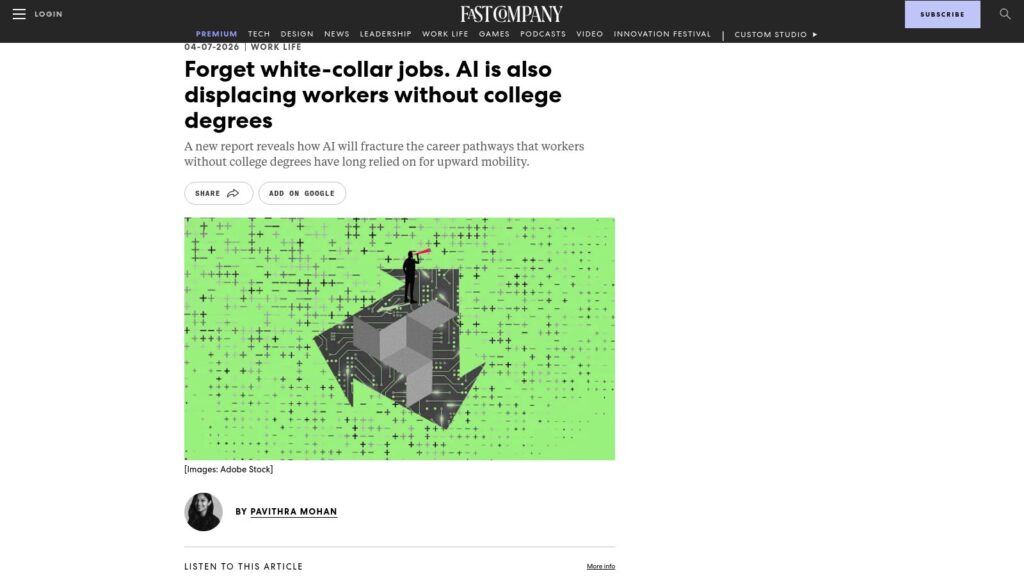
AI Is Creating a Future Workforce Disaster As It Erases Entry-Level Skillbuilding

AI is automating entry-level tasks, eliminating foundational job experiences and creating future talent shortages. This reduces opportunities for young workers, as companies prioritize efficiency over skill development. While productivity increases, independent thinking and professional instincts decline, leading to potential long-term workforce issues. Employers may face a talent gap, lacking capable individuals to fill senior roles, as essential on-the-job training disappears. AI also impacts workplace collaboration, weakening mentorship and informal learning among junior employees. The trend signifies a structural shift in career progression, where fewer workers gain necessary experience to advance.

https://allwork.space/2026/02/ai-is-creating-a-future-workforce-disaster-as-it-erases-entry-level-skillbuilding/

Managing the New Blend of Human and Virtual “Co-Workers”

HR must adapt for 2026 as AI reshapes workplaces. Key trends include managing layoffs humanely, protecting employee mental health from AI, improving productivity, addressing recruitment fraud, safeguarding against corporate espionage, and supporting workers transitioning to skilled trades. Successful HR leaders will prioritize process optimizations over mere tech skills and develop compensation strategies for employees’ digital likenesses.

https://www.latimes.com/b2b/human-resources/story/2026-02-22/2026-future-of-work-trends-hr-leaders

AI News: Italy Sets the Rules for AI in the Workplace

Italy’s AI Act, effective October 2025, outlines compliance rules for AI usage in workplaces, emphasizing data transparency and employee rights. It mandates clear communication about AI functionalities, human oversight, and protects against discrimination. Employers face fines for non-compliance, and a new Oversight Committee will monitor AI’s employment impact. The Act reinforces GDPR obligations, ensuring lawful handling of personal data. Companies must assess AI systems, update practices, and align with legal requirements for continued operation.

https://www.klgates.com/AI-News-Italy-Sets-the-Rules-for-AI-in-the-Workplace-2-20-2026

Huge AI Jobs Disruption Coming. What It Means For You.

AI’s job disruption is accelerating, causing concerns for industries like finance, insurance, and logistics. Major companies are freezing hiring or cutting staff due to AI’s increasing productivity, with predictions of significant headcount reductions. The unemployment rate among recent graduates is at a 12-year high, and overall job openings have dropped, signaling AI’s impact on employment. While some economists and Fed officials see resilience in the job market, fears of jobless growth are rising, highlighting challenges for young workers. Infrastructure jobs remain in demand, but overall, AI may render many roles redundant, leading to a complex economic landscape ahead.

https://www.investors.com/news/economy/ai-jobs-inflection-what-it-means-for-sp-500-fed-you/

Japan to Mass-Produce Humanoid Robots by 2027

Japan plans to mass-produce humanoid robots by 2027 to address labor shortages. Two prototypes are under development: a 250 cm disaster response model and a human-sized research model. This effort involves collaboration among major Japanese companies and is part of a broader AI Robotics Strategy to enhance technological capabilities and workforce support, as Japan faces a declining working-age population. Despite challenges, the initiative aims to unify efforts in robotics as Japan seeks to regain its competitive edge in the field.

https://japan-forward.com/japan-to-mass-produce-humanoid-robots-by-2027/

Scroll to Top