business

A Humanoid-robot Revolution Is Coming. Don’t Worry — Here’s Why It Will Take a While.

Humanoid robots are poised for a $5 trillion market, but full autonomy is years away due to complexities in development, reliability, and safety. Current sales in the U.S. are expected to remain under 1 million annually until after 2036. While some startups are progressing, challenges include replicating human dexterity and enhancing AI capabilities. Humanoid robots must optimize task efficiency, with early prototypes costing between $5,000 to $30,000, yet practical use remains limited. Overall, the path to widespread deployment is slow and complex.

https://www.marketwatch.com/story/a-humanoid-robot-revolution-is-coming-dont-worry-heres-why-it-will-take-a-while-8e2b1d08

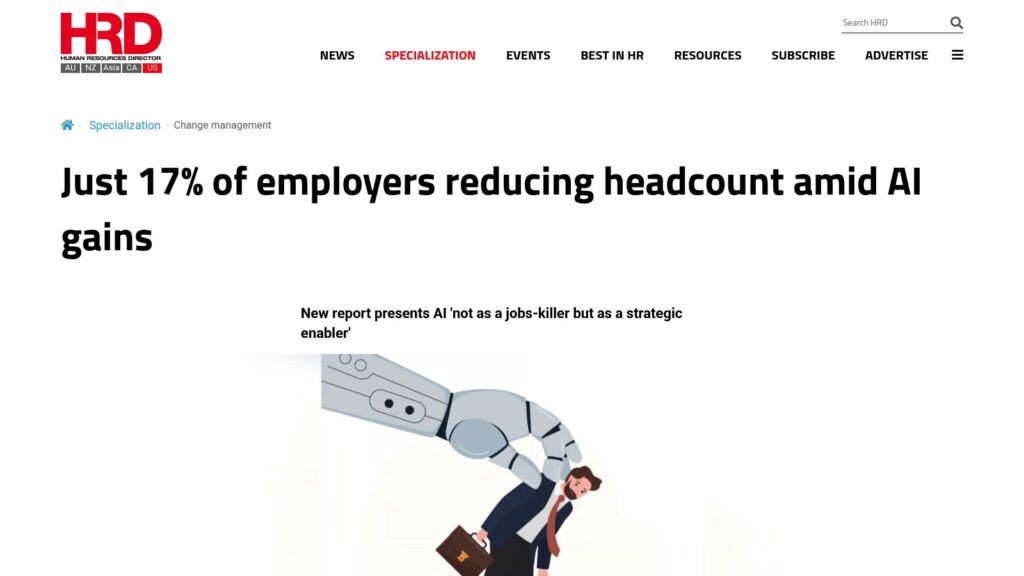
HR in 2026: Three Shifts Already Reshaping the Workplace

HR in 2026 will focus on proactive responses to new employment legislation, AI integration in daily operations, and managing a multi-generational workforce. Anticipation of changes is crucial, shifting from reactive strategies to early engagement with policies and system designs. Emphasizing collaboration across generational strengths is essential for resilience and innovation. Success hinges on preparing for these shifts now rather than later.

https://www.thehrdirector.com/features/hr-in-business/hr-2026-three-shifts-already-reshaping-workplace/

Why Data Skills Are the Backbone of AI Success

Data skills are crucial for AI success, yet many organizations face a significant skills gap, hindering AI implementation and ROI. Over 20% of employees lack adequate training in AI, impacting their ability to leverage AI tools effectively. Human oversight is essential for refining AI outputs, and training should be integral to organizational strategy, not an afterthought. To remain competitive and fully harness AI’s capabilities, continuous upskilling and a focus on data fluency across all levels are necessary.

https://startupsmagazine.co.uk/why-data-skills-are-the-backbone-of-ai-success

2026 AI Trends

In 2026, organizations will increasingly integrate AI into their business strategies, focusing on how to use AI effectively rather than just deploying it. This will lead to the rise of AI-native departments in HR, procurement, and customer operations, where AI handles routine tasks, and humans focus on higher-value activities. Additionally, there will be a reduction in middle management roles as AI takes over routine tasks, and organizations will prioritize leaders who can effectively manage hybrid teams of humans and AI.

https://www.imd.org/ibyimd/artificial-intelligence/2026-ai-trends-what-leaders-need-to-know-to-stay-competitive/

Salesforce Regrets Firing 4000 Experienced Staff and Replacing Them With AI

Salesforce regrets firing 4,000 experienced customer support staff, acknowledging overconfidence in AI’s ability to replace human roles. The layoffs resulted in declining service quality, increased complaints, and operational disruptions, as AI struggled with complex customer issues. CEO Marc Benioff has since recognized the value of human expertise, shifting Salesforce’s strategy towards augmenting AI rather than outright replacement. This cautionary tale highlights the risks of rapidly advancing automation without adequate preparation.

https://maarthandam.com/2025/12/25/salesforce-regrets-firing-4000-staff-ai/

Council Post: AI Readiness Past 2026 Demands a Workforce Transformation Today

Companies must prioritize workforce upskilling to prepare for AI’s impact beyond 2026. While hyperscalers face challenges in monetizing AI investments, companies implementing AI workflows for internal operations can achieve significant returns. Empowering employees to understand, experiment with, and critically evaluate AI is crucial, especially in regulated industries where accountability is paramount.

https://www.forbes.com/councils/forbesbusinessdevelopmentcouncil/2025/12/23/ai-readiness-past-2026-demands-a-workforce-transformation-today/

How the World of Work Will Change Over the Next 20 Years

The future of work will be significantly shaped by artificial intelligence, impacting performance measurement, workforce demographics, and the role of managers. AI will enable real-time data analysis to optimize workflows and collaboration, while a shrinking workforce will necessitate investments in vocational training and skill-based development. The gig economy will thrive with democratized access to AI, and generalist roles will become more valuable, emphasizing creativity and cross-functional collaboration.

https://www.wsj.com/lifestyle/workplace/future-of-work-978509bf

The Under-the-radar Reason for the White-collar Job Bloodbath

America’s job market is struggling due to a combination of high interest rates, stagnant demand for entry-level jobs, and a hesitance to hire amid economic uncertainty—not primarily due to AI. Long-term unemployment is rising, and the number of job seekers is exceeding job openings. While AI is altering workplace dynamics, its current impact on job displacement is overstated. The true culprit behind job market woes is deteriorating economic conditions, exacerbated by rising rates and tariffs, rather than a technological revolution.

https://www.businessinsider.com/forget-ai-heres-the-real-reason-the-job-market-sucks-2025-12

The CFO’s Playbook for the Human + AI Workforce

KPMG emphasizes insights on industry trends and innovation, particularly concerning the integration of AI into finance. CFOs are encouraged to redefine roles, manage AI agents effectively, and redesign career paths, emphasizing interdisciplinary skills and flexibility. Key strategies include planning for role convergence, choreographing AI-human collaboration, and creating hybrid career models to adapt to evolving job landscapes.

https://kpmg.com/us/en/articles/2025/cfo-playbook-for-human-ai-workforce.html

The Great Decoupling of Labor and Capital

Tech companies are increasingly decoupling revenue growth from employee headcount, evident in their historical milestones. For instance, Apple achieved its initial $100 billion in revenue with 60k employees but needed only 17k for the next $100 billion. Similarly, Alphabet, Microsoft, and Meta show reduced employee requirements for revenue growth. Even Amazon, affected by pandemic-driven overhiring, added $200 billion in revenue with only 36k more employees. Overall, nearly $1 trillion in incremental revenue across several companies involved only 100k new hires, highlighting a significant trend before generative AI’s impact. This decoupling raises questions about the future workforce dynamics and potential implications for investments and the broader economy.

https://www.mbi-deepdives.com/the-great-decoupling-of-labor-and-capital/

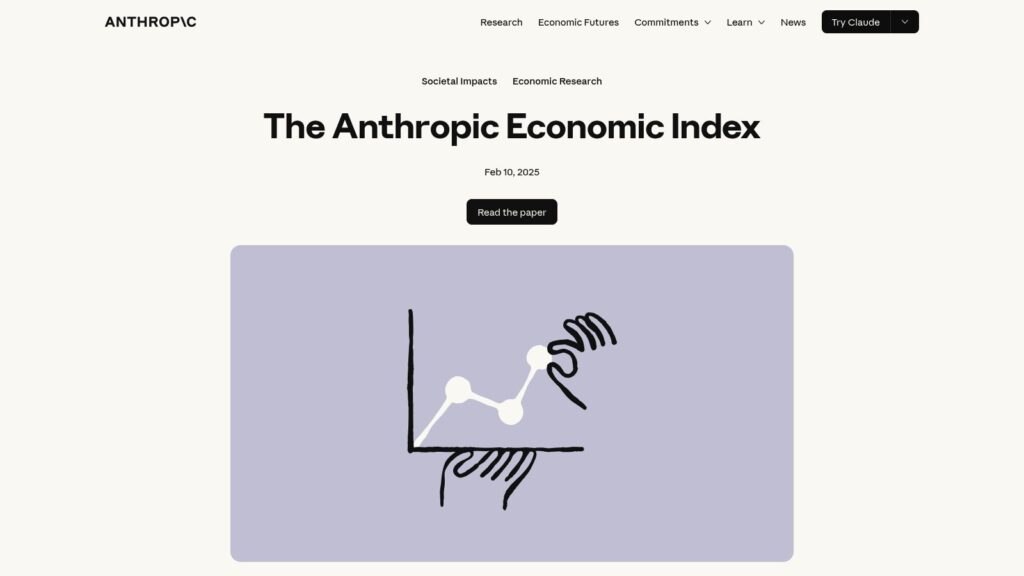
Introducing the Anthropic Economic Index

The Anthropic Economic Index, launched to analyze AI’s impact on labor markets, reveals that AI usage primarily enhances roles in software development, affecting about 36% of occupations. Findings show a balance between AI augmentation (57%) and automation (43%), with AI mostly prevalent in mid-to-high wage jobs like programming. The study harnesses anonymized data from millions of conversations on Claude.ai, offering insights into actual AI integration rather than predictions. Open data is available for further research and collaboration.

https://www.anthropic.com/news/the-anthropic-economic-index

Scroll to Top