strategy

When Building an AI Strategy, Don’t Forget the Humans
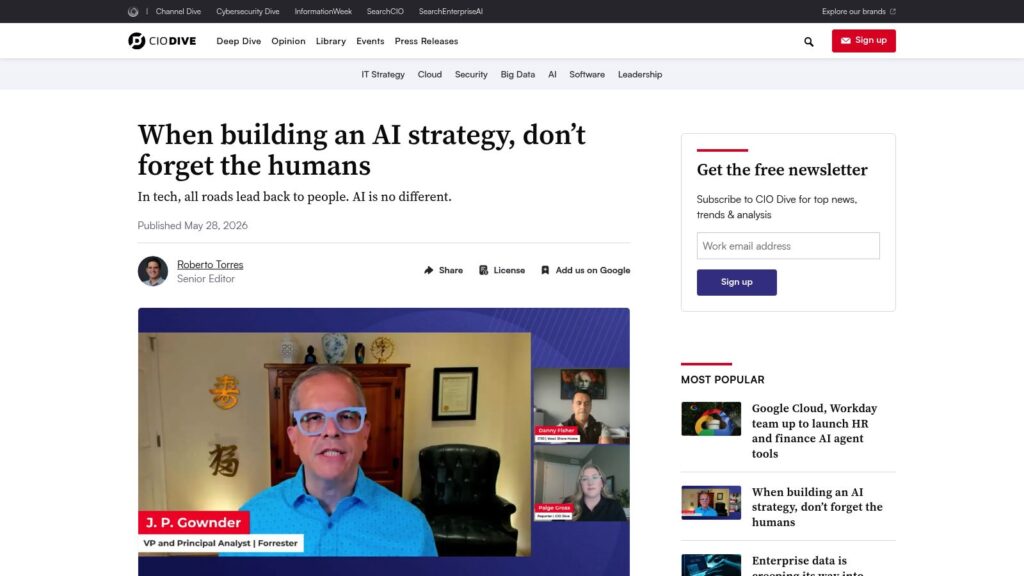
When building an AI strategy, organizations must prioritize the human aspect to ensure successful adoption and productivity gains. Transparency, communication, and intentional learning strategies are essential to build employee trust and effectively integrate AI tools, while focusing on user needs helps prevent AI initiatives from stalling due to data, talent, or risk challenges.

https://www.ciodive.com/news/AI-adoption-CIO-people-management/821297/
CIOs Say They Need a People Strategy to Scale AI

CIOs emphasize the necessity of a strong people strategy to successfully scale AI within organizations, highlighting the importance of investing in skills, culture, and employee engagement. They note that for every dollar spent on AI technology, companies should invest three dollars in people, focusing on human-centric skills and overcoming employees’ fear of obsolescence to drive sustainable AI adoption.

https://www.hrdive.com/news/cio-people-strategy-scaling-ai/821080/

Why AI Success Depends on Culture, Not Code

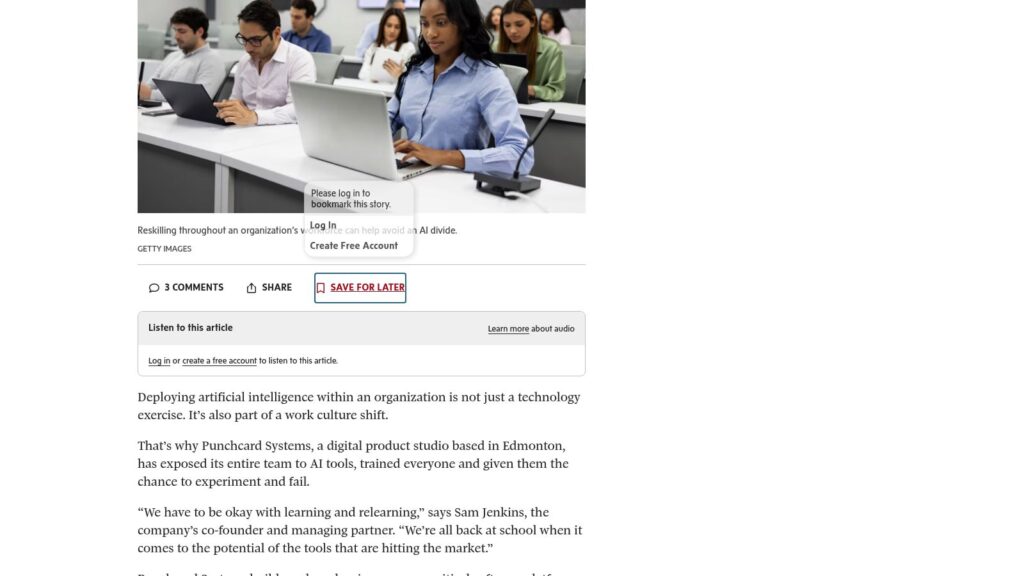
The success of AI adoption in organizations depends more on fostering a culture of continuous learning and psychological safety than on the technology itself. Punchcard Systems, an Edmonton-based company, exemplifies this by training all employees to use AI tools, encouraging experimentation, and promoting reskilling to prevent an “AI divide” among staff. Experts emphasize that AI accelerates execution but does not solve fundamental business challenges, making cultural readiness and adaptability crucial for leveraging AI effectively.

https://www.theglobeandmail.com/business/article-why-ai-success-depends-on-culture-not-code/

AI & Jobs: Are Companies Prepared for the Workforce Revolution?

The article discusses how organizations can prepare for the workforce revolution driven by AI through three key strategies: reskill, rehire, and recreate. It highlights the importance of reskilling current employees over hiring new talent to maintain internal knowledge and morale, addresses the risk of increased inequality due to uneven AI adoption and entry-level job reductions, and advocates for using AI not only to automate tasks but also to upskill employees, fostering engagement and continuous development.

https://knowledge.insead.edu/leadership-organisations/ai-jobs-are-companies-prepared-workforce-revolution

How AI Is Reshaping the Future of Work

Artificial intelligence is fundamentally transforming work by enhancing daily workflows, decision-making, and organizational structures, but the impact depends heavily on leadership that integrates AI responsibly with clear governance and ethical oversight. Stanford Graduate School of Business Executive Education programs prepare leaders to navigate these changes by focusing on AI-enabled organizational design, human-AI collaboration, reskilling, and balancing automation with human judgment to build adaptable, ethical, and high-performing organizations.

https://www.gsb.stanford.edu/exec-ed/difference/how-ai-reshaping-future-work

Business Leaders Marked Down on AI Workforce Strategy

Research by Accenture reveals that nearly one-third of workers expect their jobs to become unrecognizable or disappear by 2030, with most anticipating a need to reskill or change occupations. However, many organizations are not adequately supporting this transition, as only a minority conduct AI impact skills audits or invest significantly in reskilling, creating a gap between employee expectations and employer workforce strategies amid growing concerns over AI-induced job displacement.

https://www.computerweekly.com/news/366641771/Business-leaders-marked-down-on-AI-workforce-strategy

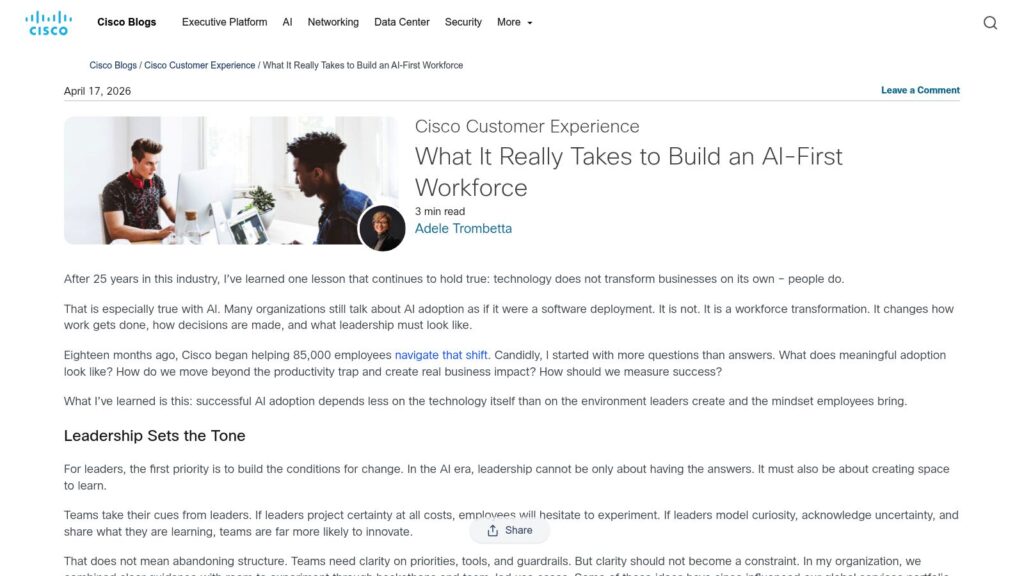
What It Really Takes to Build an AI-First Workforce

Cisco emphasizes that successful AI adoption is a workforce transformation relying on leadership creating supportive environments and employees bringing the right mindset. The company highlights that AI complements human judgment, encouraging experimentation, measuring more than productivity, and reinvesting gained capacity into learning and innovation to achieve meaningful business impact.

https://blogs.cisco.com/customerexperience/what-it-really-takes-to-build-an-ai-first-workforce

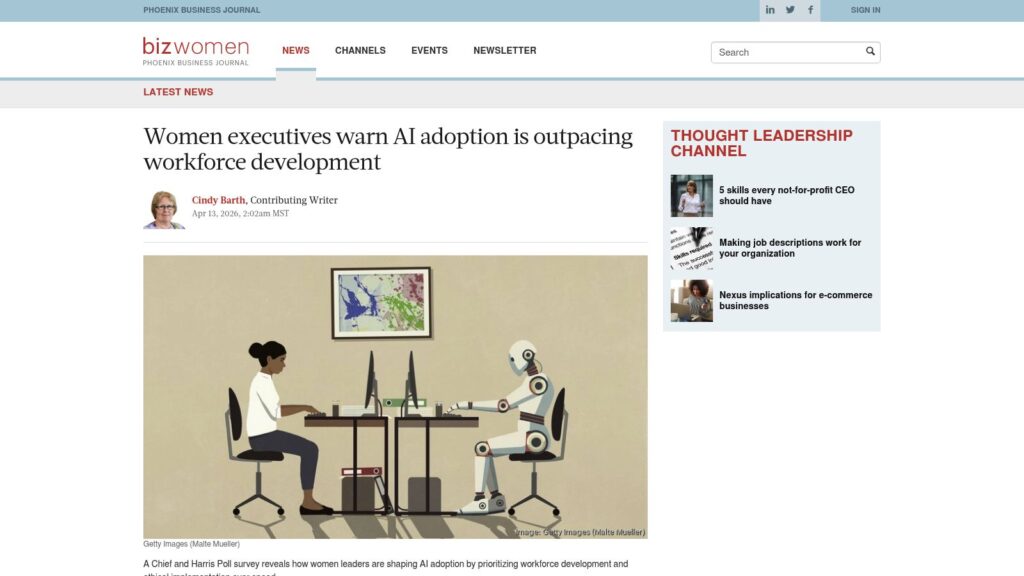
Women Executives Warn AI Adoption Is Outpacing Workforce Development

A Chief and Harris Poll survey reveals that many women executives are actively shaping AI adoption by emphasizing workforce development and ethical use rather than just rapid deployment. They express concern that organizations are reducing early-career hiring and prioritizing adoption speed over sustainable human-AI collaboration, warning that neglecting human judgment and skills may harm future leadership and organizational quality.

https://www.bizjournals.com/phoenix/bizwomen/news/latest-news/2026/04/women-executives-ai-adoption-outpacing-development.html?page=all

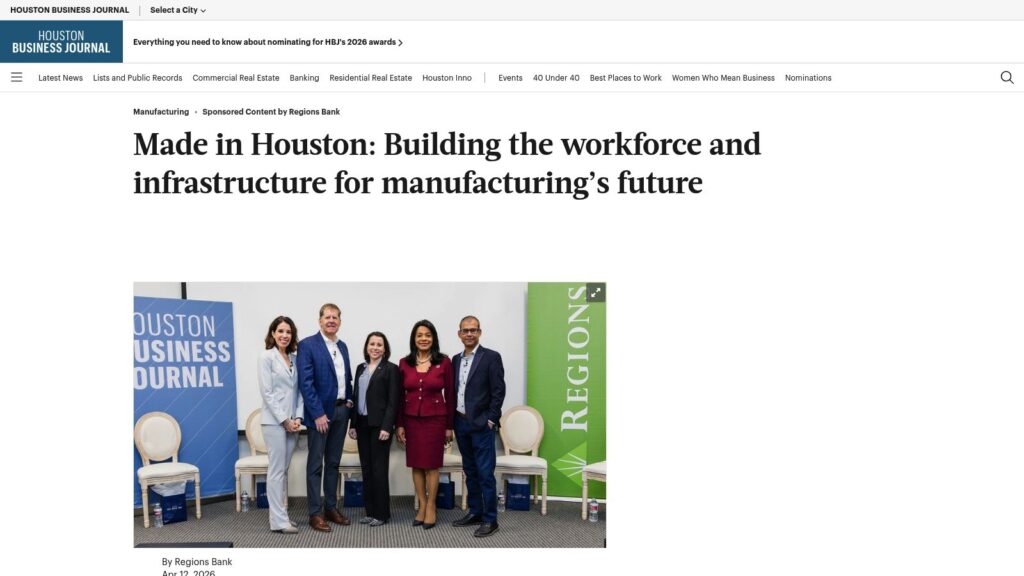
Made in Houston: Building the Workforce and Infrastructure for Manufacturing’s Future

Houston manufacturers face challenges including labor shortages, tariff uncertainties, and energy reliability but are positioning for growth through workforce development and infrastructure investment. Industry leaders, educators, and financial experts highlighted the importance of upskilling workers in advanced technologies, fostering partnerships with educational institutions like Houston City College, and adopting automation to address labor gaps while ensuring energy stability amidst Texas grid constraints.

https://www.bizjournals.com/houston/news/2026/04/12/workforce-infrastructure-manufacturing-future.html

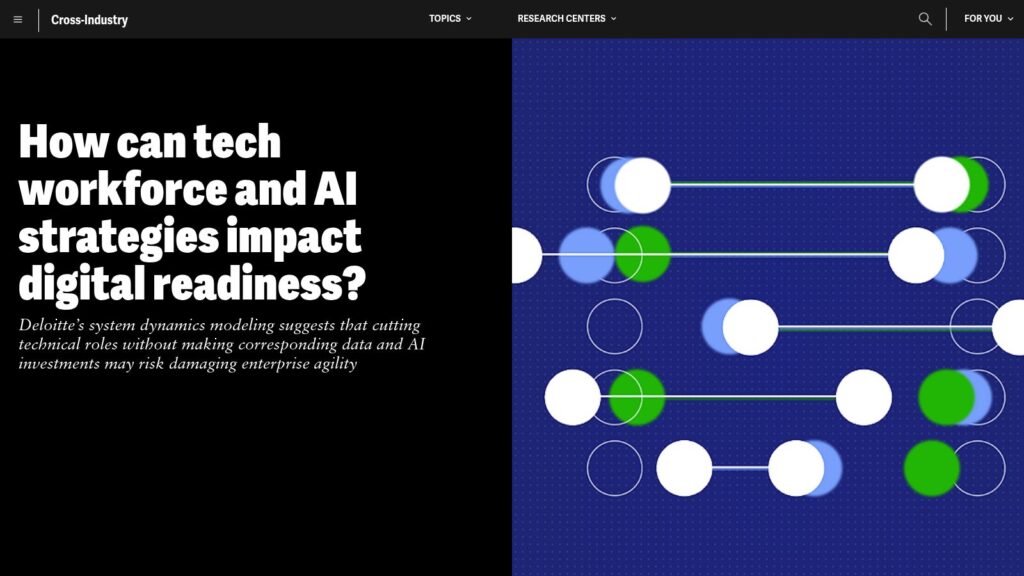
How Can Tech Workforce and AI Strategies Impact Digital Readiness?

Deloitte’s system dynamics simulation explores how cutting technology workforce without proportionate investments in data and AI modernization can harm an enterprise’s digital capability and organizational readiness. The study found that workforce reductions may slow tech modernization and reduce change adoption capacity, while advancing data and AI maturity can improve performance; however, combining layoffs with AI investments often causes short-term disruptions before stability returns. This highlights the critical balance organizations must manage between tech talent and AI initiatives to sustain agility and growth.

https://www.deloitte.com/us/en/insights/topics/technology-management/tech-workforce-ai-strategies.html

Talent Reinventors: Value in the Age of AI

Accenture’s “Talent Reinventors” report highlights how organizations combining human talent with AI are achieving superior growth and workforce adaptability by reshaping work around shared goals powered by data and AI. The report identifies six key characteristics of these leaders—including clarity, intelligent teaming, talent mobility, co-learning, breakthrough leadership, and personalized experiences—that enable companies like Volkswagen, Microsoft, and Caterpillar to successfully integrate AI and people strategies, resulting in higher revenue, stronger cultures, and better employee experience in the rapidly evolving digital economy.

https://www.accenture.com/us-en/insights/consulting/talent-reinventors-delivering-value-people-age-ai?c=acn_glb_thefuture-readymediarelations_14261455&n=mrl_0226

The AI Lab Next Door

New America introduces a revamped vision that highlights collaboration between local colleges and communities to harness AI for public value. Key points include the convergence of incentives for cooperative relationships, increased investments in university AI capabilities, and the urgency for local leaders to engage colleges to address civic needs. Despite progress, challenges like cultural clashes and decentralized operations hinder large-scale partnerships. The brief calls for strategic partnerships that are problem-focused, economically beneficial, accountable, and aimed at strengthening democratic institutions amid the rapid evolution of AI.

https://www.newamerica.org/insights/the-ai-lab-next-door/

Scroll to Top