AI Cited as Top Reason for US Job Cuts for Third Straight Month
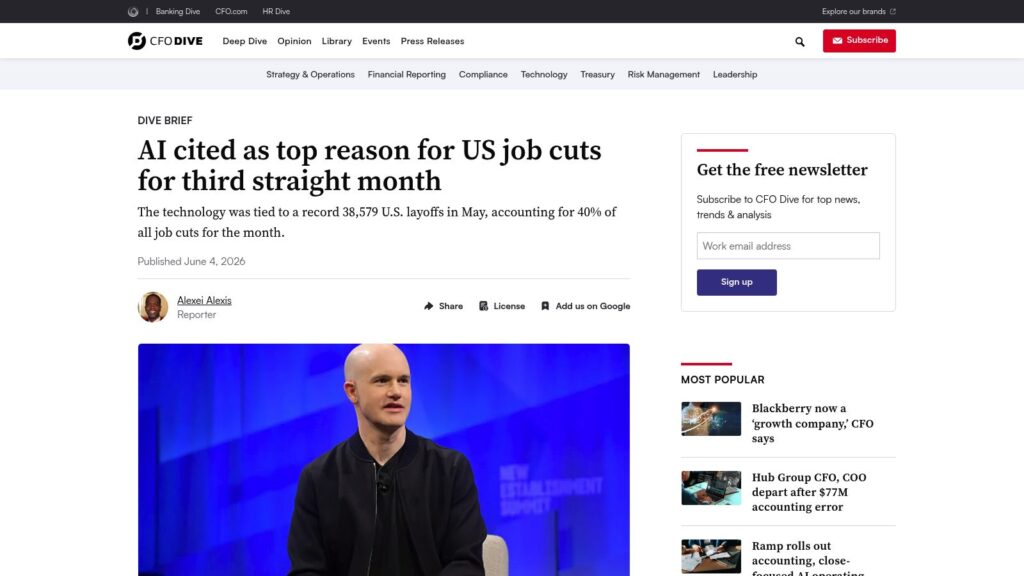
Artificial intelligence was the leading cause of U.S. job cuts for the third consecutive month in May 2026, tied to a record 38,579 layoffs, making up 40% of all announced job cuts for the month. According to Challenger, Gray & Christmas, AI-related layoffs have rapidly increased throughout the year, surpassing the total for all of 2025, with significant reductions reported in the technology sector as companies like Coinbase and Cisco restructure to focus more on AI and automation.

https://www.cfodive.com/news/ai-cited-top-reason-us-job-cuts-third-straight-month/822029/
AI Agents Lag Far Behind Human Workers, Research Shows. So, Why Are Tech Companies Laying Off the Humans?

Tech companies are laying off human workers while investing heavily in AI agents that are touted to replace human labor, despite research showing these AI agents fail to produce professionally acceptable work over 95% of the time. Analysts and experts suggest that the technology is overhyped and often used as an excuse for layoffs, with AI agents currently unable to reliably perform complex, end-to-end tasks without human supervision.

https://www.cbc.ca/news/world/ai-agents-tech-company-layoffs-9.7221069

An Economist’s Case Against the AI Jobs-Pocalypse

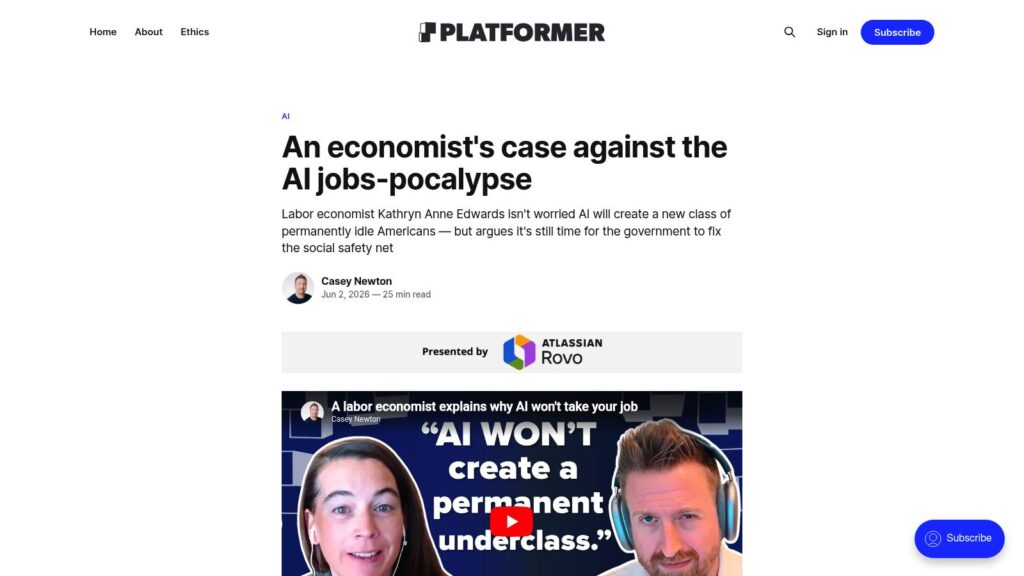
Labor economist Kathryn Anne Edwards argues that while AI will cause some job displacement, the widespread fear of a permanent “idle class” of unemployed Americans is overblown, emphasizing the resilience and adaptability of workers. However, she stresses that the U.S. is unprepared for potential mass unemployment and calls for stronger social safety nets, including overhauling unemployment insurance, improving healthcare, and empowering workers through policies like unionization and fair taxation, rather than relying on universal basic income.

https://www.platformer.news/an-economists-case-against-the-ai-jobs-pocalypse/

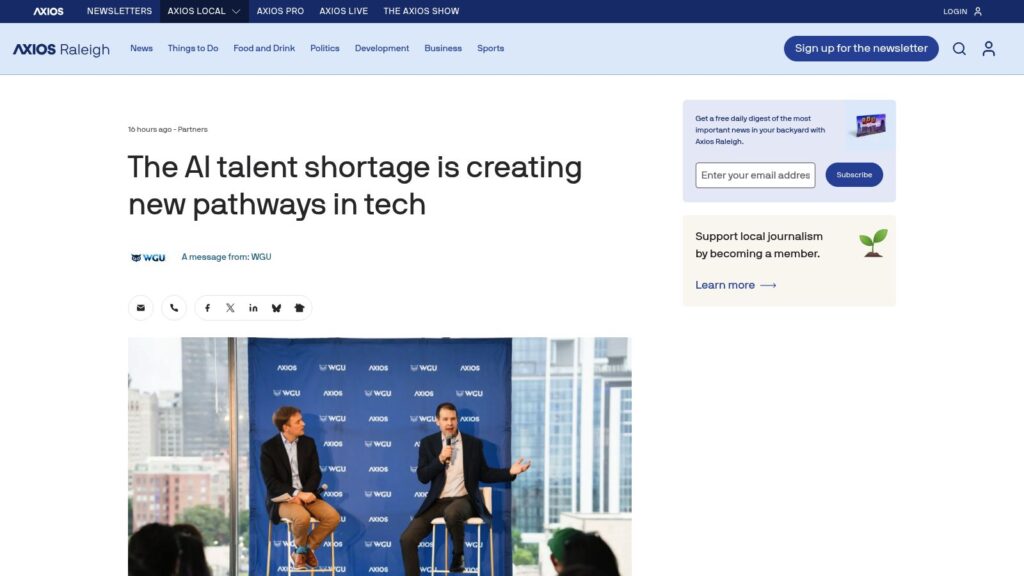
The AI Talent Shortage Is Creating New Pathways in Tech

The growing shortage of AI talent is pushing businesses to create new pathways in tech, as companies struggle to find qualified workers to deploy AI systems despite rapid adoption. Programs like Western Governors University’s Bachelor of Science in AI Engineering aim to address this gap by focusing on practical AI deployment skills, helping workers develop competencies needed to build and manage AI-powered systems in real-world applications.

https://www.axios.com/local/raleigh/sponsored/the-ai-talent-shortage-is-creating-new-pathways-in-tech

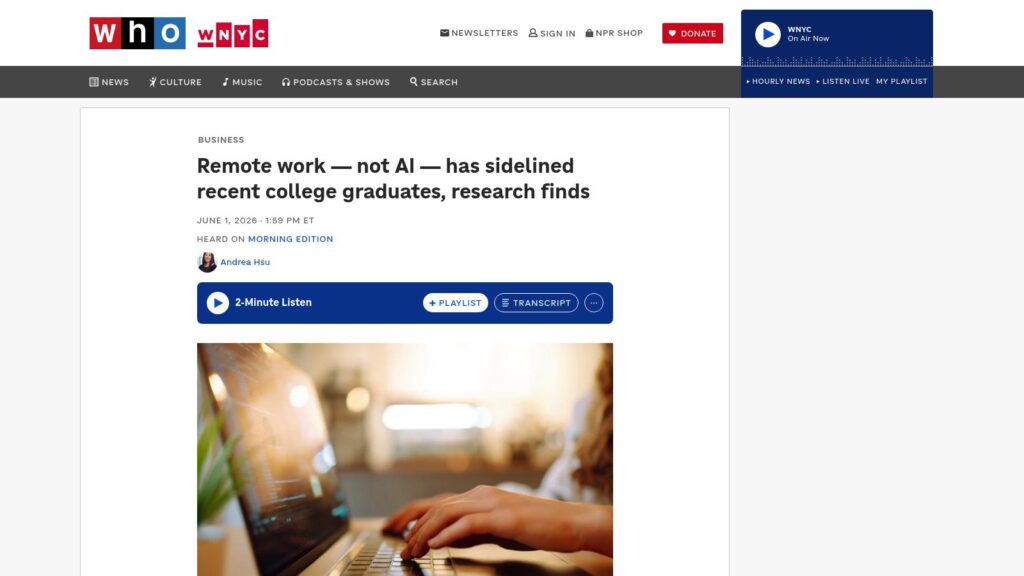
Remote Work — Not AI — Has Sidelined Recent College Graduates, Research Finds

Research from the Federal Reserve Bank of New York reveals that remote work, rather than AI, has contributed significantly to higher unemployment rates among younger college graduates since the pandemic. The shift to remote work has made employers reluctant to hire and mentor recent graduates, who typically need more on-the-job training, resulting in a 20% rise in unemployment for those under 29 in “remotable” jobs, while unemployment for older graduates has decreased slightly.

https://www.npr.org/2026/06/01/nx-s1-5843076/remote-work-college-graduates-unemployment-ai

The CIO’s Guide to Skills-Based Workforce Planning

CIOs face a critical challenge where having sufficient IT staff does not guarantee the right skills to drive digital transformation, particularly in areas like AI, cloud, and cybersecurity. Skills-based workforce planning addresses this by focusing on employees’ capabilities rather than job titles, enabling organizations to dynamically align talent with evolving business priorities, improve agility, and close critical skills gaps through continuous visibility, learning, and flexible deployment of both human and AI-assisted resources.

https://www.techtarget.com/searchcio/tip/The-CIOs-guide-to-skills-based-workforce-planning

How the EU AI Act Impacts Global Standards for AI in Hiring: Expert Insights

The EU Artificial Intelligence Act introduces regulations for AI systems used in hiring, requiring transparency and meaningful human oversight to ensure accountability and reduce legal risks, especially for companies operating within the EU or employing EU-based candidates. Dimitri Boylan, CEO of Avature, emphasizes that while existing laws address many concerns, the Act clarifies governance responsibilities and promotes evidence-based management of AI hiring tools, helping large enterprises mitigate regulatory and social risks.

https://hrexecutive.com/how-the-eu-ai-act-impacts-global-standards-for-ai-in-hiring-expert-insights/

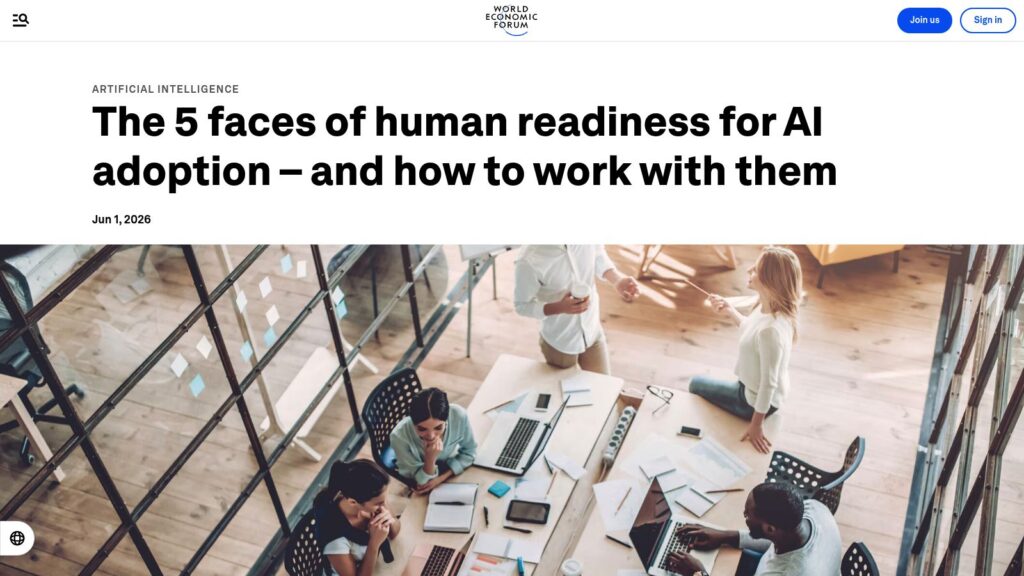
The 5 Faces of Human Readiness for AI Adoption – and How to Work with Them

The article discusses the contrasting perspectives between executives eager to adopt AI and employees who often feel threatened by it, identifying five distinct employee attitudes toward AI adoption: enthusiasts, curious, cautious, skeptics, and opposed. It emphasizes that successful AI integration requires addressing these varied human responses through cultural change, focusing on human-AI collaboration, and directly tackling employee concerns to ensure meaningful and accepted AI use in the workplace.

https://www.weforum.org/stories/2026/06/ai-workplace-adoption-readiness/

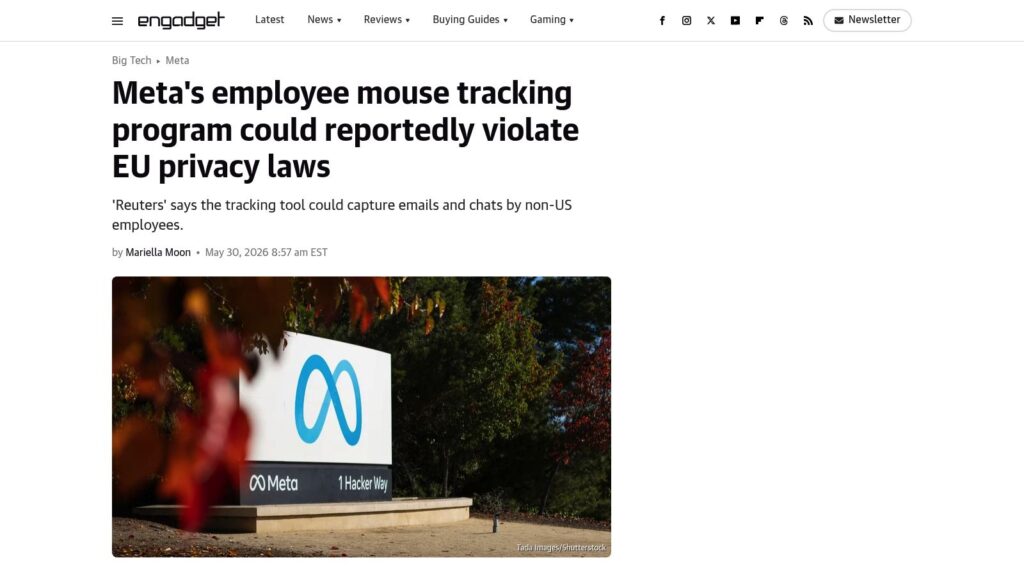
Meta’s Employee Mouse Tracking Program Could Reportedly Violate EU Privacy Laws

Meta’s employee mouse tracking program, called the Model Capability Initiative (MCI), could potentially violate the European Union’s GDPR privacy laws by capturing data, including emails and chats, not only of US employees but also involving non-US colleagues. While Meta claims it has mitigated privacy risks and notified affected employees, legal experts warn that even limited data collection of EU employees without proper disclosure and legal basis may breach regulations. Additionally, employees have raised concerns about the tool’s impact on their data usage and its role in training AI models that could replace them.

https://www.engadget.com/2184241/meta-mouse-tracking-employees-mci-eu-privacy-rules-gdpr/

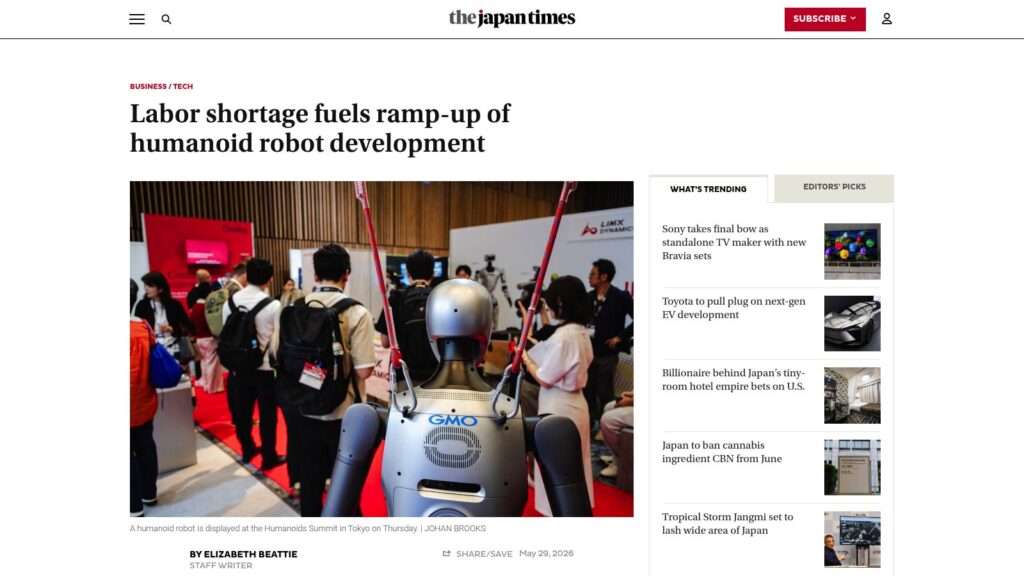
Labor Shortage Fuels Ramp-up of Humanoid Robot Development

Amid global labor shortages driven by declining birth rates, humanoid robots are increasingly being developed and considered as viable solutions to fill workforce gaps. This was a key topic at the recent Humanoids Summit in Tokyo, where experts highlighted the urgent need for physical AI to address the shrinking labor pool in countries like Japan and the United States.

https://www.japantimes.co.jp/business/2026/05/29/tech/humanoids-summit-labor-shortages/

AI in HR: How Human-Centered Leadership Can Close the Influence Gap at Work

The article discusses how human-centered leadership is essential in integrating AI within HR to close the influence gap at work. It emphasizes that while AI can enhance efficiency and decision-making, leaders must prioritize supporting human judgment, critical thinking, and well-being to ensure technology strengthens rather than undermines expertise and collaboration.

https://www.adp.com/spark/articles/2026/05/ai-in-hr-how-human-centered-leadership-can-close-the-influence-gap-at-work.aspx?q1=ES_FY25_SparkSubscribePopup&q1=ES_FY25_SparkSubscribePopup

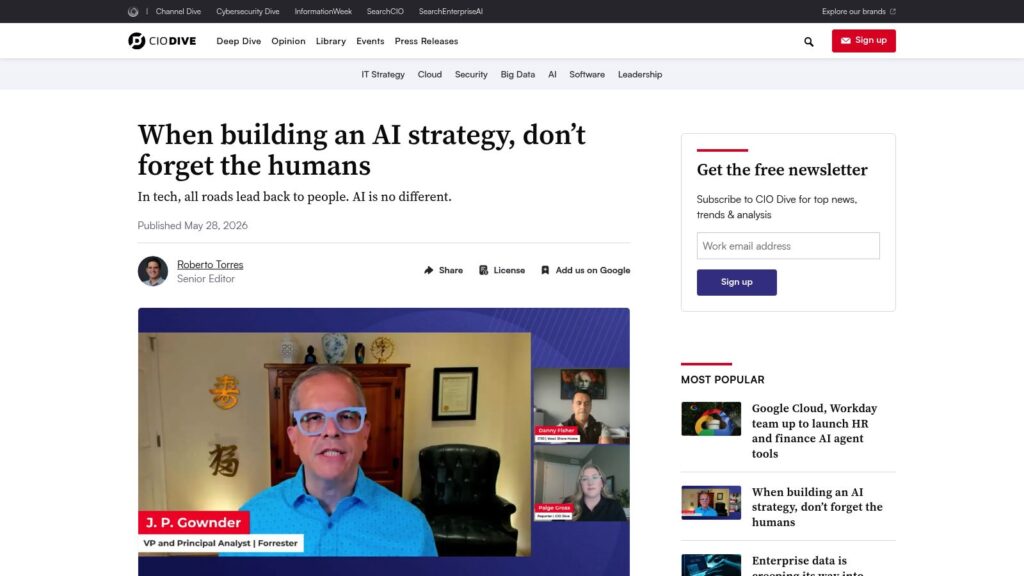
When Building an AI Strategy, Don’t Forget the Humans

When building an AI strategy, organizations must prioritize the human aspect to ensure successful adoption and productivity gains. Transparency, communication, and intentional learning strategies are essential to build employee trust and effectively integrate AI tools, while focusing on user needs helps prevent AI initiatives from stalling due to data, talent, or risk challenges.

https://www.ciodive.com/news/AI-adoption-CIO-people-management/821297/

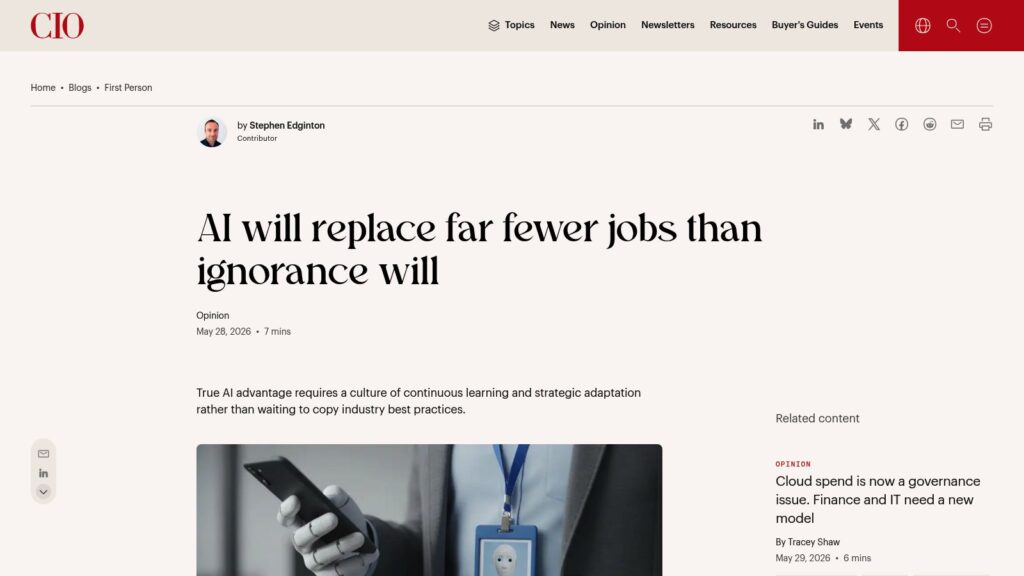
AI Will Replace Far Fewer Jobs Than Ignorance Will

Stephen Edginton argues that AI will transform work by amplifying existing technologies and reshaping job roles rather than replacing large numbers of jobs, emphasizing the importance of continuous learning and strategic adaptation. He highlights that organizations must foster a culture of experimentation, ownership, and agility to leverage AI’s full potential, warning that ignorance and slow adaptation pose greater risks than the technology itself.

https://www.cio.com/article/4177209/ai-will-replace-far-fewer-jobs-than-ignorance-will.html

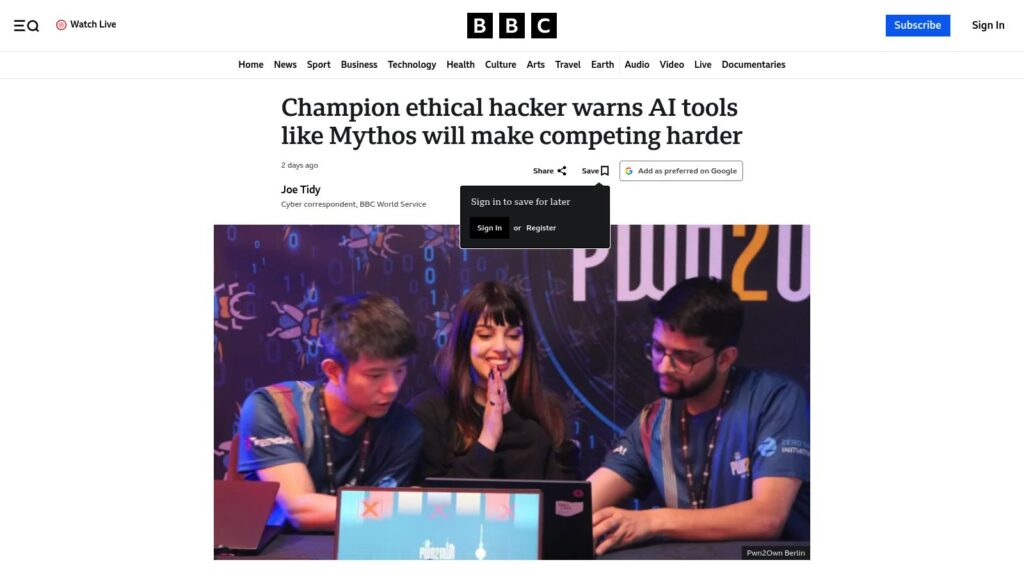
Top Ethical Hacker Chompie Warns AI Tools Could Put Her Out of Business

Valentina Palmiotti, a leading ethical hacker known as Chompie, warns that advanced AI tools like Claude Mythos are making it increasingly difficult for human hackers to compete in finding software vulnerabilities. While AI currently aids hackers in uncovering bugs faster, Palmiotti believes that soon only the very best will succeed, as AI’s capabilities pose significant challenges but also promise improved cybersecurity if responsibly controlled.

https://www.bbc.com/news/articles/c3r2zjpryzro

CIOs Say They Need a People Strategy to Scale AI

CIOs emphasize the necessity of a strong people strategy to successfully scale AI within organizations, highlighting the importance of investing in skills, culture, and employee engagement. They note that for every dollar spent on AI technology, companies should invest three dollars in people, focusing on human-centric skills and overcoming employees’ fear of obsolescence to drive sustainable AI adoption.

https://www.hrdive.com/news/cio-people-strategy-scaling-ai/821080/

Scroll to Top