AI And Human Connection Lead Top 5 Work Trends For 2026

Key work trends for 2026 include widespread use of AI-driven skill tests in hiring, more emphasis on in-person workplace connections, and a strong focus on human skills that AI cannot replicate. As technical skill needs grow, companies are investing in internal training and new talent pipelines to address shortages. Employees are placing greater importance on organizational values and leadership integrity, significantly influencing their job choices and commitment.
https://www.forbes.com/sites/drsamanthamadhosingh/2025/11/28/ai-and-human-connection-lead-top-5-work-trends-for-2026/

A Co-pilot, Not a Replacement: How AI Will Augment Human Labour in the Workforce

TLDR: Singapore government agencies use .gov.sg sites for official communication; AI is designed to augment, not replace, human labor, ensuring productivity and creativity. AI capabilities should be supported by responsible governance to prevent risks such as misinformation and over-automation. GovTech promotes AI as a co-pilot, enhancing workflows and decision-making while fostering an AI-ready workforce through ongoing training and ethical standards. The goal is to balance technological advancement with human oversight for better public service delivery.

https://www.tech.gov.sg/technews/how-ai-will-augment-human-labour-in-the-workforce/

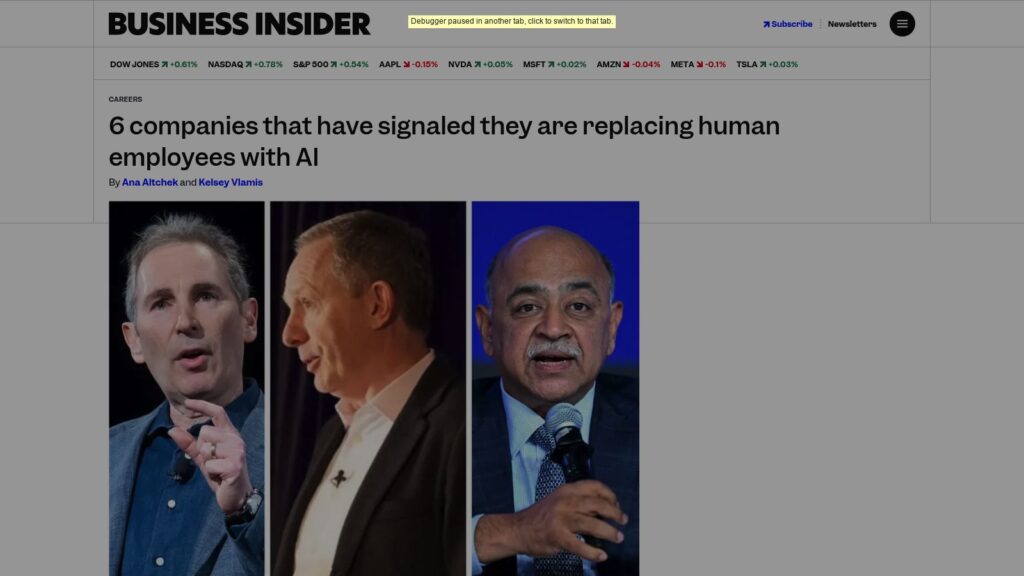
6 Companies That Have Signaled They Are Replacing Human Employees With AI

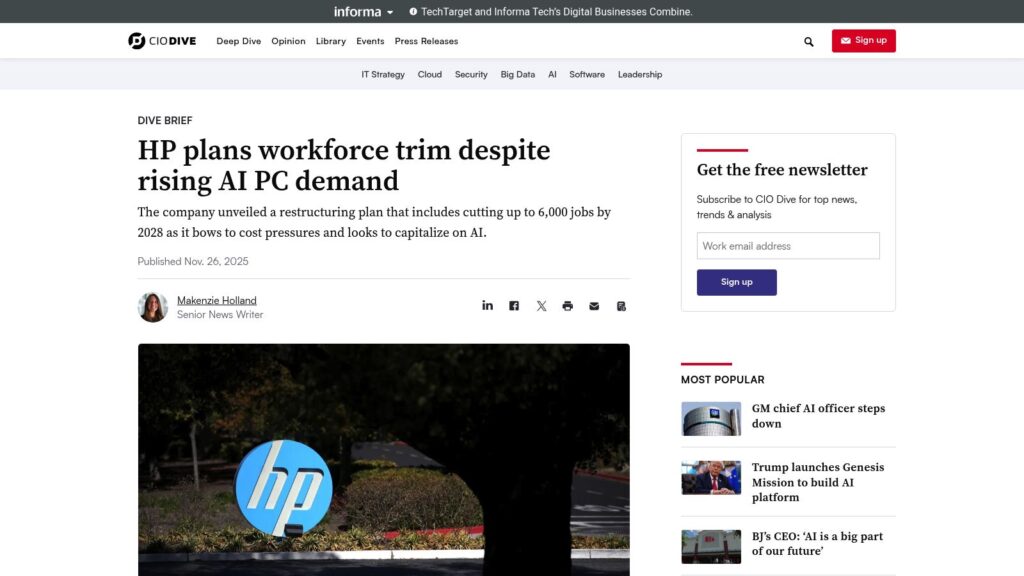
Several companies, including HP, IBM, and Amazon, are replacing human employees with AI, with HP planning to cut 4,000-6,000 jobs by 2028. AI is cited as a reason for workforce reductions at many firms, but some ambiguities remain. A MIT study indicates AI could replace 11.7% of the US labor market. While job cuts occur, tech roles in AI are expected to grow, highlighting a shift in workforce dynamics.

https://www.businessinsider.com/list-companies-replacing-human-employees-with-ai-layoffs-workforce-reductions

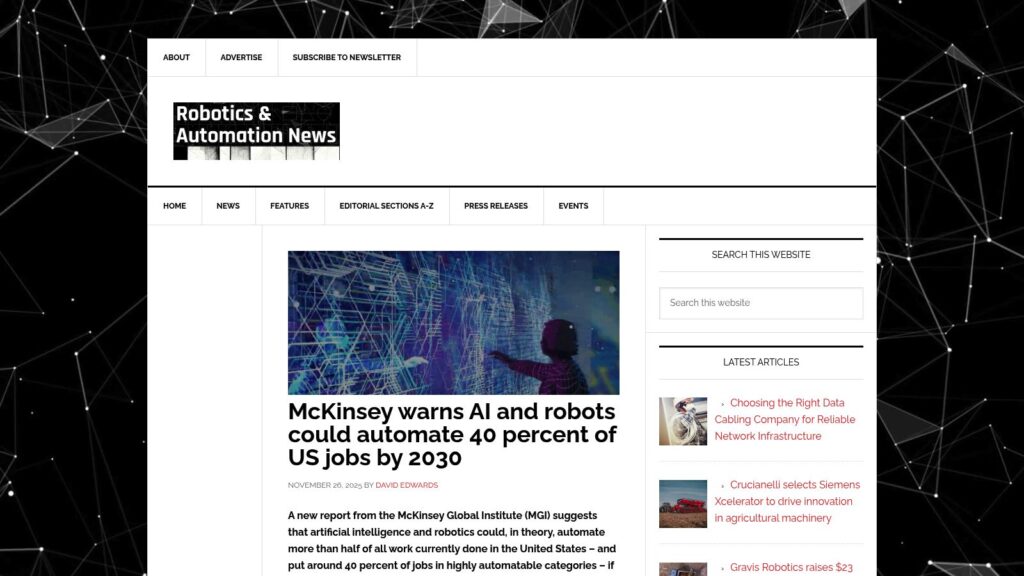
McKinsey Warns AI and Robots Could Automate 40 Percent of US Jobs by 2030

McKinsey Global Institute warns AI and robotics could automate over 40% of US jobs by 2030, potentially affecting 57% of current work hours. The report emphasizes transformation over job loss, predicting a future where human workers collaborate with AI and robots. Key skills will evolve instead of disappearing, notably increasing demand for AI fluency, which has surged sevenfold recently. Redesigning workflows could unlock an estimated $2.9 trillion in economic value if properly implemented, rather than merely reducing headcount.

https://roboticsandautomationnews.com/2025/11/26/mckinsey-warns-ai-and-robots-could-automate-40-percent-of-us-jobs-by-2030/97003/

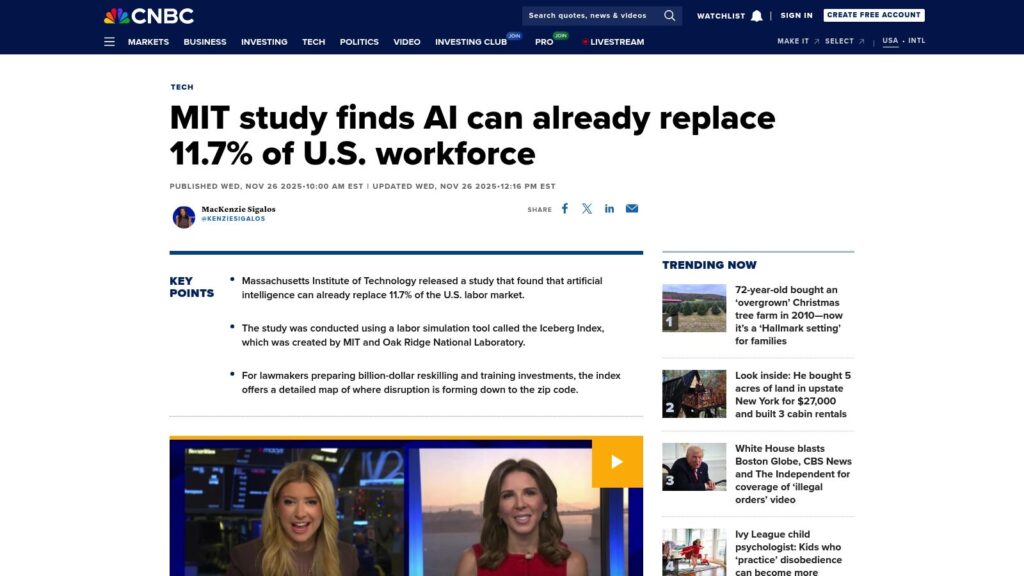
MIT Study Finds AI Can Already Replace 11.7% of U.S. Workforce

MIT study reveals AI can replace 11.7% of the U.S. workforce, equating to $1.2 trillion in wages, utilizing the Iceberg Index for simulation of worker impact. The index aids lawmakers in targeting reskilling efforts and highlights widespread job exposure beyond tech sectors, assisting states in proactive policy simulation.

https://www.cnbc.com/2025/11/26/mit-study-finds-ai-can-already-replace-11point7percent-of-us-workforce.html

US Workers Report a ‘major AI Trust Gap’ That Affects Their View of Companies

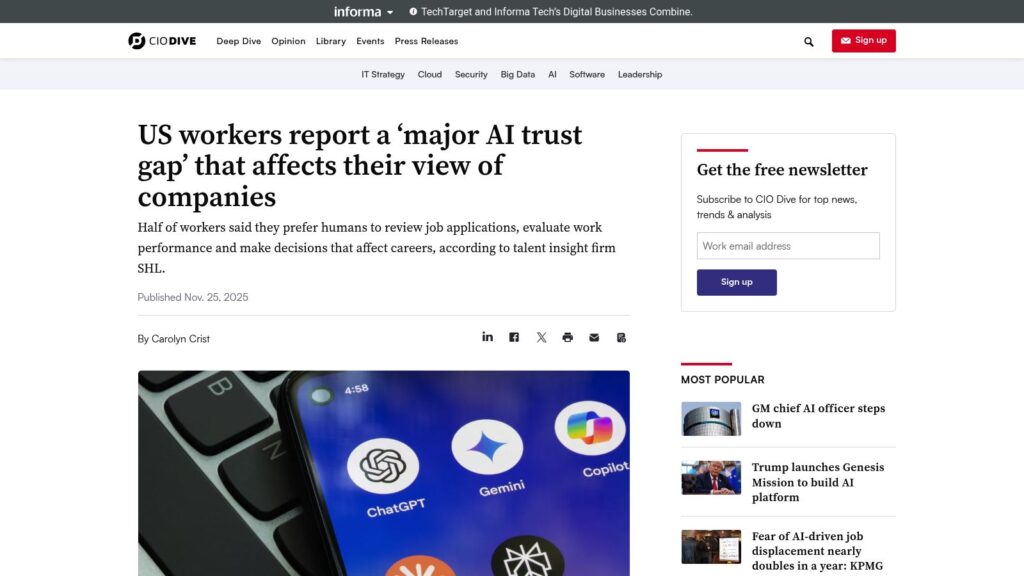
U.S. workers express major distrust in AI’s role at work, preferring human judgment for hiring and evaluations. Despite openness to AI for efficiency, 74% say AI interviews influence perceptions of companies, with many fearing bias and lack of human touch. Only 27% trust employers to use AI responsibly. As AI adoption rises, upskilling and transparency are crucial for employee confidence and career readiness.

https://www.ciodive.com/news/us-workers-report-a-major-ai-trust-gap/806341/

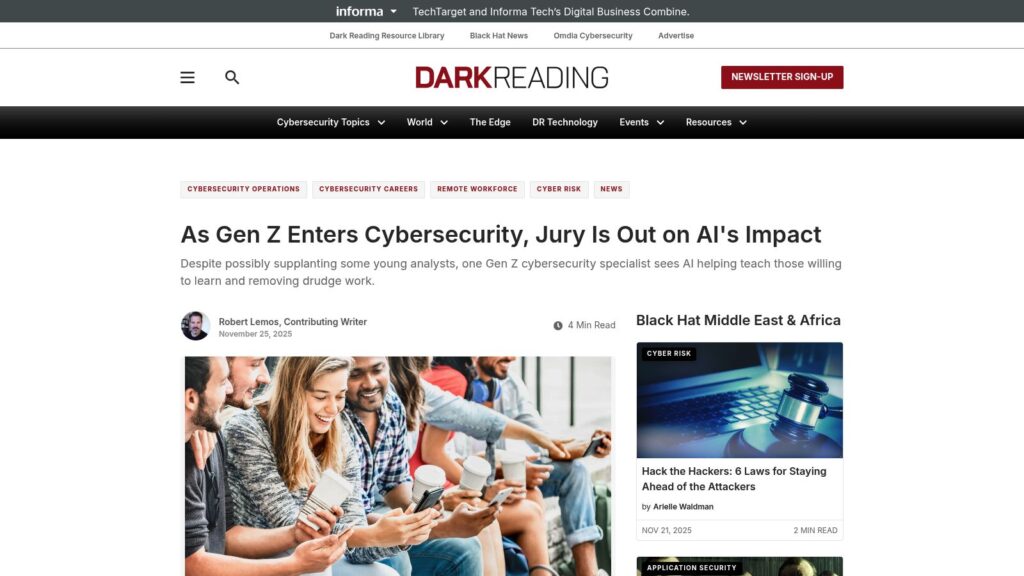
As Gen Z Enters Cybersecurity, Jury Out on AI’s Impact

Gen Z is entering cybersecurity as AI reshapes the field. While AI threatens some entry-level roles by automating repetitive tasks, it also offers analysts opportunities to focus on creative and strategic work. Bandana Kaur, a Gen Z researcher, advocates using AI as a learning tool and stresses that curiosity and self-study are more valuable than formal credentials. AI adoption by both attackers and defenders is expanding, and many hiring barriers stem from unrealistic job requirements rather than genuine job scarcity. Kaur’s experience shows that curiosity, practical engagement, and online resources can help overcome career challenges in cybersecurity.

https://www.darkreading.com/cybersecurity-operations/gen-z-cybersecurity-jury-out-ai-impact

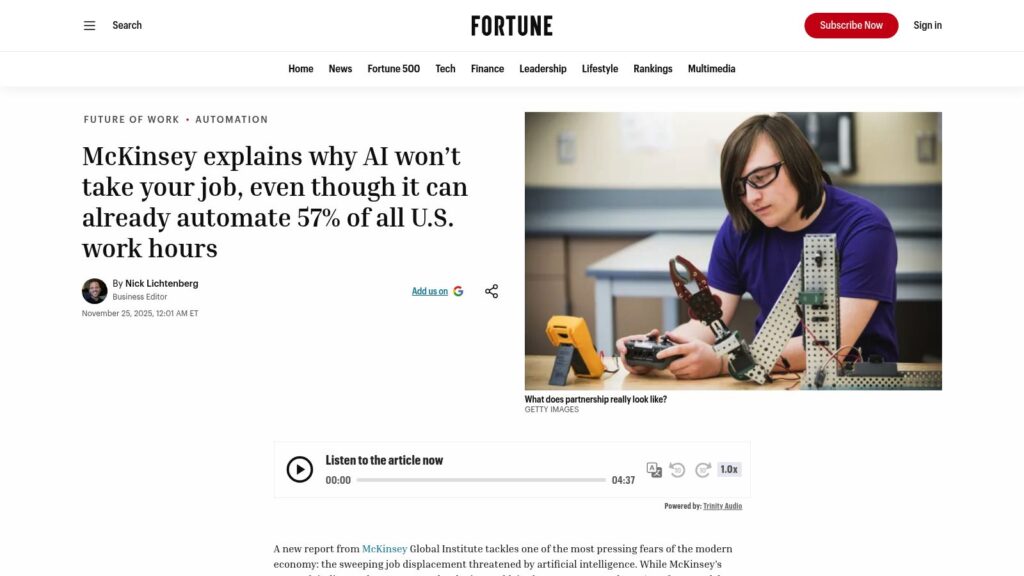
AI Agents and Robots Can Already Automate Over 57% of U.S. Work Hours, but That Doesn’t Mean Half of All Jobs Are Endangered, McKinsey Says

McKinsey’s report highlights that while AI can automate 57% of U.S. work hours, it won’t lead to mass job losses. Instead, jobs will evolve into partnerships between humans and AI, with a continued demand for human skills, especially in social and emotional intelligence. The key to harnessing AI’s economic potential lies in redesigning workflows and processes, not just automating tasks. As AI capabilities grow, so does the need for skills like AI fluency, emphasizing collaboration over replacement. The future of work will focus on human oversight and decision-making, allowing workers to tackle more complex challenges.

https://fortune.com/2025/11/25/why-ai-wont-take-your-job-partnership-agents-robots-mckinsey/

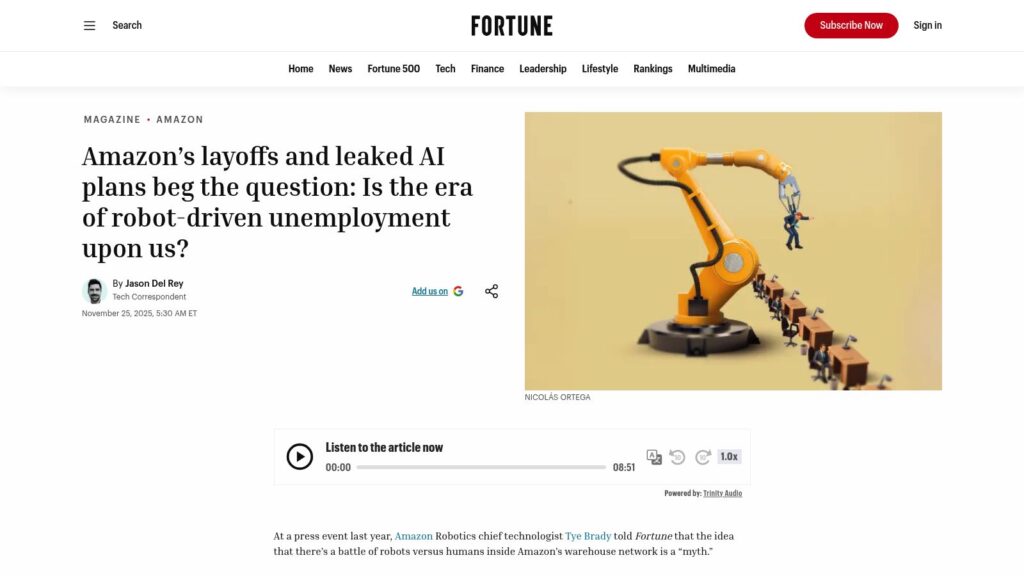
Amazon’s Layoffs and Leaked AI Plans Beg the Question: Is the Era of Robot-driven Unemployment Upon Us?

Amazon’s layoffs and AI plans raise concerns about robot-driven unemployment. Though Amazon claims robots extend human capacity, internal documents suggest plans to automate 75% of operations, potentially affecting 600,000 jobs. While corporate layoffs occur (14,000 jobs cut), the company continues investing in AI and training. Automation could reshape job roles, but fears about job scarcity persist, creating a complex future for workers. The mixed impact of robots on warehouse employment highlights the need for a balance between efficiency and workforce sustainability.

https://fortune.com/2025/11/25/amazon-layoffs-artificial-intelligence-robots-unemployment-automation/

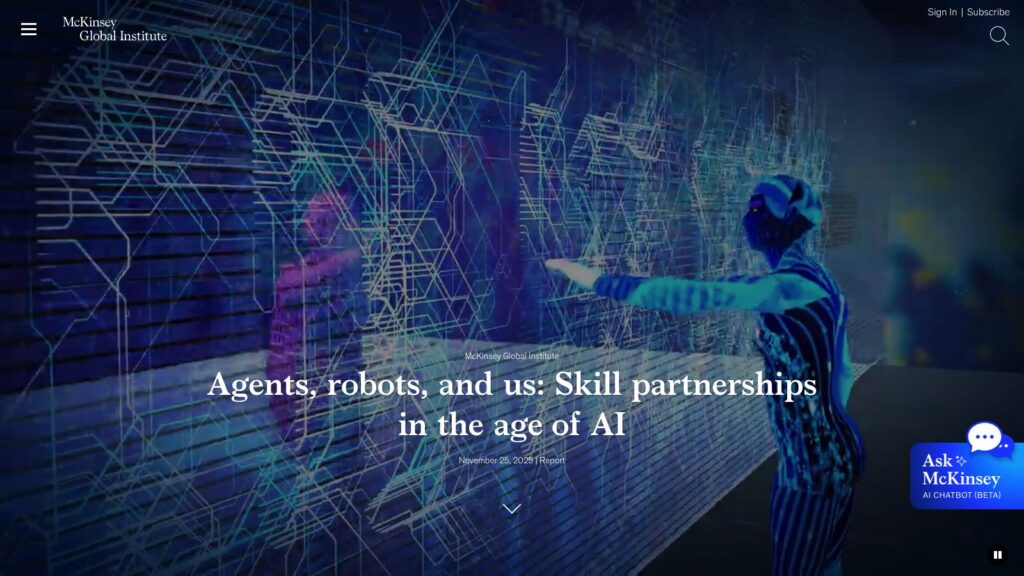
Agents, Robots, and Us: Skill Partnerships in the Age of AI

AI is reshaping workforce dynamics, creating partnerships among individuals, agents, and robots. While automation could theoretically streamline 57% of US work hours, this does not predict job loss. Skills remain relevant but will evolve. Key findings reveal a rise in demand for AI fluency and an estimated potential economic boost of $2.9 trillion in the US by 2030, dependent on effective collaboration between humans and machines. Organizations must adapt workflows around AI integration, emphasizing human skills that complement technology.

https://www.mckinsey.com/mgi/our-research/agents-robots-and-us-skill-partnerships-in-the-age-of-ai

Robots and AI Are Already Remaking the Chinese Economy

China is rapidly transforming its economy with robots and AI to enhance manufacturing efficiency as a response to rising costs and international competition. Companies like Midea are implementing AI systems that manage production and logistics, significantly speeding up processes and reducing labor needs. China’s aggressive robot deployment—295,000 installed last year—far exceeds that of the U.S. These advancements aim to secure China’s role as a global manufacturing hub despite a shrinking workforce and rising wages. The government sees this adoption of AI as crucial for maintaining economic strength and competitiveness against U.S. initiatives to bring jobs back domestically.

https://www.wsj.com/tech/ai/ai-robots-china-manufacturing-89ae1b42?st=wTHV3o

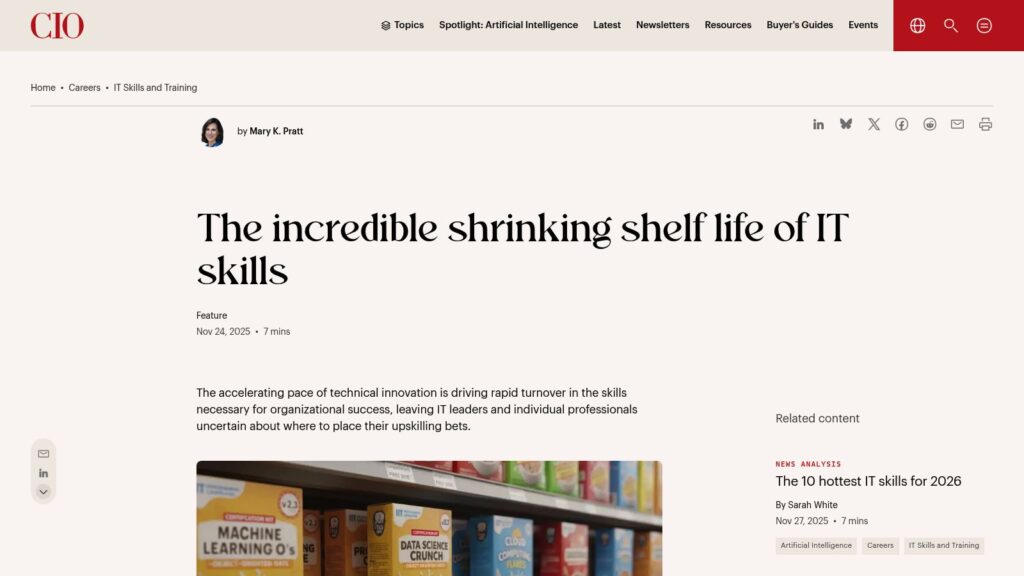
The Incredible Shrinking Shelf Life of IT Skills

IT skills’ relevance is declining rapidly due to accelerated technological innovation, necessitating continuous upskilling among IT professionals. The half-life of skills has decreased from decades to as little as two years, with skills like FinOps currently in demand but possibly becoming obsolete as AI advancements take over. Organizations must foster a culture of adaptability and continuous learning to keep pace with changing requirements. Hiring or developing employees with a growth mindset and enabling time for skill development is essential for navigating this skill instability landscape.

https://www.cio.com/article/4093446/the-incredible-shrinking-shelf-life-of-it-skills.html

Scroll to Top