AI Is Changing Jobs. Who Benefits?

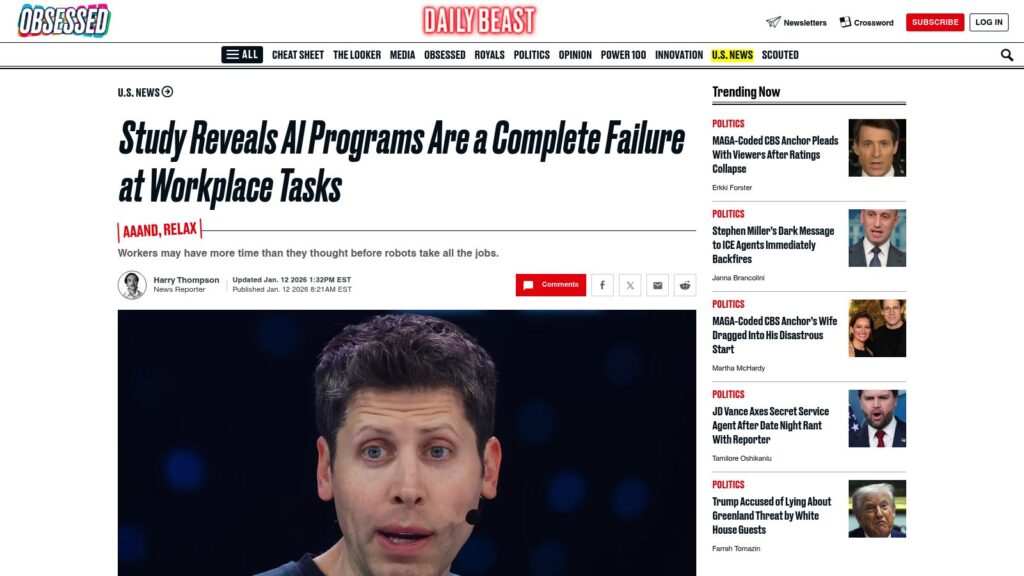
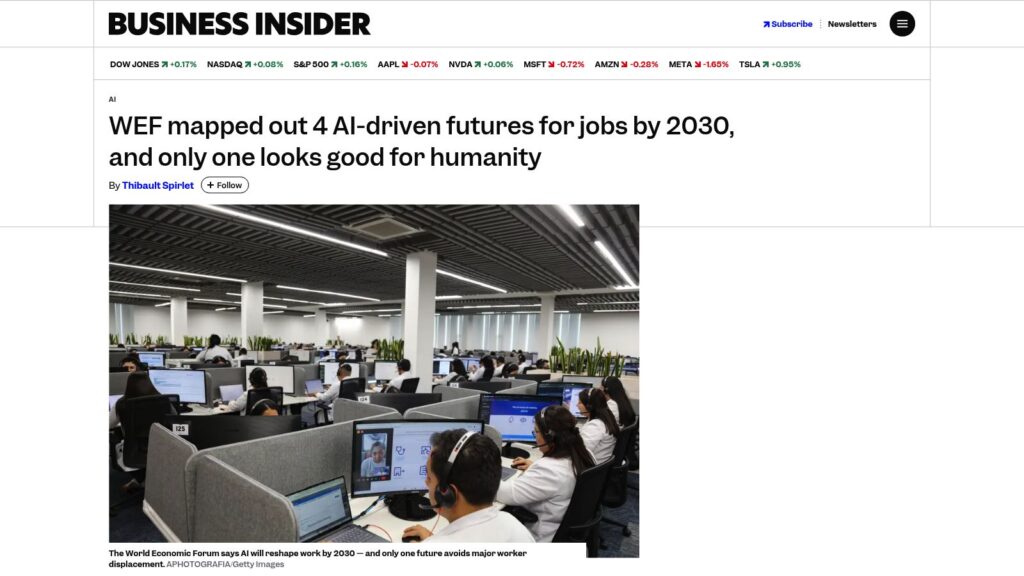
AI is reshaping job landscapes, with companies hiring fewer juniors and pressuring experienced workers to do more. Gains mainly benefit shareholders, AI firms, and skilled senior workers, leaving entry-level positions scarce and mid-career workers undercompensated. The future could see a divided economy or new job creation, but without policy changes, benefits may concentrate among the few.

https://www.vincentschmalbach.com/ai-is-changing-jobs-who-benefits/

Microsoft Teases Agents That Become ‘independent Users’

Microsoft introduces “agentic users,” AI agents acting as independent workforce members, capable of attending meetings, editing documents, and collaborating with humans. These agents will require a specific A365 license and be available in the M365 Agent Store. Concerns about management and potential rogue behavior have been raised, with their debut anticipated during Microsoft’s Ignite conference.

https://www.theregister.com/2025/11/10/microsoft_agentic_users_a365/

The Great Decoupling of Labor and Capital

Tech companies are increasingly decoupling revenue growth from employee headcount, evident in their historical milestones. For instance, Apple achieved its initial $100 billion in revenue with 60k employees but needed only 17k for the next $100 billion. Similarly, Alphabet, Microsoft, and Meta show reduced employee requirements for revenue growth. Even Amazon, affected by pandemic-driven overhiring, added $200 billion in revenue with only 36k more employees. Overall, nearly $1 trillion in incremental revenue across several companies involved only 100k new hires, highlighting a significant trend before generative AI’s impact. This decoupling raises questions about the future workforce dynamics and potential implications for investments and the broader economy.

https://www.mbi-deepdives.com/the-great-decoupling-of-labor-and-capital/

The Rise of ‘vibe Working’

“Vibe working” is a trend where generative AI is used to simplify tasks in the workplace, focusing on a casual, free-flowing approach. It has gained traction, with companies hiring for roles like “Vibe Growth Manager” and implementing tools like Microsoft’s “vibe working.” However, while it emphasizes creativity and ease, experts warn it may underplay the need for skill and hard work. The trend, popular among Gen Z, reflects a shift towards less formal workplaces. Yet, over-reliance on AI can lead to subpar results, highlighting the need for a balance between creativity and expertise.

https://www.businessinsider.com/rise-of-vibe-working-coding-microsoft-openai-2025-10

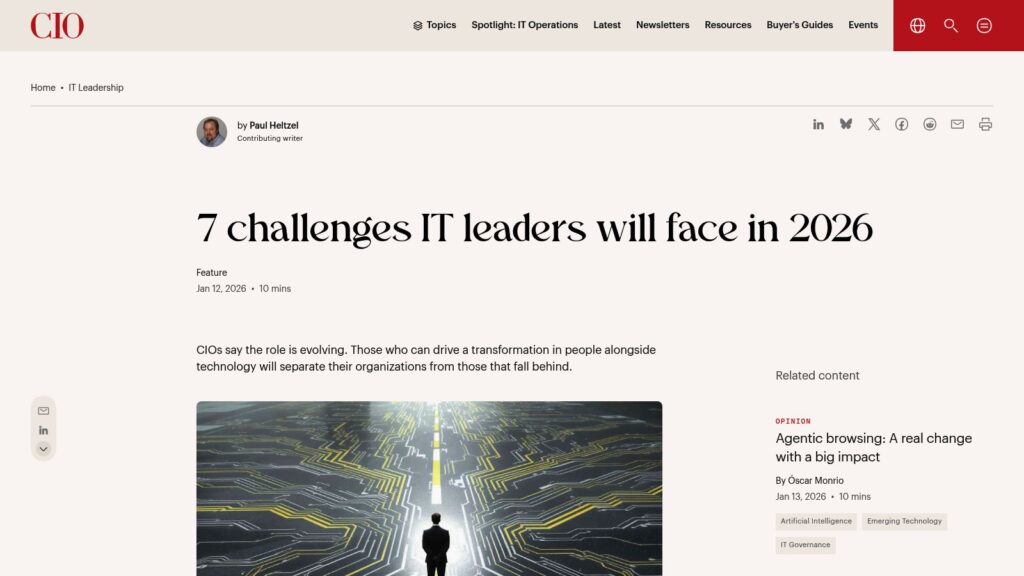
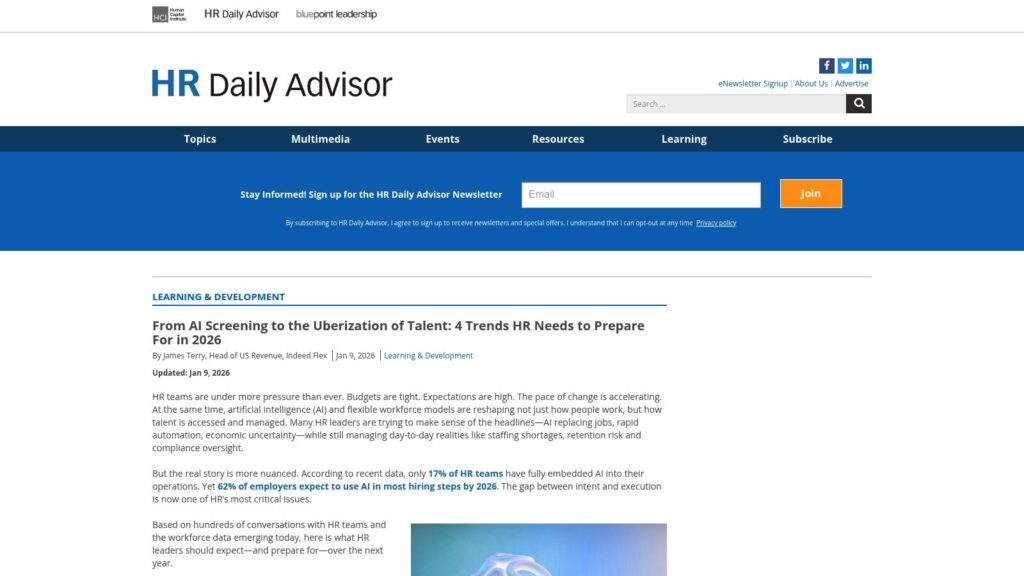
How to Futureproof Your IT Team in the AI Era

AI disrupts IT roles, causing entry-level positions to vanish. CIOs must adjust by prioritizing skills for future needs, emphasizing strategic problem-solving and collaboration. Traditional IT structures are evolving into cross-functional teams that demand higher-level problem-solving skills from new hires. Training should focus on non-technical skills and AI literacy, while organizations must proactively build continuous training programs to fill growing skill gaps. Emerging roles in AI and cybersecurity are expanding, urging IT leaders to restructure teams and foster a culture of innovation and adaptability.

https://www.cio.com/article/4062363/how-to-futureproof-your-it-team-in-the-ai-era.html

The CIO’s HR Challenge: Leading the Agentic Workforce

CIOs now lead a blended workforce of humans and “agentic” AI, which independently identifies tasks and makes decisions. This new role requires balancing technology management with HR skills, as careful oversight is essential to mitigate risks such as uncontrolled system access. Effective onboarding, role clarity, access permissions, performance metrics, and regular evaluations are critical to ensure both human and AI team members operate effectively and trust is maintained. CIOs must adapt to scaling AI like human employees to enhance organizational success and performance.

https://aijourn.com/the-cios-hr-challenge-leading-the-agentic-workforce/

Hiring Only Senior Engineers Is Killing Companies

Hiring only senior engineers limits startup potential; many exceptional junior engineers are overlooked. Companies cite onboarding challenges and complexity but risk missing talented juniors who can learn quickly. By adjusting hiring processes to embrace juniors, businesses can harness their energy and growth potential, countering the competition for senior talent. A suggested five-step hiring process includes evaluating mindset, practical coding skills, and effective use of AI tools. After hiring, investment in mentoring and open communication is essential for success. Embracing juniors can lead to strong teams and long-term benefits.

https://workweave.dev/blog/hiring-only-senior-engineers-is-killing-companies

Tech Leaders: Are You Balancing AI Transformation With Employee Needs?

AI’s impact on employment is complex; instead of layoffs, some companies focus on augmenting employees’ roles through AI. While fears of job loss persist, there is evidence of job creation in tech. Firms like Parsons demonstrate that AI can enhance productivity without reducing headcount, investing in employee upskilling. Overall, embracing AI presents opportunities for growth but requires careful management of workforce transitions to maintain employee morale and satisfaction.

https://www.cio.com/article/4040458/tech-leaders-are-you-balancing-ai-transformation-with-employee-needs.html

AI Threatens to Eliminate 40 Job Roles, According to Microsoft’s Latest Research Finding — Is Your Career Safe?

Microsoft research lists 40 jobs most at risk of automation by AI, including interpreters, writers, customer service reps, and editors, because they overlap with AI’s research and communication strengths. Conversely, jobs with heavy physical or manual requirements—like dredge operators, roofers, and medical assistants—are much less affected. The study highlights AI’s substantial impact on productivity and its potential use in reducing jobs, though it doesn’t claim AI can fully replace any single occupation yet. Broader concerns include possible mass unemployment, inequality, and the need for societal solutions—but there are also prospects for greater innovation and economic change.

https://www.windowscentral.com/artificial-intelligence/microsoft-reveals-40-jobs-about-to-be-destroyed-by-and-safe-from-ai

Will AI Automate Away Your Job?

AI’s potential to automate jobs varies by task complexity; shorter tasks face higher risk. Knowledge workers, especially those in programming, are increasingly vulnerable as AI improves in performing discrete, well-defined functions. Factors influencing automation susceptibility include data availability, employee power, task humanity, trust in human roles, and remote work feasibility. Young job seekers and freelancers are especially at risk. Future work may require rethinking meaning, identity, and economic security in light of automation, prompting calls for policies like AI taxes and maintaining human involvement in significant processes.

https://commonplace.org/2025/03/20/will-ai-automate-away-your-job/

Introducing the Anthropic Economic Index

The Anthropic Economic Index, launched to analyze AI’s impact on labor markets, reveals that AI usage primarily enhances roles in software development, affecting about 36% of occupations. Findings show a balance between AI augmentation (57%) and automation (43%), with AI mostly prevalent in mid-to-high wage jobs like programming. The study harnesses anonymized data from millions of conversations on Claude.ai, offering insights into actual AI integration rather than predictions. Open data is available for further research and collaboration.

https://www.anthropic.com/news/the-anthropic-economic-index

What Fully Automated Firms Will Look Like

AI-firms will revolutionize business by leveraging collective AI advantages: they can copy, evolve, and scale talent rapidly unlike humans. Such firms will transform hiring, management, and innovation processes, allowing for unprecedented efficiency and knowledge transfer, resulting in organizations that function like a unified intelligence. The potential exists for a single AI-driven entity to dominate the market due to lower transaction costs and the ability to replicate successful components. This evolution may lead to massive, software-like corporations, challenging traditional economic structures and the role of human workers.

https://www.dwarkeshpatel.com/p/ai-firm

Scroll to Top