Salesforce Regrets Firing 4000 Experienced Staff and Replacing Them With AI
Salesforce regrets firing 4,000 experienced customer support staff, acknowledging overconfidence in AI’s ability to replace human roles. The layoffs resulted in declining service quality, increased complaints, and operational disruptions, as AI struggled with complex customer issues. CEO Marc Benioff has since recognized the value of human expertise, shifting Salesforce’s strategy towards augmenting AI rather than outright replacement. This cautionary tale highlights the risks of rapidly advancing automation without adequate preparation.

https://maarthandam.com/2025/12/25/salesforce-regrets-firing-4000-staff-ai/
AI Shifts Expectations for Entry Level Jobs

AI’s rise affects early-career engineers, as entry-level jobs decline due to automation. Predictions show significant job cuts, particularly in programming, while roles like AI engineer are growing. Recent grads must adapt to higher expectations and develop skills in AI usage, as proficiency becomes essential. Employers seek experiential learning over theoretical knowledge, prompting educational shifts towards apprenticeships. Overall, AI augments rather than replaces jobs, requiring a balance of hard skills and critical thinking for success in the evolving job market.

https://spectrum.ieee.org/ai-effect-entry-level-jobs

Artificial Intelligence (AI) and Employment

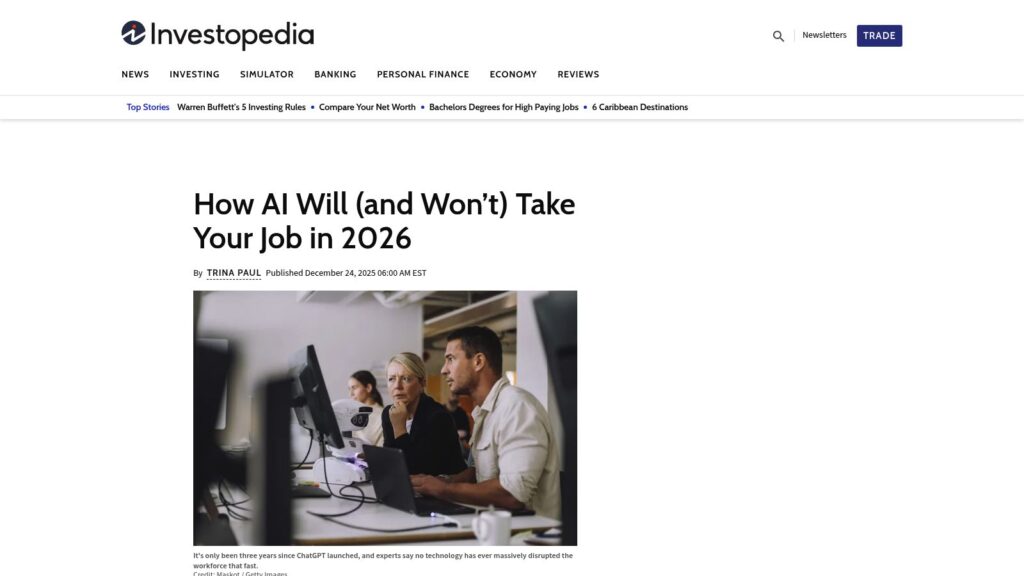
AI is increasingly present in UK workplaces, affecting job opportunities and conditions. Recent AI advancements include powerful hardware and large language models; however, challenges such as bias and opacity persist. AI adoption varies across sectors, with more uptake in large firms. While AI may threaten specific jobs, it can also create new roles. Concerns about inequality and changing working conditions are noted. The UK government’s focus includes infrastructure, investment, and skill development in response to AI.

https://post.parliament.uk/research-briefings/post-pn-0757/

Key Workforce Trends to Watch in 2026

2026 workforce trends: 1) AI adoption enhances job efficiency, reshaping roles rather than replacing jobs. 2) Skills-based hiring is rising due to labor shortages, with a focus on skills over traditional qualifications. 3) Stagnant job market challenges new graduates, especially outside in-demand fields. Adapting to these trends is crucial for attracting talent and fostering productivity.

https://www.fastcompany.com/91466644/key-workforce-trends-to-watch-in-2026

Robot School in China Trains Humanoids for Factories and Home Chores

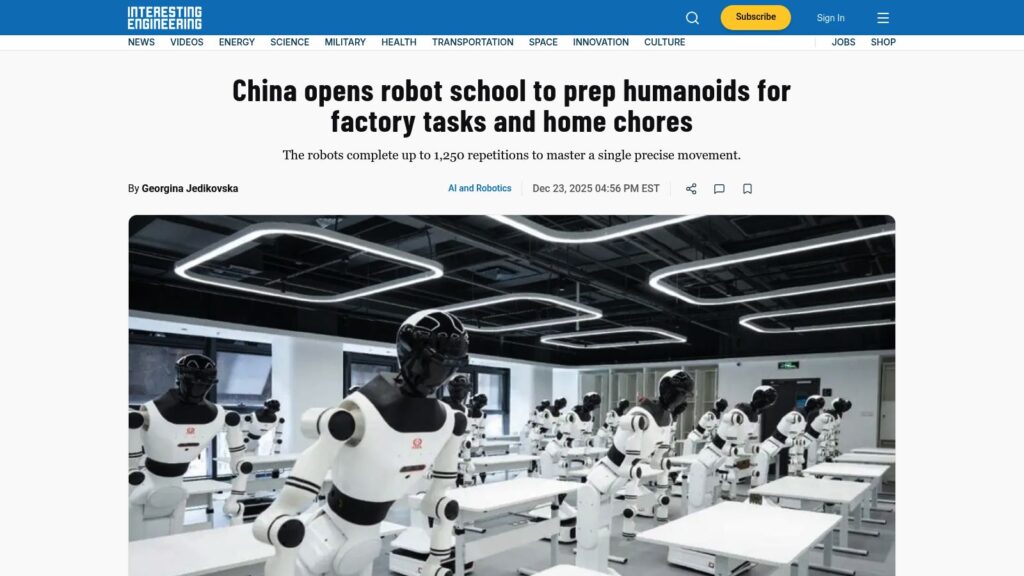
China opened a school in Beijing to train humanoid robots for tasks in factories and homes. The center features modular training scenarios and emphasizes repeated practice, with robots needing up to 1,250 repetitions to master a task. The goal is to create a rich database for training robots in various environments, contributing to effective AI learning. Trained robots are already in use for material handling, courier services, and inspections.

https://interestingengineering.com/ai-robotics/china-robot-school-to-prep-humanoids

However We Deploy AI at Work, People Must Remain the Focus (and Training Is Key)

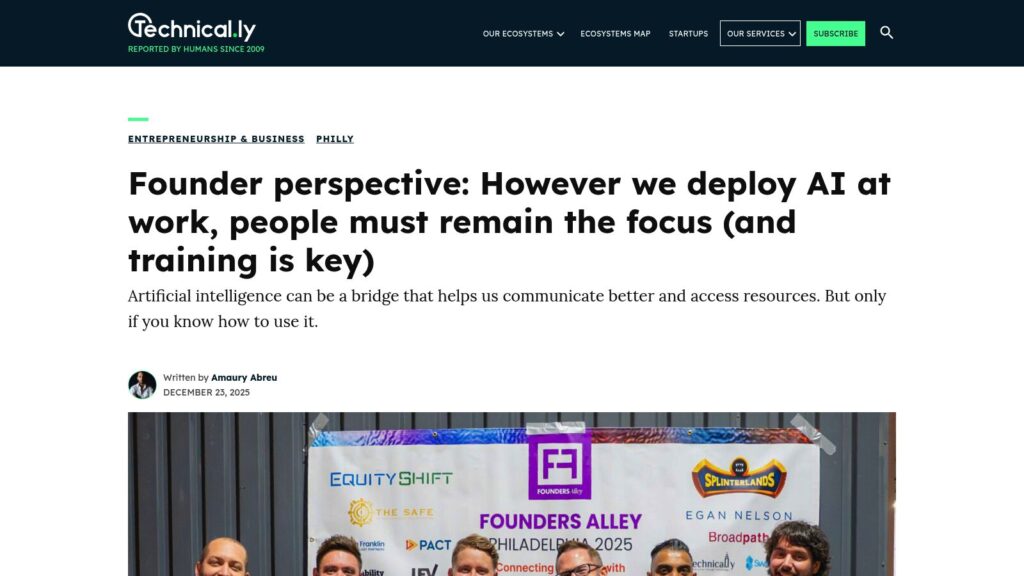
AI can enhance communication and productivity but should prioritize human interaction. Current data shows no significant job disruption from AI, emphasizing the need for training and responsible development. Startups must consider long-term impacts and provide accessible AI education to prevent workforce displacement.

https://technical.ly/entrepreneurship/ai-workplace-works-best-when-people-come-first/

Council Post: AI Readiness Past 2026 Demands a Workforce Transformation Today

Companies must prioritize workforce upskilling to prepare for AI’s impact beyond 2026. While hyperscalers face challenges in monetizing AI investments, companies implementing AI workflows for internal operations can achieve significant returns. Empowering employees to understand, experiment with, and critically evaluate AI is crucial, especially in regulated industries where accountability is paramount.

https://www.forbes.com/councils/forbesbusinessdevelopmentcouncil/2025/12/23/ai-readiness-past-2026-demands-a-workforce-transformation-today/

Yes, AI Is Really Impacting The Job Market. Here’s What To Do.

AI’s impact on job market: Unemployment rises (4.6%), especially among new grads (10%). Employers hesitating to hire entry-level, despite young workers being tech-savvy. Essential to support frontline workers; trust in CEOs regarding AI is low (only 27% trusted). Discuss AI openly to mitigate anxiety. Senior workers must adapt; younger employees can rapidly innovate. AI isn’t killing jobs but reshaping them—embracing younger talent may drive productivity.

https://joshbersin.com/2025/12/yes-ai-is-really-impacting-the-job-market-heres-what-to-do/

2026 Labour Market Trends: Hiring Slowdown and AI Disruption

2026 Job Market Trends: Talent market faces challenges due to economic pressures, hiring remains slow with rising unemployment (5.1%). Experts predict continuation of this trend in 2026, driven by increased employment costs and new legislation. Lower-skilled jobs decline, while demand for tech and high-skilled positions remains selective. AI and automation complicate entry for young workers, emphasizing the need for reskilling and adaptability. Top talent competition persists, requiring employers to enhance work-life balance and culture for retention. Focus shifts to developing current workforce over aggressive hiring strategies.

https://www.peoplemanagement.co.uk/article/1943835/2026-labour-market-trends-hiring-slowdown-ai-disruption

How the World of Work Will Change Over the Next 20 Years

The future of work will be significantly shaped by artificial intelligence, impacting performance measurement, workforce demographics, and the role of managers. AI will enable real-time data analysis to optimize workflows and collaboration, while a shrinking workforce will necessitate investments in vocational training and skill-based development. The gig economy will thrive with democratized access to AI, and generalist roles will become more valuable, emphasizing creativity and cross-functional collaboration.

https://www.wsj.com/lifestyle/workplace/future-of-work-978509bf

AI Adoption Demands Workforce Resilience

AI is rapidly changing the workplace, and HR leaders face the challenge of ensuring employees adapt with resilience. By framing AI as a partner that enhances work rather than threatens jobs, organizations can foster a culture of adaptability. Effective communication, institutionalizing resilience as a competency, and encouraging experimentation through small wins are essential strategies. Resilience becomes crucial as AI integrates into all workflows, enabling organizations to navigate and leverage change successfully.

https://hrdailyadvisor.com/2025/12/19/ai-adoption-demands-workforce-resilience/

Meet Your Robotic Coworker

Agility Robotics CEO Peggy Johnson discusses the development of humanoid robots like Digit, designed to assist human workers in various industries, particularly in repetitive and labor-intensive tasks. The latest version, Digit 4.0, features advancements such as longer battery life and self-charging capabilities. Johnson emphasizes that these robots enhance workplace safety and efficiency rather than replacing human jobs, fostering new roles for workers. She highlights the importance of human-centric design in robotics and the need for cooperative safety measures in human-robot interactions to build trust in the workplace.

https://www.mckinsey.com/capabilities/tech-and-ai/our-insights/meet-your-robotic-coworker

AI-powered Learning Ecosystems: a Guide to Workforce Upskilling

The article emphasizes transforming traditional training into AI-powered, personalized learning ecosystems, with a focus on B2B upskilling partnerships and adaptive learning. This new approach leverages unified data, modular designs, and AI capabilities for better learner outcomes, emphasizing the importance of strategic technology and governance in educational environments. The article underlines the role of CIOs in leading this transformation towards adaptive and inclusive learning experiences.

https://www.cio.com/article/4108064/ai-powered-learning-ecosystems-a-guide-to-workforce-upskilling.html

Gallup Report Sees Uneven Growth in Workplace AI Use

TLDR: A Gallup report reveals U.S. workplace AI use grew from 40% to 45% in 2025, with frequent use increasing from 19% to 23%. Awareness of organizations adopting AI is uneven, with 37% of employees acknowledging implementation. AI is mainly used in knowledge roles, and applications include information consolidation and idea generation. Managerial support is crucial for broader AI adoption.

https://www.hrgrapevine.com/us/content/article/2025-12-16-gallup-report-sees-uneven-growth-in-workplace-ai-use

Scroll to Top