Building Talent for an AI-driven Future

TLDR: Lumina Foundation aims to enhance post-high school education and credentials for Americans, focusing on equity and workforce alignment. President Jamie Merisotis discussed the impact of AI on jobs, urging preparation for uniquely human skills. Despite challenges in higher education perception, degree value persists with significant income benefits. Future adaptations are needed for affordability, flexibility, and workforce relevance. Employers should enhance training and partnerships with educational institutions to create skilled, adaptable workers in a changing economy.

https://www.luminafoundation.org/news-and-views/building-talent-for-an-ai-driven-future/

AI Is Redefining Entry-level Tech Roles — Here’s What CIOs Need to Change Now

AI is transforming entry-level tech roles, requiring CIOs to adapt hiring practices, onboarding, and AI integration strategies. Rather than diminishing these roles, AI is reshaping them, increasing demand for tech talent. CIOs must audit job descriptions, redesign training to enhance learning opportunities, and focus on skills-based hiring, recognizing AI’s role in workforce transformation. Organizations that effectively adjust will gain a competitive edge in the evolving job landscape.

https://www.cio.com/article/4132224/ai-is-redefining-entry-level-tech-roles-heres-what-cios-need-to-change-now.html

AI Hype Versus Reality and a ‘Generational Recession’: New Goodwill® Report Reveals Growing Workforce Gaps

A new report from Goodwill Industries International reveals a growing “generational recession” affecting Gen Z, with low career confidence and delays in achieving financial milestones. Despite AI hype, only 22% of Americans use it for career training, and 35% don’t use it at all. The report also highlights the impact of layoffs, with many Americans experiencing job cuts or knowing someone who has.

https://www.prnewswire.com/news-releases/ai-hype-versus-reality-and-a-generational-recession-new-goodwill-report-reveals-growing-workforce-gaps-302687681.html

The Reporter Who Tried to Replace Herself With a Bot

TLDR: Ella Markianos, an entry-level AI journalist, tested a customized AI chatbot named Claudella to perform her job. After building Claudella, she found it capable of handling many tasks but noted its limitations in style, humor, and understanding editorial feedback. Despite AI’s growing competency, Ella remains committed to her writing, valuing the human aspect of journalism while acknowledging her career concerns amid AI advancements.

https://www.platformer.news/journalism-job-automation-claude/

The Dutch Love Four-day Working Weeks, but Are They Sustainable?

The Netherlands has widely adopted a four-day workweek, enhancing employee well-being without reducing pay. Companies that switched report improved productivity, lower sick leave, and increased job retention. However, the OECD warns that maintaining high productivity remains a challenge due to stagnating growth and an aging workforce. Calls for more women to work full-time could help, but barriers like childcare and societal norms persist. The sustainability of this work model is under scrutiny as it may not be economically viable long-term.

https://www.bbc.com/news/articles/cx2y85xdyw3o

Why I’m Not Worried About AI Job Loss

AI won’t cause mass job loss; current fears are exaggerated. While AI is advancing rapidly, substitution of human labor is complex, as comparative advantages matter. Human bottlenecks persist, leading to ongoing complementarity with AI, especially as demand for human-produced goods remains elastic. Transition will be smoother than many expect, with opportunities for new job creation despite some displacement. Ordinary workers should adapt without excessive worry; a backlash against AI might emerge due to fear, not necessity.

https://davidoks.blog/p/why-im-not-worried-about-ai-job-loss

About That Matt Shumer Post That Has Nearly 50 Million Views

Gary Marcus critiques Matt Shumer’s viral blog post with nearly 50 million views, calling it hype with misleading claims about AI’s coding capabilities. He argues that Shumer’s assertions lack data and ignore issues like error rates and user experiences. Marcus highlights five points of concern, including potential user burnout and security risks of AI-generated code, while cautioning against overconfidence in AI’s reliability. He concludes that despite some improvements, Shumer’s perspective is overly optimistic and unrealistic.

https://garymarcus.substack.com/p/about-that-matt-shumer-post-that

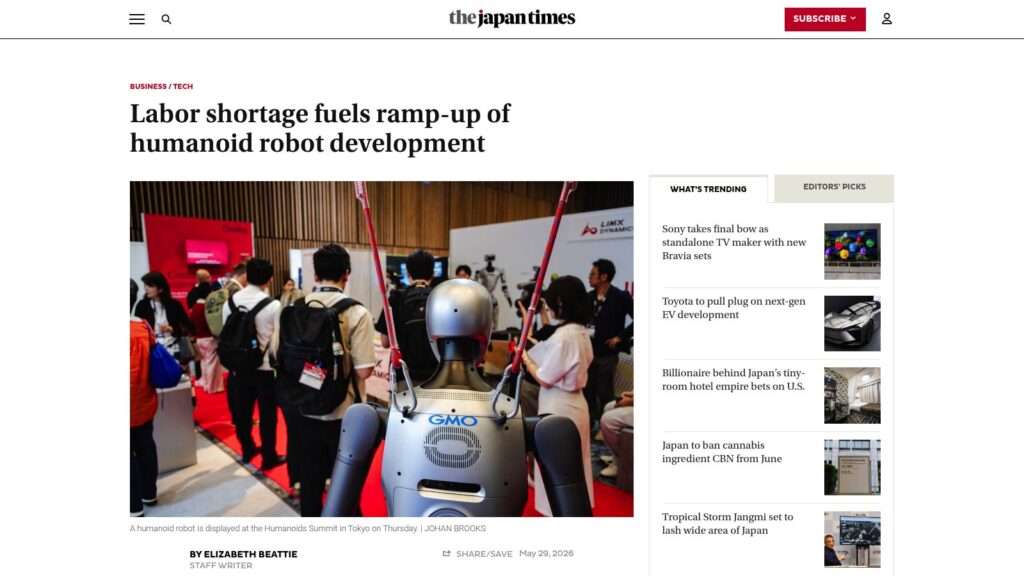
“Robots Instead of Chefs? Faster and More Precise: They Are an Aid to Business, Not a Threat.”

Jim Block’s CEO promotes automation in restaurants as a helpful ally, enhancing efficiency without losing human connection. Humanoid robots assist with repetitive tasks like frying and assembling food, allowing staff to focus on customer service. This collaboration aims for precision and speed while preserving the personal touch essential to hospitality. Thus, future quality fast food combines robotic efficiency with human warmth.

https://reportergourmet.com/en/news/9767-robots-instead-of-chefs-they-are-a-help-not-a-threat-jim-block-innovates-the-restaurant-industry

Robotization and Occupational Mobility

Robotization and AI affect workers’ long-term career trajectories beyond job losses and wage declines. Since 2000, fewer workers transition to higher-paying jobs due to automation, impacting earnings and reducing investments in housing and education. Policies should address the broader implications of technology, not just job displacement, as many workers face diminished career advancement opportunities, particularly in high-manufacturing areas affected by industrial robots. The study highlights the need for policies to consider the long-term career effects of automation on all workers, not just those directly displaced.

https://www.brookings.edu/articles/robotization-and-occupational-mobility/

How Data and AI Are Reshaping Every Career

AI reshapes careers through “job churn,” where roles evolve due to task automation, augmentation, and redesign. As industries transform, workers face new expectations around data and technology, making skills adaptation essential. Approximately 40% of global employment is exposed to AI, with 78 million new jobs expected by 2030 amidst significant displacement. Key impacts include changing responsibilities across sectors such as finance, retail, and marketing, emphasizing the need for continuous skill development to maintain job relevance.

https://www.snowflake.com/en/blog/how-data-ai-reshaping-careers/

Something Big Is Happening

AI is rapidly advancing, transforming how work is done. Major breakthroughs, such as model GPT-5.3, have made AI increasingly competent in tasks that once needed human expertise. Many tech workers already feel AI’s impact, observing that it can outperform them in coding and other areas. This shift is not gradual; it’s accelerating, with predictions that AI can replace up to 50% of entry-level white-collar jobs within 1-5 years. The implications are vast, affecting fields like law, finance, writing, and customer service, as AI develops decision-making capabilities similar to human judgment. To adapt to these changes, individuals should actively engage with AI tools, understanding their potential and leveraging them to enhance productivity. Continuous learning and an openness to change are critical to thrive in this evolving landscape. The next few years will be crucial for those willing to embrace AI as it reshapes various industries.

https://shumer.dev/something-big-is-happening

How the Growing AI Workforce Is Changing the CIO Role

CIOs are evolving from managing technology to orchestrating hybrid teams of humans and AI agents, as AI adoption grows in enterprises. While AI agents can automate tasks, CIOs must strategically decide their applications, focusing on well-defined, low-risk tasks. Measuring AI agents’ productivity should account for reliability and human capacity freed rather than just cost. CIOs face challenges like governance, risk management, and employee resistance while integrating AI, necessitating a shift in organizational culture and accountability frameworks. Beginning with small pilot projects and ensuring proper governance and monitoring are crucial for successful AI implementation.

https://www.cio.com/article/4126383/how-the-growing-ai-workforce-is-changing-the-cio-role.html

Scroll to Top