ai

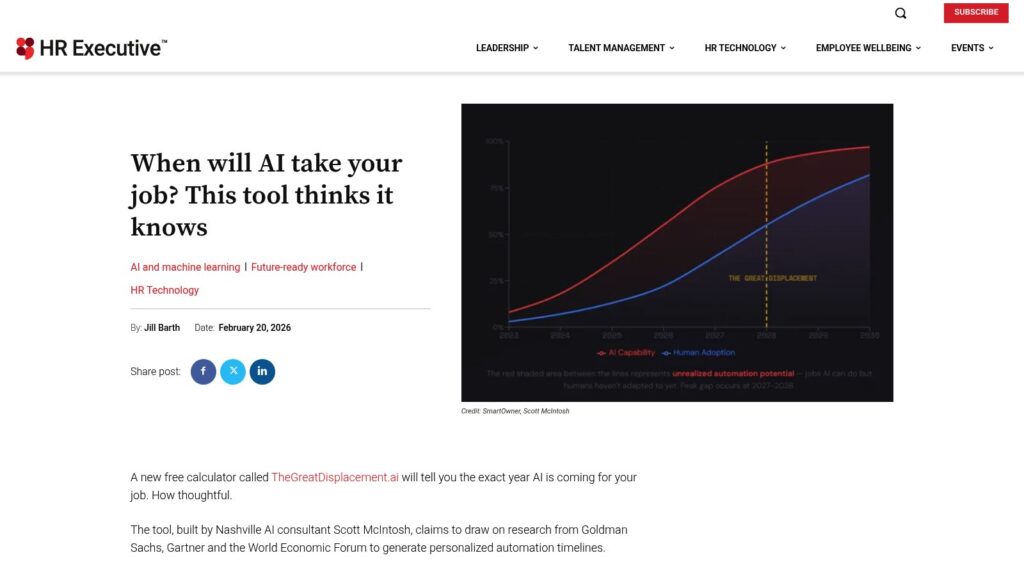
AI Was Behind Over 50,000 Layoffs in 2025 — Here Are the Top Firms to Cite It for Job Cuts

In 2025, AI was linked to nearly 55,000 layoffs in the U.S., contributing to a total of 1.17 million job cuts, the highest since 2020. Major companies like Amazon and Microsoft cited AI as a key factor in their layoffs, part of broader cost-cutting efforts amid economic challenges. Critics suggest companies may be using AI as a scapegoat for overhiring during the pandemic.

https://www.cnbc.com/2025/12/21/ai-job-cuts-amazon-microsoft-and-more-cite-ai-for-2025-layoffs.html

How AI Will Transform the Workplace in 2026

AI will transform workplaces in 2026 through ‘Connected Intelligence,’ integrating people, AI, and data. Key changes include:

  1. Collaboration: Human-to-AI and AI-to-AI interactions will enhance teamwork.
  2. Infrastructure: Networks will evolve to support increased AI traffic and threats.
  3. Simplified IT: AI will streamline network management, enabling focus on strategy.
  4. Customer Experience: AI will redefine interactions between brands and customers, emphasizing hybrid teamwork.
  5. Security & Leadership: Organizations will prioritize trust and adaptive security as they manage human and AI workers.

The future emphasizes collaboration, simplified management, and trust.

https://newsroom.cisco.com/c/r/newsroom/en/us/a/y2025/m12/how-ai-will-transform-the-workplace-in-2026.html

85% of Workers Say AI Will Improve Their Jobs: The Conference Board

85% of workers believe AI will enhance their jobs in two years, despite concerns about job loss. A survey reveals 91% have seen task changes due to AI, with 87% noting productivity boosts and 57% increased job satisfaction. However, many companies lack an effective AI strategy; over half of leaders see a disconnect between AI initiatives and business goals. HR’s current role is often limited to training rather than participating in strategic decisions, and a significant skills gap exists. The Conference Board recommends organizations engage employees in AI redesign, invest in upskilling, and adapt talent models to leverage AI’s potential effectively.

https://www.staffingindustry.com/news/global-daily-news/85-of-workers-say-ai-will-improve-their-jobs-the-conference-board

HR in 2026: Three Shifts Already Reshaping the Workplace

HR in 2026 will focus on proactive responses to new employment legislation, AI integration in daily operations, and managing a multi-generational workforce. Anticipation of changes is crucial, shifting from reactive strategies to early engagement with policies and system designs. Emphasizing collaboration across generational strengths is essential for resilience and innovation. Success hinges on preparing for these shifts now rather than later.

https://www.thehrdirector.com/features/hr-in-business/hr-2026-three-shifts-already-reshaping-workplace/

Why Data Skills Are the Backbone of AI Success

Data skills are crucial for AI success, yet many organizations face a significant skills gap, hindering AI implementation and ROI. Over 20% of employees lack adequate training in AI, impacting their ability to leverage AI tools effectively. Human oversight is essential for refining AI outputs, and training should be integral to organizational strategy, not an afterthought. To remain competitive and fully harness AI’s capabilities, continuous upskilling and a focus on data fluency across all levels are necessary.

https://startupsmagazine.co.uk/why-data-skills-are-the-backbone-of-ai-success

2026 AI Trends

In 2026, organizations will increasingly integrate AI into their business strategies, focusing on how to use AI effectively rather than just deploying it. This will lead to the rise of AI-native departments in HR, procurement, and customer operations, where AI handles routine tasks, and humans focus on higher-value activities. Additionally, there will be a reduction in middle management roles as AI takes over routine tasks, and organizations will prioritize leaders who can effectively manage hybrid teams of humans and AI.

https://www.imd.org/ibyimd/artificial-intelligence/2026-ai-trends-what-leaders-need-to-know-to-stay-competitive/

The Future Of Work On The Frontlines: AI Eases Tasks, But Workers Have No Say In Which Ones

AI simplifies tasks for frontline workers, reducing stress and improving job satisfaction, but only 15% were consulted before implementation, causing trust issues. Empathy and inclusion are essential for successful AI integration; technology should support human roles, not replace them. Long-term optimism hinges on transparency and worker participation in AI rollouts.

https://allwork.space/2025/12/the-future-of-work-on-the-frontlines-ai-eases-tasks-but-workers-have-no-say-in-which-ones/

AI and Jobs: Should We Really Be Worried? New Data Changes Everything

AI impacts jobs, but fears of mass layoffs may be exaggerated. A Yale study shows no measurable effect on US employment. Job losses primarily affect recent graduates, particularly in high-salary roles. Current AI systems struggle with accuracy and reasoning, and expert opinions suggest decades remain before AI can truly replace human thought. Historically, technological advances create new jobs. Universal income models are considered if job automation leads to significant unemployment. Future employment dynamics depend on human choices regarding innovation and policy.

https://www.futura-sciences.com/en/ai-and-jobs-should-we-really-be-worried-new-data-changes-everything_22521/

Salesforce Regrets Firing 4000 Experienced Staff and Replacing Them With AI

Salesforce regrets firing 4,000 experienced customer support staff, acknowledging overconfidence in AI’s ability to replace human roles. The layoffs resulted in declining service quality, increased complaints, and operational disruptions, as AI struggled with complex customer issues. CEO Marc Benioff has since recognized the value of human expertise, shifting Salesforce’s strategy towards augmenting AI rather than outright replacement. This cautionary tale highlights the risks of rapidly advancing automation without adequate preparation.

https://maarthandam.com/2025/12/25/salesforce-regrets-firing-4000-staff-ai/

AI Shifts Expectations for Entry Level Jobs

AI’s rise affects early-career engineers, as entry-level jobs decline due to automation. Predictions show significant job cuts, particularly in programming, while roles like AI engineer are growing. Recent grads must adapt to higher expectations and develop skills in AI usage, as proficiency becomes essential. Employers seek experiential learning over theoretical knowledge, prompting educational shifts towards apprenticeships. Overall, AI augments rather than replaces jobs, requiring a balance of hard skills and critical thinking for success in the evolving job market.

https://spectrum.ieee.org/ai-effect-entry-level-jobs

Artificial Intelligence (AI) and Employment

AI is increasingly present in UK workplaces, affecting job opportunities and conditions. Recent AI advancements include powerful hardware and large language models; however, challenges such as bias and opacity persist. AI adoption varies across sectors, with more uptake in large firms. While AI may threaten specific jobs, it can also create new roles. Concerns about inequality and changing working conditions are noted. The UK government’s focus includes infrastructure, investment, and skill development in response to AI.

https://post.parliament.uk/research-briefings/post-pn-0757/

However We Deploy AI at Work, People Must Remain the Focus (and Training Is Key)

AI can enhance communication and productivity but should prioritize human interaction. Current data shows no significant job disruption from AI, emphasizing the need for training and responsible development. Startups must consider long-term impacts and provide accessible AI education to prevent workforce displacement.

https://technical.ly/entrepreneurship/ai-workplace-works-best-when-people-come-first/

Council Post: AI Readiness Past 2026 Demands a Workforce Transformation Today

Companies must prioritize workforce upskilling to prepare for AI’s impact beyond 2026. While hyperscalers face challenges in monetizing AI investments, companies implementing AI workflows for internal operations can achieve significant returns. Empowering employees to understand, experiment with, and critically evaluate AI is crucial, especially in regulated industries where accountability is paramount.

https://www.forbes.com/councils/forbesbusinessdevelopmentcouncil/2025/12/23/ai-readiness-past-2026-demands-a-workforce-transformation-today/

Yes, AI Is Really Impacting The Job Market. Here’s What To Do.

AI’s impact on job market: Unemployment rises (4.6%), especially among new grads (10%). Employers hesitating to hire entry-level, despite young workers being tech-savvy. Essential to support frontline workers; trust in CEOs regarding AI is low (only 27% trusted). Discuss AI openly to mitigate anxiety. Senior workers must adapt; younger employees can rapidly innovate. AI isn’t killing jobs but reshaping them—embracing younger talent may drive productivity.

https://joshbersin.com/2025/12/yes-ai-is-really-impacting-the-job-market-heres-what-to-do/

Scroll to Top