ai

AI and the Ironies of Automation

AI automates work but introduces complexities, necessitating human oversight to prevent errors. Insights from Lisanne Bainbridge’s 1983 paper on automation reveal challenges like decision-making under stress and training needs for operators, highlighting the irony that successful systems require significant investment in human skill development. As AI becomes more advanced, reevaluating UI/UX for operator interfaces and proactive leadership for AI agents is crucial for effective supervision.

https://www.ufried.com/blog/ironies_of_ai_2/

AI and the Ironies of Automation

AI automation leads to paradoxes where human skills deteriorate due to reduced engagement, causing inefficiency and knowledge gaps. Humans become overseers, losing expertise needed for monitoring automated systems effectively. This raises risks of errors going unnoticed, as attention wanes in low-activity scenarios. Future automation may create unqualified operators lacking necessary knowledge. The reliance on AI without maintaining human skills and awareness is unsustainable, demanding a reevaluation of monitoring roles and potential new job profiles to mitigate these issues.

https://www.ufried.com/blog/ironies_of_ai_1/

“Empowering People and Building Digital Skills Are Essential for Accelerating the Adoption of AI and Robotics in the Workplace”

Empowering workforce and enhancing digital skills are crucial for advancing AI and robotics adoption in workplaces, as discussed at the Rockwell Automation Fair 2025. Key insights include the importance of skilled employees, intuitive human-machine interactions, and the integration of Autonomous Mobile Robots (AMRs) in manufacturing environments. Experts emphasized the need for safety measures and thoughtful factory designs to harmonize human-robot collaboration. AI-driven automation and machine learning are transforming operational efficiency. Effective coordination of robots within existing operations is essential for realizing the full potential of robotics technologies.

https://emag.directindustry.com/2025/12/18/rockwell-automation-ai-robotics-workplace-amr/

Board Oversight Of AI-Driven Workforce Displacement

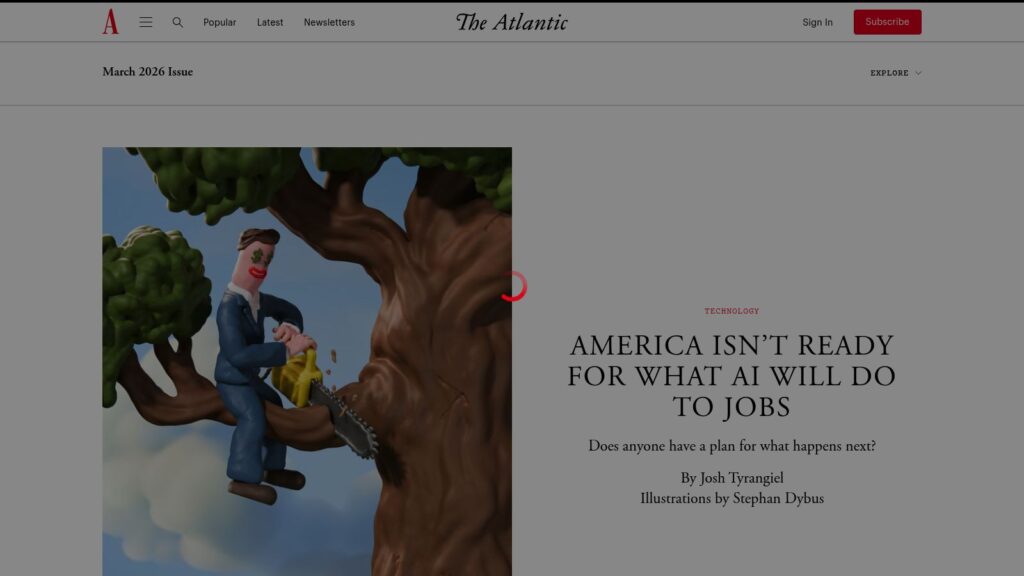
Boards must reassess oversight roles in response to AI-driven workforce changes, notably layoffs. Legal obligations exist mainly around financial disclosures and WARN Act compliance, but fiduciary responsibilities are emerging that emphasize the importance of human capital and company culture. Governing bodies are encouraged to consider AI’s impact on employees, aligning technology adoption with long-term corporate strategy rather than short-term cost-cutting. Ethical considerations also mandate directors to prioritize worker welfare and align with corporate values, while fostering management accountability in AI deployment decisions.

https://corpgov.law.harvard.edu/2025/12/18/board-oversight-of-ai-driven-workforce-displacement/

Fear of Losing Your Job Is No Way to Get Employees on Board With AI

Companies pushing AI adoption through fear are using the wrong motivator. Fear-driven mandates create performative compliance that limits growth, while open communication and collaboration unlock AI’s potential. Effective leadership redirects attention outward, fostering trust, creativity, and problem-solving, rather than inward fear and rigidity.

https://www.morningstar.com/news/marketwatch/20251218179/fear-of-losing-your-job-is-no-way-to-get-employees-on-board-with-ai

The AI Efficiency Illusion: Why Cutting 1.1 Million Jobs Will Stifle, Not Scale, Your Strategy

TLDR: In 2025, U.S. companies cut over 1.17 million jobs, claiming efficiency through AI. However, this approach erodes human capital, stifles innovation, and increases operational errors among remaining employees. Layoffs disproportionately affect women and people of color, worsening systemic inequities. Companies must prioritize human-centric strategies, ensuring diversity and governance to optimize AI’s benefits rather than cutting jobs. This holistic approach will lead to long-term profitability and equity.

https://fortune.com/2025/12/18/the-ai-efficiency-illusion-why-cutting-1-1-million-jobs-will-stifle-not-scale-your-strategy/

Nvidia CEO Predicts Gradual AI Job Shift, Not Sudden Replacement

Nvidia CEO Jensen Huang predicts a gradual shift in the job market due to AI, with routine tasks being automated while jobs requiring interpretation and complex reasoning remain. He anticipates the emergence of new industries and job types, such as robot-based apparel, but acknowledges that even these roles may eventually be automated. Huang emphasizes the importance of AI as a global technology race, highlighting the advantages for the first to reach its full potential.

https://news.outsourceaccelerator.com/gradual-ai-job-shift/

Why State CIOs Are Betting on AI

State CIOs are prioritizing AI and generative AI to modernize government IT, driven by budget constraints, cybersecurity risks, and workforce challenges. While AI’s potential to enhance citizen services is recognized, its immediate impact is evident in internal processes such as document generation and policy analysis. States are also focusing on modernization, cybersecurity, and compliance with the upcoming ADA accessibility deadline.

https://www.bankinfosecurity.com/state-cios-are-betting-on-ai-a-30306

The Under-the-radar Reason for the White-collar Job Bloodbath

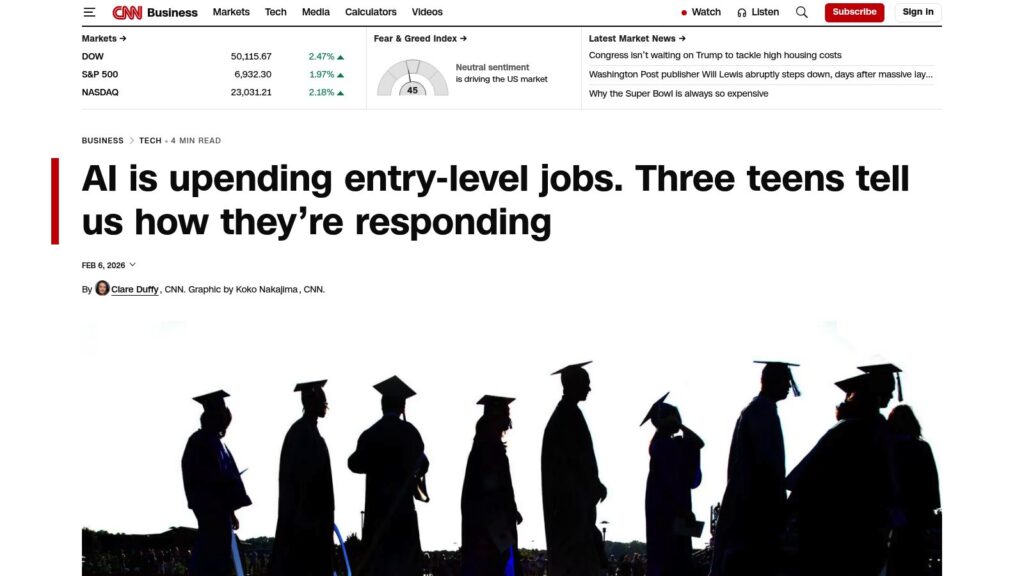
America’s job market is struggling due to a combination of high interest rates, stagnant demand for entry-level jobs, and a hesitance to hire amid economic uncertainty—not primarily due to AI. Long-term unemployment is rising, and the number of job seekers is exceeding job openings. While AI is altering workplace dynamics, its current impact on job displacement is overstated. The true culprit behind job market woes is deteriorating economic conditions, exacerbated by rising rates and tariffs, rather than a technological revolution.

https://www.businessinsider.com/forget-ai-heres-the-real-reason-the-job-market-sucks-2025-12

How Workers Will Adapt in the AI Era

AI will change workers’ roles, allowing them to adapt rather than be replaced. Most current skills remain relevant, focusing on human abilities like judgment and creativity. Demand for AI-related skills is rising. Examples in fields like radiology and customer service show technology enhancing rather than replacing jobs. Effective management will shift towards integrating human and AI efforts. Proper adaptation to AI could unlock significant economic value and elevate human work rather than diminish it. Choices made today will shape the future workforce.

https://time.com/7341258/how-workers-will-adapt-in-ai-era/

The AI Layoff Wave Is Just Beginning — and It’s by Design

AI-driven layoffs are rising, with major companies like UPS and Amazon cutting jobs to restructure workforces strategically. As the job market contracts and organizations focus on skills rather than headcount, 41% of firms expect to reduce employees due to AI. Companies are now leveraging AI for productivity and workforce optimization, leading to a fluid workforce model. Effective adaptation requires treating AI as a collaborator, balancing tech efficiency with human culture to succeed in the evolving landscape.

https://fortune.com/2025/12/17/ai-layoff-wave-just-beginning-by-design-jobless-growth/

Workforce Rides AI Wave as New Roles Emerge

AI tech is reshaping job roles, pushing workers to focus on creative, high-value tasks. AI product managers are in high demand, with extensive applicant pools, while technical roles like algorithm engineers require advanced degrees. Companies prioritize practical experience in AI applications over coding skills, leading to a diverse workforce that includes AI trainers for data preparation.

https://www.chinadaily.com.cn/a/202512/16/WS69409616a310d6866eb2ec5f_3.html

Choose the Human Path for AI

Mitigation of AI’s impact requires prioritizing human enhancement over job elimination. The future of work can leverage AI to empower rather than replace workers, as highlighted by historical management theories and MIT research. Emphasizing human capabilities (empathy, creativity, etc.) is vital for effective AI integration. Educational frameworks are evolving, such as MIT’s Universal AI, to enhance understanding and application of AI. Deliberate choices in AI development can lead to collaborative prosperity rather than widespread job loss.

https://mitsloan.mit.edu/ideas-made-to-matter/choose-human-path-ai

What the AI Executive Order Means for the Workplace

Executive Order aims to standardize AI use in workplaces by challenging restrictive state laws. It tasks federal agencies to identify and address burdensome regulations on AI, especially in hiring. The order promotes a unified approach to AI, reducing compliance difficulties for companies. Currently, state laws remain effective until legally challenged.

https://www.psca.org/news/psca-news/2025/12/what-the-ai-executive-order-means-for-the-workplace/

What Harvard Researchers Learned About Use of AI in White-collar Work at Top Companies

Harvard researchers analyzed AI use in white-collar jobs at Procter & Gamble and Boston Consulting Group. Findings indicate AI boosts productivity and performance, especially when integrated into collaborative teams. While AI enhances speed and performance for lower-skilled workers, it risks homogenizing ideas and potentially reduces junior roles. Proper management of AI technology is lacking, with current leaders needing more training to effectively oversee AI systems. Companies must strategically redesign roles to fully leverage AI benefits while protecting human jobs.

https://www.cnbc.com/2025/12/16/harvard-research-ai-office-work-job-risks.html

Scroll to Top