ai

What Harvard Researchers Learned About Use of AI in White-collar Work at Top Companies

Harvard researchers analyzed AI use in white-collar jobs at Procter & Gamble and Boston Consulting Group. Findings indicate AI boosts productivity and performance, especially when integrated into collaborative teams. While AI enhances speed and performance for lower-skilled workers, it risks homogenizing ideas and potentially reduces junior roles. Proper management of AI technology is lacking, with current leaders needing more training to effectively oversee AI systems. Companies must strategically redesign roles to fully leverage AI benefits while protecting human jobs.

https://www.cnbc.com/2025/12/16/harvard-research-ai-office-work-job-risks.html

AI Use at Work Rises

AI use among U.S. employees rose from 40% to 45% between Q2 and Q3 2025. Frequent use increased from 19% to 23%, with daily use rising slightly to 10%. Knowledge-based workers, especially in tech and finance, showed higher AI adoption compared to frontline roles. While 37% acknowledged their companies’ AI implementations, many were unaware, particularly in non-managerial roles. Employees mainly used AI for consolidating information (42%), generating ideas (41%), and learning (36%). More advanced AI tools are still underutilized. There’s a strong correlation between managerial support and employee AI use.

https://www.gallup.com/workplace/699689/ai-use-at-work-rises.aspx

China Is Worried About AI Job Losses

China faces high youth and low-skilled worker unemployment amid economic shifts and AI integration. The government aims for rapid AI adoption, but acknowledges potential job loss impacts, looking to balance technological advancement with social stability. While accepting short-term job losses for progress, the CCP is expected to implement measures to mitigate unemployment as societal unrest poses a significant threat. Historically, the CCP has prioritized stability, and current leaders may take a different approach by managing AI’s rollout to protect jobs while pursuing economic reform.

https://www.rand.org/pubs/commentary/2025/12/china-is-worried-about-ai-job-losses.html

Life After Artificial Intelligence Takes All of Our Jobs

AI could eliminate up to 99% of jobs in five years, leading to high unemployment and sociopolitical instability. While past tech advancements created new jobs, AI might completely replace human labor. Future scenarios include taxing corporations for universal basic income or producing high-end goods, potentially sparking societal unrest. The author suggests a possible resolution lies in finding ways to ensure a livable standard for all amid automation-driven job loss.

https://www.ocregister.com/2025/12/13/life-after-artificial-intelligence-takes-all-of-our-jobs/

“I Was Forced to Use AI Until the Day I Was Laid Off.” Copywriters Reveal How AI Has Decimated Their Industry

Copywriters are facing severe job loss due to AI’s rise, as many are forced to adapt their roles or lose work entirely. Stories detail layoffs, reduced workloads, and a shift to AI-generated content, leading to diminished quality and job satisfaction. Many report transitioning to alternative careers or struggling financially amidst increased competition. The profession is now plagued by instability and a loss of human touch in copywriting, pushing workers to question their future and self-worth in an AI-dominated market.

https://www.bloodinthemachine.com/p/i-was-forced-to-use-ai-until-the

Why Curiosity, Not Coding, Is the Top Trait CEOs Need for the Future

Curiosity over coding: In an AI-driven workplace, curiosity and digital engagement are more important for leaders and employees than pure technical skills.

Digitally engaged employees: They are curious, proactive learners who experiment, seek development, accept mistakes, and become GenAI superusers.

AI value unlocked by people: These superusers teach others, improve processes, and move organizations beyond basic AI usage to real productivity gains.

Shaping the 2030 workforce: Their behavior is writing the roadmap for how AI will transform work over the next several years.

CEO responsibility: Leaders must model continuous learning and create environments that foster curiosity and digital engagement, not just hire for it.

https://www.inc.com/joe-galvin/why-curiosity-not-coding-is-the-top-trait-ceos-need-for-the-future-of-work/91278344

Job Apocalypse? Humbug! AI Is Creating Brand New Occupations

New AI-era roles: AI is not just displacing jobs but creating new ones focused on training, integrating, supervising, and governing AI systems.

Upgraded data annotation: Data labeling now requires well-paid subject-matter experts in fields such as law, finance, and medicine, enabled by platforms such as Mercor.

Forward-deployed engineers: Hybrid developer–consultant–sales roles are growing quickly to customize and deploy AI tools inside organizations.

Human skills as premium: As coding becomes more automated, skills like empathy, communication, and real-world judgment become more valuable, exemplified by human overseers of robotaxis.

Governance and leadership: AI risk-and-governance specialists and chief AI officers are rapidly emerging to manage AI safety, compliance, and strategic deployment at scale.

https://www.economist.com/business/2025/12/14/job-apocalypse-humbug-ai-is-creating-brand-new-occupations

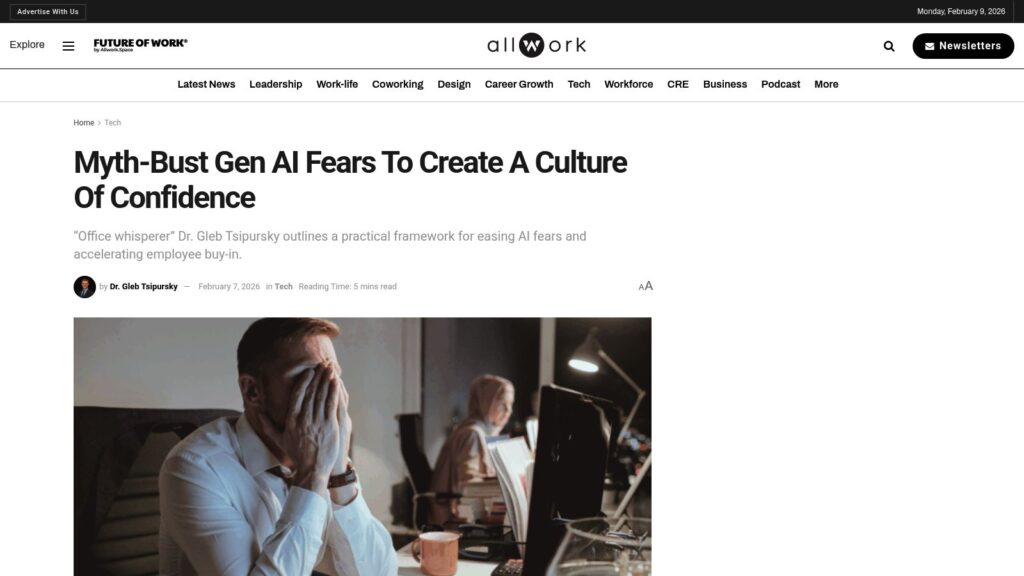
AI Sparks Critical Thinking Crisis: Executives Warn Of Talent Pipeline Collapse

Executives warn of a critical thinking crisis due to AI’s replacement of traditional tasks that develop strategic expertise, leading to a talent pipeline collapse. A survey indicates a global shortage of strategic thinkers, with AI demanding a shift from execution to strategic thinking, impacting all job sectors. Companies must redesign roles and upskill employees to cope with this skills gap. AI’s integration poses risks like operational vulnerabilities and necessitates proactive strategies to prepare future middle-management. The key to organizational resilience is embracing change and nurturing critical thinking skills.

https://allwork.space/2025/12/ai-sparks-critical-thinking-crisis-executives-warn-of-talent-pipeline-collapse/

The CFO’s Playbook for the Human + AI Workforce

KPMG emphasizes insights on industry trends and innovation, particularly concerning the integration of AI into finance. CFOs are encouraged to redefine roles, manage AI agents effectively, and redesign career paths, emphasizing interdisciplinary skills and flexibility. Key strategies include planning for role convergence, choreographing AI-human collaboration, and creating hybrid career models to adapt to evolving job landscapes.

https://kpmg.com/us/en/articles/2025/cfo-playbook-for-human-ai-workforce.html

AI Is Making the Workplace Lonelier

AI is increasing workplace loneliness as employees favor chatbots over human interaction for tasks like mentorship and brainstorming. While productivity rises, this trend results in fewer connections and collaboration, leading to potential emotional detachment among workers. Although AI is seen as a supplement to conversation, concerns grow that reliance on bots undermines human connection and creativity, potentially fracturing organizations.

https://www.axios.com/2025/12/13/ai-anthropic-chatbot-remote-work-jobs

The Biggest AI Moments of 2025: Surveillance, Layoffs, and Robots

AI dominated tech in 2025, revealing complexities alongside progress. Key highlights include:
1. OpenAI uncovered a China-linked AI surveillance tool.
2. Workers faced automation fears; repetitive jobs at risk.
3. The first World Humanoid Robot Games showcased advanced robotics.
4. Waymo reported significant safety improvements in driverless cars.
5. Internal concerns at OpenAI about AGI risks led to notable staff exits.
Overall, AI advancements brought both excitement and challenges for 2026.

https://www.eweek.com/news/biggest-ai-moments-2025/

Exclusive: Key Democrat Demands AI Job Impact Data From Companies

New Dems’ AI Task Force chair, Rep. Valerie Foushee, demands tech firms disclose how AI influenced recent layoffs. The letter targets major companies, requesting data on demographics, AI-related layoffs, and notification processes. Amid rising unemployment for Black Americans, the New Dems focus on protecting middle-class workers, with companies due to respond by Dec. 31.

https://www.axios.com/2025/12/11/democrat-ai-job-impact-data-companies

Howard Marks Says AI Is Going to Have a ‘terrifying’ Impact on Employment — and It Goes Well Past Lost Paychecks

Howard Marks warns AI’s impact on employment goes beyond job loss, threatening purpose and identity. He believes universal basic income (UBI) cannot replace the structure and self-worth derived from work. Estimates suggest AI could affect about 60% of jobs in advanced economies, with a shift in job landscape expected. Tech leaders emphasize the need for developing skills that machines can’t easily replicate.

https://www.businessinsider.com/ai-kills-jobs-paychecks-human-purpose-howard-marks-investor-2025-12

Understanding AI’s Labor Market Impacts: Opportunities for the Department of Labor’s AI Workforce Research Hub

AI’s workforce effects are uncertain; some predict modest impacts, while others foresee significant changes soon. The U.S. Department of Labor’s AI Workforce Research Hub aims to evaluate these impacts. Proposed actions include forming data-sharing partnerships with AI developers and hiring platforms, enhancing federal data collection on AI use, and involving economists to analyze data for informed policymaking. This strategy seeks to prepare policymakers for response to AI’s labor market effects.

https://www.thefai.org/posts/understanding-ai-s-labor-market-impacts-opportunities-for-the-department-of-labor-s-ai-workforce

Scroll to Top