ai

Will Your Job Be Replaced by AI? Here Are the Roles Most Affected
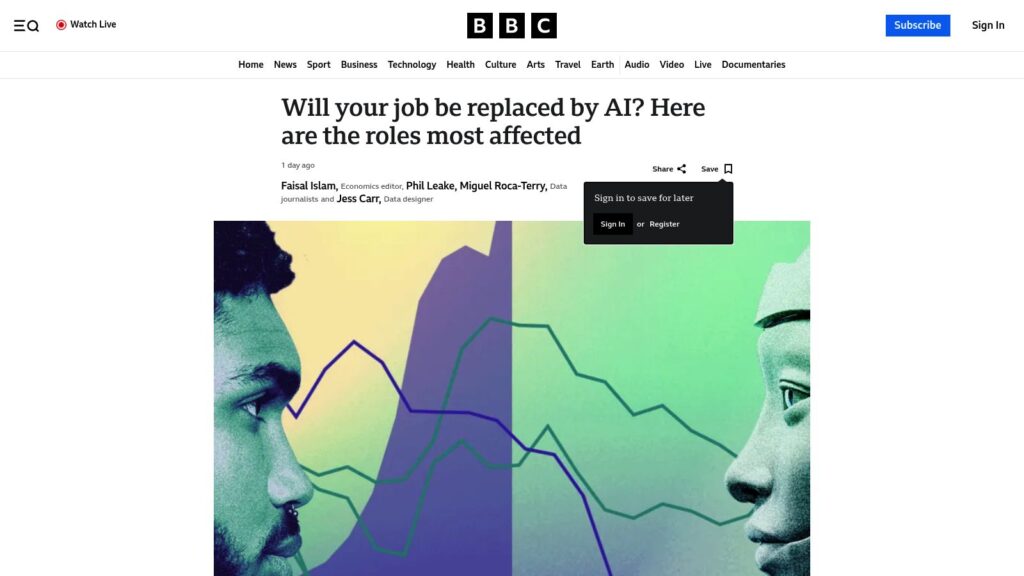
Advances in artificial intelligence (AI) are rapidly increasing automation and augmentation of work, especially in roles involving software development, finance, and creative industries. Research shows significant job displacement effects among younger workers in AI-exposed sectors, with companies investing heavily in AI to boost productivity but also facing high operational costs that may limit automation uptake. While AI adoption is reshaping labor demand, uncertainties remain about the pace and extent of job replacement across different sectors and regions.
https://www.bbc.com/news/articles/cn7nllr4vd6o

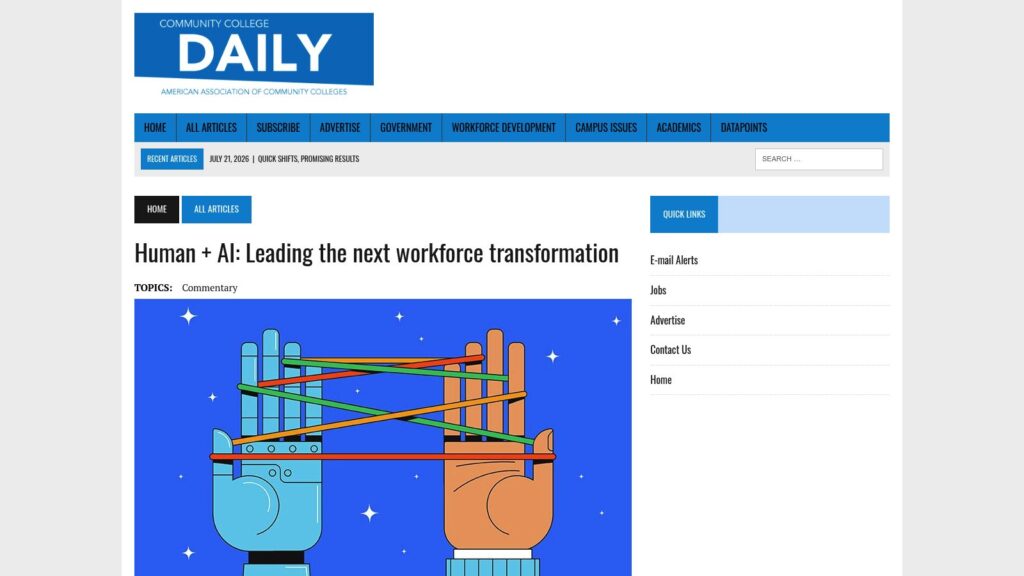
Human + AI: Leading the Next Workforce Transformation

Community colleges face a leadership challenge in adapting workforce preparation for an AI-enabled economy by equipping graduates with both AI literacy and distinctly human skills such as judgment, creativity, and ethical reasoning. As AI reshapes tasks within occupations, colleges must integrate AI education across programs and foster human competencies to enable students to work effectively alongside intelligent systems in complex, interactive roles. This human + AI approach ensures graduates are prepared for evolving professional demands and informed citizenship in an AI-driven society.

https://www.ccdaily.com/2026/07/human-ai-leading-the-next-workforce-transformation/

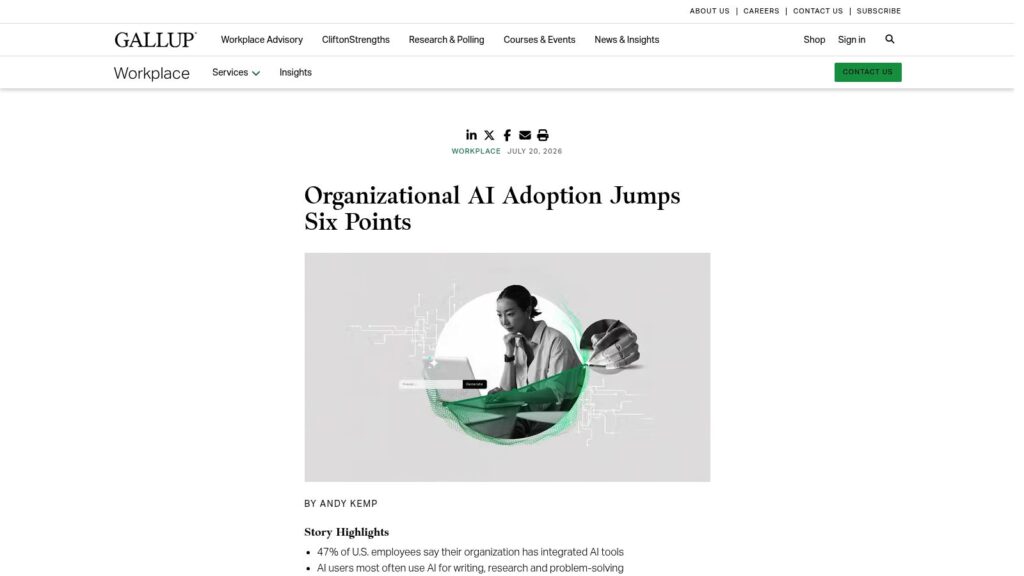
Organizational AI Adoption Jumps Six Points

Organizational adoption of AI in U.S. workplaces increased from 41% to 47% in Q2 2026, with 52% of employees now using AI in their roles, mostly for writing, research, and problem-solving. Productivity gains are highest among employees using AI for specialized tasks like coding, automation, and data analytics, and workers who use AI for a broader variety of functions report greater productivity improvements. These findings suggest that supporting employees to apply AI across multiple job-relevant tasks can enhance organizational productivity more than limited or occasional AI use.

https://www.gallup.com/workplace/712736/organizational-adoption-jumps-six-points.aspx

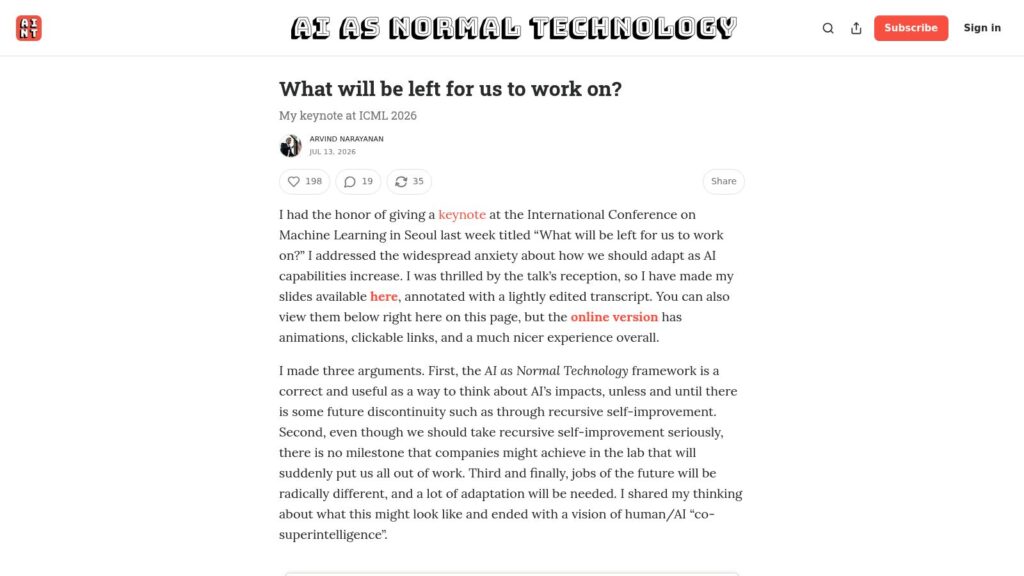
What Will Be Left for Us to Work On?

Arvind Narayanan discusses the evolving role of human work amid increasing automation and AI advances, questioning what tasks will remain uniquely human. He argues that while many routine and even some complex tasks are becoming automated, humans will continue to be needed for roles involving creativity, empathy, ethical judgment, and complex social interactions. This shift calls for adapting workforce skills and organizational approaches to focus on areas where human qualities and oversight remain essential.

https://www.normaltech.ai/p/what-will-be-left-for-us-to-work

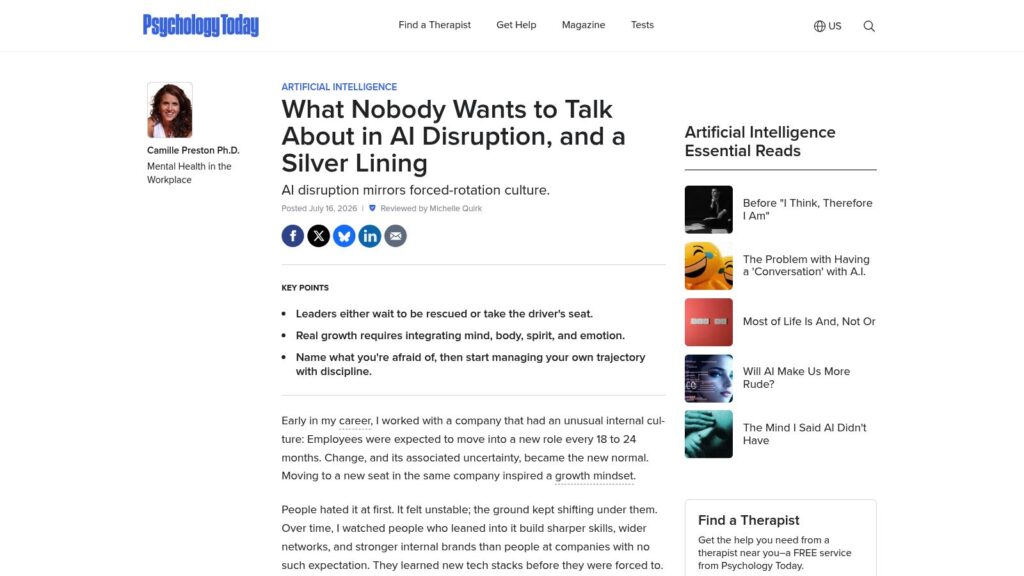
What Nobody Wants to Talk About in AI Disruption, and a Silver Lining

The article compares AI disruption in the workplace to a forced-rotation culture that compels employees to continually update their skills and adapt proactively. It emphasizes that fear of obsolescence is natural, but individuals who actively manage their career trajectory with discipline and integrate mind, body, spirit, and emotion are better equipped to navigate change. The author encourages leaders to acknowledge their fears, move beyond purely cognitive responses, and take ownership of their development to remain relevant and resilient amid rapid AI-driven transformations.

https://www.psychologytoday.com/us/blog/mental-health-in-the-workplace/202607/what-nobody-wants-to-talk-about-in-ai-disruption-and-a

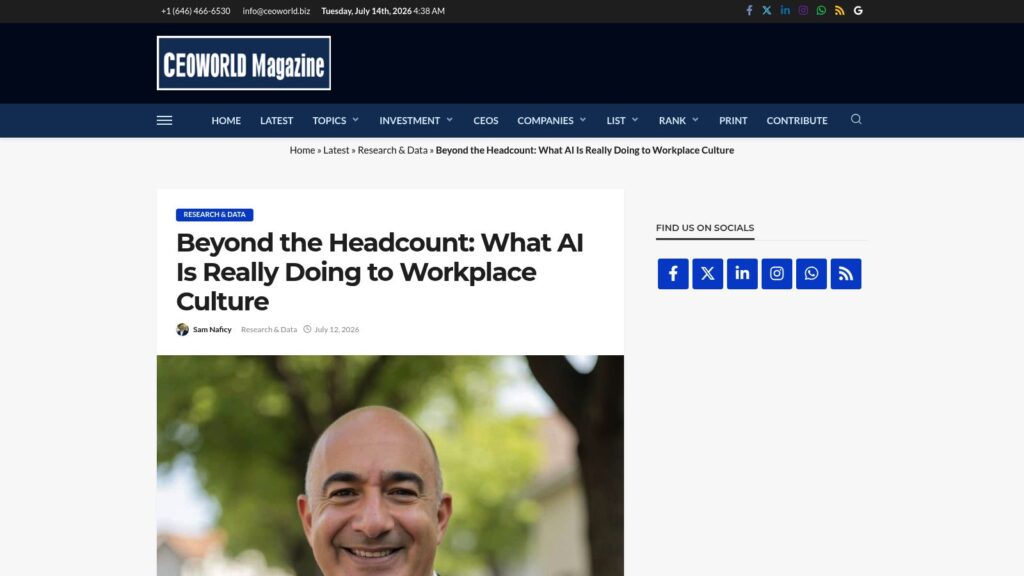
Beyond the Headcount: What AI Is Really Doing to Workplace Culture

AI-driven automation reshapes workplace culture by shifting communication patterns, thinning collaboration, and increasing employees’ cognitive load as remaining workers take on new responsibilities managing AI systems without additional support or compensation. Organizations often overlook these cultural impacts, focusing instead on headcount reductions and cost savings, while informal AI literacy roles emerge among socially connected employees who lack formal recognition, posing retention risks. Effective leadership requires acknowledging these changes, redefining roles and performance metrics, and investing in human-AI collaboration to sustain productivity and organizational cohesion.

https://ceoworld.biz/2026/07/12/beyond-the-headcount-what-ai-is-really-doing-to-workplace-culture/

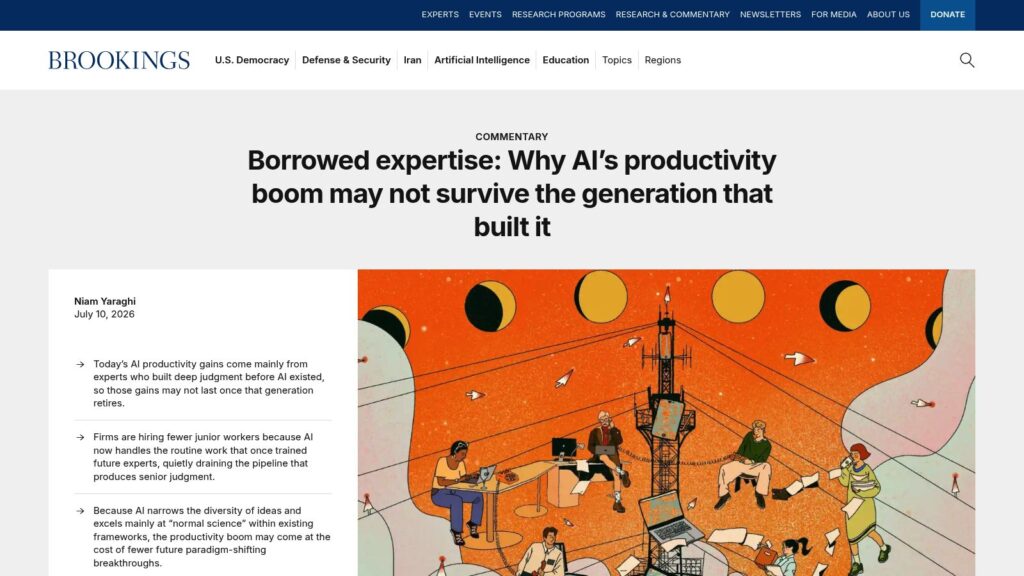
Borrowed Expertise: Why AI’s Productivity Boom May Not Survive the Generation That Built It

Generative AI’s current productivity gains rely heavily on experts whose judgment was developed before these tools existed, leveraging their deep domain knowledge to guide AI effectively. However, as firms reduce entry-level hiring due to AI’s automation of routine tasks, the developmental pipeline that cultivates future expert judgment is weakening, risking a long-term decline in innovation and expertise. This dynamic suggests that the current AI-driven productivity boom may not sustain as the generation that built it retires and is insufficiently replaced.

https://www.brookings.edu/articles/borrowed-expertise-why-ais-productivity-boom-may-not-survive-the-generation-that-built-it/

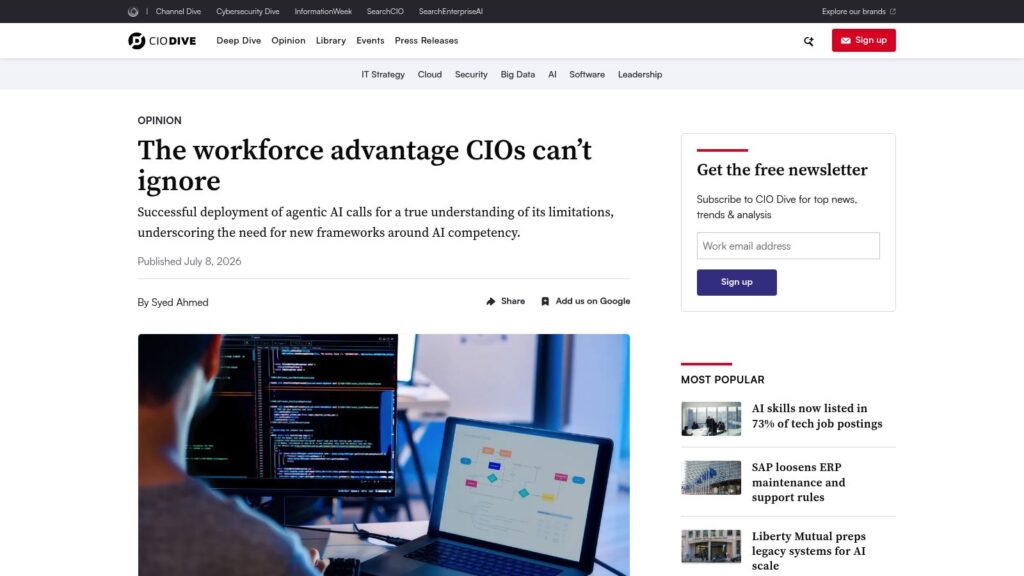
The Workforce Advantage CIOs Can’t Ignore

Enterprises adopting agentic AI must prioritize workforce transformation alongside technology deployment, as widespread AI literacy is essential for maximizing AI’s value and reducing risks. Current AI education approaches are inadequate, lacking alignment with real-world enterprise use and role-specific needs, prompting a shift toward immersive, practical learning frameworks that foster continuous adaptation, governance, and interdisciplinary collaboration. Organizations that develop AI-literate employees capable of managing AI systems and their evolving complexities will gain a strategic workforce advantage critical for survival and growth.

https://www.ciodive.com/news/AI-literacy-workforce-technology-infosys/824403/

Why Big Tech Is Postponing the AI Jobs Doomsday

Big tech leaders, including OpenAI CEO Sam Altman, have recently shifted their stance, suggesting that AI will augment rather than replace the workforce, a view supported by the Competitive Enterprise Institute (CEI) in its new paper “Don’t Panic: A Skeptic’s Guide to the AI Jobs Doomsday.” The paper argues that while AI will disrupt some job tasks, history shows that technology generally creates new work opportunities and improves productivity, enabling workers to focus on different, often higher-value activities rather than becoming obsolete. CEI highlights that AI acts as “enhanced labor,” increasing economic output and requiring human creativity and oversight, thus postponing fears of widespread job losses.

https://cei.org/blog/why-big-tech-is-postponing-the-ai-jobs-doomsday/

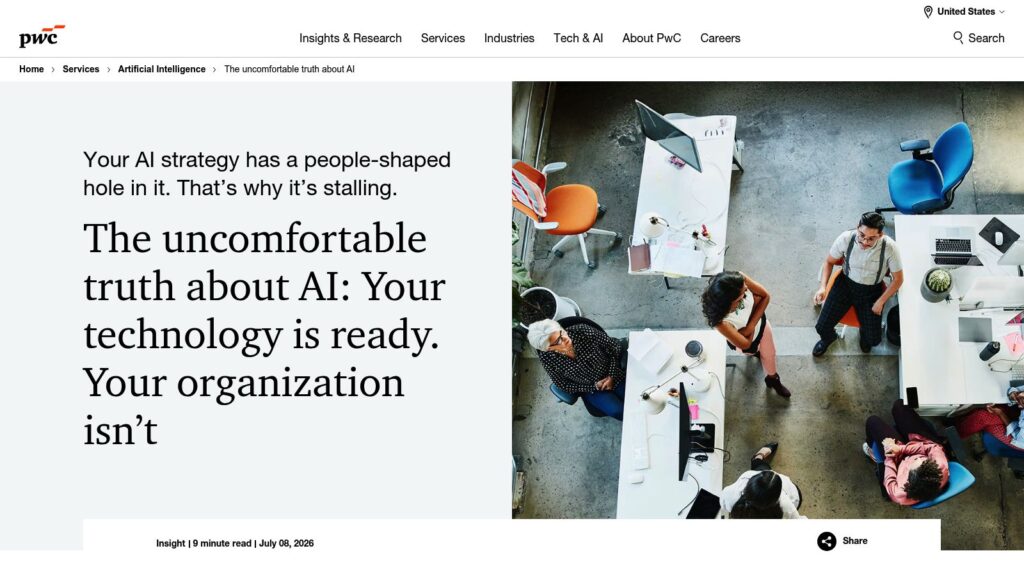
The Uncomfortable Truth About AI: Your Technology Is Ready. Your Organization Isn’t

PwC warns that while AI adoption can boost productivity and create new job opportunities, it will also lead to significant workforce disruptions, including job displacements and skill mismatches. Organizations must proactively invest in reskilling and upskilling initiatives to help employees adapt to changing roles and leverage AI effectively.

https://www.pwc.com/us/en/services/ai/uncomfortable-truth-about-ai-workforce-transformation.html

AI Creates a Workforce Dividend. Invest It for Growth.

The article highlights that CEOs often overlook the critical leadership role required to successfully integrate AI into their organizations. It emphasizes that beyond technology adoption, leaders must focus on workforce reskilling, culture change, and redesigning work practices to fully capture AI’s productivity and growth benefits. PwC underscores that proactive leadership in these areas is essential for realizing the long-term value of AI while managing workforce transformation effectively.

https://www.pwc.com/us/en/services/ai/ai-dividend-growth-redeployment.html

Why HR Must Lead the AI Culture Shift

HR must lead the AI culture shift by embedding AI into people operations to reduce administrative burdens and enable more strategic work such as retention, coaching, and leadership development. Rather than replacing human judgment, AI augments execution by automating time-consuming tasks like compensation analysis, performance reviews, and recruiting processes, allowing HR teams to focus on building trust and culture. Thoughtful AI adoption can help alleviate HR burnout and preserve the human aspects of leadership in the evolving workplace.

https://hrexecutive.com/why-hr-must-lead-the-ai-culture-shift/

How Will AI Impact the Labor Market?

Goldman Sachs hosted a discussion with economists from MIT and its own research team examining AI’s impact on the labor market. They project that AI-driven automation could displace about 9% of U.S. workers over a decade but emphasize historical patterns suggest new jobs will be created to offset losses, mitigating permanent unemployment risks. Experts highlight that adoption rates, task complexity, and whether AI complements or replaces workers will shape outcomes, with uncertainty remaining on the long-term net effects on jobs and wages across different sectors.

https://www.goldmansachs.com/insights/goldman-sachs-exchanges/how-will-ai-impact-the-labor-market

Companies That Add More AI Also Add More People

A survey of over 21,000 US firms by Ramp and Revelio Labs reveals that companies making significant financial investments in AI tend to add jobs at a higher rate than low-intensity adopters, with job growth appearing six to 12 months after AI adoption. High-intensity AI adopters grew headcount by 10.2 percent over two years, primarily by hiring entry-level workers with skills in AI usage, though overall labor market improvements remain uneven. This trend suggests that AI investment is associated with workforce expansion, especially in roles supporting AI deployment and management, despite ongoing concerns about costs, control, and trust in AI providers.

https://www.theregister.com/ai-and-ml/2026/07/02/companies-that-add-more-ai-also-add-more-people/5266134

Scroll to Top