automation

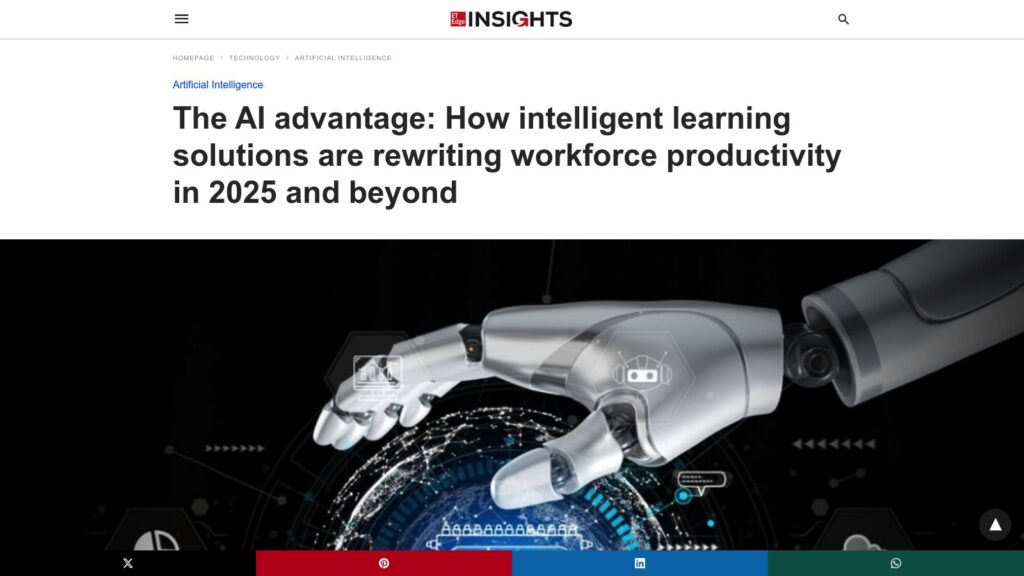
The AI Advantage: How Intelligent Learning Solutions Are Rewriting Workforce Productivity in 2025 and Beyond

AI transforms workforce productivity in 2025 via personalized learning ecosystems. It enhances skill development with adaptive learning, generative content creation, and predictive analytics, moving away from traditional training methods. Benefits include faster skill acquisition, better retention, and improved productivity. AI democratizes learning, empowers employees, and aligns workforce capabilities with business strategies. The future of work relies on organizations embracing AI-driven learning as a continually evolving system for competitive advantage.

https://etedge-insights.com/technology/artificial-intelligence/the-ai-advantage-how-intelligent-learning-solutions-are-rewriting-workforce-productivity-in-2025-and-beyond/amp/

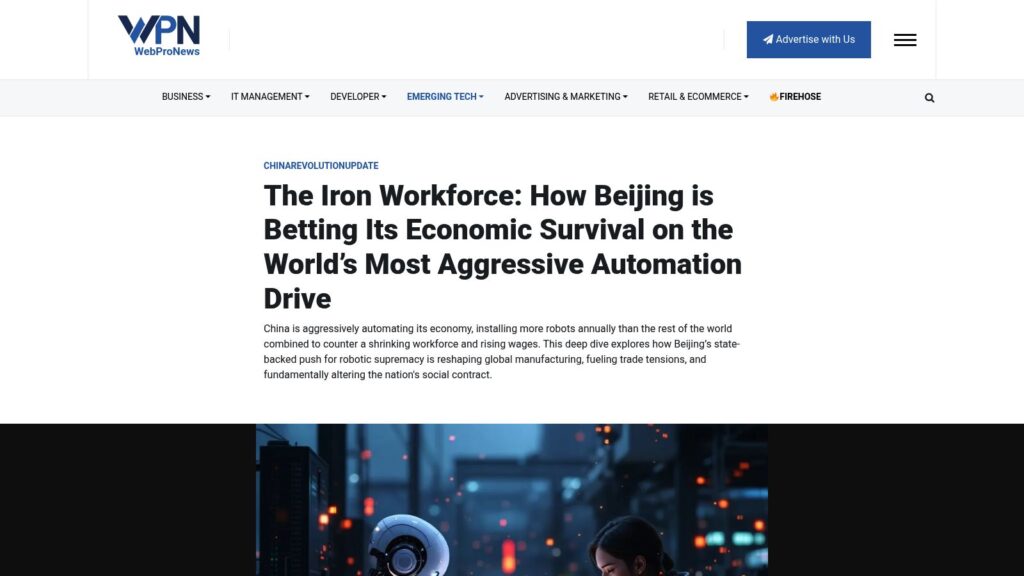
The Iron Workforce: How Beijing Is Betting Its Economic Survival on the World’s Most Aggressive Automation Drive

China is rapidly automating its economy to combat a shrinking workforce and rising wages, installing more robots than the rest of the world combined. This state-backed push aims to transform China’s manufacturing landscape, with significant ramifications for global trade and social stability. Increased automation, driven by government subsidies and advancements in AI, is reshaping job markets and raising concerns about unemployment among less skilled workers. As China strives for self-sufficiency and dominance in high-tech production, it faces potential trade tensions with Western nations reacting to its competitive edge. The societal impact of these changes, particularly for displaced workers, poses risks to internal stability as the country navigates this complex transition.

https://www.webpronews.com/the-iron-workforce-how-beijing-is-betting-its-economic-survival-on-the-worlds-most-aggressive-automation-drive/

AI Should Advise

AI should advise, humans decide. AI excels in data analysis but lacks moral judgment and accountability. Real-world examples show risks in banking, healthcare, and autonomous driving highlight the necessity of human oversight. Ethical concerns include loss of dignity and perpetuation of injustice, leading to calls for regulatory frameworks emphasizing transparency and human involvement. Organizations must establish strict guidelines for AI use that maintain human authority, ensuring responsible AI deployment.

https://www.finextra.com/blogposting/30252/ai-should-advise—humans-should-decide

A Co-pilot, Not a Replacement: How AI Will Augment Human Labour in the Workforce

TLDR: Singapore government agencies use .gov.sg sites for official communication; AI is designed to augment, not replace, human labor, ensuring productivity and creativity. AI capabilities should be supported by responsible governance to prevent risks such as misinformation and over-automation. GovTech promotes AI as a co-pilot, enhancing workflows and decision-making while fostering an AI-ready workforce through ongoing training and ethical standards. The goal is to balance technological advancement with human oversight for better public service delivery.

https://www.tech.gov.sg/technews/how-ai-will-augment-human-labour-in-the-workforce/

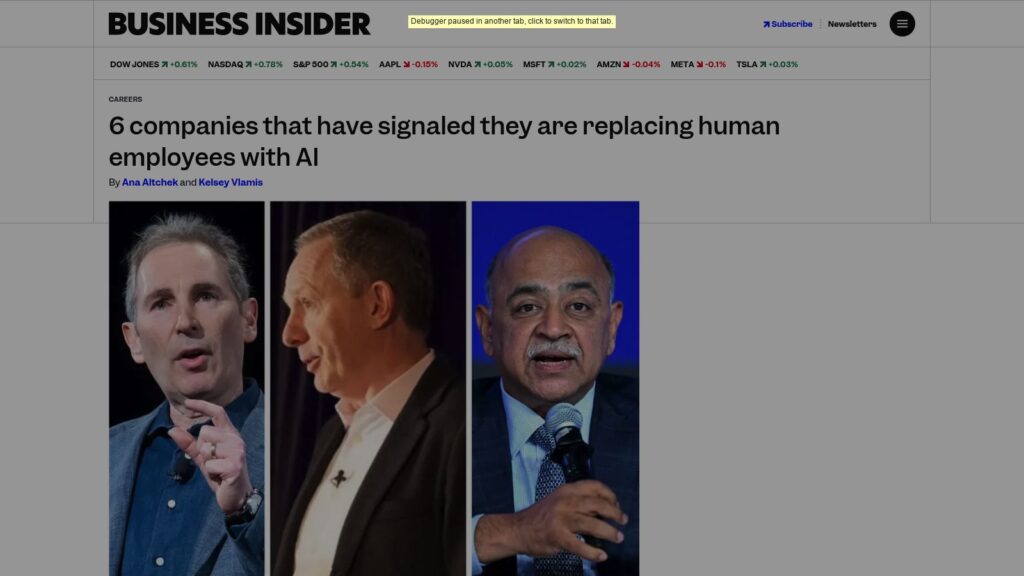
6 Companies That Have Signaled They Are Replacing Human Employees With AI

Several companies, including HP, IBM, and Amazon, are replacing human employees with AI, with HP planning to cut 4,000-6,000 jobs by 2028. AI is cited as a reason for workforce reductions at many firms, but some ambiguities remain. A MIT study indicates AI could replace 11.7% of the US labor market. While job cuts occur, tech roles in AI are expected to grow, highlighting a shift in workforce dynamics.

https://www.businessinsider.com/list-companies-replacing-human-employees-with-ai-layoffs-workforce-reductions

AI Threatens to Eliminate 40 Job Roles, According to Microsoft’s Latest Research Finding — Is Your Career Safe?

Microsoft research lists 40 jobs most at risk of automation by AI, including interpreters, writers, customer service reps, and editors, because they overlap with AI’s research and communication strengths. Conversely, jobs with heavy physical or manual requirements—like dredge operators, roofers, and medical assistants—are much less affected. The study highlights AI’s substantial impact on productivity and its potential use in reducing jobs, though it doesn’t claim AI can fully replace any single occupation yet. Broader concerns include possible mass unemployment, inequality, and the need for societal solutions—but there are also prospects for greater innovation and economic change.

https://www.windowscentral.com/artificial-intelligence/microsoft-reveals-40-jobs-about-to-be-destroyed-by-and-safe-from-ai

Will AI Automate Away Your Job?

AI’s potential to automate jobs varies by task complexity; shorter tasks face higher risk. Knowledge workers, especially those in programming, are increasingly vulnerable as AI improves in performing discrete, well-defined functions. Factors influencing automation susceptibility include data availability, employee power, task humanity, trust in human roles, and remote work feasibility. Young job seekers and freelancers are especially at risk. Future work may require rethinking meaning, identity, and economic security in light of automation, prompting calls for policies like AI taxes and maintaining human involvement in significant processes.

https://commonplace.org/2025/03/20/will-ai-automate-away-your-job/

What Fully Automated Firms Will Look Like

AI-firms will revolutionize business by leveraging collective AI advantages: they can copy, evolve, and scale talent rapidly unlike humans. Such firms will transform hiring, management, and innovation processes, allowing for unprecedented efficiency and knowledge transfer, resulting in organizations that function like a unified intelligence. The potential exists for a single AI-driven entity to dominate the market due to lower transaction costs and the ability to replicate successful components. This evolution may lead to massive, software-like corporations, challenging traditional economic structures and the role of human workers.

https://www.dwarkeshpatel.com/p/ai-firm

Scroll to Top