automation

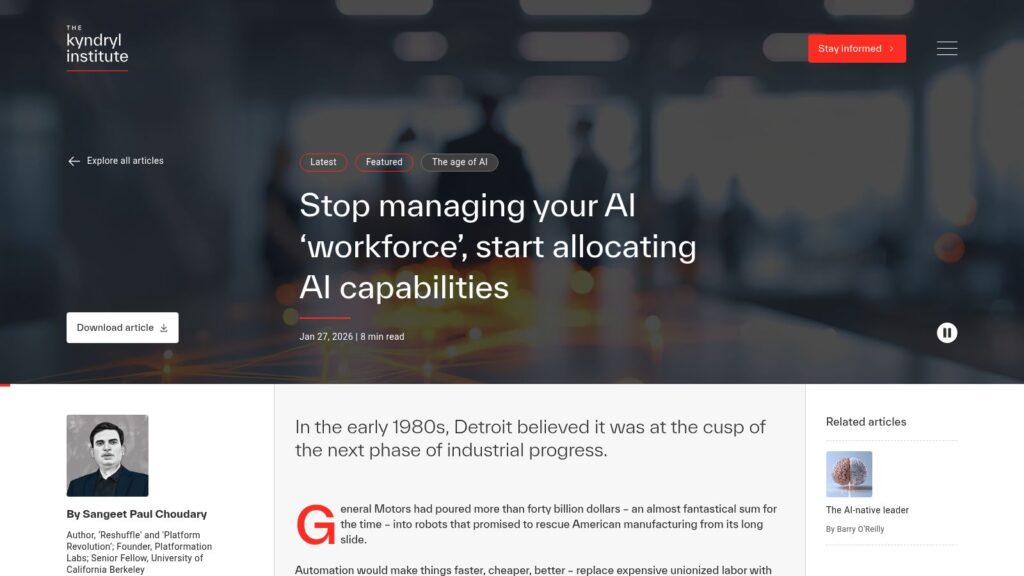
Stop Managing Your AI ‘workforce’

AI adoption requires rethinking workflow architecture rather than framing agents as digital co-workers. Historical insights from Toyota show that integrating new capabilities necessitates reorganizing production systems to fully utilize their potential. As AI capabilities evolve, human roles will shift, necessitating dynamic management of human skill value and capability sensing. Leaders must view agentic systems as strategic investments, reframing their approach to organizational structure and competitive advantage.

https://www.kyndryl.com/us/en/institute/2026/01/ai-workforce

Redefining Talent Through human-AI Integration

The rise of AI and automation threatens traditional entry-level roles, which are crucial for developing leadership skills. Organizations must intentionally redesign early-career work to preserve and accelerate human capability development, integrating AI literacy with leadership fundamentals and creating opportunities for critical thinking and co-responsibility in AI system improvement.

https://www.ey.com/en_gl/megatrends/why-shared-intelligence-will-redefine-talent

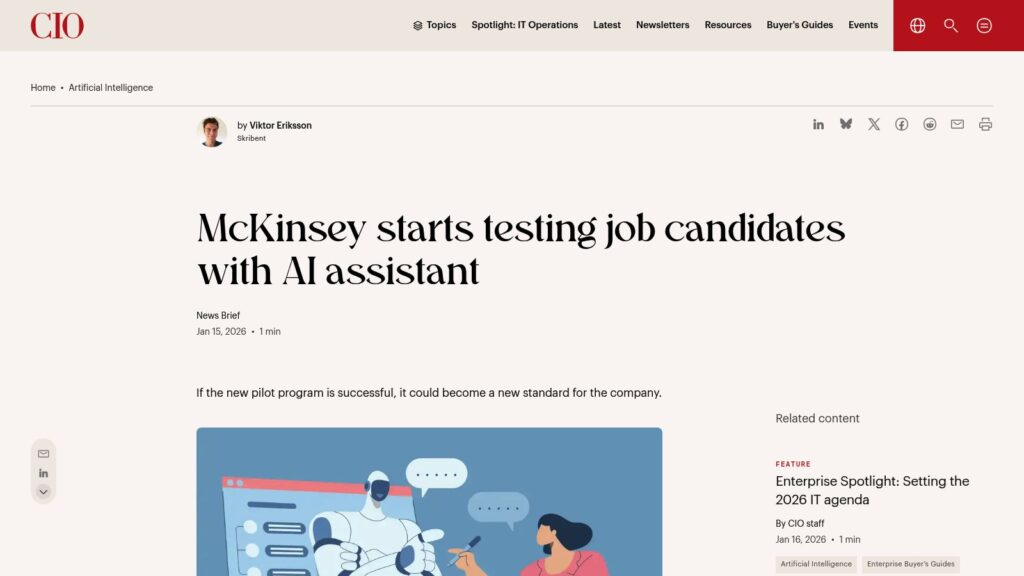
McKinsey Starts Testing Job Candidates With AI Assistant

McKinsey is testing a new hiring method where candidates use the firm’s AI assistant, Lilli, during interviews. This pilot program evaluates candidates on their ability to engage with the AI while analyzing cases, aiming to reflect future consulting practices. If successful, this approach may standardize AI use in recruitment.

https://www.cio.com/article/4117688/mckinsey-begins-testing-candidates-with-an-ai-assistant.html

8 CIO Recommendations for ERP Implementation in 2026

Agentic AI is transforming ERP systems, enabling proactive, end-to-end business process management across finance, supply chain, manufacturing, HR, and customer service. CIOs should develop a clear business plan for agentic AI adoption, engage with ERP vendors, and establish frameworks for human-AI collaboration, risk mitigation, and governance. The focus should be on balancing incremental process optimization with transformative business reinvention, leveraging mature data and process foundations for a broader approach.

https://www.informationweek.com/software-platforms/8-cio-recommendations-for-erp-implementation-in-2026-think-agentic

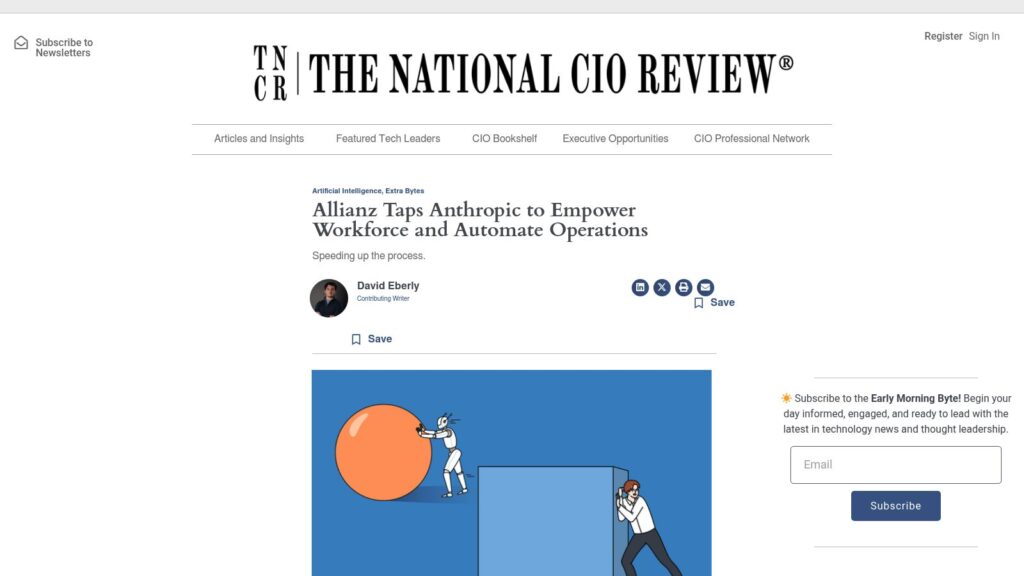
Allianz Taps Anthropic to Empower Workforce and Automate Operations

Allianz partners with Anthropic to integrate AI into insurance operations, focusing on employee empowerment, automation, and compliance. Key initiatives include providing access to AI models, developing agents for insurance workflows, and establishing AI audit trails. This aims to enhance efficiency while ensuring transparency and regulatory adherence, amid workforce restructuring and training programs for skill development.

https://nationalcioreview.com/articles-insights/extra-bytes/allianz-taps-anthropic-to-empower-workforce-and-automate-operations/

AI Layoffs Are Looking More and More Like Corporate Fiction That’s Masking a Darker Reality, Oxford Economics Suggests

Oxford Economics suggests that AI layoffs are often used as a cover for routine headcount reductions, rather than a result of automation. Companies may be attributing job cuts to AI to present themselves as innovative and to appease investors, rather than admitting to business failures. Despite headlines, data show that AI-related job losses account for only a small share of total reported job losses.

https://finance.yahoo.com/news/ai-layoffs-looking-more-more-210954693.html

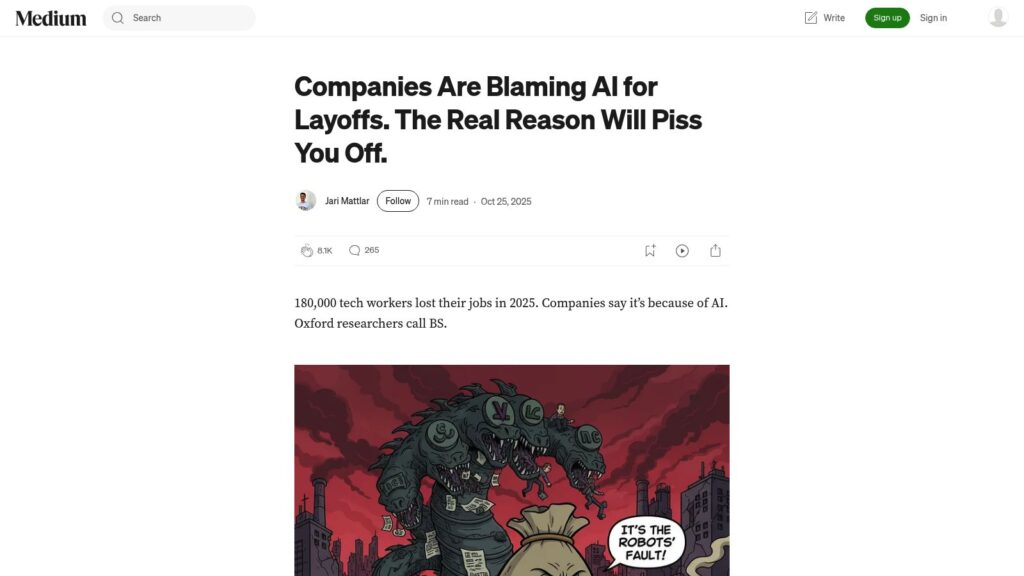
Companies Are Blaming AI for Layoffs. The Real Reason Will Piss You Off.

Companies falsely blame AI for layoffs; a study shows 95% of investments yield no ROI. Instead, firms are cutting jobs to rectify overhiring from COVID-19. Young workers face increased job losses, particularly in entry-level positions. To safeguard your career, document your achievements, learn AI tools for productivity, and recognize the difference between actual AI displacement and opportunistic layoffs labeled as “AI-driven.”

https://medium.com/@mattlar.jari/companies-are-blaming-ai-for-layoffs-the-real-reason-will-piss-you-off-149639ce47cf

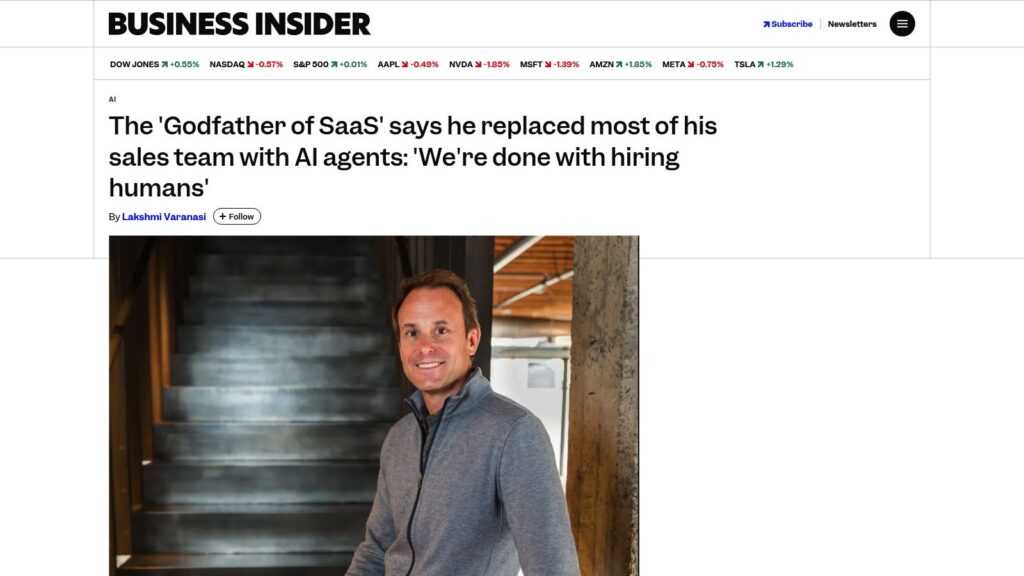
The ‘Godfather of SaaS’ Says He Replaced Most of His Sales Team With AI Agents: ‘We’re Done With Hiring Humans’

SaaStr founder Jason Lemkin replaced most of his sales team with AI agents, aiming for enhanced productivity and efficiency after two high-paid human sales reps quit. His company now employs 20 AI agents, which autonomously handle tasks previously managed by humans, and plans to train them based on top human sales practices. While concerns about data security remain, Lemkin believes AI agents can outperform human workers in scalability and effectiveness.

https://www.businessinsider.com/godfather-of-saas-jason-lemkin-replace-humans-ai-agents-sales-2026-1

Utilities Turn to Physical AI to Accelerate Grid Modernization

Utilities are using robotics and AI to address workforce shortages, enhance operational efficiency, and improve inspection cycles without needing extensive manpower. Integrating robotics into existing ERP systems offers significant benefits such as increased task velocity, better data reliability, and improved safety. This approach helps meet rising demands while optimizing the workforce, reducing risk, and enhancing grid resilience.

https://erp.today/utilities-turn-to-physical-ai-to-accelerate-grid-modernization/

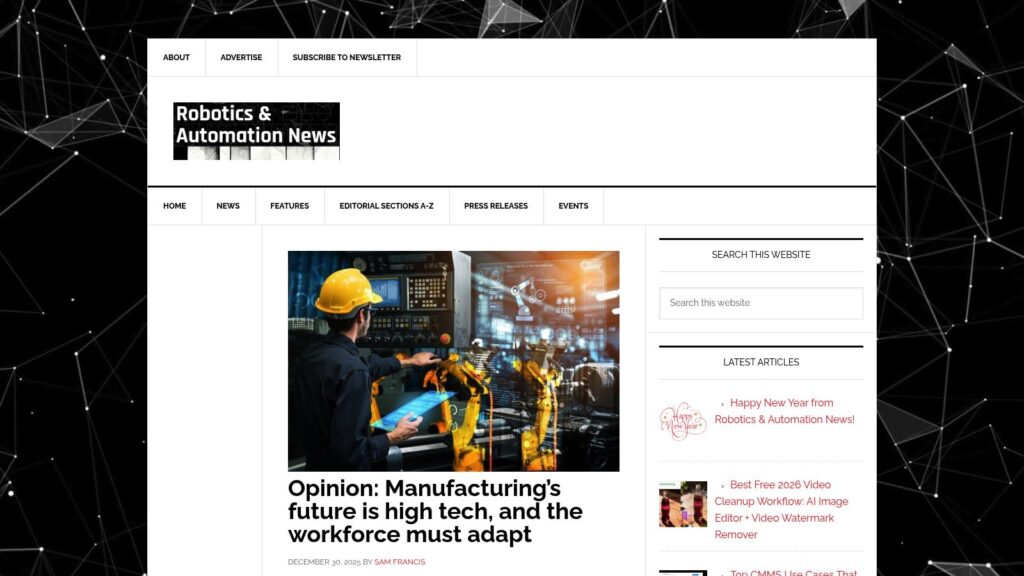
Manufacturing’s Future Is High Tech

Manufacturing is evolving into a high-tech industry driven by AI, automation, and sustainability, requiring new skills and perceptions. Experts advocate for educational reforms to align with modern needs, emphasizing hands-on training and career visibility to attract talent. The sector faces a talent shortage, demanding a workforce adept in technology and soft skills. By 2035, successful manufacturing will hinge on innovation, adaptability, and purpose-driven careers, reinforcing manufacturing’s role in economic strength.

https://roboticsandautomationnews.com/2025/12/30/opinion-manufacturings-future-is-high-tech-and-the-workforce-must-adapt/97952/

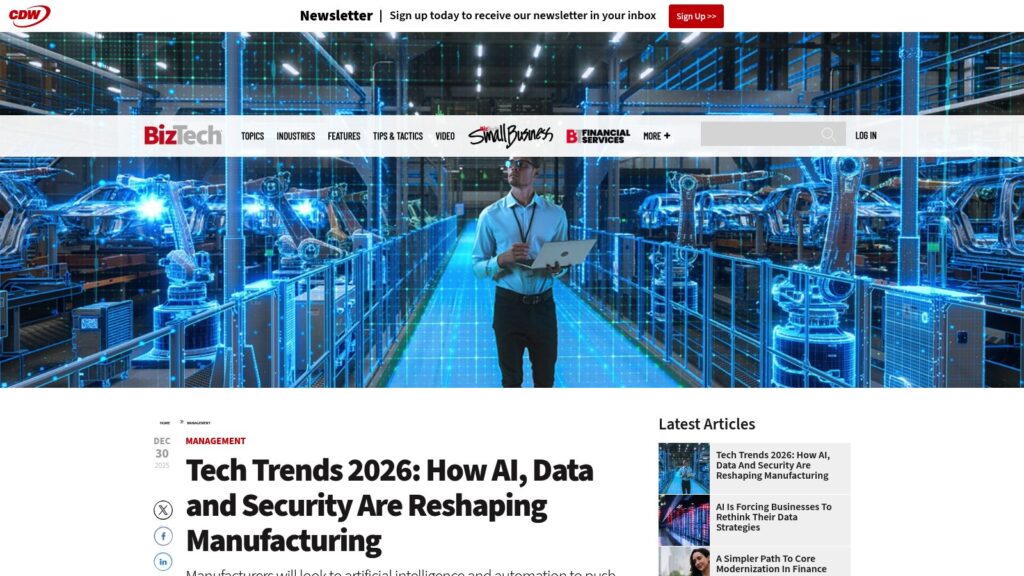
Tech Trends 2026: How AI, Data and Security Are Reshaping Manufacturing

By 2026, manufacturers will increasingly adopt AI and automation to optimize operations, with over 40% upgrading production scheduling systems to AI. This shift will involve software-defined factories, AI-driven design, and federated data architectures, requiring manufacturers to address challenges like data unification and security concerns. Additionally, AI will reshape workforces through human-robot collaboration and personalized training, and enhance cybersecurity through AI-powered defenses.

https://biztechmagazine.com/article/2025/12/tech-trends-2026-how-ai-data-and-security-are-reshaping-manufacturing

How AI Is Transforming Every Corner of the Contact Center From Agents to AI Agents

AI is revolutionizing contact centers, transforming roles: agents become AI co-pilots, supervisors evolve into intelligent coaches, and analysts turn strategic visionaries. This shift to “agentic AI” enhances human capabilities, fostering proactive, empathetic interactions. AI integrates across systems, predicting issues, thus enhancing operational efficiency without replacing human empathy. Future contact centers will anticipate customer needs, facilitated by technologies like RingCentral’s RingCX. Overall, the collaboration between AI and humans promises a more effective and nuanced contact center experience.

https://www.cxtoday.com/workforce-engagement-management/how-ai-is-transforming-every-corner-of-the-contact-center-from-agents-to-ai-agents-ringcentral-cs-0011/

AI and the Ironies of Automation

AI automates work but introduces complexities, necessitating human oversight to prevent errors. Insights from Lisanne Bainbridge’s 1983 paper on automation reveal challenges like decision-making under stress and training needs for operators, highlighting the irony that successful systems require significant investment in human skill development. As AI becomes more advanced, reevaluating UI/UX for operator interfaces and proactive leadership for AI agents is crucial for effective supervision.

https://www.ufried.com/blog/ironies_of_ai_2/

AI and the Ironies of Automation

AI automation leads to paradoxes where human skills deteriorate due to reduced engagement, causing inefficiency and knowledge gaps. Humans become overseers, losing expertise needed for monitoring automated systems effectively. This raises risks of errors going unnoticed, as attention wanes in low-activity scenarios. Future automation may create unqualified operators lacking necessary knowledge. The reliance on AI without maintaining human skills and awareness is unsustainable, demanding a reevaluation of monitoring roles and potential new job profiles to mitigate these issues.

https://www.ufried.com/blog/ironies_of_ai_1/

Scroll to Top