business

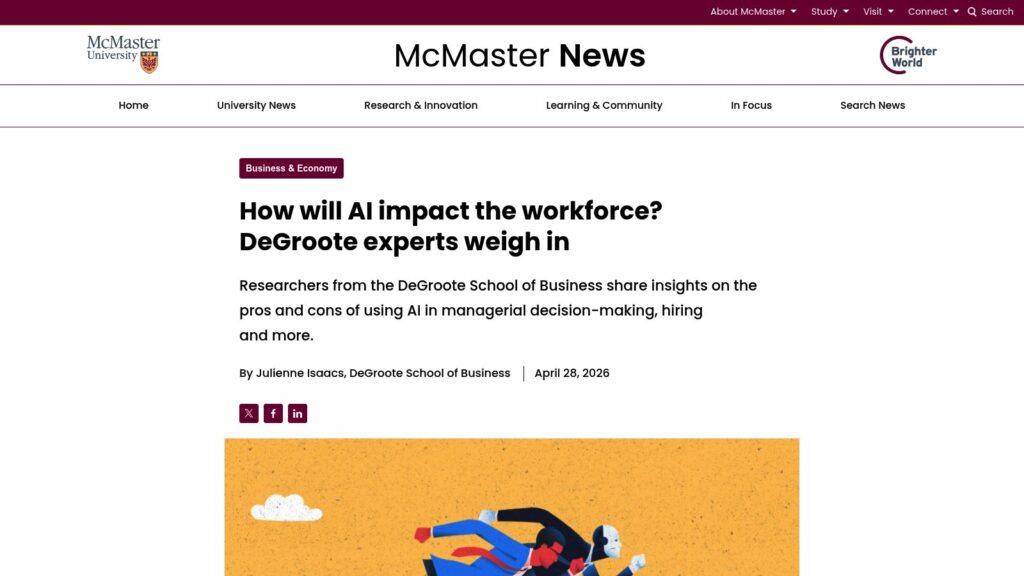
How Will AI Impact the Workforce? DeGroote Experts Weigh In

Researchers at McMaster’s DeGroote School of Business examine the impact of AI on the workforce, highlighting that AI should support human judgment rather than replace it. They emphasize the ethical deployment of AI in areas like hiring and management, cautioning against AI assuming authoritative roles over humans while recognizing AI’s potential to improve efficiency, fairness, and decision-making when used responsibly with human oversight.

https://news.mcmaster.ca/how-will-ai-impact-the-workforce-degroote-experts-weigh-in/

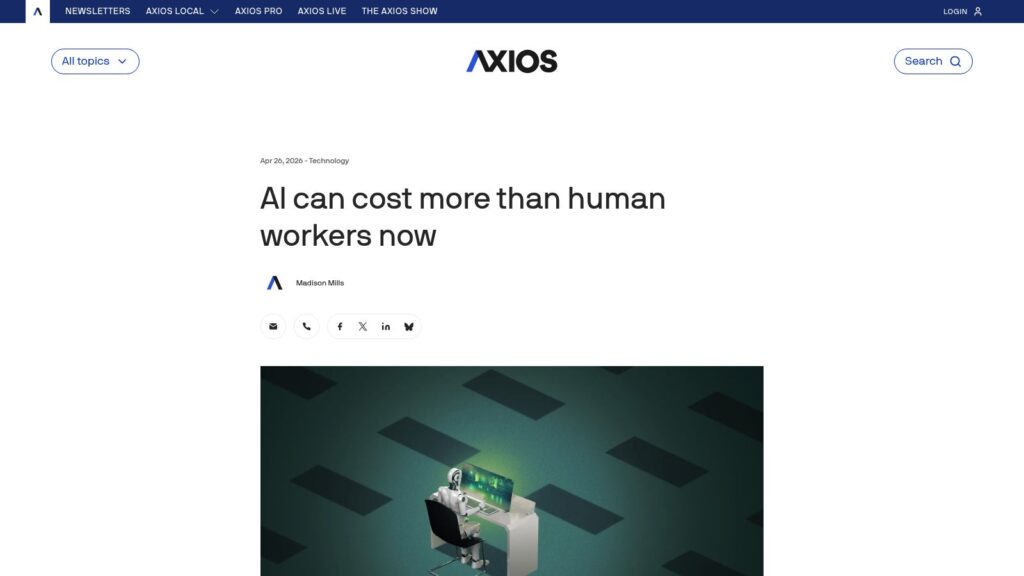
AI Can Cost More Than Human Workers Now

Some companies are now spending more on AI technology than on their employees’ salaries, with costs for AI compute and subscriptions exceeding labor expenses. This has led to significantly increased IT budgets, driven by AI infrastructure and services, though firms still need to demonstrate a return on investment to stakeholders as rising AI costs may shift from an advantage to a liability.

https://www.axios.com/2026/04/26/ai-cost-human-workers

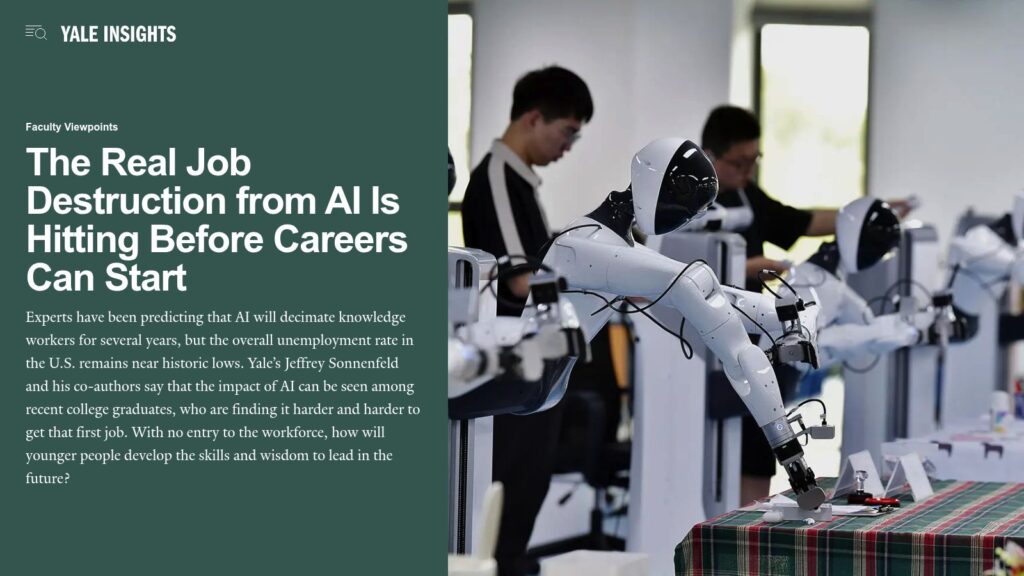
From Digital to Physical: AI as a Working Entity

Fujitsu discusses the evolution of AI workers in manufacturing, highlighting their transition from simple automation tools to autonomous entities capable of independently executing tasks across the value chain, including design, production, and quality control. The article emphasizes the growing integration of both digital AI workers in white-collar roles and physical AI workers, such as humanoid robots on the shop floor, and stresses the need to redesign workflows and human–AI collaboration to maximize the potential of these AI workers.

https://global.fujitsu/en-global/technology/key-technologies/news/ta-Manufacturing_AI_worker-20260427

How AI Is Reshaping the Future of Work

Artificial intelligence is fundamentally transforming work by enhancing daily workflows, decision-making, and organizational structures, but the impact depends heavily on leadership that integrates AI responsibly with clear governance and ethical oversight. Stanford Graduate School of Business Executive Education programs prepare leaders to navigate these changes by focusing on AI-enabled organizational design, human-AI collaboration, reskilling, and balancing automation with human judgment to build adaptable, ethical, and high-performing organizations.

https://www.gsb.stanford.edu/exec-ed/difference/how-ai-reshaping-future-work

The 3 Trials of Leadership in the Age of AI

The article outlines three major leadership challenges posed by AI’s integration into the workplace: the Leadership Trial of Identity, which demands a shift toward prioritizing soft skills like empathy and creativity over traditional hard skills; the Leadership Trial of Technique, requiring leaders to manage blended teams of humans and AI with new performance metrics and risk management approaches; and the Leadership Trial of Governance, highlighting the need for boards to update their composition and oversight capabilities to effectively govern AI-related risks. These trials signify a fundamental transformation in leadership identity, methods, and governance necessary for organizations to thrive in the AI era.

https://hrexecutive.com/the-3-trials-of-leadership-in-the-age-of-ai/

Thousands of CEOs Admit AI Had No Impact on Employment or Productivity—and It Has Economists Resurrecting a Paradox From 40 Years Ago

A recent National Bureau of Economic Research study reveals that despite widespread AI adoption by two-thirds of executives across major economies, nearly 90% report no significant impact on productivity or employment in their firms. This phenomenon parallels the productivity paradox observed by economist Robert Solow in the 1980s during the IT revolution, where anticipated productivity gains from new technology failed to materialize immediately. While firms remain optimistic about AI’s future potential to boost productivity and output, current data suggests its benefits are not yet broadly reflected in economic metrics.

https://fortune.com/article/why-do-thousands-of-ceos-believe-ai-not-having-impact-productivity-employment-study/

Workplace AI Growth Continues Despite Limited System Change

Artificial intelligence usage in the U.S. workplace has become common, with about half of employees reporting some AI use in their roles, primarily boosting productivity and efficiency in individual tasks. Despite these gains, AI has yet to fundamentally transform organizational work structures, though it is influencing job content and prompting workforce changes such as expansions, reductions, and reorganizations.

https://nationalcioreview.com/articles-insights/extra-bytes/workplace-ai-growth-continues-despite-limited-system-change/

Business Leaders Marked Down on AI Workforce Strategy

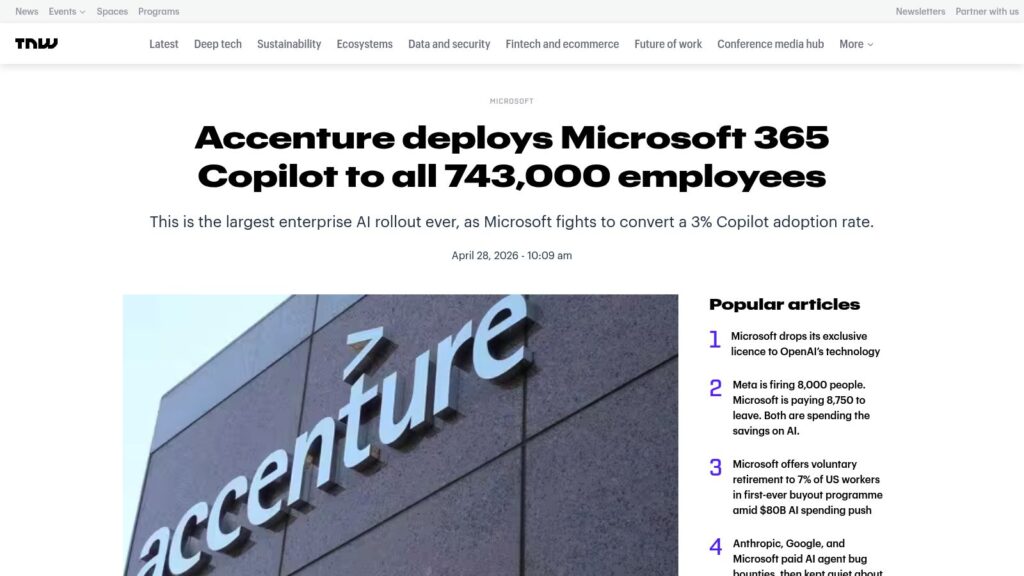
Research by Accenture reveals that nearly one-third of workers expect their jobs to become unrecognizable or disappear by 2030, with most anticipating a need to reskill or change occupations. However, many organizations are not adequately supporting this transition, as only a minority conduct AI impact skills audits or invest significantly in reskilling, creating a gap between employee expectations and employer workforce strategies amid growing concerns over AI-induced job displacement.

https://www.computerweekly.com/news/366641771/Business-leaders-marked-down-on-AI-workforce-strategy

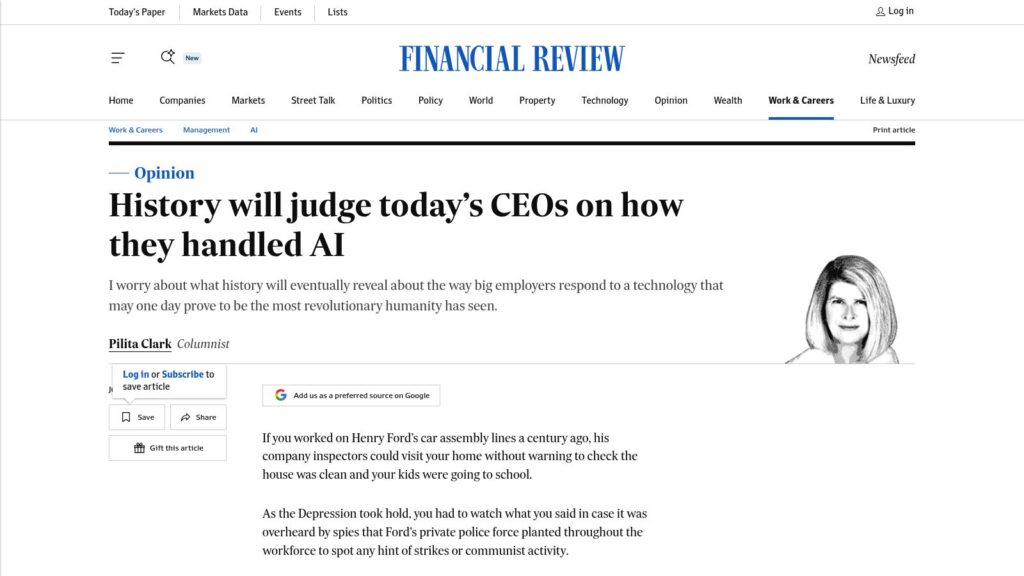
Bosses Say AI Boosts Productivity – Workers Say They’re Drowning in ‘Workslop’

The article discusses the rise of “workslop,” a term describing AI-generated work that appears polished but is flawed and requires extensive correction, leading to decreased productivity and morale among workers. Despite executives’ claims that AI boosts efficiency, many employees report spending more time fixing AI errors, highlighting a disconnect between management’s expectations and workers’ experiences with AI in the workplace.

https://www.theguardian.com/technology/2026/apr/14/ai-productivity-workplace-errors

Want to Understand the Current State of AI? Check Out These Charts.

The 2026 AI Index from Stanford reveals that AI development is rapidly advancing, with top models outperforming human experts in many domains and adoption outpacing previous technologies like the internet. While the US and China lead in AI capabilities, the technology’s fast growth is challenging regulation, testing standards, and labor markets, with AI beginning to impact jobs and raising mixed public sentiments about its benefits and risks.

https://www.technologyreview.com/2026/04/13/1135675/want-to-understand-the-current-state-of-ai-check-out-these-charts/

AI Is Shaking Up Workplaces—But Some Companies That Use It Are Getting Bigger, Not Smaller

A Gallup survey reveals that smaller U.S. companies adopting AI tend to expand their workforces, while larger firms are more likely to reduce staff, though AI use signals potential layoffs across all sizes. Despite worker concerns about AI eliminating jobs, many credit the technology with boosting productivity, even as companies continue to explore its operational impact.

https://www.investopedia.com/ai-is-shaking-up-workplaces-but-some-companies-that-use-it-are-getting-bigger-not-smaller-11949806

Women Executives Warn AI Adoption Is Outpacing Workforce Development

A Chief and Harris Poll survey reveals that many women executives are actively shaping AI adoption by emphasizing workforce development and ethical use rather than just rapid deployment. They express concern that organizations are reducing early-career hiring and prioritizing adoption speed over sustainable human-AI collaboration, warning that neglecting human judgment and skills may harm future leadership and organizational quality.

https://www.bizjournals.com/phoenix/bizwomen/news/latest-news/2026/04/women-executives-ai-adoption-outpacing-development.html?page=all

Made in Houston: Building the Workforce and Infrastructure for Manufacturing’s Future

Houston manufacturers face challenges including labor shortages, tariff uncertainties, and energy reliability but are positioning for growth through workforce development and infrastructure investment. Industry leaders, educators, and financial experts highlighted the importance of upskilling workers in advanced technologies, fostering partnerships with educational institutions like Houston City College, and adopting automation to address labor gaps while ensuring energy stability amidst Texas grid constraints.

https://www.bizjournals.com/houston/news/2026/04/12/workforce-infrastructure-manufacturing-future.html

Twin to Win: The Rise of Digital Doppelgangers – HR Magazine

Digital doppelgangers—AI-powered digital replicas of employees—are emerging as a significant future-of-work trend, with organisations exploring their use for knowledge retention, productivity, and mentoring. Examples include Peterborough City Council’s chatbot based on a long-serving employee and UBS’s AI analyst avatars, illustrating both the potential benefits and challenges, such as data protection, ethical concerns, and the need for human oversight. While the technology advances rapidly, HR leaders must carefully address legal, ethical, and employee relations issues as digital twins become more common in the workplace.

https://www.hrmagazine.co.uk/content/features/twin-to-win-the-rise-of-digital-doppelgangers

Scroll to Top