productivity

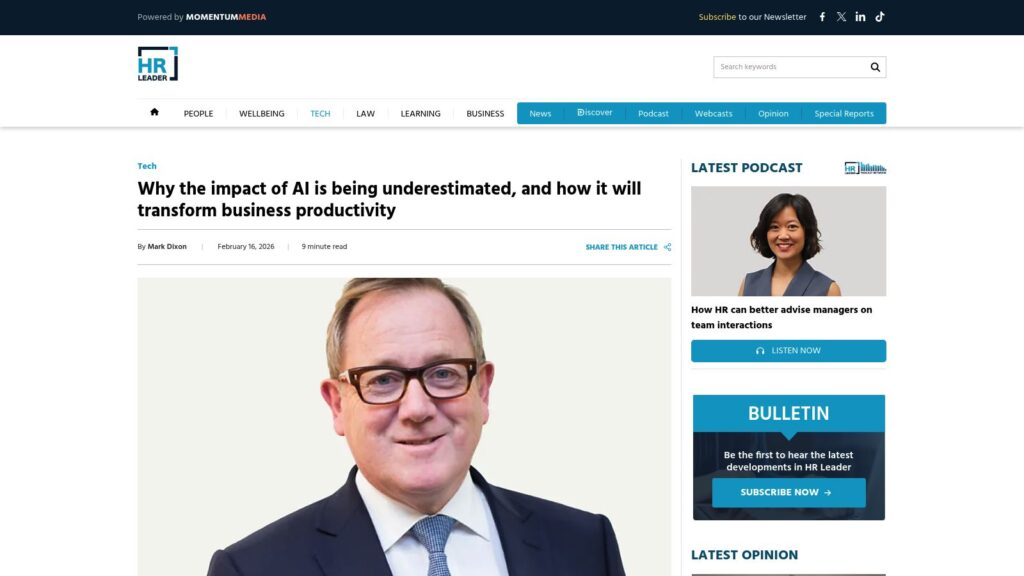
Why the Impact of AI Is Being Underestimated, and How It Will Transform Business Productivity

AI’s impact on business is underappreciated; it boosts productivity and creates new roles despite fears of job loss. Younger employees are crucial in adopting AI, enhancing workplace collaboration. Historical patterns show that those who embrace change early reap the most rewards. AI is transformative, reshaping how work is done, and those who take initiative in learning AI skills will lead in the evolving job market. The velocity of business is accelerating, urging a proactive approach to career development.

https://www.hrleader.com.au/tech/27821-why-the-impact-of-ai-is-being-underestimated-and-how-it-will-transform-business-productivity

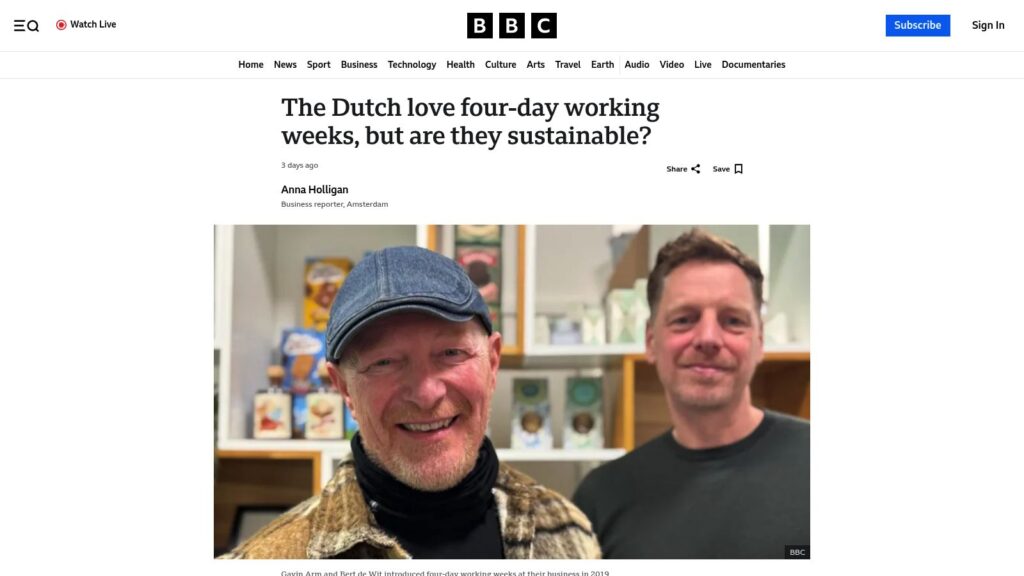
The Dutch Love Four-day Working Weeks, but Are They Sustainable?

The Netherlands has widely adopted a four-day workweek, enhancing employee well-being without reducing pay. Companies that switched report improved productivity, lower sick leave, and increased job retention. However, the OECD warns that maintaining high productivity remains a challenge due to stagnating growth and an aging workforce. Calls for more women to work full-time could help, but barriers like childcare and societal norms persist. The sustainability of this work model is under scrutiny as it may not be economically viable long-term.

https://www.bbc.com/news/articles/cx2y85xdyw3o

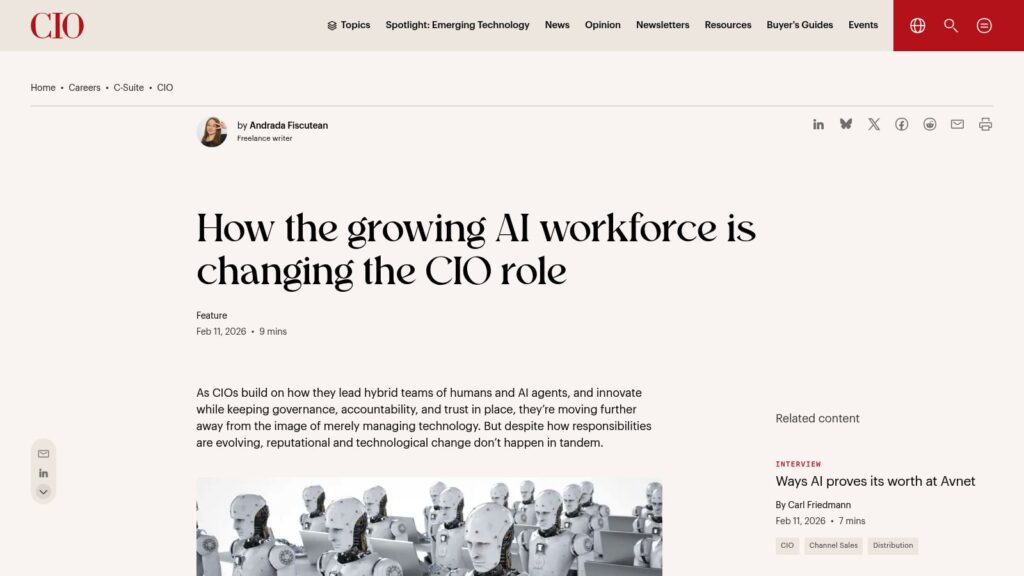
How the Growing AI Workforce Is Changing the CIO Role

CIOs are evolving from managing technology to orchestrating hybrid teams of humans and AI agents, as AI adoption grows in enterprises. While AI agents can automate tasks, CIOs must strategically decide their applications, focusing on well-defined, low-risk tasks. Measuring AI agents’ productivity should account for reliability and human capacity freed rather than just cost. CIOs face challenges like governance, risk management, and employee resistance while integrating AI, necessitating a shift in organizational culture and accountability frameworks. Beginning with small pilot projects and ensuring proper governance and monitoring are crucial for successful AI implementation.

https://www.cio.com/article/4126383/how-the-growing-ai-workforce-is-changing-the-cio-role.html

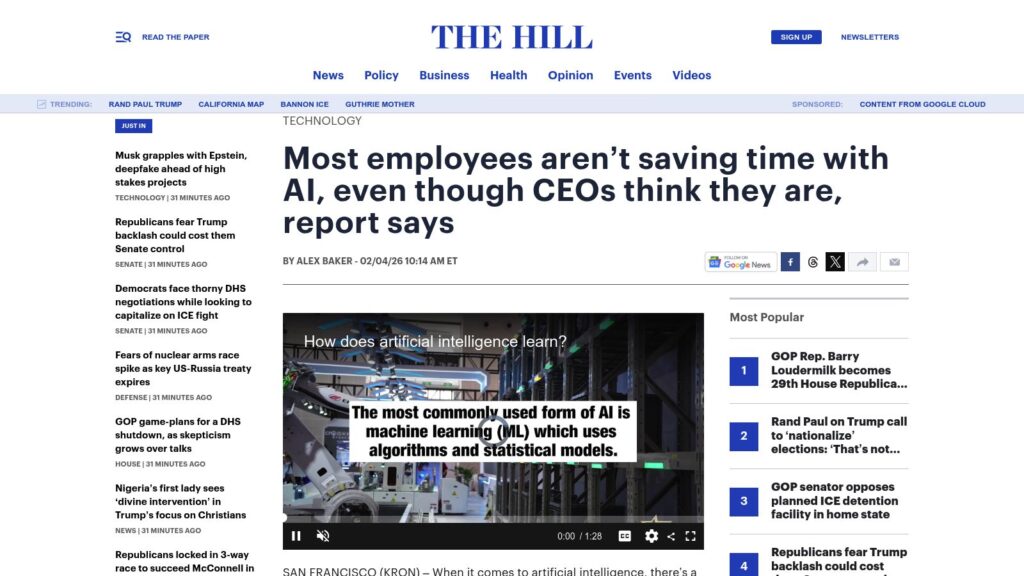
Most Employees Aren’t Saving Time With AI, Even Though CEOs Think They Are, Report Says

AI is failing to save employees time, despite CEOs believing otherwise, reports show. A survey highlights a disparity between executives and employees regarding AI efficacy. 97% of workers use AI ineffectively; 25% save no time, while 40% prefer not to use it. Leaders feel confident about AI strategy, but many employees lack training and access, leading to feelings of overwhelm. The findings suggest a significant gap in perceived AI value between the C-suite and staff.

https://thehill.com/policy/technology/5721857-employees-artificial-intelligence-study/

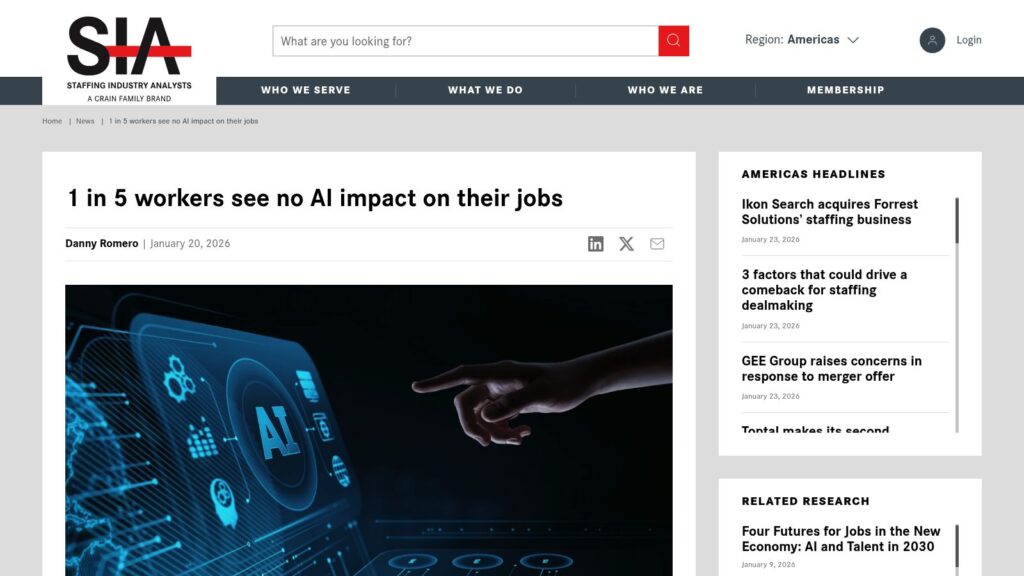
1 in 5 Workers See No AI Impact on Their Jobs

1 in 5 workers see no AI effect on jobs, despite rapid AI integration in hiring. 47% fear AI benefits companies more. Job postings requiring AI skills rose by 1,587%. 65% feel the need to upskill; 52% seek ways to enhance skills. Traditional career paths are viewed as outdated; only 41% want them. 40% work second jobs due to costs, with work-life balance prioritized over pay. Trust in leadership decreased from 77% to 72%, notably among Gen Z. Manager-employee relationships improved, while soft skills are learned from older workers and tech skills from younger ones.

https://www.staffingindustry.com/news/global-daily-news/1-in-5-workers-see-no-ai-impact-on-their-jobs

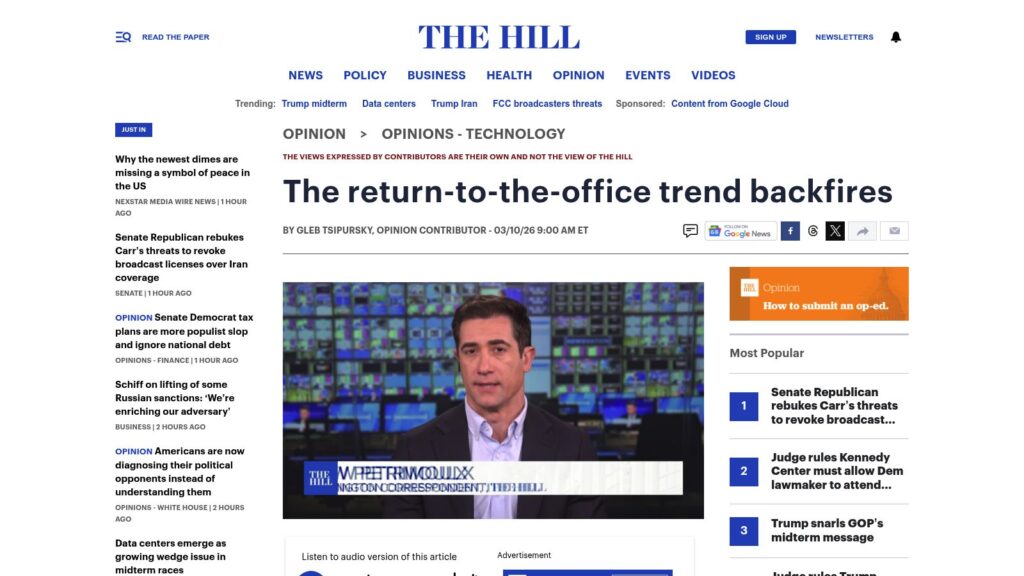
Welcome Back to the Office. You Won’t Get Anything Done

Return-to-office (RTO) mandates are not about productivity but about control. Despite studies showing that hybrid work does not impact productivity, many companies are implementing RTO mandates, citing productivity and company culture as reasons. However, the real motivation behind these mandates is likely to exert control over employees and reduce staff size without paying severance.

https://thewalrus.ca/return-to-office-mandates/

The Coordination Tax

TLDR: Traditional companies face competition from small firms leveraging AI to reduce coordination overhead, leading to fewer employees needed for similar outputs. Most executive roles may focus on coordination rather than irreplaceable judgment, as AI can replicate many decision-making tasks. Companies with fewer people supported by AI will have significant cost advantages. The future favors smaller teams where the value lies in decision-making, not coordination. Executives must reassess their roles and the true extent of their judgment against AI capabilities.

https://codegood.co/writing/the-coordination-tax

85% of Workers Say AI Will Improve Their Jobs: The Conference Board

85% of workers believe AI will enhance their jobs in two years, despite concerns about job loss. A survey reveals 91% have seen task changes due to AI, with 87% noting productivity boosts and 57% increased job satisfaction. However, many companies lack an effective AI strategy; over half of leaders see a disconnect between AI initiatives and business goals. HR’s current role is often limited to training rather than participating in strategic decisions, and a significant skills gap exists. The Conference Board recommends organizations engage employees in AI redesign, invest in upskilling, and adapt talent models to leverage AI’s potential effectively.

https://www.staffingindustry.com/news/global-daily-news/85-of-workers-say-ai-will-improve-their-jobs-the-conference-board

However We Deploy AI at Work, People Must Remain the Focus (and Training Is Key)

AI can enhance communication and productivity but should prioritize human interaction. Current data shows no significant job disruption from AI, emphasizing the need for training and responsible development. Startups must consider long-term impacts and provide accessible AI education to prevent workforce displacement.

https://technical.ly/entrepreneurship/ai-workplace-works-best-when-people-come-first/

Managers Are Unprepared to Lead a Human-agent Hybrid Workforce

Managers struggle to lead hybrid teams with AI agents, which complicates traditional management roles. As AI adoption rises, employees shift from execution to orchestration, requiring new leadership strategies. Leaders must balance agent skills with domain expertise, maintain collaboration, and pivot career development towards strategic thinking. Managers face identity challenges as technical skills become accessible, and they must adapt their approach to leadership amidst evolving work dynamics. Successful navigation of this transition is crucial for organizational efficiency and culture.

https://digiday.com/sponsored/managers-are-unprepared-to-lead-a-human-agent-hybrid-workforce/

Employees Who Use GenAI the Most See the Biggest Impact

PwC’s Global Workforce Hopes and Fears Survey 2025 reveals that frequent users of GenAI tools experience the most significant positive impact on productivity and work quality. To maximize AI’s potential, companies should address employee concerns through transparency, build trust in the technology, create a clear vision for the future, and invest in upskilling programs.

https://www.pwc.com/gx/en/issues/c-suite-insights/the-leadership-agenda/hopes-and-fears.html

Three Things to Know About Implementing Workplace AI Tools

AI in workplaces has potential but often disrupts workflows and decision-making. Studies show human-AI collaboration can hinder performance compared to using either alone. AI tools may confirm users’ biases, leading to poor judgments. Managers should carefully assess AI’s influence before implementing it to avoid negative impacts on employee performance.

https://sloanreview.mit.edu/article/three-things-to-know-about-implementing-workplace-ai-tools/

Scroll to Top