robotization

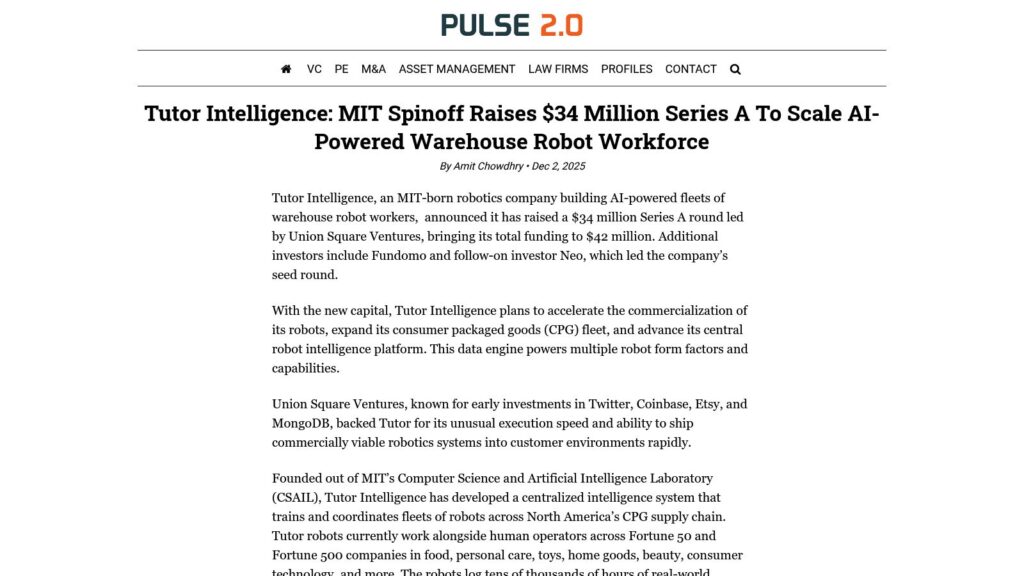
Tutor Intelligence: MIT Spinoff Raises $34 Million Series a To Scale AI-Powered Warehouse Robot Workforce

MIT spinoff Tutor Intelligence raised $34 million Series A, totaling $42 million funding, to scale AI-powered warehouse robots. Led by Union Square Ventures, funding will enhance robot commercialization, CPG fleet expansion, and central intelligence platform development. Tutor robots can adapt and perform in real-world environments, using real-time data to improve functionality. Their Robot-as-a-Service model offers high-reliability automation with minimal upkeep.

https://pulse2.com/tutor-intelligence-34-million-series-a/

Yomiuri: Human-Like Robot Development Advances, Expected to Fill Gaps in Workforce

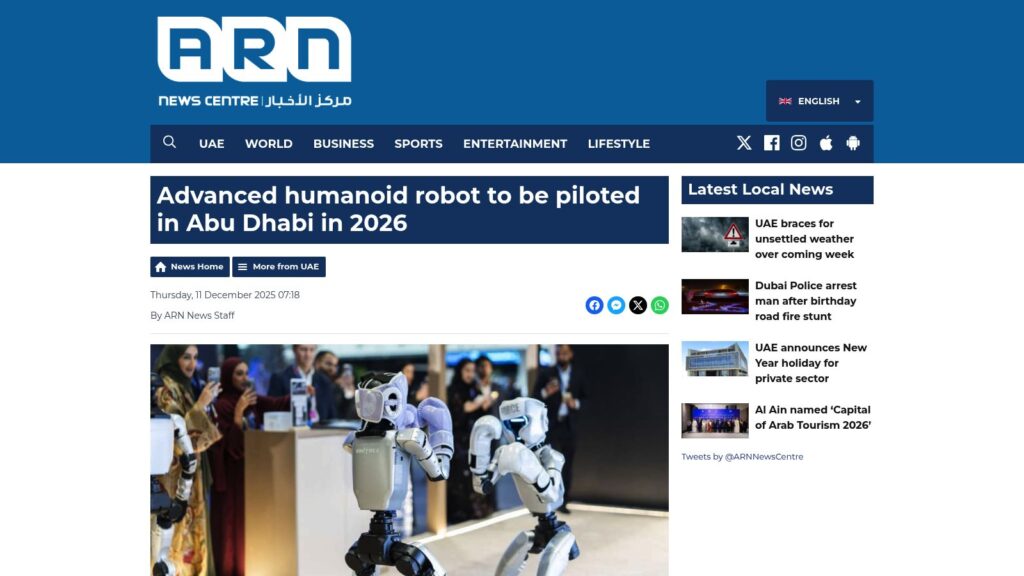
Humanoid robot development is progressing to address labor shortages in developed nations. Kawasaki Heavy Industries revealed its “RHP Kaleido” robot, featuring improved stability and remote operation, at an exhibition in Tokyo. Demand for humanoid robots is expected to soar, with forecasts suggesting global shipments will increase 100-fold by 2035. Japanese companies, like Waseda University and Yamazen Corp., are pursuing domestic production and practical applications in various industries, despite challenges like high manufacturing costs.

https://www.marketwatch.com/story/yomiuri-human-like-robot-development-advances-expected-to-fill-gaps-in-workforce-936e4905?mod=asia-markets

The Iron Workforce: How Beijing Is Betting Its Economic Survival on the World’s Most Aggressive Automation Drive

China is rapidly automating its economy to combat a shrinking workforce and rising wages, installing more robots than the rest of the world combined. This state-backed push aims to transform China’s manufacturing landscape, with significant ramifications for global trade and social stability. Increased automation, driven by government subsidies and advancements in AI, is reshaping job markets and raising concerns about unemployment among less skilled workers. As China strives for self-sufficiency and dominance in high-tech production, it faces potential trade tensions with Western nations reacting to its competitive edge. The societal impact of these changes, particularly for displaced workers, poses risks to internal stability as the country navigates this complex transition.

https://www.webpronews.com/the-iron-workforce-how-beijing-is-betting-its-economic-survival-on-the-worlds-most-aggressive-automation-drive/

The Silent Workforce: Why Unmanaged Bot Identities Are the Next Systemic Risk

Organizations increasingly use Robotic Process Automation Management (RPAM) to secure growing non-human identities (bots) that now outnumber humans 45 to 1, exposing critical security gaps. Bots often operate under high privileges with static credentials, creating vulnerabilities if compromised. RPAM provides dynamic credential management, enforcing least privilege, auditing, and compliance, helping prevent breaches and manage operational efficiency as automation scales. As regulations tighten, RPAM is essential for future-proofing automated workforces and safeguarding against systemic risks.

https://www.webpronews.com/the-silent-workforce-why-unmanaged-bot-identities-are-the-next-systemic-risk/

McKinsey Warns AI and Robots Could Automate 40 Percent of US Jobs by 2030

McKinsey Global Institute warns AI and robotics could automate over 40% of US jobs by 2030, potentially affecting 57% of current work hours. The report emphasizes transformation over job loss, predicting a future where human workers collaborate with AI and robots. Key skills will evolve instead of disappearing, notably increasing demand for AI fluency, which has surged sevenfold recently. Redesigning workflows could unlock an estimated $2.9 trillion in economic value if properly implemented, rather than merely reducing headcount.

https://roboticsandautomationnews.com/2025/11/26/mckinsey-warns-ai-and-robots-could-automate-40-percent-of-us-jobs-by-2030/97003/

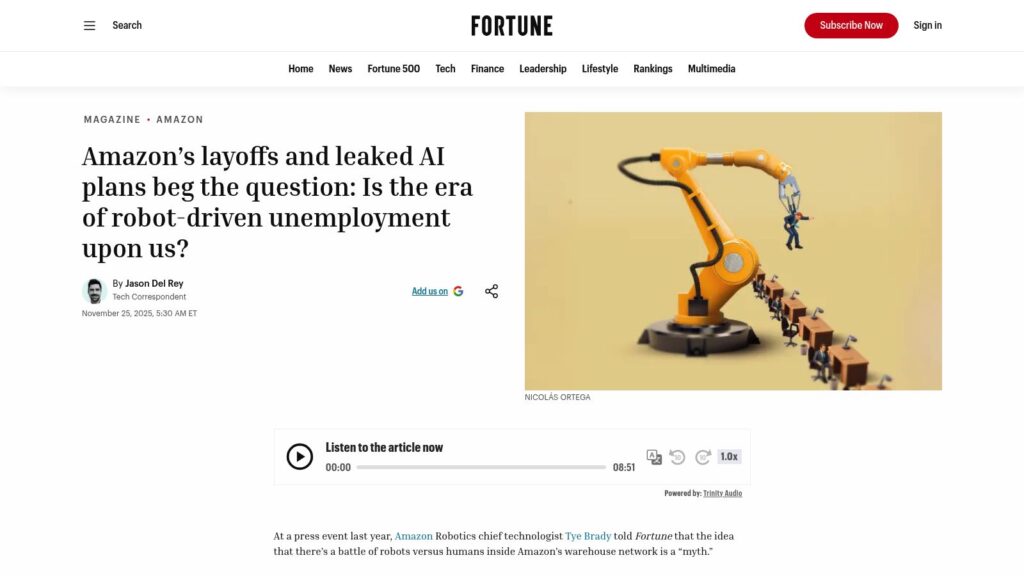
Amazon’s Layoffs and Leaked AI Plans Beg the Question: Is the Era of Robot-driven Unemployment Upon Us?

Amazon’s layoffs and AI plans raise concerns about robot-driven unemployment. Though Amazon claims robots extend human capacity, internal documents suggest plans to automate 75% of operations, potentially affecting 600,000 jobs. While corporate layoffs occur (14,000 jobs cut), the company continues investing in AI and training. Automation could reshape job roles, but fears about job scarcity persist, creating a complex future for workers. The mixed impact of robots on warehouse employment highlights the need for a balance between efficiency and workforce sustainability.

https://fortune.com/2025/11/25/amazon-layoffs-artificial-intelligence-robots-unemployment-automation/

Agents, Robots, and Us: Skill Partnerships in the Age of AI

AI is reshaping workforce dynamics, creating partnerships among individuals, agents, and robots. While automation could theoretically streamline 57% of US work hours, this does not predict job loss. Skills remain relevant but will evolve. Key findings reveal a rise in demand for AI fluency and an estimated potential economic boost of $2.9 trillion in the US by 2030, dependent on effective collaboration between humans and machines. Organizations must adapt workflows around AI integration, emphasizing human skills that complement technology.

https://www.mckinsey.com/mgi/our-research/agents-robots-and-us-skill-partnerships-in-the-age-of-ai

Robots and AI Are Already Remaking the Chinese Economy

China is rapidly transforming its economy with robots and AI to enhance manufacturing efficiency as a response to rising costs and international competition. Companies like Midea are implementing AI systems that manage production and logistics, significantly speeding up processes and reducing labor needs. China’s aggressive robot deployment—295,000 installed last year—far exceeds that of the U.S. These advancements aim to secure China’s role as a global manufacturing hub despite a shrinking workforce and rising wages. The government sees this adoption of AI as crucial for maintaining economic strength and competitiveness against U.S. initiatives to bring jobs back domestically.

https://www.wsj.com/tech/ai/ai-robots-china-manufacturing-89ae1b42?st=wTHV3o

Scroll to Top