robotization

Utilities Turn to Physical AI to Accelerate Grid Modernization

Utilities are using robotics and AI to address workforce shortages, enhance operational efficiency, and improve inspection cycles without needing extensive manpower. Integrating robotics into existing ERP systems offers significant benefits such as increased task velocity, better data reliability, and improved safety. This approach helps meet rising demands while optimizing the workforce, reducing risk, and enhancing grid resilience.

https://erp.today/utilities-turn-to-physical-ai-to-accelerate-grid-modernization/

Preparing the Workforce for a Robotic Construction Era

Construction faces labor shortages and safety issues, creating demand for robotic automation. Human-robot collaboration is essential due to site complexities. A study by Virginia Tech and the University of Illinois identifies core competencies for effective collaboration, focusing on safety, skills, and knowledge areas needed in construction. The resulting framework guides education and training for a robot-ready workforce.

https://www.newswise.com/articles/preparing-the-workforce-for-a-robotic-construction-era

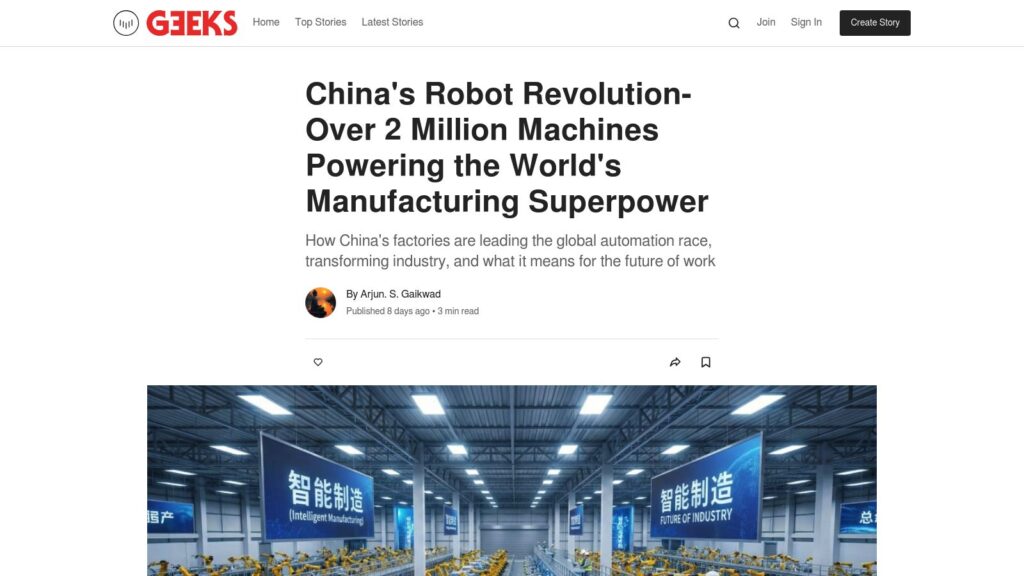
China’s Robot Revolution – Over 2 Million Machines Powering the World’s Manufacturing Superpower

China leads global manufacturing automation with over 2 million industrial robots, significantly enhancing efficiency. In 2024, it accounted for 54% of new global installations, driven by initiatives like “Made in China 2025.” The transition to automation addresses labor shortages and rising costs, evolving job roles towards tech support and innovation. Despite concerns about job displacement, training programs aim to upskill workers. Continued growth in robot installations is expected, reshaping supply chains and improving product quality. China’s robotic revolution signals a collaborative future between humans and technology.

https://vocal.media/geeks/china-s-robot-revolution-over-2-million-machines-powering-the-world-s-manufacturing-superpower

A Humanoid-robot Revolution Is Coming. Don’t Worry — Here’s Why It Will Take a While.

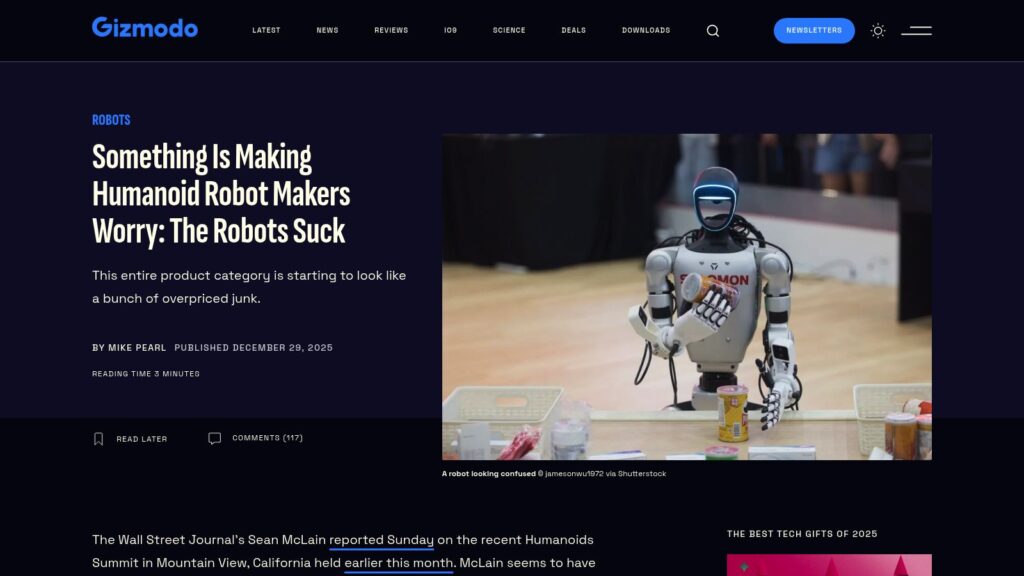
Humanoid robots are poised for a $5 trillion market, but full autonomy is years away due to complexities in development, reliability, and safety. Current sales in the U.S. are expected to remain under 1 million annually until after 2036. While some startups are progressing, challenges include replicating human dexterity and enhancing AI capabilities. Humanoid robots must optimize task efficiency, with early prototypes costing between $5,000 to $30,000, yet practical use remains limited. Overall, the path to widespread deployment is slow and complex.

https://www.marketwatch.com/story/a-humanoid-robot-revolution-is-coming-dont-worry-heres-why-it-will-take-a-while-8e2b1d08

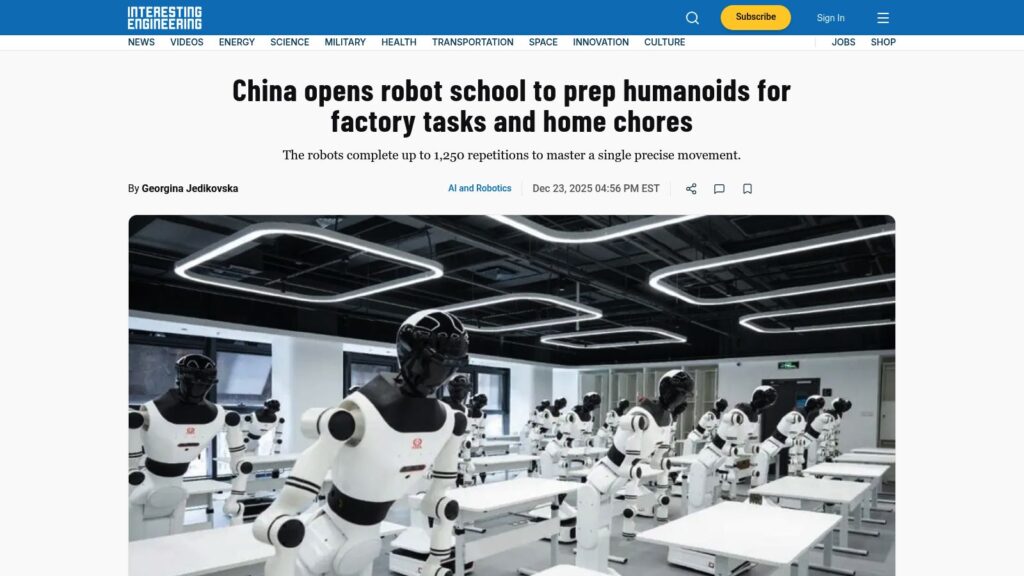
Robot School in China Trains Humanoids for Factories and Home Chores

China opened a school in Beijing to train humanoid robots for tasks in factories and homes. The center features modular training scenarios and emphasizes repeated practice, with robots needing up to 1,250 repetitions to master a task. The goal is to create a rich database for training robots in various environments, contributing to effective AI learning. Trained robots are already in use for material handling, courier services, and inspections.

https://interestingengineering.com/ai-robotics/china-robot-school-to-prep-humanoids

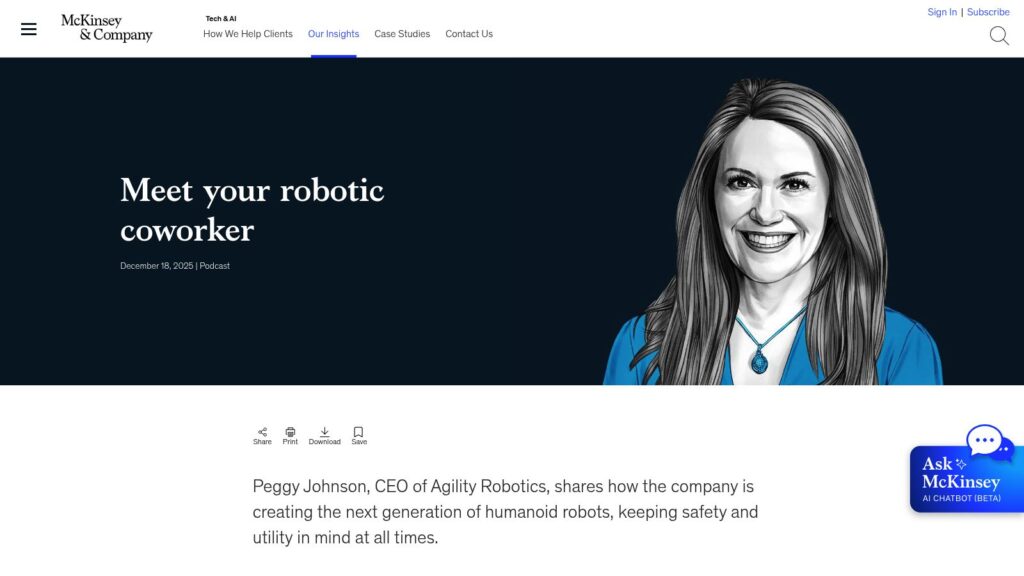
Meet Your Robotic Coworker

Agility Robotics CEO Peggy Johnson discusses the development of humanoid robots like Digit, designed to assist human workers in various industries, particularly in repetitive and labor-intensive tasks. The latest version, Digit 4.0, features advancements such as longer battery life and self-charging capabilities. Johnson emphasizes that these robots enhance workplace safety and efficiency rather than replacing human jobs, fostering new roles for workers. She highlights the importance of human-centric design in robotics and the need for cooperative safety measures in human-robot interactions to build trust in the workplace.

https://www.mckinsey.com/capabilities/tech-and-ai/our-insights/meet-your-robotic-coworker

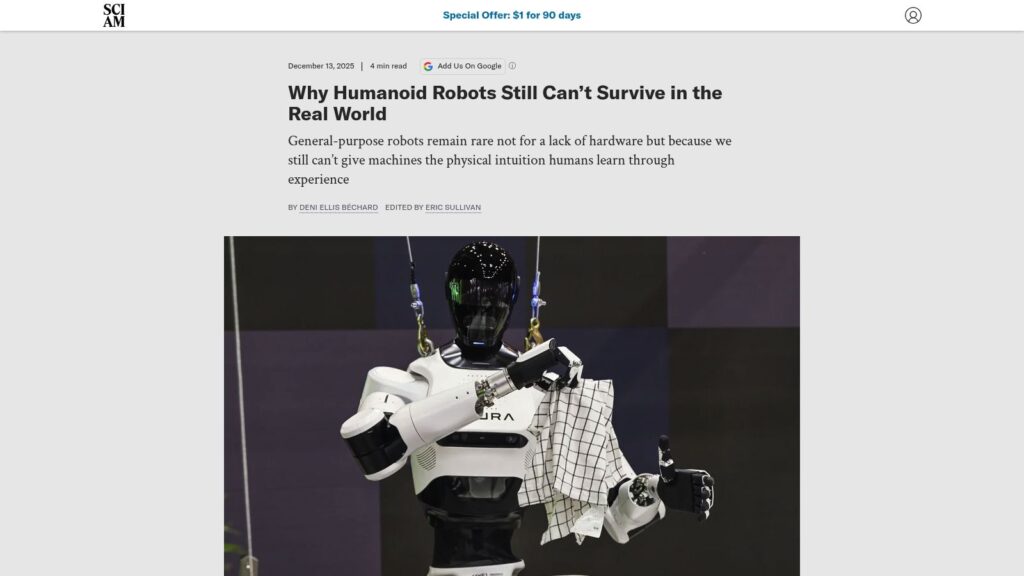
Why Humanoid Robots and Embodied AI Still Struggle in the Real World

Humanoid robots struggle in real-world situations due to a lack of physical intuition and embodied knowledge, unlike humans who learn from extensive real-life experiences. Despite advancements, these robots can’t perform everyday tasks like chores effectively, as they are limited by factors like uneven surfaces and complex movements. Current robot designs excel in controlled environments, but general-purpose humanoids remain elusive. Robotics researchers are exploring techniques like human demonstration and simulation, yet challenges persist, leaving humanoids in developmental stages with uncertain timelines for practical deployment.

https://www.scientificamerican.com/article/why-humanoid-robots-and-embodied-ai-still-struggle-in-the-real-world/

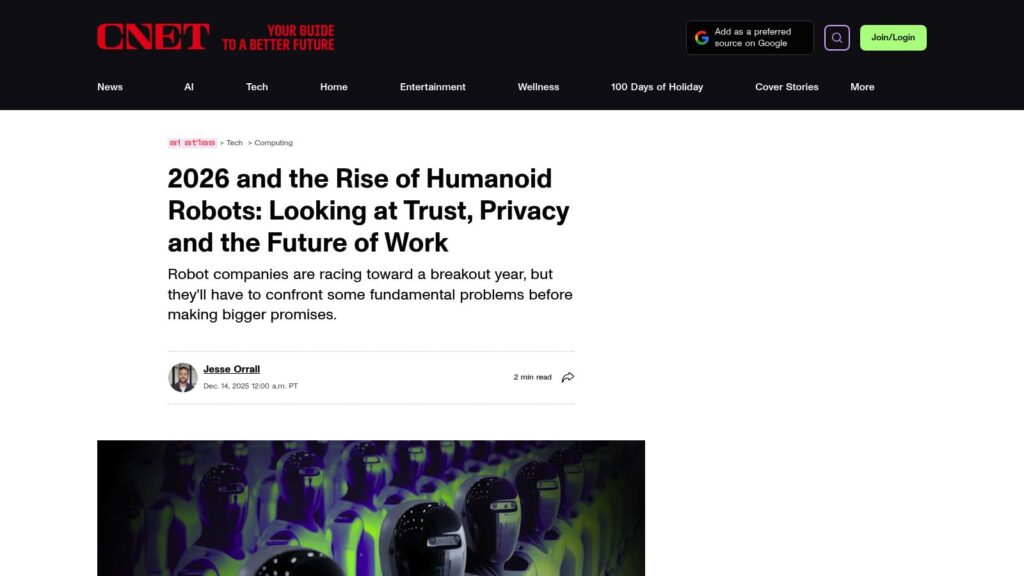
2026 and the Rise of Humanoid Robots: Looking at Trust, Privacy and the Future of Work

Humanoid robots are expected to become more prevalent in homes and workplaces in 2026, but the industry faces challenges. Safety concerns, privacy issues, and the need for human teleoperation in some cases raise questions about public acceptance. Additionally, the high cost of these robots and their potential impact on the labor market are concerns.

https://www.cnet.com/tech/computing/2026-and-the-rise-of-humanoid-robots-looking-at-trust-privacy-and-the-future-of-work/

From Lab to Workplace: How Exoskeletons Are Evolving

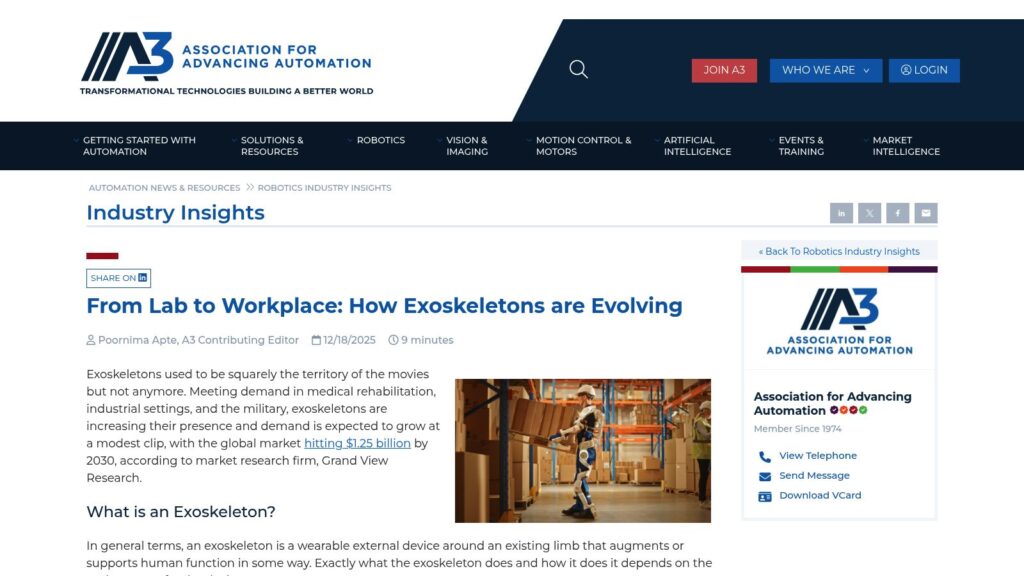
Exoskeletons are evolving from sci-fi to practical applications in healthcare, manufacturing, and the military, with the market expected to reach $1.25 billion by 2030. They help support or augment human function, available in passive (no power needed) and active (motorized) types. Use cases include medical rehabilitation for spinal cord injuries and physical augmentation for workers in repetitive motion jobs, as well as military aid for carrying loads. Adoption faces challenges like perceived weight, comfort, effectiveness, and lack of established standards for workplace compliance. As technology and machine learning improve, exoskeletons may expand into consumer markets, enhancing mobility for the elderly and individuals recovering from injuries.

https://www.automate.org/robotics/industry-insights/from-lab-to-workplace-how-exoskeletons-are-evolving

“Empowering People and Building Digital Skills Are Essential for Accelerating the Adoption of AI and Robotics in the Workplace”

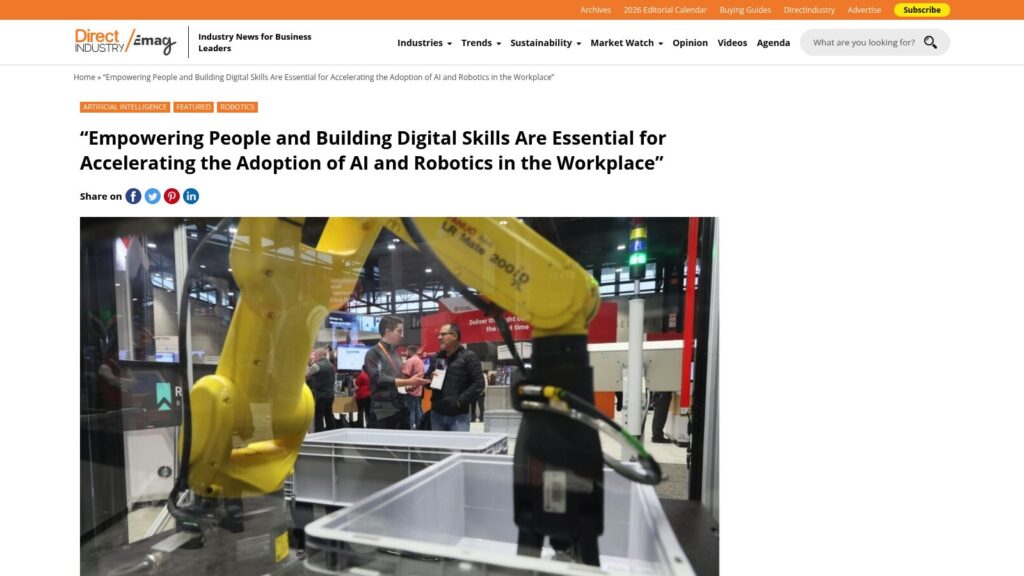
Empowering workforce and enhancing digital skills are crucial for advancing AI and robotics adoption in workplaces, as discussed at the Rockwell Automation Fair 2025. Key insights include the importance of skilled employees, intuitive human-machine interactions, and the integration of Autonomous Mobile Robots (AMRs) in manufacturing environments. Experts emphasized the need for safety measures and thoughtful factory designs to harmonize human-robot collaboration. AI-driven automation and machine learning are transforming operational efficiency. Effective coordination of robots within existing operations is essential for realizing the full potential of robotics technologies.

https://emag.directindustry.com/2025/12/18/rockwell-automation-ai-robotics-workplace-amr/

New Study Highlights Safety, Reliability, and Performance as the Key Drivers of Trust

A new study by QNX reveals that 77% of global technology leaders trust robotics for essential workplace functions, with safety, reliability, and performance key drivers of that trust. While executives are comfortable with robots handling menial tasks, trust decreases for tasks requiring human interaction. Despite the growing adoption of robotics, concerns remain about workplace preparedness and security risks.

https://www.automate.org/robotics/news/qnx-research-reveals-77-of-global-technology-leaders-trusting-of-robotics-in-the-workplace

Robotics Market Trends & Summary: Automation Redefining the Global Economy

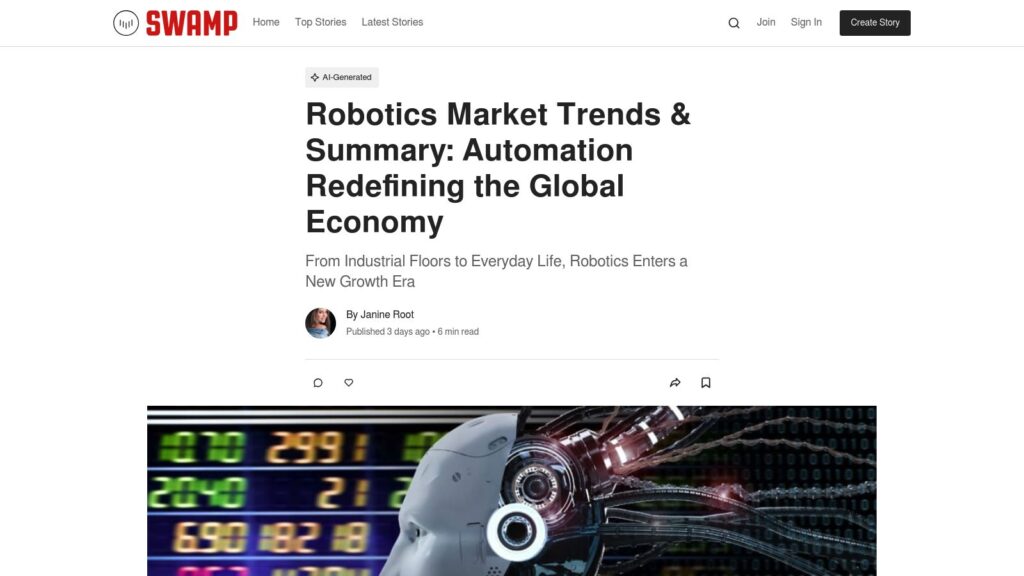
Robotics market transforming economy; expected to reach $553.14 billion by 2033, driven by AI, labor shortages, and automation demand. Expanding applications in healthcare, logistics, and agriculture. Challenges include high costs and human-robot interaction complexities. Advanced robotics essential for operational efficiency and competitiveness across industries.

https://vocal.media/theSwamp/robotics-market-trends-and-summary-automation-redefining-the-global-economy

1X Preps 10,000 Household Robots for the Workforce

1X plans to deploy 10,000 Neo humanoid robots for industries through a partnership with EQT, focusing on easing labor shortages and improving workplace safety. This marks a shift from initial consumer applications to industrial use, including manufacturing and healthcare. Pilot deployments begin in the U.S. in 2026, aiming for scalability and practicality in real-world applications.

https://www.eweek.com/news/1x-humanoid-robots-industrial-setting/

The Biggest AI Moments of 2025: Surveillance, Layoffs, and Robots

AI dominated tech in 2025, revealing complexities alongside progress. Key highlights include:
1. OpenAI uncovered a China-linked AI surveillance tool.
2. Workers faced automation fears; repetitive jobs at risk.
3. The first World Humanoid Robot Games showcased advanced robotics.
4. Waymo reported significant safety improvements in driverless cars.
5. Internal concerns at OpenAI about AGI risks led to notable staff exits.
Overall, AI advancements brought both excitement and challenges for 2026.

https://www.eweek.com/news/biggest-ai-moments-2025/

Scroll to Top