technology

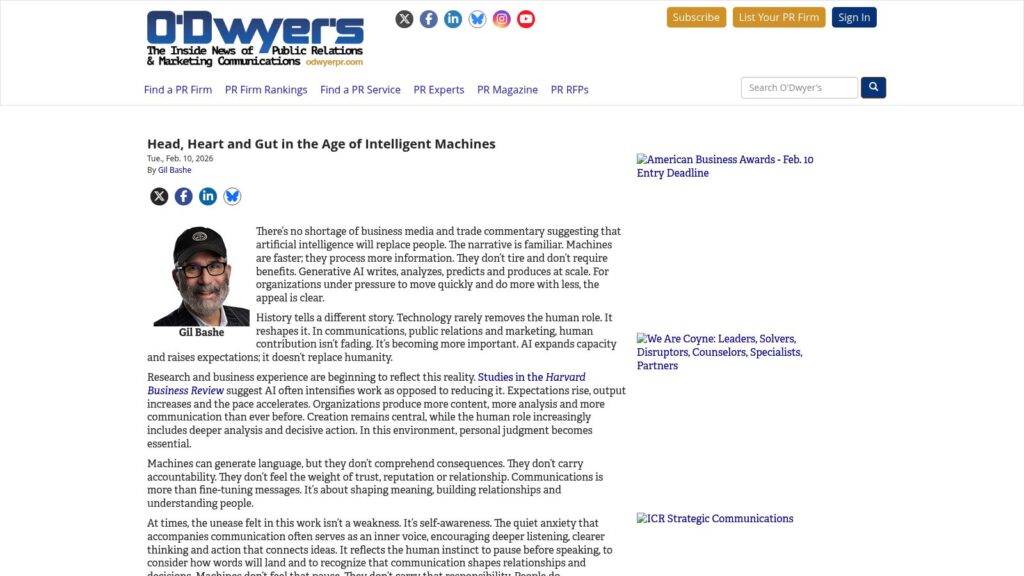
Head, Heart and Gut in the Age of Intelligent Machines

AI won’t replace humans; it reshapes roles in communications. Despite AI’s efficiency, human creativity, judgment, and accountability are essential. Reliance on technology without critical thinking risks producing conformity and misinformation. Leadership must blend human insight with technological capabilities for effective communication and trust-building. The future hinges on uniting intelligence with empathy and human judgment.

https://www.odwyerpr.com/story/public/24276/2026-02-10/head-heart-gut-age-intelligent-machines.html

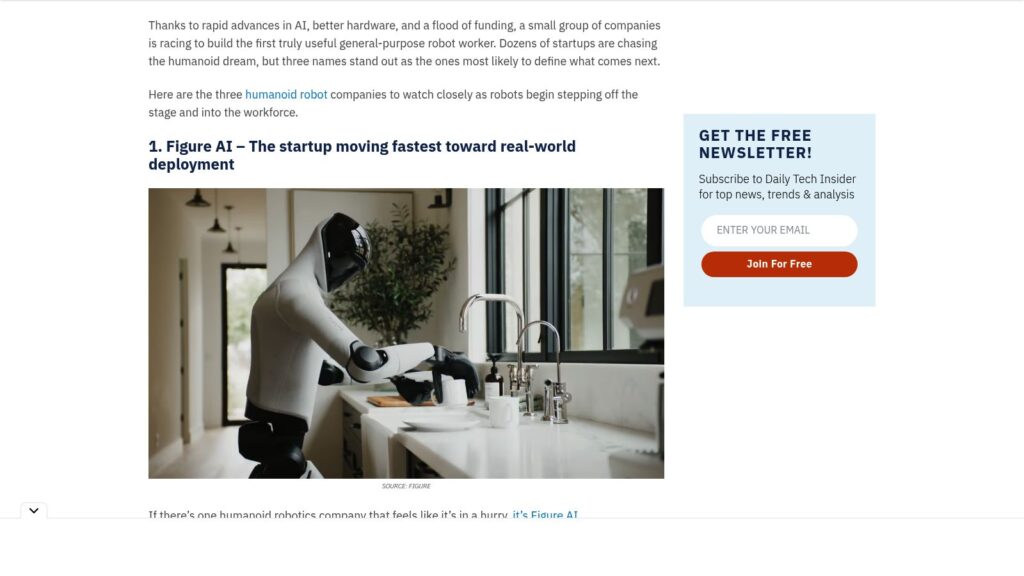
3 Humanoid Robot Companies Shaping the Future of Automation

3 Humanoid Robot Companies to Watch:
1. Figure AI – Fast deployment of general-purpose robots for industrial work.
2. Tesla Optimus – Ambitious project aiming for mass-production humanoid robots.
3. Agility Robotics – Focused on practical warehouse applications with its robot, Digit.

Humanoid robots will initially assist in labor-intensive jobs, not replace them.

https://www.eweek.com/news/3-humanoid-robot-companies-automation/

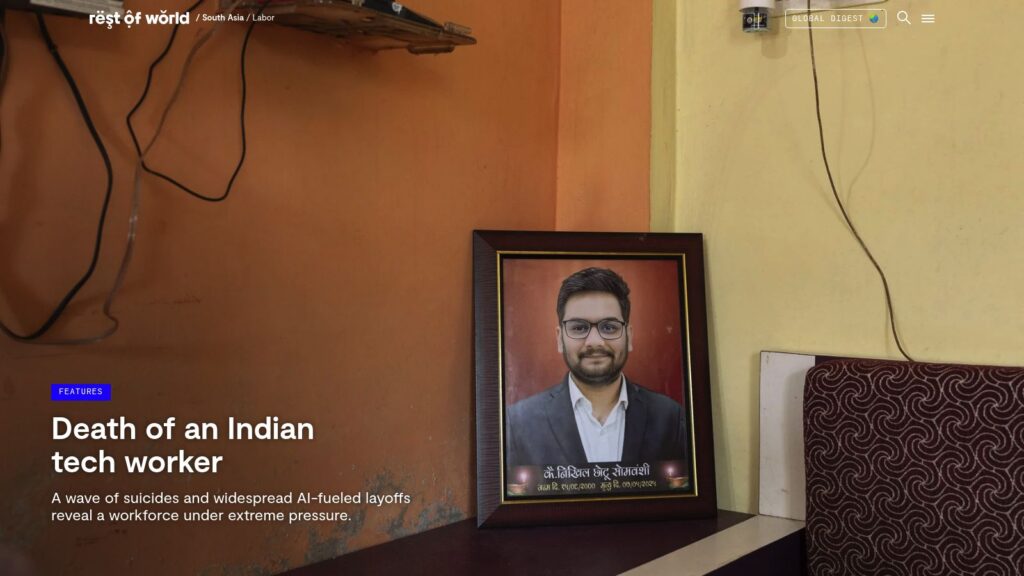
Death of an Indian Tech Worker

Indian tech worker Nikhil Somwanshi, 24, died by suicide amid severe industry stress, reflecting burnout and intense job pressures. His tragic story highlights a broader crisis in India’s tech sector, where over 80% of workers experience burnout and layoffs rise due to AI advancements. With significant hours worked and increasing anxiety regarding job security, suicides are prevalent, with 227 reported from 2017 to 2025. Many tech leaders promote excessively long workweeks, exacerbating the issues, and employees face mental health challenges without sufficient support. Conditions mirror a shift in the workforce affected by AI, leading to fears of job irrelevance and a culture where speaking out is discouraged.

https://restofworld.org/2026/india-tech-workers-crisis-suicide/

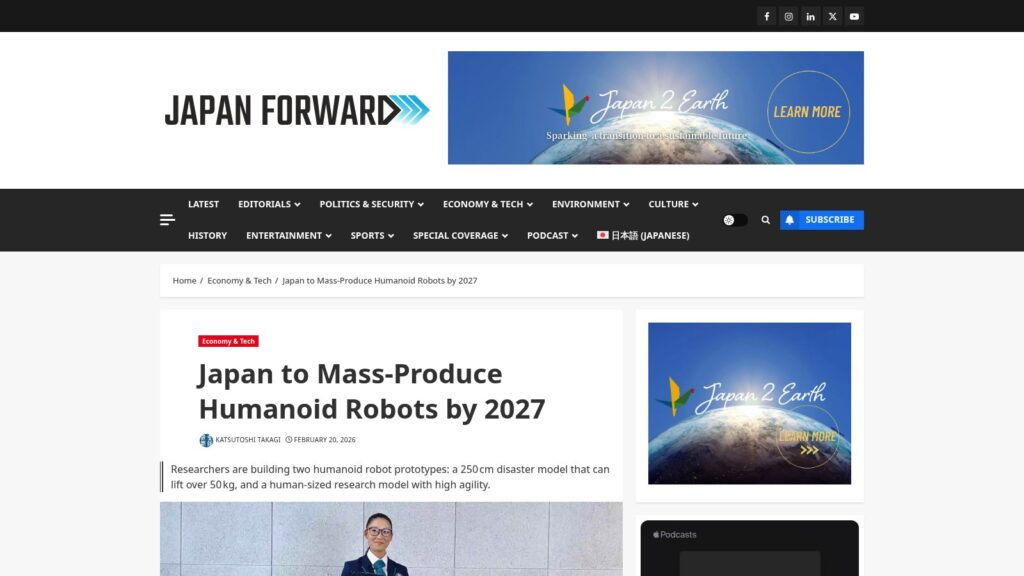
What Is a Humanoid Robot? Definition, Capabilities, and Industrial Reality

Humanoid robots mimic human structure and capabilities to work in human-designed environments. As labor shortages rise, manufacturers see them as a new automation solution. Key humanoid features include human-like form, high degrees of freedom for movement, and advanced AI for autonomy. Their role in industrial automation differs from traditional robots, focusing on unstructured settings. Current challenges include production costs and safety, emphasizing the need for practical applications and clear ROI in manufacturing. Future success depends on identifying specific tasks where humanoids excel, moving beyond mere demonstrations to validation of value.

https://www.automate.org/news/humanoid-robots-definition-capabilities-and-industrial-reality

8 CIO Recommendations for ERP Implementation in 2026

Agentic AI is transforming ERP systems, enabling proactive, end-to-end business process management across finance, supply chain, manufacturing, HR, and customer service. CIOs should develop a clear business plan for agentic AI adoption, engage with ERP vendors, and establish frameworks for human-AI collaboration, risk mitigation, and governance. The focus should be on balancing incremental process optimization with transformative business reinvention, leveraging mature data and process foundations for a broader approach.

https://www.informationweek.com/software-platforms/8-cio-recommendations-for-erp-implementation-in-2026-think-agentic

The Economics of Skills: AI, Human Augmentation, and the Future Workforce

TLDR: HR faces challenges from digital transformation, requiring skills orchestration over cost. Talent is shifting from Global North to decentralized hubs in the South/East. Effective Digital Capacity (EDC) metrics are essential as 40% of tech skills will be obsolete by 2027. Emerging Tier-2 cities increase competitiveness, while talent gaps grow, particularly in cybersecurity. AI transforms job roles, fostering human-machine collaboration. Companies must adapt from wage models to skill-based compensation and move towards a polycentric talent strategy to remain relevant by 2030.

https://draup.com/talent/data-books/economics-of-skills-ai-augmentation

Utilities Turn to Physical AI to Accelerate Grid Modernization

Utilities are using robotics and AI to address workforce shortages, enhance operational efficiency, and improve inspection cycles without needing extensive manpower. Integrating robotics into existing ERP systems offers significant benefits such as increased task velocity, better data reliability, and improved safety. This approach helps meet rising demands while optimizing the workforce, reducing risk, and enhancing grid resilience.

https://erp.today/utilities-turn-to-physical-ai-to-accelerate-grid-modernization/

Manufacturing’s Future Is High Tech

Manufacturing is evolving into a high-tech industry driven by AI, automation, and sustainability, requiring new skills and perceptions. Experts advocate for educational reforms to align with modern needs, emphasizing hands-on training and career visibility to attract talent. The sector faces a talent shortage, demanding a workforce adept in technology and soft skills. By 2035, successful manufacturing will hinge on innovation, adaptability, and purpose-driven careers, reinforcing manufacturing’s role in economic strength.

https://roboticsandautomationnews.com/2025/12/30/opinion-manufacturings-future-is-high-tech-and-the-workforce-must-adapt/97952/

Tech Trends 2026: How AI, Data and Security Are Reshaping Manufacturing

By 2026, manufacturers will increasingly adopt AI and automation to optimize operations, with over 40% upgrading production scheduling systems to AI. This shift will involve software-defined factories, AI-driven design, and federated data architectures, requiring manufacturers to address challenges like data unification and security concerns. Additionally, AI will reshape workforces through human-robot collaboration and personalized training, and enhance cybersecurity through AI-powered defenses.

https://biztechmagazine.com/article/2025/12/tech-trends-2026-how-ai-data-and-security-are-reshaping-manufacturing

The 2026 Talent Reckoning: Beyond Degrees and Certifications

By 2026, CIOs will prioritize skills over degrees in hiring, favoring adaptability and learning agility. Traditional degree requirements are declining as employers seek candidates with practical skills and microcredentials that demonstrate ongoing learning. Hiring assessments will shift focus to real-world experience and emotional intelligence, with strategies like skills assessments and job simulations gaining prominence. This transition aims to expand talent pools and tackle retention challenges in a tech-driven environment, emphasizing the need for continuous workforce development and a hybrid culture that values employee engagement amidst AI integration.

https://www.techtarget.com/searchcio/feature/The-talent-reckoning-Beyond-degrees-and-certifications

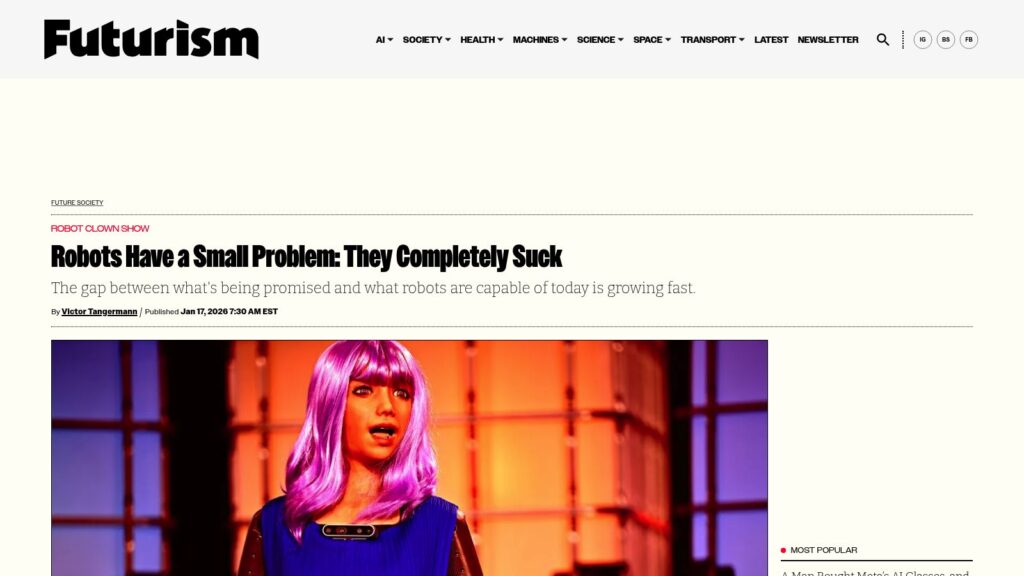
Why Humanoid Robots and Embodied AI Still Struggle in the Real World

Humanoid robots struggle in real-world situations due to a lack of physical intuition and embodied knowledge, unlike humans who learn from extensive real-life experiences. Despite advancements, these robots can’t perform everyday tasks like chores effectively, as they are limited by factors like uneven surfaces and complex movements. Current robot designs excel in controlled environments, but general-purpose humanoids remain elusive. Robotics researchers are exploring techniques like human demonstration and simulation, yet challenges persist, leaving humanoids in developmental stages with uncertain timelines for practical deployment.

https://www.scientificamerican.com/article/why-humanoid-robots-and-embodied-ai-still-struggle-in-the-real-world/

78% of IT Job Postings Already Require AI Skills

IT job markets increasingly require AI skills, with 78% of postings demanding them. As AI reshapes roles, reskilling is critical, and soft skills gain importance. By 2030, AI proficiency may be as essential as PC skills today, highlighting the need for adaptability and new competencies. Concerns about rising automation and job displacement persist, yet opportunities for younger talent are expected to grow. Companies must rethink entry-level roles amidst these changes.

https://www.cio.com/article/4094687/without-ai-the-it-job-market-would-hardly-be-possible-anymore.html

The Incredible Shrinking Shelf Life of IT Skills

IT skills’ relevance is declining rapidly due to accelerated technological innovation, necessitating continuous upskilling among IT professionals. The half-life of skills has decreased from decades to as little as two years, with skills like FinOps currently in demand but possibly becoming obsolete as AI advancements take over. Organizations must foster a culture of adaptability and continuous learning to keep pace with changing requirements. Hiring or developing employees with a growth mindset and enabling time for skill development is essential for navigating this skill instability landscape.

https://www.cio.com/article/4093446/the-incredible-shrinking-shelf-life-of-it-skills.html

Scroll to Top