training

AI Isn’t Failing, People Are Failing With AI

The article emphasizes that AI projects fail not due to the technology itself, but from improper application and lack of understanding. Success with tools like BERT and GPT relies on domain expertise and a structured approach to deployment, particularly in data-heavy industries like healthcare and finance. A risk-based framework is recommended for assessing AI applications. In summary, effective AI use hinges on comprehension of technology, data management, and strategic application.

https://www.cio.com/article/4135361/ai-isnt-failing-people-are-failing-with-ai.html

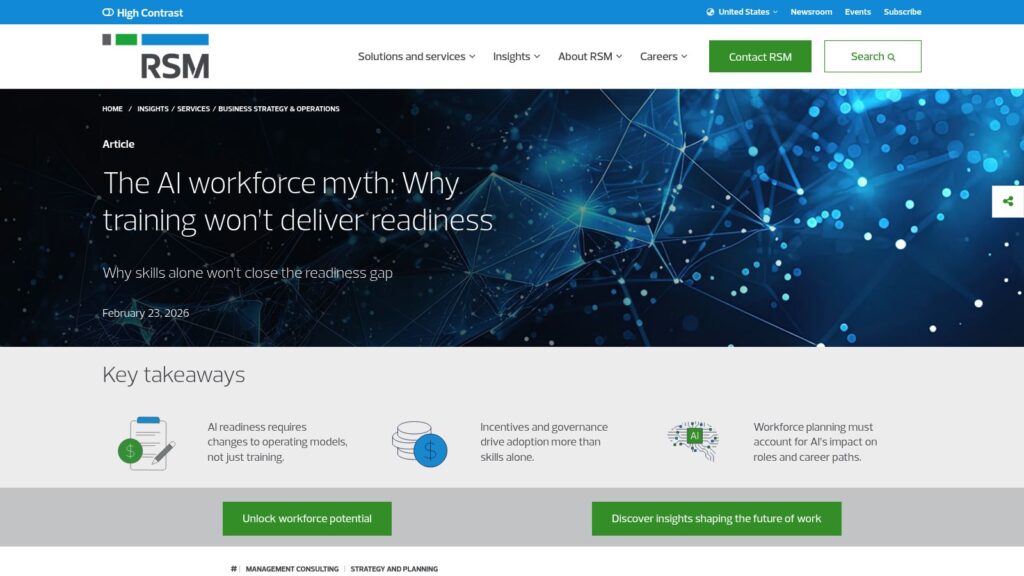
The AI Workforce Myth: Why Training Won’t Deliver Readiness

Organizations investing in AI readiness find that training alone does not produce business impact because it doesn’t change how work gets done or how AI is adopted. Structural barriers—outdated processes, missing governance, and roles not aligned with AI—limit adoption. Leading organizations redefine operating models by integrating AI into workflows, updating job descriptions, establishing governance, and creating performance-based incentives. They conclude readiness requires organizational redesign and change management, not just skill training. 

https://rsmus.com/insights/services/business-strategy-operations/why-training-wont-deliver-readiness.html

Skills Are Evolving Too Quickly for Current Training Cycles, Report Says

IT skills are changing rapidly, with responsibilities shifting every 18 months. Companies view training as a perk rather than essential for operations, leading to skill gaps. Research suggests embedding learning into workflows to align skill development with business needs is crucial. Integrating training could also improve job retention, as many workers desire more training opportunities.

https://www.ciodive.com/news/learning-skills-evolving-training-cycles-it-info-tech/812628/

KPMG 2026 Perspectives: Local Insights From Boston

KPMG’s 2026 report on Boston businesses shows a strategic shift towards AI adoption and workforce upskilling amidst economic uncertainty. Leaders emphasize efficiency, with 98% providing AI training and 91% focusing on internal upskilling to reduce hiring needs. Confidence in growth remains high (up to 94%), but there are concerns over integration of AI, cybersecurity, and market conditions. While hiring and expansion plans have slightly decreased, 93% intend to increase AI use, expecting transformative impacts on operations. Additionally, Boston’s talent quality and educational resources are seen as competitive advantages, with a substantial number aiming for acquisitions in 2026 despite tariff impacts affecting sales.

https://kpmg.com/us/en/media/news/boston-perspectives.html

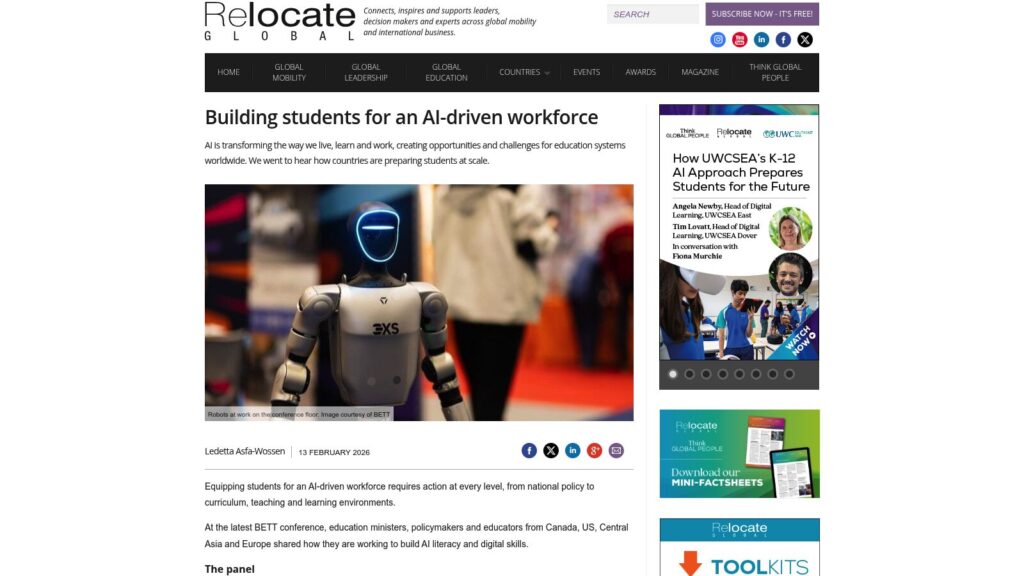
Building Students for an AI-driven Workforce

AI education for workforce readiness is critical. Countries like Tajikistan are mandating AI literacy in schools, while others like Canada focus on updating curricula. Challenges include integrating AI into existing systems and ensuring teacher competence. Innovative practices involve experiential learning and collaboration with employers to equip students for current workforce demands.

https://www.relocatemagazine.com/building-students-for-an-ai-driven-workforce-ledetta-asfa-wossen-betts-0226

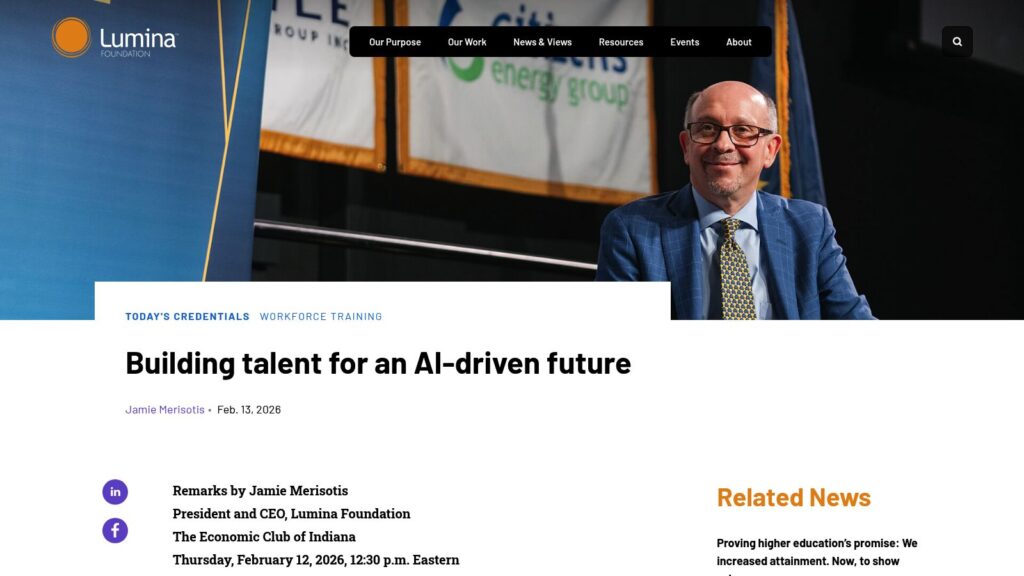
Building Talent for an AI-driven Future

TLDR: Lumina Foundation aims to enhance post-high school education and credentials for Americans, focusing on equity and workforce alignment. President Jamie Merisotis discussed the impact of AI on jobs, urging preparation for uniquely human skills. Despite challenges in higher education perception, degree value persists with significant income benefits. Future adaptations are needed for affordability, flexibility, and workforce relevance. Employers should enhance training and partnerships with educational institutions to create skilled, adaptable workers in a changing economy.

https://www.luminafoundation.org/news-and-views/building-talent-for-an-ai-driven-future/

17 Tips For Building Strong Workforce Development In The AI Age

The article offers strategic tips for workforce development in the age of AI. It emphasizes designing intentional, adaptable skill-building systems that align technology adoption with employee growth and long-term engagement. Key recommendations include clear communication about change, using AI to eliminate low-value work, focusing on capabilities over specific roles, and embedding learning into real tasks. Leaders are advised to tie upskilling to career paths and continuously map skills as work evolves to support innovation and loyalty. 

https://www.forbes.com/councils/forbesbusinesscouncil/2026/02/06/18-tips-for-building-strong-workforce-development-in-the-ai-age/

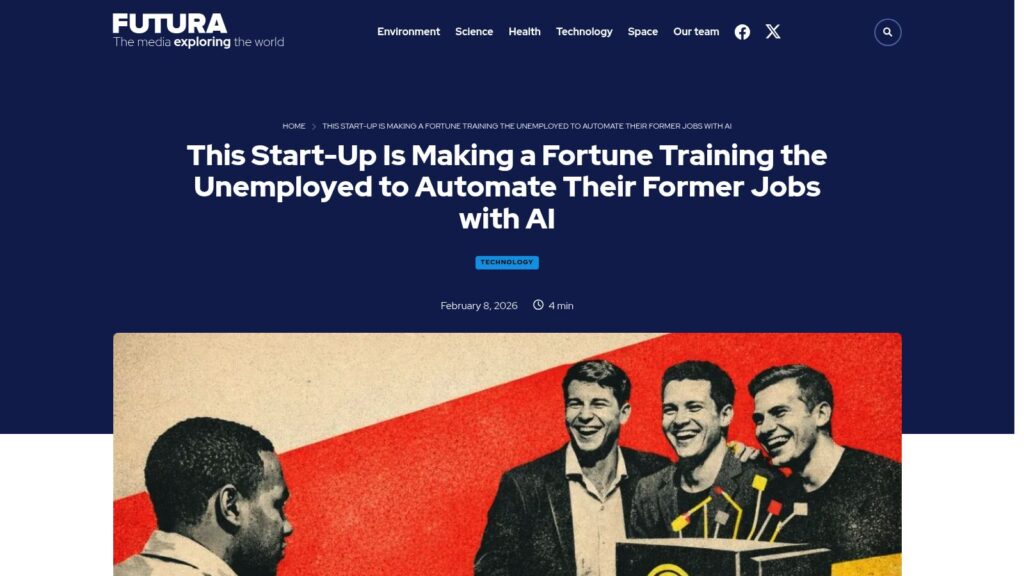
This Start-Up Is Making a Fortune Training the Unemployed to Automate Their Former Jobs With AI

Start-up trains unemployed to automate their jobs with AI. As job market weakens and more roles are replaced by automation, ex-workers are hired to teach AI skills they previously possessed, raising ethical concerns. This trend reflects a grim future where human labor value diminishes. Some firms regret replacing workers with AI, revealing limitations in AI capabilities.

https://www.futura-sciences.com/en/this-start-up-is-making-a-fortune-training-the-unemployed-to-automate-their-former-jobs-with-ai_25046/

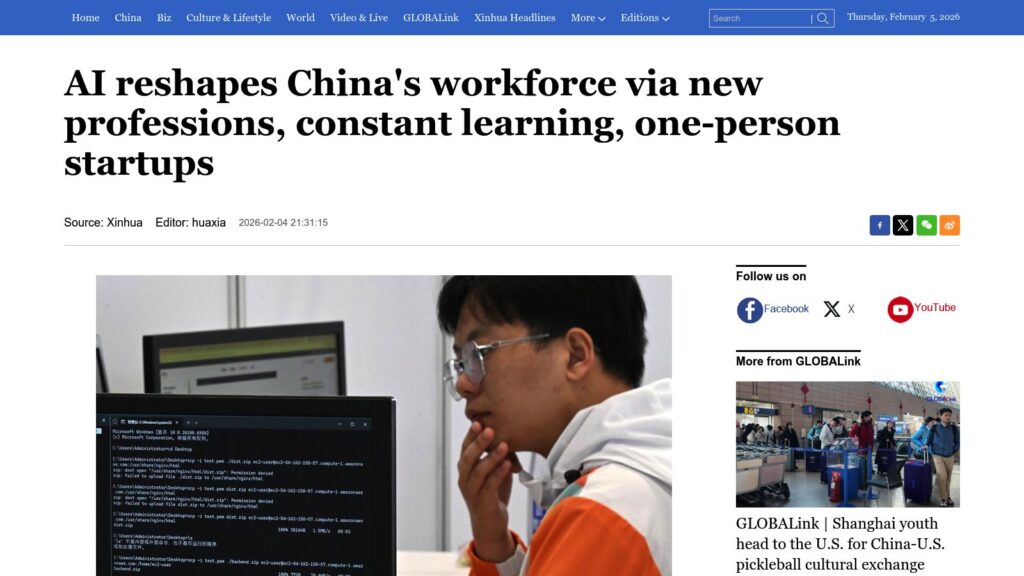
AI Reshapes China’s Workforce Via New Professions, Constant Learning, One-person Startups

AI is transforming China’s workforce by creating new job roles, facilitating entrepreneurship, and requiring continuous skill development. The rise of AI-related jobs has led to increased wages and job openings in sectors like algorithm engineering. Despite concerns about job displacement, AI is enabling higher value roles and encouraging lifelong learning among a diverse range of workers. The trend supports the emergence of One Person Companies (OPCs) leveraging AI. China’s “AI Plus” initiative aims to enhance skills training and reemployment opportunities as technology evolves.

https://english.news.cn/20260204/8d1bd05e8c4240998206fb9bdf32860a/c.html

Growth in 2026 Won’t Happen Without Businesses Prioritizing Worker Trust and Skills

Businesses must prioritize employee trust and skills for growth in 2026. Research indicates that while employees are optimistic about AI’s potential, many companies are not effectively leveraging AI to boost productivity. High-performing organizations that invest in upskilling and employee collaboration achieve better results, demonstrating that human-centric approaches are vital for successful AI integration and organizational growth.

https://www.unleash.ai/artificial-intelligence/growth-in-2026-wont-happen-without-businesses-prioritizing-worker-trust-and-skills/

76% of Americans Plan on Learning New AI Skills in 2026, Workera Report Finds

A Workera report reveals that 76% of Americans plan to learn new AI skills in 2026, with 40% aiming to apply them in their current roles and 36% seeking new opportunities. The report, based on a survey of 1,000 white-collar workers, also highlights that 53% of respondents are looking for new roles, with 39% expecting AI to impact their employment status. Additionally, the report emphasizes the importance of skills data over resumes in talent decisions.

https://www.prnewswire.com/news-releases/76-of-americans-plan-on-learning-new-ai-skills-in-2026-workera-report-finds-302666555.html

AI Literacy Training: From Best Practice to Legal Requirement Under the New EU AI Act

EU AI Act mandates AI literacy training, evolving from best practice to legal obligation. Effective Feb 2026, compliance is essential for all organizations deploying AI affecting people in the EU. Training must cover AI fundamentals, legal requirements, and practical applications while addressing ethics. Ongoing, structured education is crucial for maintaining compliance and adapting to evolving regulations globally.

https://blog.knowbe4.com/ai-literacy-training-from-best-practice-to-legal-requirement-under-the-new-eu-ai-act

Invest in the Workforce for the AI Age: a Blueprint for Scale, Skills and Responsible Growth

Investing in workforce skills is crucial in the AI era for maximizing value creation. Successful transformation requires alignment of workforce, operating models, and governance to drive business outcomes. A new social contract for learning is essential, where organizations offer clear skills pathways and support continuous learning. Roles must evolve, emphasizing human judgment over repetitive tasks. Companies should adopt disciplined AI missions, focus on collaborative ecosystems, and ensure responsible AI deployment to foster trust and inclusivity. Leaders must integrate strategy with skills development to achieve sustainable growth and productivity.

https://www.weforum.org/stories/2026/01/ai-roadmap-transforming/

Citi Has Quietly Built a 4,000-person Internal AI Workforce

Citi has launched an AI Champions and Accelerators program, recruiting 4,000 volunteers to help colleagues understand and utilize AI tools. The initiative emphasizes a peer-to-peer approach to enhance AI adoption across the bank, with participants dedicating 3-5 hours weekly. The program, which began in 2024, supports ongoing training and feedback on AI tools, fostering engagement and collaboration within the workforce. CEO Jane Fraser encourages a confident, AI-savvy workforce to shape future operations and productivity.

https://www.businessinsider.com/citi-bank-ai-accelerators-volunteers-2025-12

In Chinese Data Factories, Workers Teach Humanoid Robots Boring Tasks

China’s local governments are funding over 40 training centers to address a robotic data shortage, training humanoid robots through repetitive human actions like folding clothes. This initiative supports China’s push for advanced robotics, framed as essential for productivity and technological supremacy. The government emphasizes embodied intelligence, leading to a race among firms to develop humanoid robots. Challenges include costly data collection methods and concerns over potential industry overcapacity. Despite skepticism about training efficiency, the facilities aim to provide standardized data, aiding smaller firms and bolstering China’s competitive edge in robotics.

https://restofworld.org/2026/china-robots-training-centers-workers/

Scroll to Top