trends

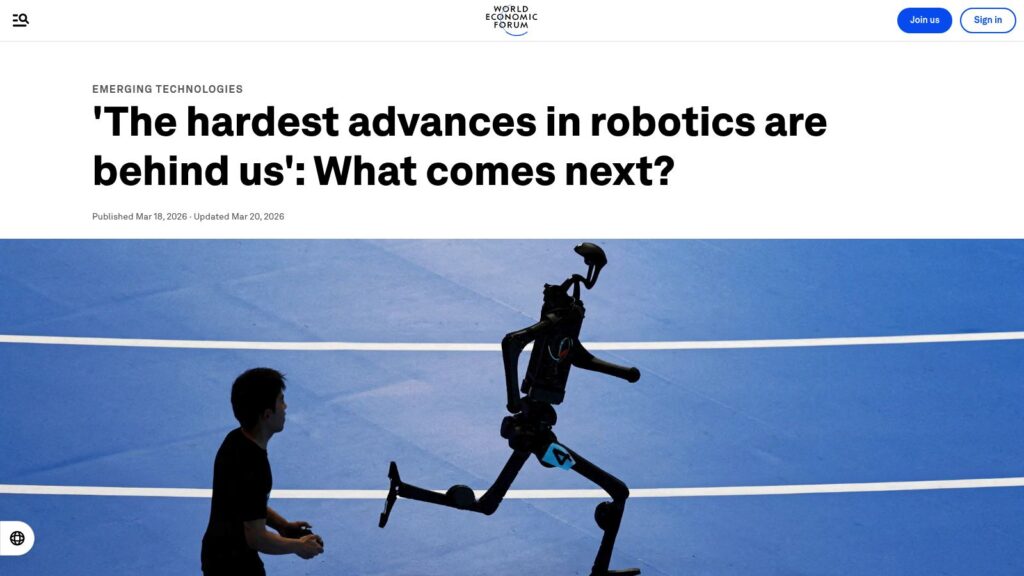
What Are the Next Key Advancements in Robotics? Experts Explain

After a decade of foundational breakthroughs, autonomous robots have successfully moved from controlled industrial environments like ports and factories into large-scale real-world operations, with experts at the World Economic Forum’s 2026 Annual Meeting asserting that the hardest technical advances are behind us. The next phase focuses on developing robots that can handle unstructured environments such as homes by improving manipulation, risk assessment, and contextual reasoning, which will enable robots to work safely and effectively alongside humans beyond predictable settings.

https://www.weforum.org/stories/2026/03/advances-in-autonomous-robotics-what-comes-next/

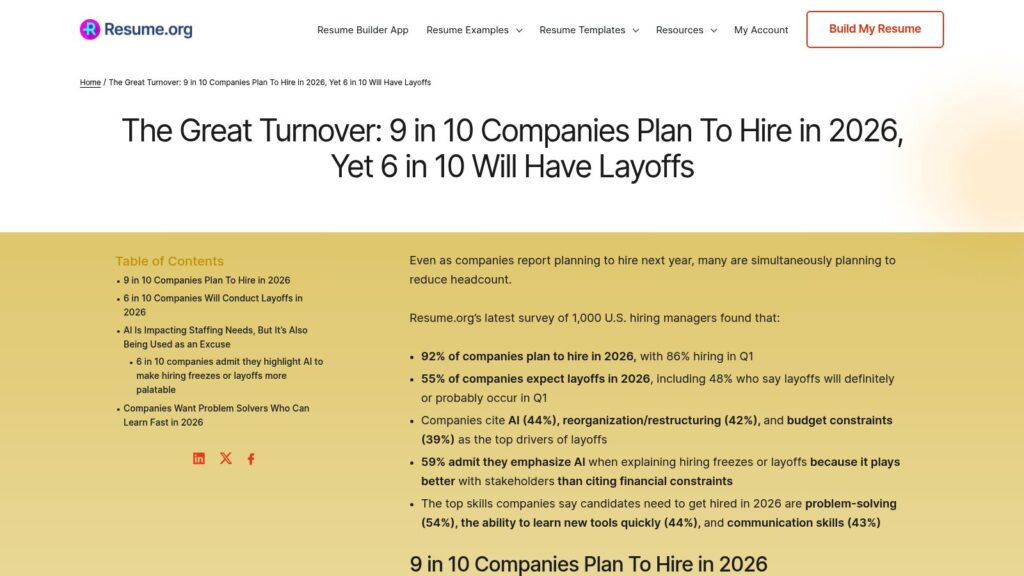
The Great Turnover: 9 in 10 Companies Plan To Hire in 2026, Yet 6 in 10 Will Have Layoffs

A Resume.org survey of 1,000 U.S. hiring managers reveals that while 92% of companies plan to hire in 2026, 55% also anticipate layoffs. Layoffs are driven by AI, reorganization, and budget constraints, with companies often citing AI to explain workforce reductions. The top skills companies seek in candidates are problem-solving, adaptability, and communication, highlighting the importance of practical, day-to-day performance skills.

https://www.resume.org/the-great-turnover-9-in-10-companies-plan-to-hire-in-2026-yet-6-in-10-will-have-layoffs-2/

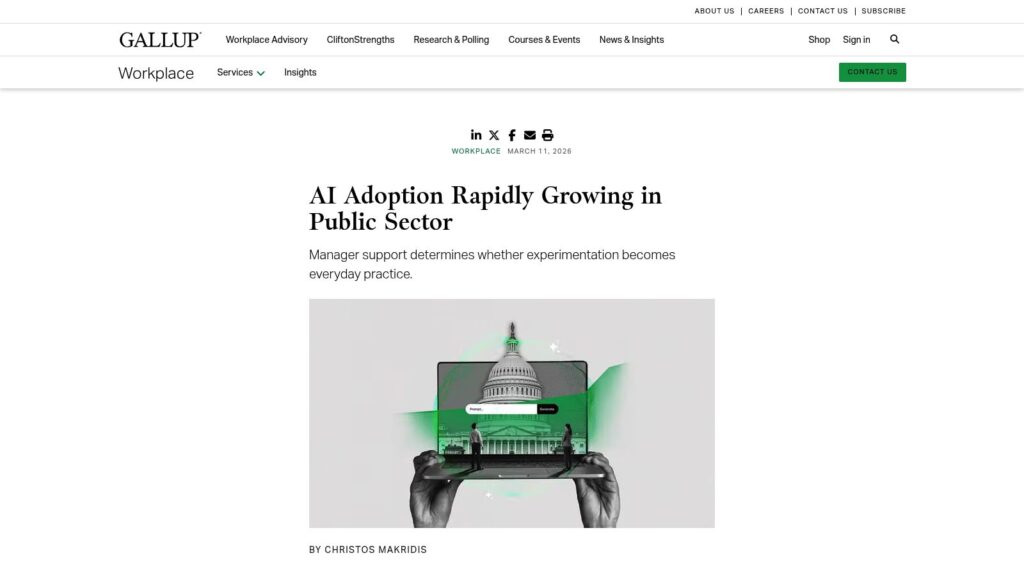
AI Adoption Rapidly Growing in Public Sector

AI adoption in the public sector is rising, nearing private sector levels. As of Q4 2025, 43% of public-sector employees use AI, up from 17% in Q2 2023. Private-sector usage is 41%. Frequent AI use is higher in the private sector (25% vs. 21%), while occasional use is more common in the public sector (22% vs. 16%). Managerial support impacts AI usage, with 65% of employees in high-support environments using AI frequently, compared to 37% in low-support settings. While public sector adoption remains lower than in private industries, recent trends show increasing integration of AI tools in daily operations. Challenges include data privacy concerns and the need for clearer AI strategies from management.

https://www.gallup.com/workplace/702983/adoption-rapidly-growing-public-sector.aspx

Why Contract Workers Are Embracing AI Capability Faster Than Rest of Workforce

Contract workers are embracing AI capabilities faster than the rest of the workforce, with staffing firms adding AI skills 46% faster than the wider labor market. This trend is driven by employers prioritizing flexibility, cost control, and AI, leading to a shift towards contract work as a necessity for both employers and job seekers. The rise in contract roles, particularly in specialized sectors like Construction and Healthcare, reflects a broader evolution of traditional employment norms and a strategic shift in workforce planning.

https://www.hrgrapevine.com/us/content/article/2026-03-05-why-contract-workers-are-embracing-ai-capability-faster-than-rest-of-workforce

Block Lays Off 4,000 Workers Citing AI. But How Much Does AI Actually Have to Do With It?

Block’s CEO Jack Dorsey announced layoffs of 4,000 employees (40% of workforce), attributing this to AI advancements. However, experts suggest overhiring during the pandemic contributed significantly to these cuts. While Block’s shares rose post-announcement, analysts believe the layoffs are a mix of AI efficiency and necessary organizational adjustments, rather than solely due to AI’s impact. Other tech companies like Salesforce and Amazon have also made significant layoffs, linking them partially to reallocating resources to AI. Despite industry cuts, job opportunities in tech still exist, particularly in medium-sized companies.

https://www.cbc.ca/news/business/block-layoffs-ai-9.7108981

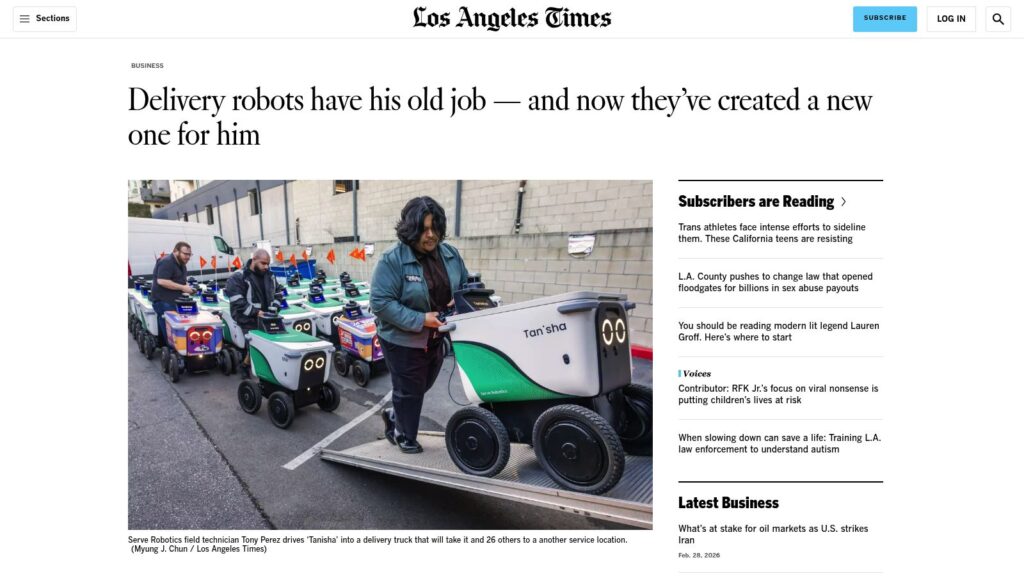
Delivery Robots Have His Old Job — and Now They’ve Created a New One for Him

AI delivery robots are replacing drivers, creating a new job: robot wrangler. These workers help robots navigate obstacles, provide maintenance, and ensure they operate effectively. Charlie Snodgrass, a former gig driver, is among the first to take on this role, checking and managing multiple robots daily as companies like Serve Robotics expand their fleets. Demand for such positions is rising as robots become more integrated into urban infrastructure.

https://www.latimes.com/business/story/2026-02-25/theres-job-that-ai-isnt-eliminating-robot-wrangler

Managing the New Blend of Human and Virtual “Co-Workers”

HR must adapt for 2026 as AI reshapes workplaces. Key trends include managing layoffs humanely, protecting employee mental health from AI, improving productivity, addressing recruitment fraud, safeguarding against corporate espionage, and supporting workers transitioning to skilled trades. Successful HR leaders will prioritize process optimizations over mere tech skills and develop compensation strategies for employees’ digital likenesses.

https://www.latimes.com/b2b/human-resources/story/2026-02-22/2026-future-of-work-trends-hr-leaders

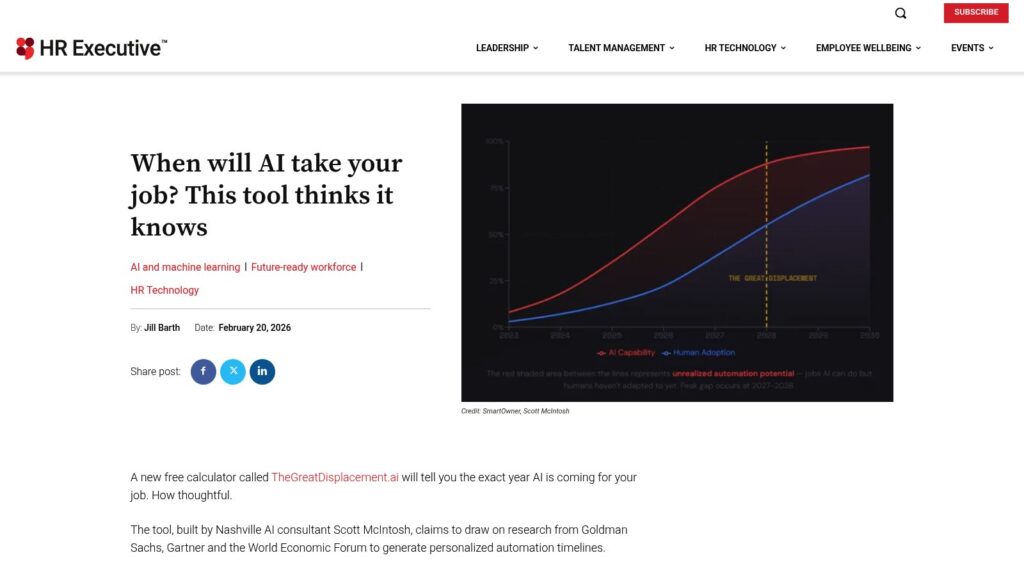
When Will AI Take Your Job? This Tool Thinks It Knows

AI job displacement tool predicts when AI might replace jobs, indicating potential for 300 million jobs affected globally. While 20% of organizations may reduce middle management, an estimated 170 million new jobs could emerge by 2030. HR leaders must adapt to AI integration, as only a small percentage of workers currently use AI in their roles.

https://hrexecutive.com/when-will-ai-take-your-job-this-tool-thinks-it-knows/

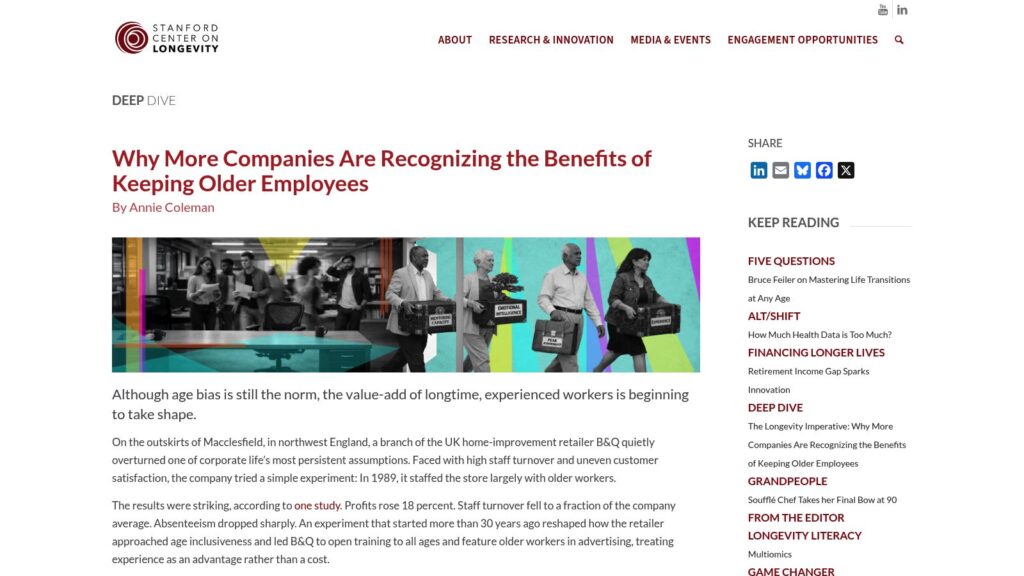
Why More Companies Are Recognizing the Benefits of Keeping Older Employees

Companies are recognizing the benefits of older workers, shown by successful experiments at B&Q and BMW that increased productivity and reduced turnover. Despite aging populations and the need for experienced talent, many organizations still push older employees out prematurely. Studies show that firms with older workers perform better due to their judgment and experience, countering the “albatross theory” that views them as liabilities. As life expectancy increases and workforce demographics shift, companies should adapt strategies to retain older employees and serve an aging customer base. Investors are starting to see the financial importance of this shift, and businesses must design careers that leverage the value of older workers to maintain competitiveness.

https://longevity.stanford.edu/why-more-companies-are-recognizing-the-benefits-of-keeping-older-employees/

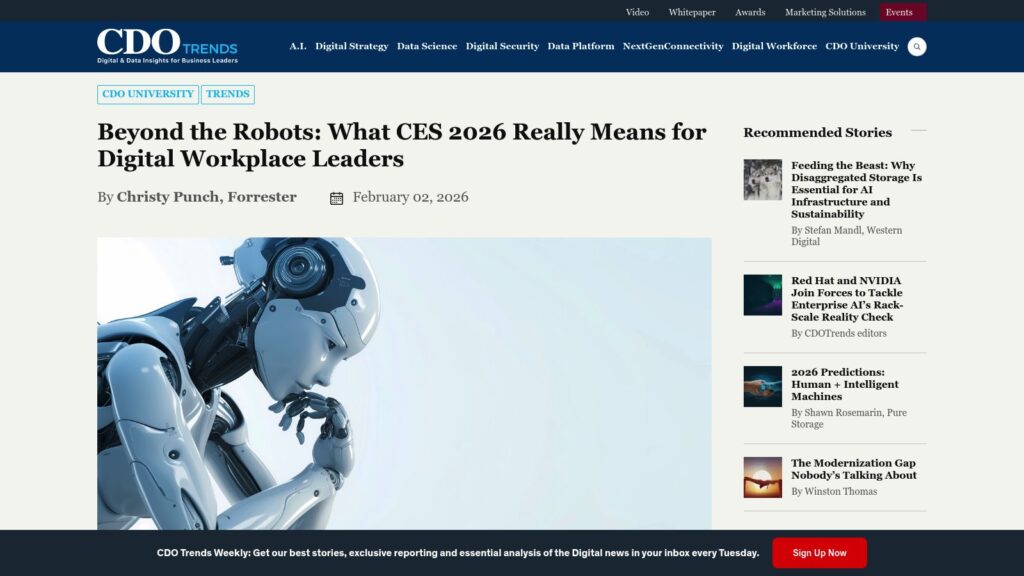
Beyond the Robots: What CES 2026 Really Means for Digital Workplace Leaders

CES 2026 showcased AI’s transformative impact on frontline work and digital employee experiences (DEX). Key takeaways highlight AI’s role in improving operations, safety, and business outcomes, as seen in examples from Siemens and Google. AI is now central to digital experiences, facilitating personalized, adaptive workplaces, while wearables emerged as a powerful yet risky technology. Despite advancements, the practical implementation of these solutions varies, emphasizing the need for careful problem identification and a balanced approach to technology integration.

https://www.cdotrends.com/story/4879/beyond-robots-what-ces-2026-really-means-digital-workplace-leaders

AI-Washing Exposed: Are 50K+ Layoffs Really About Automation?

Over 50,000 layoffs in 2025 were attributed to AI, with companies like Amazon and Pinterest citing automation. However, Forrester research reveals many lack the AI systems needed to replace these roles, raising concerns over “AI-washing”—using AI claims to mask financial motives behind layoffs. This trend indicates a shift in corporate narratives to maintain investor confidence while obscuring underlying business struggles. As AI’s true impact unfolds, companies must prove genuine implementation to regain trust among workers and investors.

https://www.techbuzz.ai/articles/ai-washing-exposed-are-50k-layoffs-really-about-automation

No One Can Predict AI’s Impact On Jobs; But Here Are 4 Possibilities

The World Economic Forum outlines four potential scenarios for AI’s impact on jobs by 2030: a supercharged, rapidly adapting workforce; uneven adaptation leading to unemployment; a productive “co-pilot economy” with gradual AI integration; and a stalled, dysfunctional economy with increased automation and inequality. The report emphasizes the importance of human-AI collaboration, investment in training and data infrastructure, and fostering an adaptive organizational culture to navigate these potential outcomes.

https://www.forbes.com/sites/joemckendrick/2026/01/30/no-one-can-predict-ais-impact-on-jobs-but-here-are-4-possibilities/

Three Narratives for the Future of Work

TLDR: Future of work narratives include: 1) Mass Displacement – automation outpaces job creation, risking widespread unemployment and social instability; 2) Leap of Consciousness – technological advancement disrupts jobs but creates new roles requiring human skills, hinging on timely workforce reskilling; 3) Managed Deceleration – external factors like regulation slow tech adoption, allowing time for societal adjustment. Key focus: adaptation capacity is vital for navigating these futures.

https://ifforesight.substack.com/p/three-narratives-for-the-future-of

Who Uses AI in Europe

EU invests in AI adoption, but usage remains uneven. 64% of Europeans see AI literacy as crucial by 2030. AI use has increased 12.3% since 2021, with 32.7% of Europeans using AI tools. Adoption varies by country, with generative AI in education low at 9.8%. Denmark leads in AI business adoption (42.03%), while Hungary lags behind (1.31%). The EU should focus on sector-specific AI deployment and measurable KPIs for effective support.

https://eutechloop.com/who-uses-ai-in-europe-and-where-its-still-taboo/

Scroll to Top