trends

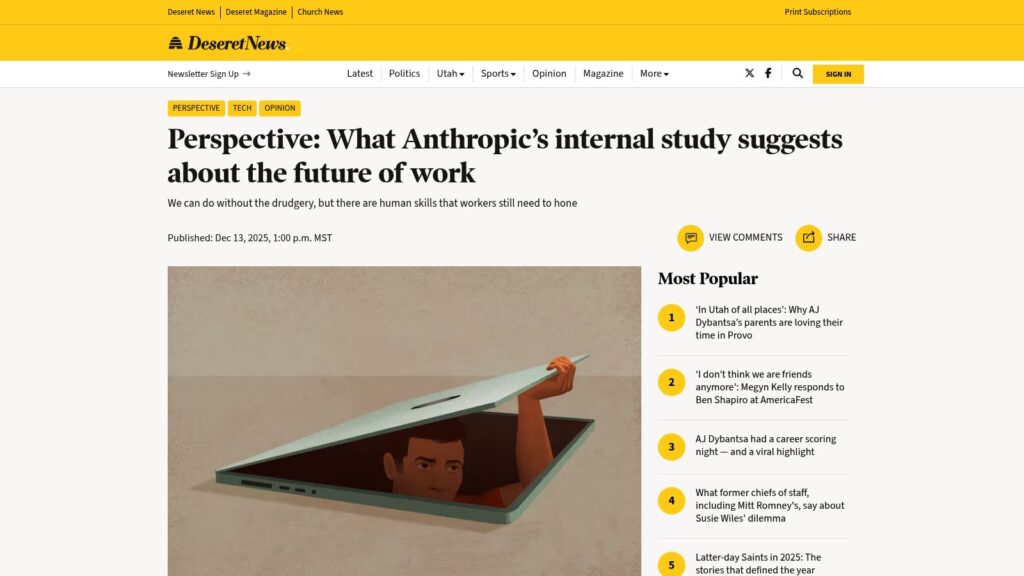
Perspective: What Anthropic’s Internal Study Suggests About the Future of Work

AI boosts productivity (20%-50% gains) but may atrophy essential human skills, prompting concerns about skill loss among workers, such as engineers. As AI takes over tasks, human roles shift from execution to judgment, necessitating ongoing skill retention and training. The challenge is maintaining vital skills while adapting to increasingly automated workplaces.

https://www.deseret.com/opinion/2025/12/13/future-of-work-ai-anthropic-study/

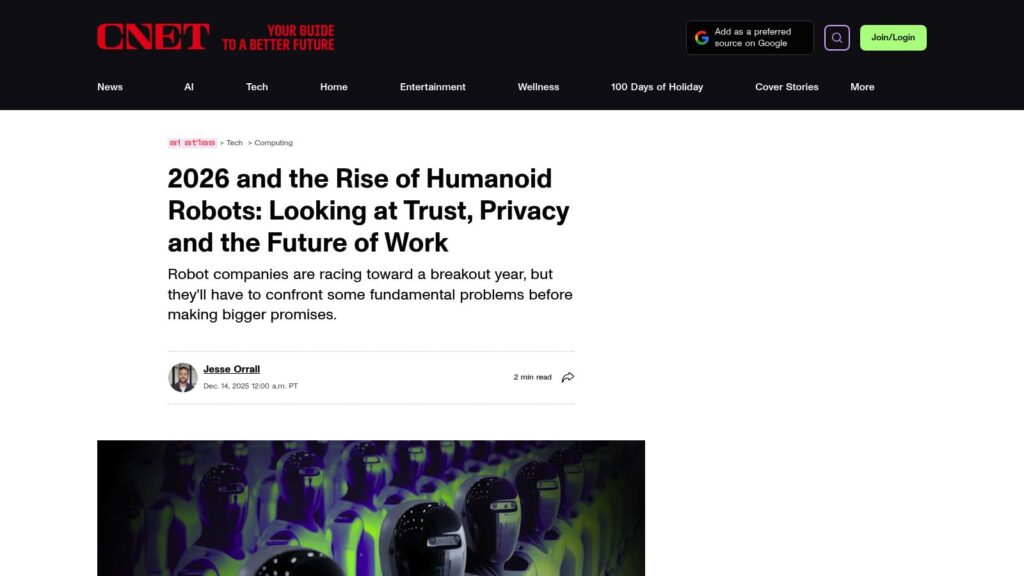
2026 and the Rise of Humanoid Robots: Looking at Trust, Privacy and the Future of Work

Humanoid robots are expected to become more prevalent in homes and workplaces in 2026, but the industry faces challenges. Safety concerns, privacy issues, and the need for human teleoperation in some cases raise questions about public acceptance. Additionally, the high cost of these robots and their potential impact on the labor market are concerns.

https://www.cnet.com/tech/computing/2026-and-the-rise-of-humanoid-robots-looking-at-trust-privacy-and-the-future-of-work/

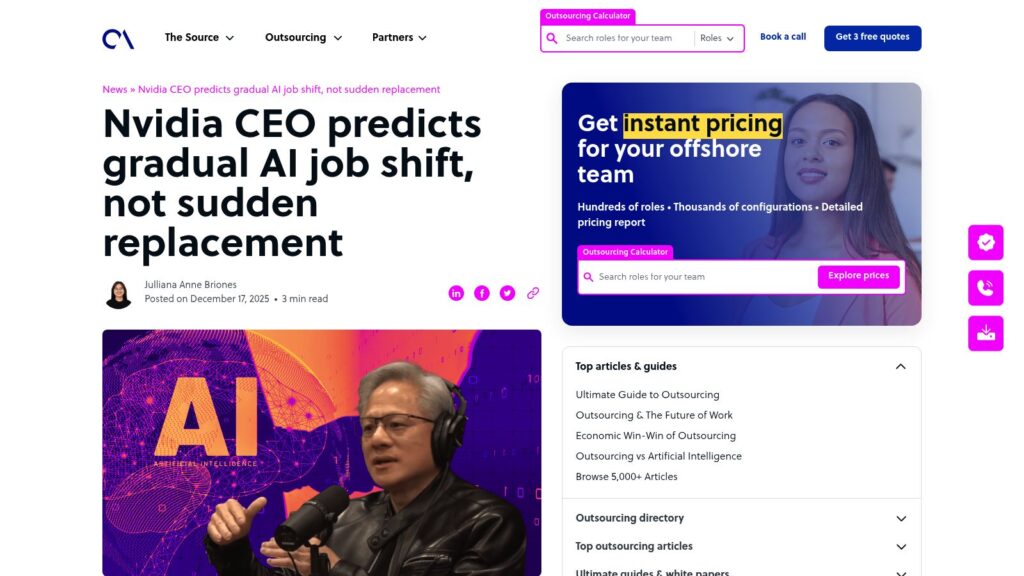
Nvidia CEO Predicts Gradual AI Job Shift, Not Sudden Replacement

Nvidia CEO Jensen Huang predicts a gradual shift in the job market due to AI, with routine tasks being automated while jobs requiring interpretation and complex reasoning remain. He anticipates the emergence of new industries and job types, such as robot-based apparel, but acknowledges that even these roles may eventually be automated. Huang emphasizes the importance of AI as a global technology race, highlighting the advantages for the first to reach its full potential.

https://news.outsourceaccelerator.com/gradual-ai-job-shift/

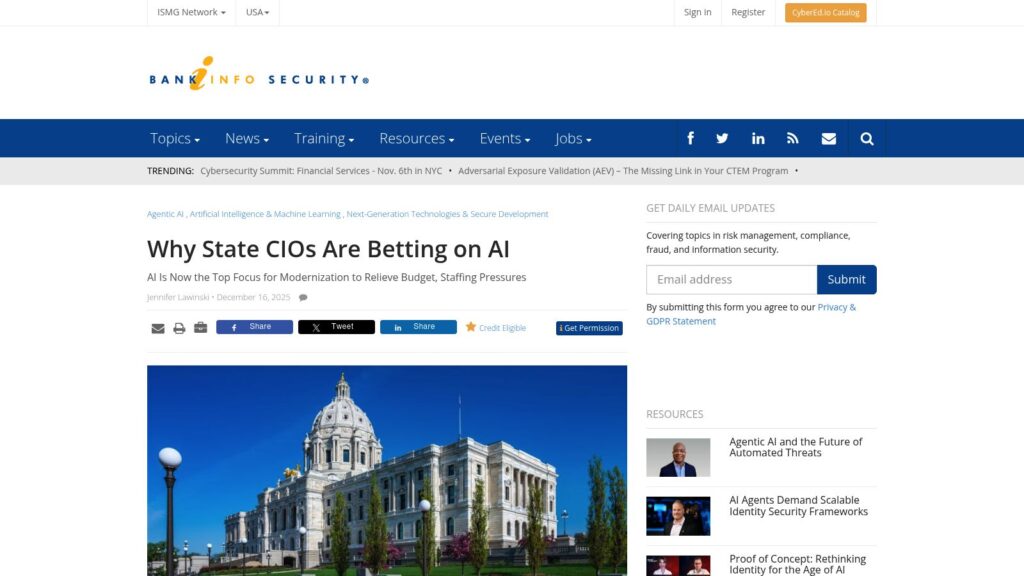
Why State CIOs Are Betting on AI

State CIOs are prioritizing AI and generative AI to modernize government IT, driven by budget constraints, cybersecurity risks, and workforce challenges. While AI’s potential to enhance citizen services is recognized, its immediate impact is evident in internal processes such as document generation and policy analysis. States are also focusing on modernization, cybersecurity, and compliance with the upcoming ADA accessibility deadline.

https://www.bankinfosecurity.com/state-cios-are-betting-on-ai-a-30306

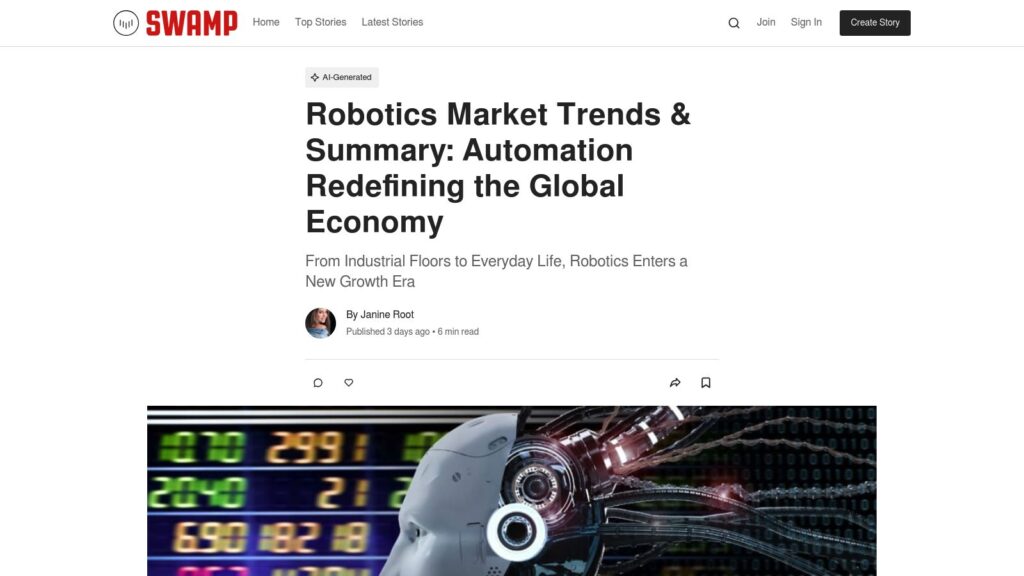
Robotics Market Trends & Summary: Automation Redefining the Global Economy

Robotics market transforming economy; expected to reach $553.14 billion by 2033, driven by AI, labor shortages, and automation demand. Expanding applications in healthcare, logistics, and agriculture. Challenges include high costs and human-robot interaction complexities. Advanced robotics essential for operational efficiency and competitiveness across industries.

https://vocal.media/theSwamp/robotics-market-trends-and-summary-automation-redefining-the-global-economy

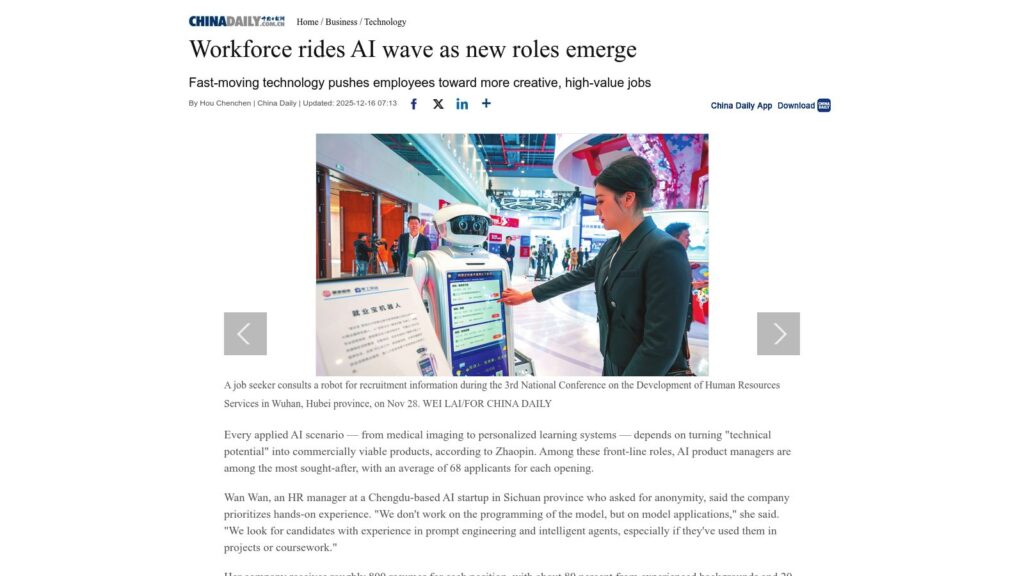
Workforce Rides AI Wave as New Roles Emerge

AI tech is reshaping job roles, pushing workers to focus on creative, high-value tasks. AI product managers are in high demand, with extensive applicant pools, while technical roles like algorithm engineers require advanced degrees. Companies prioritize practical experience in AI applications over coding skills, leading to a diverse workforce that includes AI trainers for data preparation.

https://www.chinadaily.com.cn/a/202512/16/WS69409616a310d6866eb2ec5f_3.html

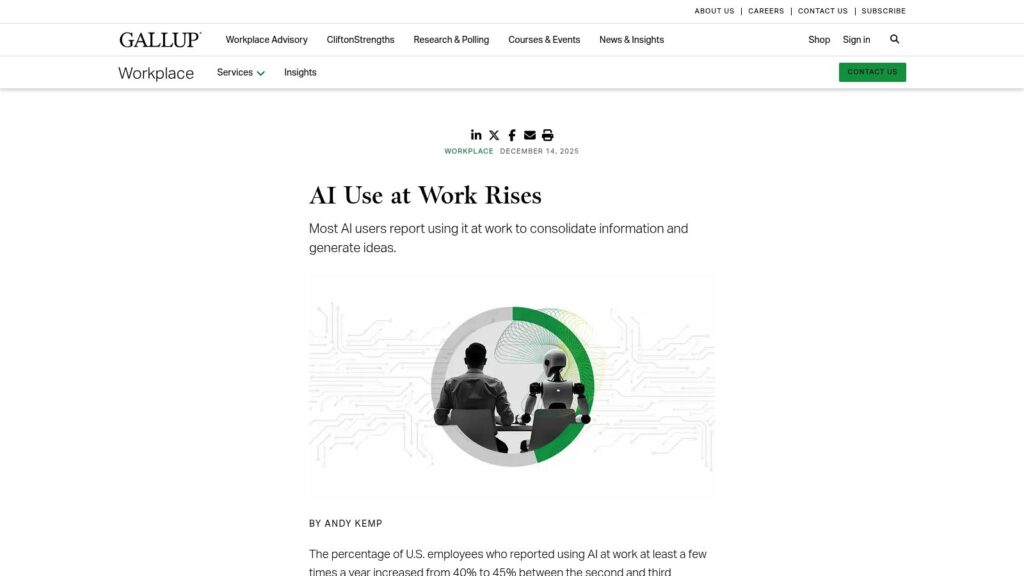
AI Use at Work Rises

AI use among U.S. employees rose from 40% to 45% between Q2 and Q3 2025. Frequent use increased from 19% to 23%, with daily use rising slightly to 10%. Knowledge-based workers, especially in tech and finance, showed higher AI adoption compared to frontline roles. While 37% acknowledged their companies’ AI implementations, many were unaware, particularly in non-managerial roles. Employees mainly used AI for consolidating information (42%), generating ideas (41%), and learning (36%). More advanced AI tools are still underutilized. There’s a strong correlation between managerial support and employee AI use.

https://www.gallup.com/workplace/699689/ai-use-at-work-rises.aspx

AI Sparks Critical Thinking Crisis: Executives Warn Of Talent Pipeline Collapse

Executives warn of a critical thinking crisis due to AI’s replacement of traditional tasks that develop strategic expertise, leading to a talent pipeline collapse. A survey indicates a global shortage of strategic thinkers, with AI demanding a shift from execution to strategic thinking, impacting all job sectors. Companies must redesign roles and upskill employees to cope with this skills gap. AI’s integration poses risks like operational vulnerabilities and necessitates proactive strategies to prepare future middle-management. The key to organizational resilience is embracing change and nurturing critical thinking skills.

https://allwork.space/2025/12/ai-sparks-critical-thinking-crisis-executives-warn-of-talent-pipeline-collapse/

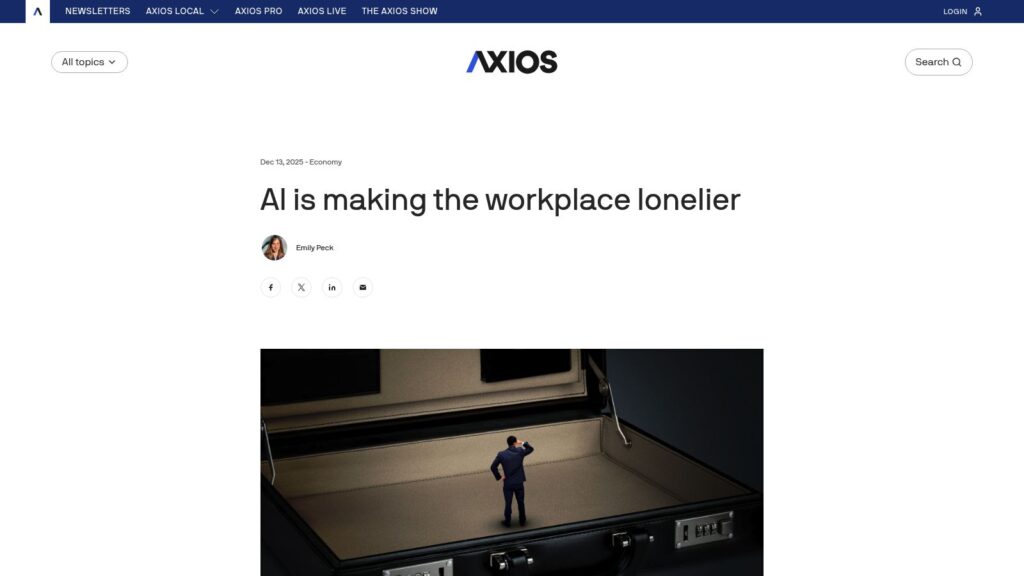
AI Is Making the Workplace Lonelier

AI is increasing workplace loneliness as employees favor chatbots over human interaction for tasks like mentorship and brainstorming. While productivity rises, this trend results in fewer connections and collaboration, leading to potential emotional detachment among workers. Although AI is seen as a supplement to conversation, concerns grow that reliance on bots undermines human connection and creativity, potentially fracturing organizations.

https://www.axios.com/2025/12/13/ai-anthropic-chatbot-remote-work-jobs

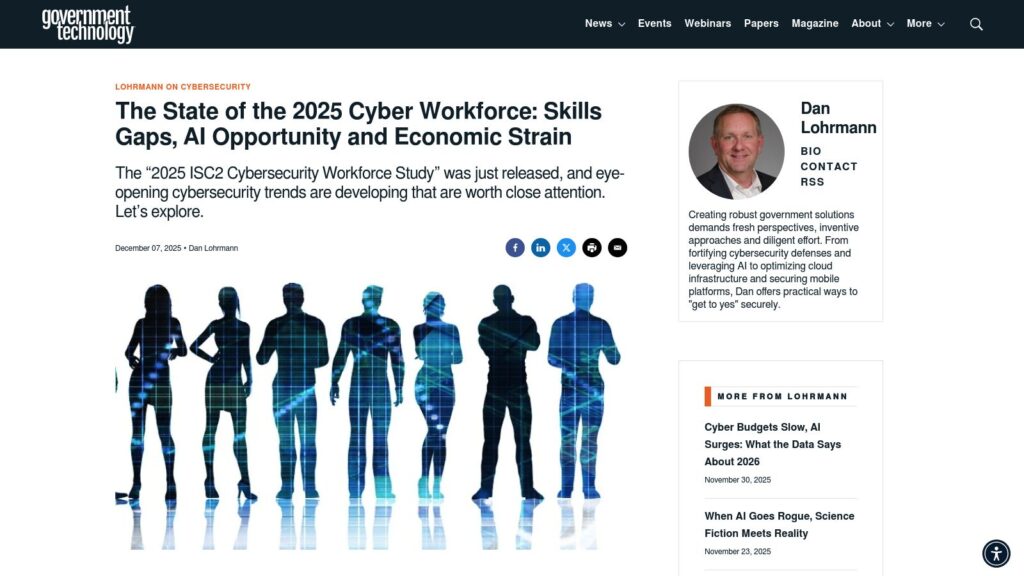
The State of the 2025 Cyber Workforce: Skills Gaps, AI Opportunity and Economic Strain

TLDR: The 2025 ISC2 Cybersecurity Workforce Study highlights key trends: budget cuts and hiring freezes increase security risks; skills deficits challenge resilience; AI’s growth creates new job opportunities; job satisfaction remains high despite organizational issues. Investing in workforce skills is crucial for cybersecurity strength.

https://www.govtech.com/blogs/lohrmann-on-cybersecurity/the-state-of-the-2025-cyber-workforce-skills-gaps-ai-opportunity-and-economic-strain

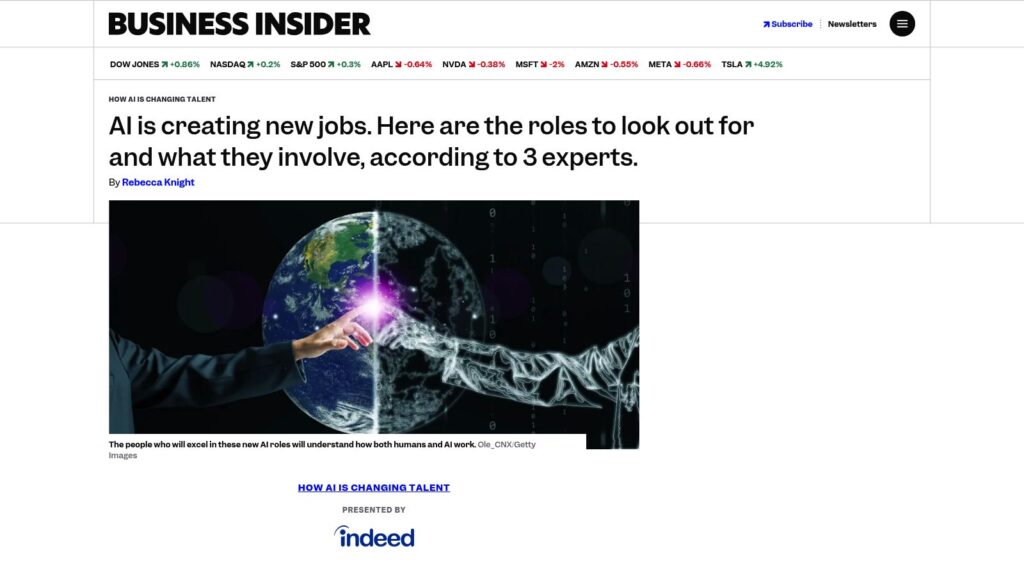
The New Jobs AI Is Creating for the Workforce

AI is creating new jobs like decision designer and AI experience officer that focus on human-AI collaboration, blending technical skills with psychology and ethics. As AI adoption matures, companies are shifting from retrofitting existing roles to creating uniquely AI-focused positions to ensure effective collaboration and ethical implementation, while maintaining human oversight in decision-making processes.

https://www.businessinsider.com/new-jobs-ai-creates-workforce-decision-designer-experience-officer-2025-12

AI And Human Connection Lead Top 5 Work Trends For 2026

Key work trends for 2026 include widespread use of AI-driven skill tests in hiring, more emphasis on in-person workplace connections, and a strong focus on human skills that AI cannot replicate. As technical skill needs grow, companies are investing in internal training and new talent pipelines to address shortages. Employees are placing greater importance on organizational values and leadership integrity, significantly influencing their job choices and commitment.

https://www.forbes.com/sites/drsamanthamadhosingh/2025/11/28/ai-and-human-connection-lead-top-5-work-trends-for-2026/

McKinsey Warns AI and Robots Could Automate 40 Percent of US Jobs by 2030

McKinsey Global Institute warns AI and robotics could automate over 40% of US jobs by 2030, potentially affecting 57% of current work hours. The report emphasizes transformation over job loss, predicting a future where human workers collaborate with AI and robots. Key skills will evolve instead of disappearing, notably increasing demand for AI fluency, which has surged sevenfold recently. Redesigning workflows could unlock an estimated $2.9 trillion in economic value if properly implemented, rather than merely reducing headcount.

https://roboticsandautomationnews.com/2025/11/26/mckinsey-warns-ai-and-robots-could-automate-40-percent-of-us-jobs-by-2030/97003/

The Incredible Shrinking Shelf Life of IT Skills

IT skills’ relevance is declining rapidly due to accelerated technological innovation, necessitating continuous upskilling among IT professionals. The half-life of skills has decreased from decades to as little as two years, with skills like FinOps currently in demand but possibly becoming obsolete as AI advancements take over. Organizations must foster a culture of adaptability and continuous learning to keep pace with changing requirements. Hiring or developing employees with a growth mindset and enabling time for skill development is essential for navigating this skill instability landscape.

https://www.cio.com/article/4093446/the-incredible-shrinking-shelf-life-of-it-skills.html

Will AI Automate Away Your Job?

AI’s potential to automate jobs varies by task complexity; shorter tasks face higher risk. Knowledge workers, especially those in programming, are increasingly vulnerable as AI improves in performing discrete, well-defined functions. Factors influencing automation susceptibility include data availability, employee power, task humanity, trust in human roles, and remote work feasibility. Young job seekers and freelancers are especially at risk. Future work may require rethinking meaning, identity, and economic security in light of automation, prompting calls for policies like AI taxes and maintaining human involvement in significant processes.

https://commonplace.org/2025/03/20/will-ai-automate-away-your-job/

Scroll to Top