trends

Key HR Technology Trends for 2026 — and How to Plan

Agentic AI is transforming HR technology, driving automation and insights. Organizations must align people, data, and technology to leverage AI’s potential, prioritizing strong governance and HR-IT collaboration. By 2028, 33% of enterprise software applications will include agentic AI, highlighting its growing importance in streamlining processes and enhancing decision-making.

https://www.adp.com/spark/articles/2025/12/key-hr-technology-trends-for-2026-and-how-to-plan.aspx

How AI Will Transform the Workplace in 2026

AI will transform workplaces in 2026 through ‘Connected Intelligence,’ integrating people, AI, and data. Key changes include:

  1. Collaboration: Human-to-AI and AI-to-AI interactions will enhance teamwork.
  2. Infrastructure: Networks will evolve to support increased AI traffic and threats.
  3. Simplified IT: AI will streamline network management, enabling focus on strategy.
  4. Customer Experience: AI will redefine interactions between brands and customers, emphasizing hybrid teamwork.
  5. Security & Leadership: Organizations will prioritize trust and adaptive security as they manage human and AI workers.

The future emphasizes collaboration, simplified management, and trust.

https://newsroom.cisco.com/c/r/newsroom/en/us/a/y2025/m12/how-ai-will-transform-the-workplace-in-2026.html

A Humanoid-robot Revolution Is Coming. Don’t Worry — Here’s Why It Will Take a While.

Humanoid robots are poised for a $5 trillion market, but full autonomy is years away due to complexities in development, reliability, and safety. Current sales in the U.S. are expected to remain under 1 million annually until after 2036. While some startups are progressing, challenges include replicating human dexterity and enhancing AI capabilities. Humanoid robots must optimize task efficiency, with early prototypes costing between $5,000 to $30,000, yet practical use remains limited. Overall, the path to widespread deployment is slow and complex.

https://www.marketwatch.com/story/a-humanoid-robot-revolution-is-coming-dont-worry-heres-why-it-will-take-a-while-8e2b1d08

HR in 2026: Three Shifts Already Reshaping the Workplace

HR in 2026 will focus on proactive responses to new employment legislation, AI integration in daily operations, and managing a multi-generational workforce. Anticipation of changes is crucial, shifting from reactive strategies to early engagement with policies and system designs. Emphasizing collaboration across generational strengths is essential for resilience and innovation. Success hinges on preparing for these shifts now rather than later.

https://www.thehrdirector.com/features/hr-in-business/hr-2026-three-shifts-already-reshaping-workplace/

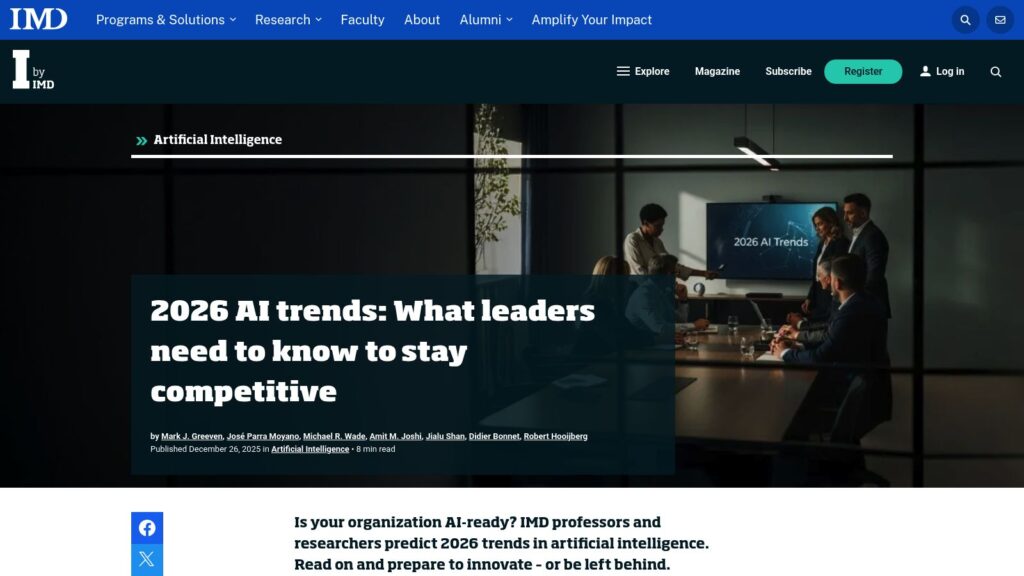
2026 AI Trends

In 2026, organizations will increasingly integrate AI into their business strategies, focusing on how to use AI effectively rather than just deploying it. This will lead to the rise of AI-native departments in HR, procurement, and customer operations, where AI handles routine tasks, and humans focus on higher-value activities. Additionally, there will be a reduction in middle management roles as AI takes over routine tasks, and organizations will prioritize leaders who can effectively manage hybrid teams of humans and AI.

https://www.imd.org/ibyimd/artificial-intelligence/2026-ai-trends-what-leaders-need-to-know-to-stay-competitive/

AI Shifts Expectations for Entry Level Jobs

AI’s rise affects early-career engineers, as entry-level jobs decline due to automation. Predictions show significant job cuts, particularly in programming, while roles like AI engineer are growing. Recent grads must adapt to higher expectations and develop skills in AI usage, as proficiency becomes essential. Employers seek experiential learning over theoretical knowledge, prompting educational shifts towards apprenticeships. Overall, AI augments rather than replaces jobs, requiring a balance of hard skills and critical thinking for success in the evolving job market.

https://spectrum.ieee.org/ai-effect-entry-level-jobs

Artificial Intelligence (AI) and Employment

AI is increasingly present in UK workplaces, affecting job opportunities and conditions. Recent AI advancements include powerful hardware and large language models; however, challenges such as bias and opacity persist. AI adoption varies across sectors, with more uptake in large firms. While AI may threaten specific jobs, it can also create new roles. Concerns about inequality and changing working conditions are noted. The UK government’s focus includes infrastructure, investment, and skill development in response to AI.

https://post.parliament.uk/research-briefings/post-pn-0757/

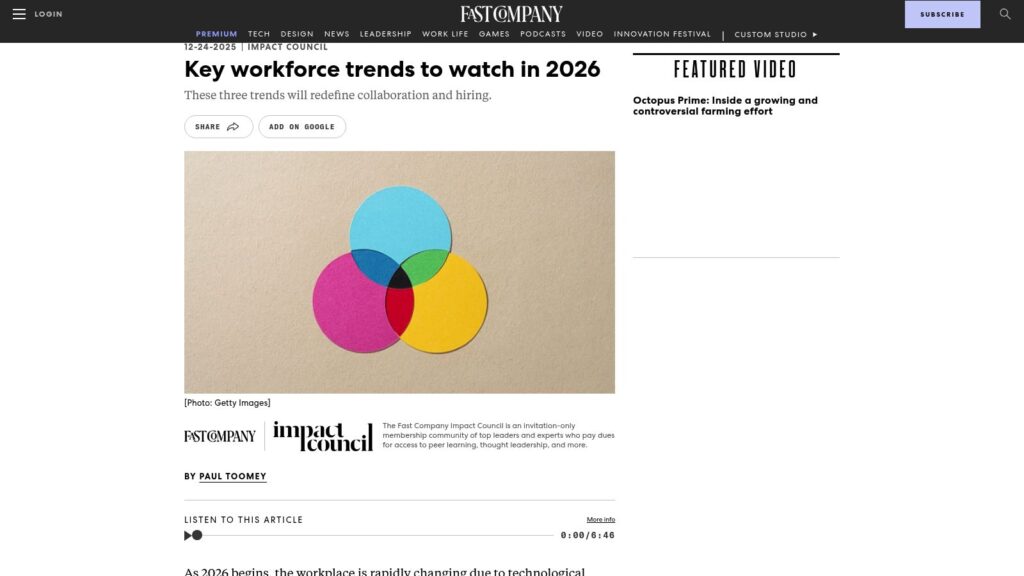
Key Workforce Trends to Watch in 2026

2026 workforce trends: 1) AI adoption enhances job efficiency, reshaping roles rather than replacing jobs. 2) Skills-based hiring is rising due to labor shortages, with a focus on skills over traditional qualifications. 3) Stagnant job market challenges new graduates, especially outside in-demand fields. Adapting to these trends is crucial for attracting talent and fostering productivity.

https://www.fastcompany.com/91466644/key-workforce-trends-to-watch-in-2026

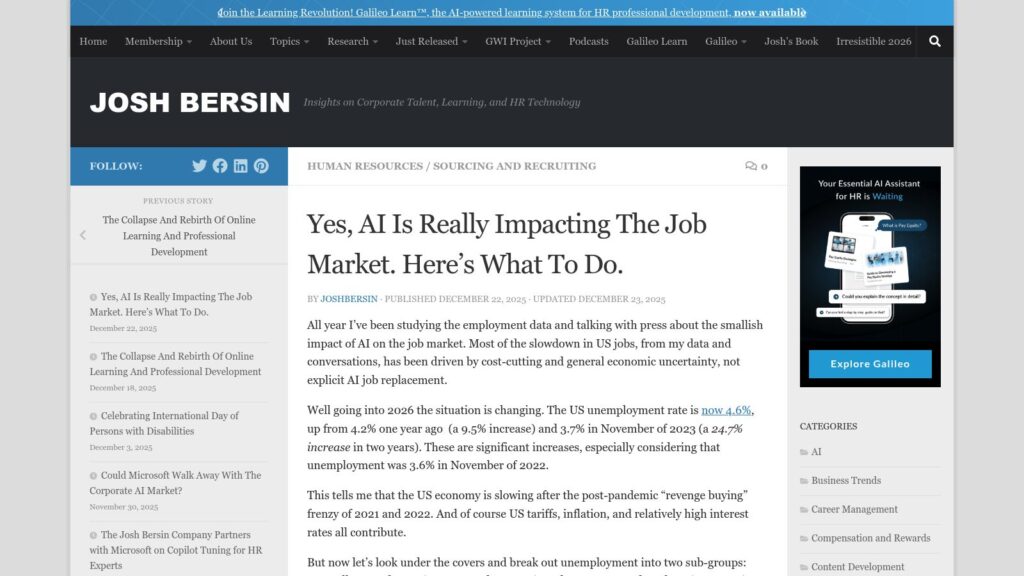
Yes, AI Is Really Impacting The Job Market. Here’s What To Do.

AI’s impact on job market: Unemployment rises (4.6%), especially among new grads (10%). Employers hesitating to hire entry-level, despite young workers being tech-savvy. Essential to support frontline workers; trust in CEOs regarding AI is low (only 27% trusted). Discuss AI openly to mitigate anxiety. Senior workers must adapt; younger employees can rapidly innovate. AI isn’t killing jobs but reshaping them—embracing younger talent may drive productivity.

https://joshbersin.com/2025/12/yes-ai-is-really-impacting-the-job-market-heres-what-to-do/

2026 Labour Market Trends: Hiring Slowdown and AI Disruption

2026 Job Market Trends: Talent market faces challenges due to economic pressures, hiring remains slow with rising unemployment (5.1%). Experts predict continuation of this trend in 2026, driven by increased employment costs and new legislation. Lower-skilled jobs decline, while demand for tech and high-skilled positions remains selective. AI and automation complicate entry for young workers, emphasizing the need for reskilling and adaptability. Top talent competition persists, requiring employers to enhance work-life balance and culture for retention. Focus shifts to developing current workforce over aggressive hiring strategies.

https://www.peoplemanagement.co.uk/article/1943835/2026-labour-market-trends-hiring-slowdown-ai-disruption

How the World of Work Will Change Over the Next 20 Years

The future of work will be significantly shaped by artificial intelligence, impacting performance measurement, workforce demographics, and the role of managers. AI will enable real-time data analysis to optimize workflows and collaboration, while a shrinking workforce will necessitate investments in vocational training and skill-based development. The gig economy will thrive with democratized access to AI, and generalist roles will become more valuable, emphasizing creativity and cross-functional collaboration.

https://www.wsj.com/lifestyle/workplace/future-of-work-978509bf

Beyond the Inflection Point: The New Forces Shaping the Transformation of Work

Rapid workplace changes, influenced by demographic shifts, deglobalization, and AI, necessitate proactive leadership and a reevaluation of skills and employment structures. There’s a significant skills scarcity as multiple generations work, yet roles remain unfilled despite automation. AI transforms job requirements, necessitating continuous reskilling. Entry-level job prospects for Gen Z decline due to automation, economic changes, and an oversupply of graduates, highlighting a mismatch between education and job market demands. Stronger connections between education and the labor market are essential to ensure students are prepared for evolving roles, promoting inclusive growth through proactive leadership and effective policy.

https://www.weforum.org/stories/2025/12/work-transformation-skills-agility-growth/

Scroll to Top