work

AI Is Changing How Work Gets Done. Here’s How CIOs Can Help
AI revolutionizes work by changing roles and responsibilities, prompting CIOs to lead in adapting to this shift. Businesses are investing significantly in AI, necessitating new skills and restructuring for existing roles, such as data scientists and AI engineers. Upskilling and collaboration are vital as organizations navigate this transformation, with emphasis on training to maximize AI’s potential while fostering innovation.

https://www.ciodive.com/news/AI-effect-on-jobs-CIO/810912/

Three Narratives for the Future of Work

TLDR: Future of work narratives include: 1) Mass Displacement – automation outpaces job creation, risking widespread unemployment and social instability; 2) Leap of Consciousness – technological advancement disrupts jobs but creates new roles requiring human skills, hinging on timely workforce reskilling; 3) Managed Deceleration – external factors like regulation slow tech adoption, allowing time for societal adjustment. Key focus: adaptation capacity is vital for navigating these futures.

https://ifforesight.substack.com/p/three-narratives-for-the-future-of

Culture Dissonance and AI Among Top Workplace Challenges in 2026

In 2026, organizations face major challenges like culture dissonance, as companies expect more from employees without equivalent returns, and negative effects from AI adoption. CHROs must prioritize human interactions in recruitment and address mental health issues linked to AI use, while combatting low-quality work production, referred to as “workslop.”

https://www.hrdive.com/news/culture-dissonance-negative-ai-effects-workplace/809768/

AI at Work: Insights From 20 Leading Technology Companies

AI is transforming work, learning, and growth. Companies are adopting AI beyond pilot projects, embedding it into daily operations. A report from the World Economic Forum highlights progress and challenges in over 20 tech firms, noting that AI increases productivity but disrupts mid-level jobs more than entry-level roles. AI enhances efficiency and cultural engagement, but trust and governance are critical for scaling it. Upcoming initiatives aim to create equitable access to AI tools, improve skills, and provide job pathways. Collaborative action across sectors is essential for a prosperous and inclusive AI-driven future.

https://www.weforum.org/stories/2026/01/ai-at-work-insights/

New Skills and AI Are Reshaping the Future of Work

TLDR: AI is transforming jobs, creating demand for new skills while also causing anxiety due to possible job displacement. Current trends show higher wages for roles requiring new skills, but middle-skill positions are threatened. Policymakers must enhance education, foster innovation, and support worker transitions to ensure benefits of AI are widely shared. Countries vary in readiness, with some needing better training and others needing to stimulate demand for available talent. Preparation is crucial for the AI-driven economy.

https://www.imf.org/en/blogs/articles/2026/01/14/new-skills-and-ai-are-reshaping-the-future-of-work

AI Has Changed “the System in Which Work Happens” so the Workplace “Operating Model Has to Change With It”: Bloor Research

AI has transformed the workplace, requiring a new operating model according to Bloor Research. This model integrates human and digital labor, moving away from traditional human-only frameworks. Organizations must adapt design approaches to accommodate AI’s role and redesign workforce structures to enhance resilience and effectiveness, shifting focus from time-based roles to outcome-based strategies. Prioritizing collaboration across departments is essential for successful implementation.

https://www.unleash.ai/artificial-intelligence/ai-has-changed-the-system-in-which-work-happens-so-the-workplace-operating-model-has-to-change-with-it-bloor-research/

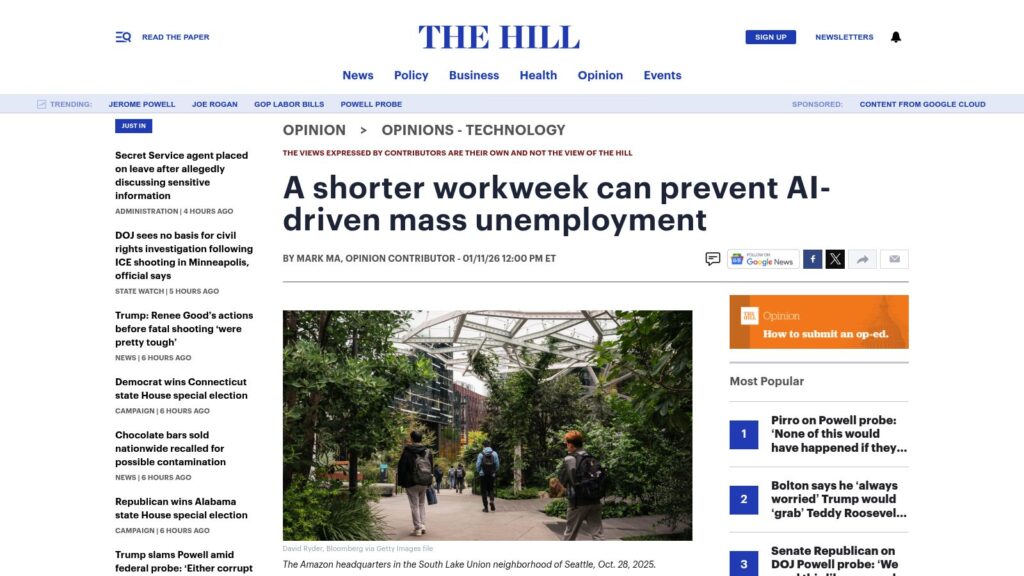
A Shorter Workweek Can Prevent AI-driven Mass Unemployment

AI-driven layoffs are increasing as firms pursue short-term profits without planning for a sustainable future, risking mass unemployment. To address this, a shorter workweek could balance labor supply and demand, maintaining employment and economic stability. Public policy is essential to implement gradual reductions in work hours, ensuring workers benefit from technological advancements without sacrificing job security.

https://thehill.com/opinion/technology/5681660-shorter-workweek-ai-economy/

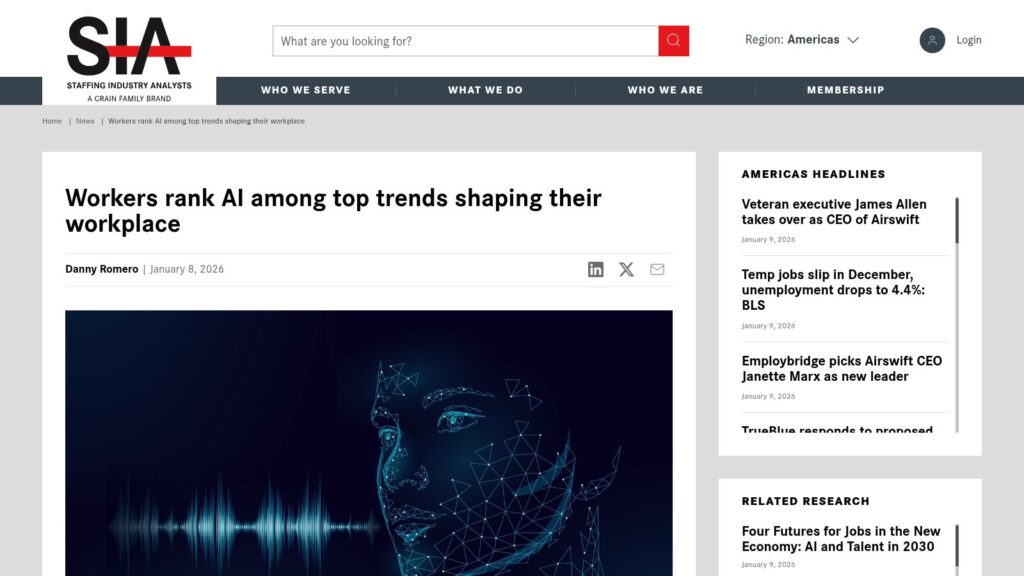
Workers Rank AI Among Top Trends Shaping Their Workplace

Workers rank AI and generative AI as top workplace trends, with AI as the leading concern. According to The Adecco Group’s report, based on 37,500 workers and 2,000 executives, salary and work-life balance are primary reasons for job retention. AI training struggles persist, as many feel undertrained. The report emphasizes the demand for stability and growth opportunities in employment.

https://www.staffingindustry.com/news/global-daily-news/workers-rank-ai-among-top-trends-shaping-their-workplace

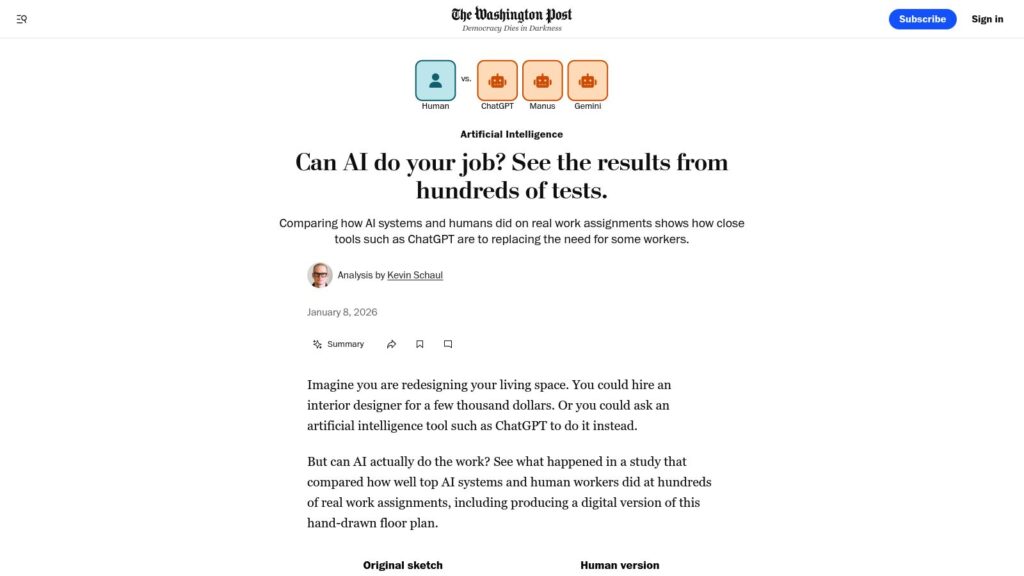
Can AI Do Your Job? See the Results From Hundreds of Tests.

A study comparing AI systems and human workers on real tasks shows AI is far from replacing jobs. Despite impressive capabilities, the best AI only completed 2.5% of projects successfully, failing mostly due to lack of long-term memory and poor visual understanding. AI produced subpar work for projects like floor plans and dashboards, highlighting its limitations. Although AI may reduce dependence on human workers, the study suggests it won’t fully automate jobs soon.

https://www.washingtonpost.com/technology/interactive/2026/ai-jobs-automation/

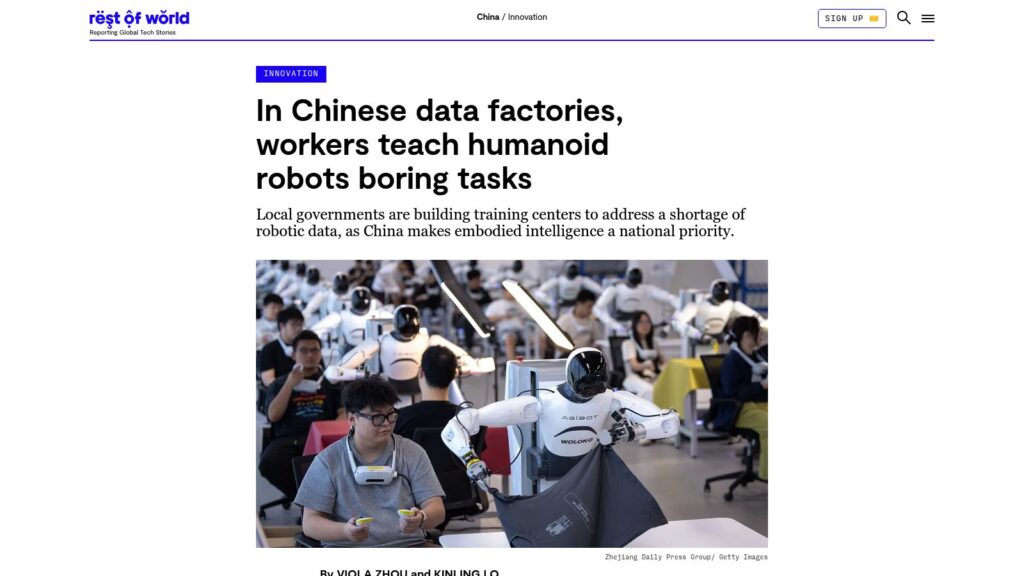
In Chinese Data Factories, Workers Teach Humanoid Robots Boring Tasks

China’s local governments are funding over 40 training centers to address a robotic data shortage, training humanoid robots through repetitive human actions like folding clothes. This initiative supports China’s push for advanced robotics, framed as essential for productivity and technological supremacy. The government emphasizes embodied intelligence, leading to a race among firms to develop humanoid robots. Challenges include costly data collection methods and concerns over potential industry overcapacity. Despite skepticism about training efficiency, the facilities aim to provide standardized data, aiding smaller firms and bolstering China’s competitive edge in robotics.

https://restofworld.org/2026/china-robots-training-centers-workers/

AI and the Human Condition

The rise of AI presents a paradox for content producers: while AI offers endless topics to cover, it also competes as a content producer itself. However, the author remains optimistic about the future of content creation, believing that AI’s individualized nature will drive people towards communal experiences centered around human-created content. This optimism extends to the belief that humans will continue to value human interaction and creativity, even in a world dominated by AI.

https://stratechery.com/2026/ai-and-the-human-condition/

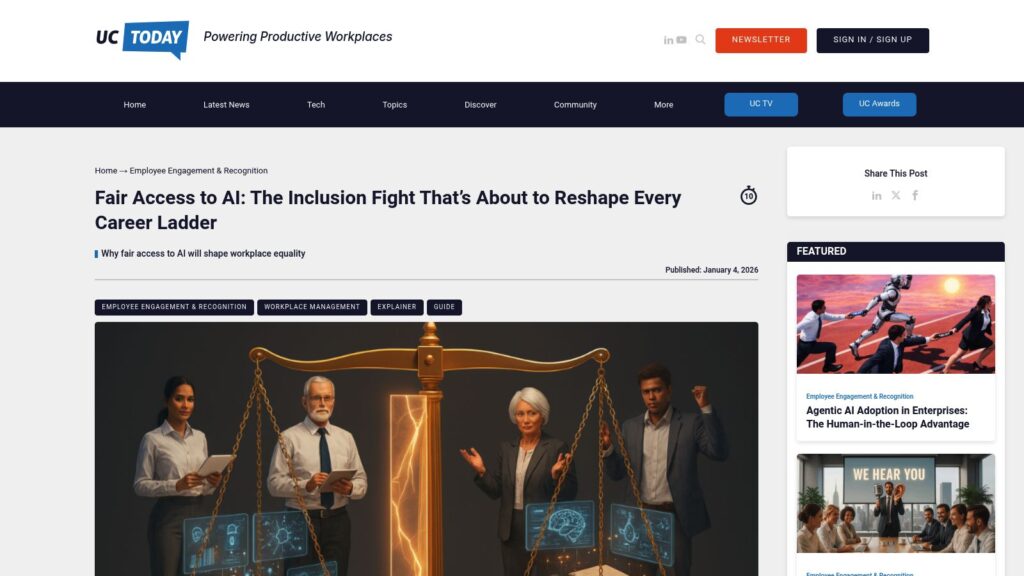
Fair Access to AI: The Inclusion Fight That’s About to Reshape Every Career Ladder

TLDR: Access to AI is uneven in workplaces, creating inequality that affects promotions and opportunities. High earners typically receive AI tools and training first, while lower-paid and frontline workers lag behind. This inequity hinders career mobility, employee trust, and engagement, prompting some to resort to unapproved “shadow AI” tools. Organizations must prioritize fair access to AI by ensuring inclusive rollouts, structured training, and transparency to prevent exacerbating existing inequalities and fostering a two-tier workplace.

https://www.uctoday.com/workplace-management/fair-access-to-ai/

Worried About AI Taking Your Job? Experts Say That’s Only Half the Story

AI is rapidly transforming the job market in Australia, creating both anxiety about job losses and potential opportunities. Experts note that while some roles may be automated, particularly in clerical and entry-level positions, others could emerge or expand. Research indicates an increase in entry-level jobs amidst AI integration. Predicting future impacts is complex, but a shift is expected toward industries where human skills are still essential. Workers who adapt and learn to utilize AI effectively may find themselves in higher demand, while those resistant to change may struggle. The government’s National AI Plan seeks to ensure a balanced approach to AI development, promoting growth without compromising job security.

https://www.sbs.com.au/news/article/australians-are-worried-about-losing-their-job-to-ai-heres-whats-really-happening/9n1syo7k7

Scroll to Top