The AI-Ready CPO: Leading Transformation With Trust, Empathy, and Agility

AI transforming HR, CPOs orchestrate human-digital workforce; focus on trust, empathy, and agility. Key imperatives: digital integration, workforce evolution, cultural change, and ethical governance. Challenges include data privacy, transparency, and change management. Emphasize human value alongside efficiency.

https://www.egonzehnder.com/functions/human-resources/insights/the-ai-ready-chief-people-officer-leading-transformation-with-trust-empathy-and-agility

Robots Expected to Become ‘allies’ in Closing Labour Gaps

Robots are increasingly seen as allies in workplaces, aiding in closing labor gaps and enhancing efficiency, as per the International Federation of Robotics. This shift is prompted by heightened demands for skilled labor and the desire to alleviate employee workloads. The global market for industrial robots is soaring, reflecting widespread adoption. However, concerns persist regarding potential job displacement. Successful integration of robotics hinges on collaboration between employers and employees.

https://www.hcamag.com/us/specialization/hr-technology/robots-expected-to-become-allies-in-closing-labour-gaps/561837

McKinsey Starts Testing Job Candidates With AI Assistant

McKinsey is testing a new hiring method where candidates use the firm’s AI assistant, Lilli, during interviews. This pilot program evaluates candidates on their ability to engage with the AI while analyzing cases, aiming to reflect future consulting practices. If successful, this approach may standardize AI use in recruitment.

https://www.cio.com/article/4117688/mckinsey-begins-testing-candidates-with-an-ai-assistant.html

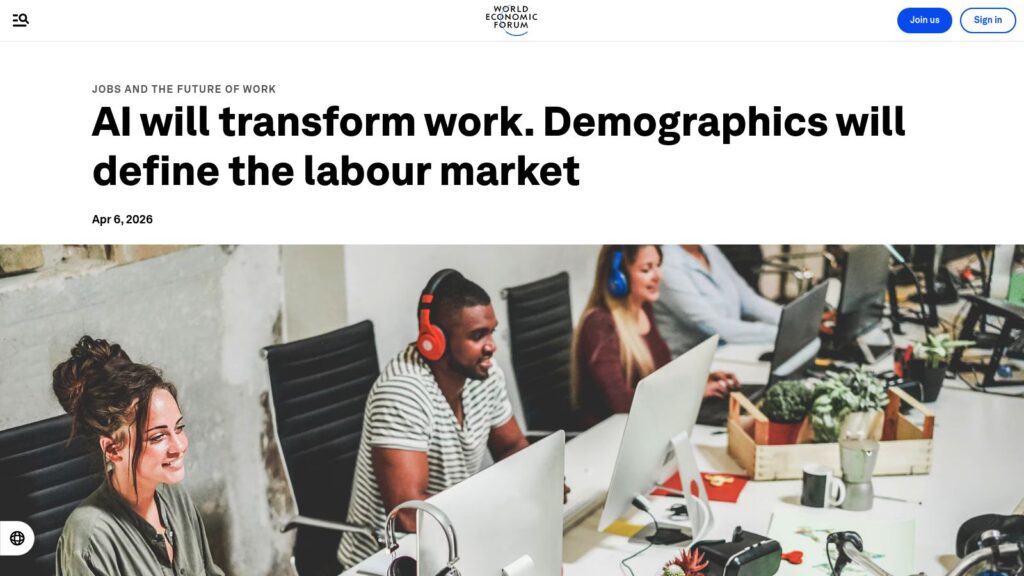
AI at Work: Insights From 20 Leading Technology Companies

AI is transforming work, learning, and growth. Companies are adopting AI beyond pilot projects, embedding it into daily operations. A report from the World Economic Forum highlights progress and challenges in over 20 tech firms, noting that AI increases productivity but disrupts mid-level jobs more than entry-level roles. AI enhances efficiency and cultural engagement, but trust and governance are critical for scaling it. Upcoming initiatives aim to create equitable access to AI tools, improve skills, and provide job pathways. Collaborative action across sectors is essential for a prosperous and inclusive AI-driven future.

https://www.weforum.org/stories/2026/01/ai-at-work-insights/

Cisco’s Journey in AI Workforce Transformation

Cisco invests in AI tools to enhance employee engagement, retention, and productivity. Key findings show AI boosts engagement and performance, promotes faster career growth, and is adopted more effectively with leadership support. Employees learn AI primarily through practical experience. Cisco’s culture encourages optimism about AI, making it integral to work processes and employee development. Overall, AI is transforming Cisco’s workforce positively.

https://blogs.cisco.com/news/ciscos-journey-in-ai-workforce-transformation

The Cybersecurity Paradox: Training the Next-gen Workforce

Cybersecurity now centers on securing human-AI interactions as AI becomes integral to workplaces. Workforce Trust Management is essential to address vulnerabilities from AI adoption, which brings both benefits and threats. Four pillars of security—Reliability, Accountability, Transparency, and Ethical Alignment—are crucial. Organizations must foster employee AI literacy and develop rapid response protocols to safeguard against potential breaches, ensuring a strong cybersecurity foundation while embracing AI’s potential.

https://www.weforum.org/stories/2026/01/cybersecurity-paradox-training-the-next-generation-workforce/

8 CIO Recommendations for ERP Implementation in 2026

Agentic AI is transforming ERP systems, enabling proactive, end-to-end business process management across finance, supply chain, manufacturing, HR, and customer service. CIOs should develop a clear business plan for agentic AI adoption, engage with ERP vendors, and establish frameworks for human-AI collaboration, risk mitigation, and governance. The focus should be on balancing incremental process optimization with transformative business reinvention, leveraging mature data and process foundations for a broader approach.

https://www.informationweek.com/software-platforms/8-cio-recommendations-for-erp-implementation-in-2026-think-agentic

New Skills and AI Are Reshaping the Future of Work

TLDR: AI is transforming jobs, creating demand for new skills while also causing anxiety due to possible job displacement. Current trends show higher wages for roles requiring new skills, but middle-skill positions are threatened. Policymakers must enhance education, foster innovation, and support worker transitions to ensure benefits of AI are widely shared. Countries vary in readiness, with some needing better training and others needing to stimulate demand for available talent. Preparation is crucial for the AI-driven economy.

https://www.imf.org/en/blogs/articles/2026/01/14/new-skills-and-ai-are-reshaping-the-future-of-work

Forrester: Businesses Are ‘AI-washing’ Layoffs

Forrester reports that AI may replace 6% of U.S. jobs over the next four years, with 10.4 million jobs at risk by 2030. Companies could misuse AI advancements to justify layoffs under financial pretenses. While fears of massive job losses persist, productivity improvements from AI have been minimal. Organizations should prioritize governance and see AI as a tool to enhance human work, not replace it.

https://www.channeldive.com/news/forrester-businesses-ai-washing-layoffs-job-loss/809417/

The Economics of Skills: AI, Human Augmentation, and the Future Workforce

TLDR: HR faces challenges from digital transformation, requiring skills orchestration over cost. Talent is shifting from Global North to decentralized hubs in the South/East. Effective Digital Capacity (EDC) metrics are essential as 40% of tech skills will be obsolete by 2027. Emerging Tier-2 cities increase competitiveness, while talent gaps grow, particularly in cybersecurity. AI transforms job roles, fostering human-machine collaboration. Companies must adapt from wage models to skill-based compensation and move towards a polycentric talent strategy to remain relevant by 2030.

https://draup.com/talent/data-books/economics-of-skills-ai-augmentation

AI Has Changed “the System in Which Work Happens” so the Workplace “Operating Model Has to Change With It”: Bloor Research

AI has transformed the workplace, requiring a new operating model according to Bloor Research. This model integrates human and digital labor, moving away from traditional human-only frameworks. Organizations must adapt design approaches to accommodate AI’s role and redesign workforce structures to enhance resilience and effectiveness, shifting focus from time-based roles to outcome-based strategies. Prioritizing collaboration across departments is essential for successful implementation.

https://www.unleash.ai/artificial-intelligence/ai-has-changed-the-system-in-which-work-happens-so-the-workplace-operating-model-has-to-change-with-it-bloor-research/

AI Workforce Strategy: From Planning to Real Value

AI workforce strategies often stall despite having the right technology due to organizational readiness, governance, and skills gaps. Success relies on integrating AI literacy among staff, effective governance, and robust data practices. Business leaders must align AI initiatives with measurable outcomes, while security teams ensure safe AI use. A people-first approach prioritizes training over technology, enabling organizations to turn AI from experimental to practical use.

https://www.comptia.org/en-eu/blog/ai-workforce-strategy-from-planning-to-real-value/

7 Challenges IT Leaders Will Face in 2026

Challenges for CIOs in 2026 include talent shortages, AI integration, governance, cybersecurity threats, and balancing costs while ensuring agile operations. Key strategies involve investing in training, fostering a culture of continuous learning, aligning technology with business objectives, and implementing robust governance frameworks for AI.

https://www.cio.com/article/4114004/7-challenges-it-leaders-will-face-in-2026.html

The Hiring Blind Spot: From Gut Instinct to Evidence in Skills-led Hiring

Shift hiring from resumes and gut instincts to evidence-based strategies using AI insights for real skills and potential. Traditional frameworks fail as they prioritize past experience over adaptability; a new mindset focused on measurable skills is essential. Align hiring practices with actual business needs, ensure fair AI assessments, and foster diversity by evaluating values and motivations. CHROs must adopt this dynamic approach to close skill gaps and meet future talent demands.

https://sea.peoplemattersglobal.com/article/ai-and-emerging-tech/the-hiring-blind-spot-from-gut-instinct-to-evidence-in-skills-led-hiring-47984

Scroll to Top