Who Uses AI in Europe

EU invests in AI adoption, but usage remains uneven. 64% of Europeans see AI literacy as crucial by 2030. AI use has increased 12.3% since 2021, with 32.7% of Europeans using AI tools. Adoption varies by country, with generative AI in education low at 9.8%. Denmark leads in AI business adoption (42.03%), while Hungary lags behind (1.31%). The EU should focus on sector-specific AI deployment and measurable KPIs for effective support.

https://eutechloop.com/who-uses-ai-in-europe-and-where-its-still-taboo/

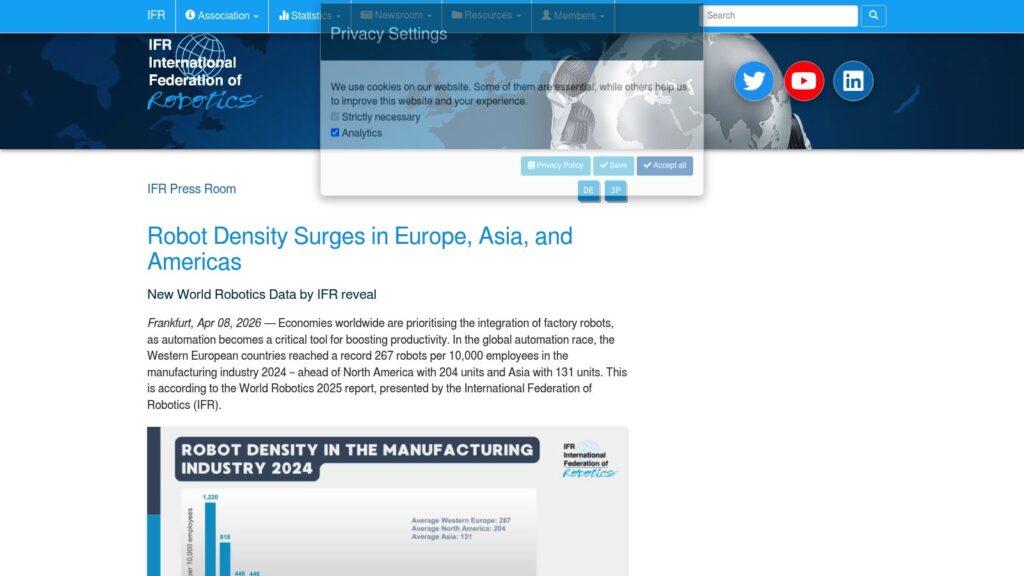
Hyundai Labor Union Warns Humanoids Could Trigger Major Job Losses

Hyundai’s labor union opposes deploying humanoid robots in factories without a formal agreement to ensure job security. The plan follows Hyundai’s intention to introduce Atlas robots and expand production capabilities by 2028, raising concerns about potential job losses and profit motives behind automation. The union demands management agreement before any robot deployment, emphasizing the threat of an “employment shock.”

https://interestingengineering.com/ai-robotics/hyundai-humanoids-not-allowed-without-agreement

Frequent Use of AI in the Workplace Continued to Rise in Q4

AI workplace use rose gradually in Q4 2025; daily use increased from 10% to 12%, with 26% using it frequently. Total users remained flat, with 49% never using AI. Adoption varies by industry and role; highest in tech and finance, lowest in retail and manufacturing. Leaders use AI more than others (69% vs. 40%). AI growth concentrated in remote-capable roles. Overall, leaders reported higher AI use than other employees, necessitating clear applications for effective integration.

https://www.gallup.com/workplace/701195/frequent-workplace-continued-rise.aspx

The Real Economics of AI and Jobs

AI is transforming the job market, altering skill needs and wages globally. While predictions about its impact vary, the World Economic Forum anticipates job creation will surpass losses in the near term. The integration of AI may proceed rapidly, potentially displacing many workers but also creating new job opportunities. Success will depend on understanding technology, policy, and education, emphasizing lifelong learning and adaptation. Demographics and geoeconomic shifts will also play significant roles in shaping future labor markets. Policymakers must consider these factors to create effective talent strategies for diverse economies.

https://time.com/7357476/economics-of-ai-and-jobs/

‘Jobs, Jobs, Jobs’ the AI Mantra in Davos as Fears Take Back Seat

Davos 2026 saw business leaders optimistic about AI creating new jobs despite fears of job losses and industry disruptions. Executives highlighted AI’s potential to improve productivity and efficiency, with some expressing concern that it might be used to justify layoffs. While tech giants viewed AI as a means for job growth in sectors like energy and infrastructure, union leaders warned of its threat to workers. Bill Gates emphasized the need for society to adapt to AI’s impact, suggesting solutions like taxing AI activities to assist displaced workers.

https://www.reuters.com/business/davos/jobs-jobs-jobs-ai-mantra-fears-take-back-seat-davos-2026-01-23/

1 in 5 Workers See No AI Impact on Their Jobs

1 in 5 workers see no AI effect on jobs, despite rapid AI integration in hiring. 47% fear AI benefits companies more. Job postings requiring AI skills rose by 1,587%. 65% feel the need to upskill; 52% seek ways to enhance skills. Traditional career paths are viewed as outdated; only 41% want them. 40% work second jobs due to costs, with work-life balance prioritized over pay. Trust in leadership decreased from 77% to 72%, notably among Gen Z. Manager-employee relationships improved, while soft skills are learned from older workers and tech skills from younger ones.

https://www.staffingindustry.com/news/global-daily-news/1-in-5-workers-see-no-ai-impact-on-their-jobs

AI Literacy Training: From Best Practice to Legal Requirement Under the New EU AI Act

EU AI Act mandates AI literacy training, evolving from best practice to legal obligation. Effective Feb 2026, compliance is essential for all organizations deploying AI affecting people in the EU. Training must cover AI fundamentals, legal requirements, and practical applications while addressing ethics. Ongoing, structured education is crucial for maintaining compliance and adapting to evolving regulations globally.

https://blog.knowbe4.com/ai-literacy-training-from-best-practice-to-legal-requirement-under-the-new-eu-ai-act

Invest in the Workforce for the AI Age: a Blueprint for Scale, Skills and Responsible Growth

Investing in workforce skills is crucial in the AI era for maximizing value creation. Successful transformation requires alignment of workforce, operating models, and governance to drive business outcomes. A new social contract for learning is essential, where organizations offer clear skills pathways and support continuous learning. Roles must evolve, emphasizing human judgment over repetitive tasks. Companies should adopt disciplined AI missions, focus on collaborative ecosystems, and ensure responsible AI deployment to foster trust and inclusivity. Leaders must integrate strategy with skills development to achieve sustainable growth and productivity.

https://www.weforum.org/stories/2026/01/ai-roadmap-transforming/

Young Workers Most Worried About AI Affecting Jobs, Randstad Survey Shows

Young workers fear AI’s job impact, per Randstad survey. 80% believe AI will affect work, especially Gen Z. Job postings needing “AI skills” rose 1,587%. Nearly half of workers worry AI benefits companies over employees. 95% of employers expect growth, only 51% of workers share this optimism.

https://www.reuters.com/technology/young-workers-most-worried-about-ai-affecting-jobs-randstad-survey-shows-2026-01-19/

Citi Has Quietly Built a 4,000-person Internal AI Workforce

Citi has launched an AI Champions and Accelerators program, recruiting 4,000 volunteers to help colleagues understand and utilize AI tools. The initiative emphasizes a peer-to-peer approach to enhance AI adoption across the bank, with participants dedicating 3-5 hours weekly. The program, which began in 2024, supports ongoing training and feedback on AI tools, fostering engagement and collaboration within the workforce. CEO Jane Fraser encourages a confident, AI-savvy workforce to shape future operations and productivity.

https://www.businessinsider.com/citi-bank-ai-accelerators-volunteers-2025-12

AI Is Becoming Your New Work Colleague. But Let’s Not Forget Your Human Ones

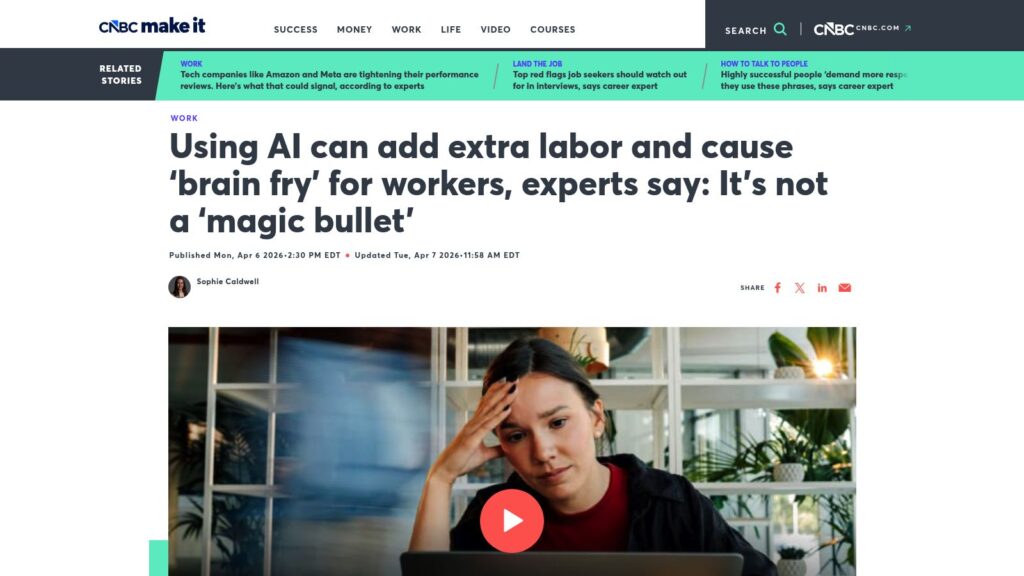
AI is becoming integral to workplaces, enhancing productivity and collaboration. However, concerns arise over diminished human connection and perceived productivity. Companies must balance AI integration with human engagement, prioritizing ethical use and continuous learning. Emphasizing connection opportunities and redefining performance recognition is essential for fostering a harmonious human-AI work environment. Keeping people at the center is crucial to ensure a future where AI empowers rather than isolates workers.

https://www.weforum.org/stories/2026/01/ai-agentic-workplace-human-resources/

AI Is Turning Side Hustles Into Second Careers — And Exposing a Policy Vacuum At Work

AI enables employees to pursue side hustles, transforming them into second careers while still working full-time. This trend challenges traditional job loyalty and requires companies to rethink engagement policies as more workers seek autonomy and diverse income streams. Organizations must adapt to this reality to avoid alienating talent and recognize the potential benefits of side hustles, which can enhance skills and innovation.

https://allwork.space/2026/01/ai-is-turning-side-hustles-into-second-careers-and-exposing-a-policy-vacuum-at-work/

Robots Are the Future of Manufacturing. What Happens to Human Workers?

China invests heavily in humanoid robots for manufacturing, compensating for a declining workforce. This shift raises concerns over job displacement, global economic impact, and potential social security challenges. Automation may lead to mass unemployment and require new economic models, including universal basic income. As robots evolve, they could drastically reduce production costs and change labor dynamics.

https://san.com/cc/robots-are-the-future-of-manufacturing-what-happens-to-human-workers/

Redefining Talent Through human-AI Integration

The rise of AI and automation threatens traditional entry-level roles, which are crucial for developing leadership skills. Organizations must intentionally redesign early-career work to preserve and accelerate human capability development, integrating AI literacy with leadership fundamentals and creating opportunities for critical thinking and co-responsibility in AI system improvement.

https://www.ey.com/en_gl/megatrends/why-shared-intelligence-will-redefine-talent

Human Behaviour and Workforce Adoption Will Determine the Value From AI

AI’s value hinges on human adoption and workforce readiness, not just technology. Organizations must shift to skills-based structures and continuous learning to boost productivity. Demographic challenges necessitate tech adoption, especially AI, to sustain economic growth. Work organization is evolving to focus on skills and flexibility, driven by automation and employee expectations for adaptability. Despite increased AI use, workforce confidence remains low, indicating that organizational readiness is key for maximizing outcomes. Continuous retooling and learning are critical in a volatile landscape. Ultimately, the synergy between human capabilities and AI defines future success.

https://www.weforum.org/stories/2026/01/human-behaviour-workforce-adoption-value-derived-from-ai/

Scroll to Top