The State of the 2025 Cyber Workforce: Skills Gaps, AI Opportunity and Economic Strain
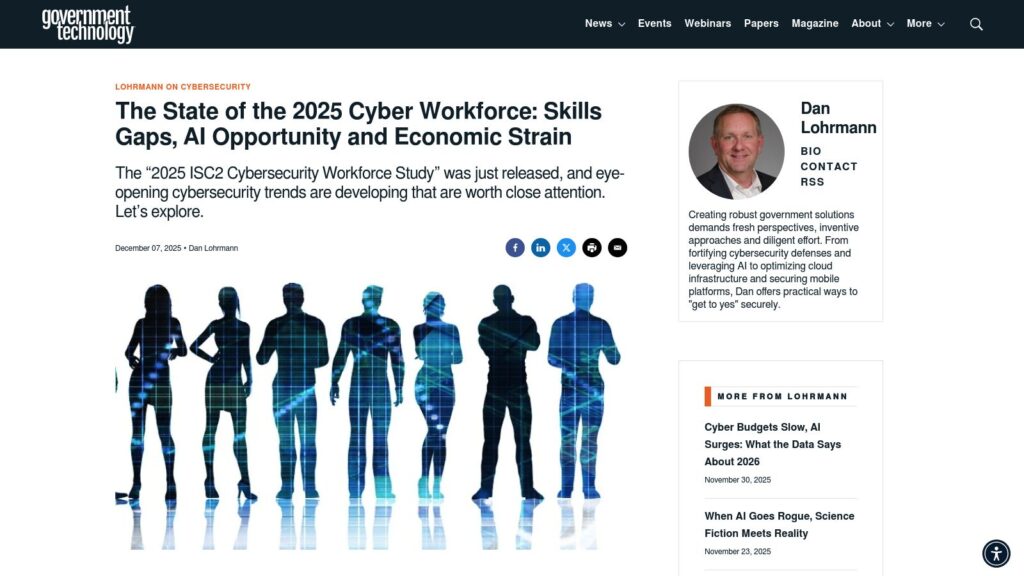
TLDR: The 2025 ISC2 Cybersecurity Workforce Study highlights key trends: budget cuts and hiring freezes increase security risks; skills deficits challenge resilience; AI’s growth creates new job opportunities; job satisfaction remains high despite organizational issues. Investing in workforce skills is crucial for cybersecurity strength.
https://www.govtech.com/blogs/lohrmann-on-cybersecurity/the-state-of-the-2025-cyber-workforce-skills-gaps-ai-opportunity-and-economic-strain

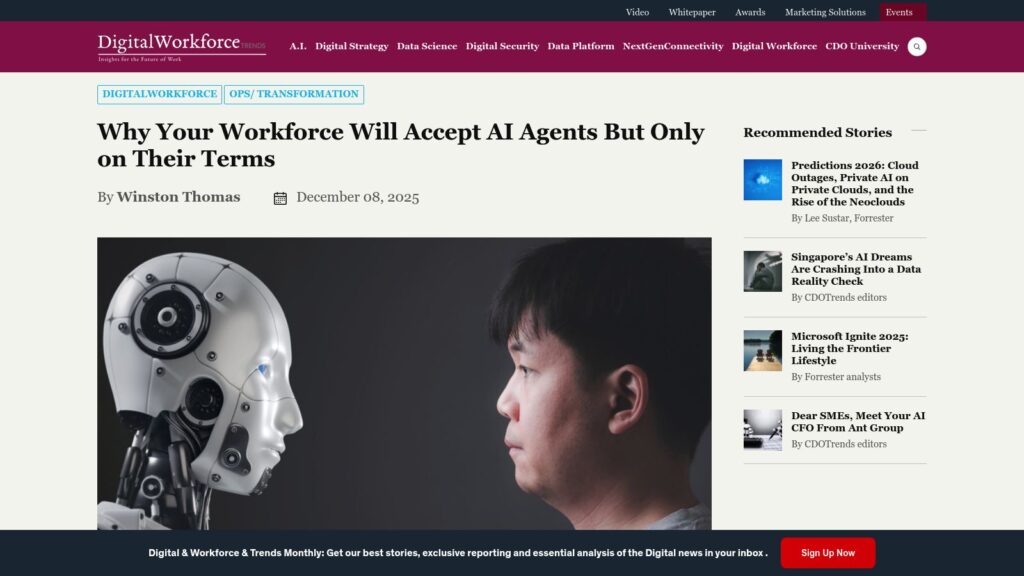
Why Your Workforce Will Accept AI Agents But Only on Their Terms

AI agents are viewed as digital employees that enhance human capabilities, yet 75% prefer not to be managed by them. Concerns include ethics, compliance, and agent sprawl in Singapore’s corporate landscape. Trust in AI varies by context—highest for skill development, lowest for financial management. Successful integration requires HR leadership, centralized data, and cultural shifts to maintain employee trust. The future involves collaboration, leveraging AI for data analysis while preserving human decision-making in sensitive areas.

https://www.cdotrends.com/story/4819/why-your-workforce-will-accept-ai-agents-only-their-terms

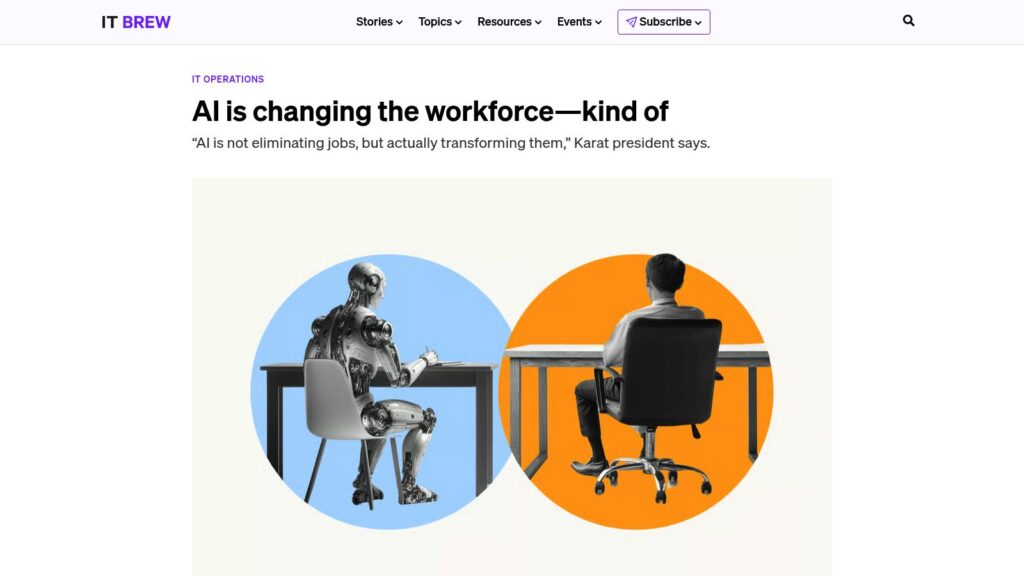
AI Is Changing the Workforce—kind Of

AI is transforming jobs rather than eliminating them, according to a Karat survey of tech executives. AI improves productivity, notably in coding, with a 34% productivity increase among top engineers. While junior and senior engineers excel using AI, mid-level engineers are lagging. AI literacy is now essential across various business roles. Despite mixed investment experiences, 85% of tech leaders expect continued hiring in software development due to AI’s influence.

https://www.itbrew.com/stories/2025/12/04/ai-is-changing-the-workforce-kind-of

AI Hasn’t Lived Up to the Hype — but Companies Aren’t Giving Up

AI adoption in HR is lagging; only 17% report success, with compliance and value concerns hindering progress. Many organizations lack AI in core HR systems, despite a push for AI integration. Leadership needs to bridge the gap between expectations and reality through intentional change management and effective governance. Success requires measurable outcomes, cross-functional collaboration, and a culture of transparency and support for employee upskilling.

https://www.shrm.org/topics-tools/news/hr-trends/ai-hype

The Junior Hiring Crisis

TLDR: AI adoption is reducing junior hiring by 13%, leading to increased unemployment for early-career individuals while senior roles remain stable. Universities report students struggling to find jobs and stressed about networking. Rather than relying on traditional mentoring, students should build relational intelligence by identifying key professional connections and practicing relationship-building skills. This proactive approach can help bridge the gap caused by the apprenticeship breakdown and prepare them for the job market amidst systemic industry challenges.

https://people-work.io/blog/junior-hiring-crisis/

Tutor Intelligence: MIT Spinoff Raises $34 Million Series a To Scale AI-Powered Warehouse Robot Workforce

MIT spinoff Tutor Intelligence raised $34 million Series A, totaling $42 million funding, to scale AI-powered warehouse robots. Led by Union Square Ventures, funding will enhance robot commercialization, CPG fleet expansion, and central intelligence platform development. Tutor robots can adapt and perform in real-world environments, using real-time data to improve functionality. Their Robot-as-a-Service model offers high-reliability automation with minimal upkeep.

https://pulse2.com/tutor-intelligence-34-million-series-a/

Yomiuri: Human-Like Robot Development Advances, Expected to Fill Gaps in Workforce

Humanoid robot development is progressing to address labor shortages in developed nations. Kawasaki Heavy Industries revealed its “RHP Kaleido” robot, featuring improved stability and remote operation, at an exhibition in Tokyo. Demand for humanoid robots is expected to soar, with forecasts suggesting global shipments will increase 100-fold by 2035. Japanese companies, like Waseda University and Yamazen Corp., are pursuing domestic production and practical applications in various industries, despite challenges like high manufacturing costs.

https://www.marketwatch.com/story/yomiuri-human-like-robot-development-advances-expected-to-fill-gaps-in-workforce-936e4905?mod=asia-markets

Superagency in the Workplace: Empowering People to Unlock AI’s Full Potential

Superagency Report Summary: AI in the Workplace – January 2025

AI is poised to transform workplaces significantly, yet only 1% of companies view their AI integration as mature. Employees are eager and ready for AI adoption, but leadership hesitancy is the main barrier. There’s potential for $4.4 trillion in productivity growth if AI is effectively harnessed. Most organizations plan to increase AI investments, but leaders must make bold moves to foster maturity. Employees already actively use AI and expect it to impact their roles significantly. The report emphasizes that the challenge lies not in the technology but in aligning leadership and shaping workplace culture to embrace AI effectively.

https://www.mckinsey.com/capabilities/tech-and-ai/our-insights/superagency-in-the-workplace-empowering-people-to-unlock-ais-full-potential-at-work

Anthropic Turns Inward to Show How AI Affects Its Own Workforce

Anthropic examined how its AI tool, Claude, affects its own workforce by surveying employees and analyzing internal data. The findings show that AI significantly changes developers’ jobs, making them more productive and allowing for faster learning, but also raising concerns about loss of technical skills, reduced collaboration, and possible job risks. Although AI can free workers to do new tasks, some spend longer on tasks due to the need for debugging and understanding AI output. Notably, overall efficiency doesn’t always improve, and thoughtful measurement of real workplace impact is essential rather than relying on time-based metrics alone.

https://www.inc.com/kit-eaton/anthropic-turns-inward-to-show-how-ai-affects-its-own-workforce/91273789

North Korea Lures Engineers to Rent Identities in Fake IT Worker Scheme

North Korea’s Famous Chollima recruiting group is targeting developers to rent their identities for illicit activities, using deception such as deep fake videos and AI. They trick real engineers into acting as fronts for remote interviews with Fortune 500 companies, offering financial compensation. Researchers documented these tactics, revealing the use of AI tools to automate job applications and capture private information. The operation highlights the risks for compromised engineers, who bear the consequences of any wrongdoing while posing as legitimate candidates.

https://www.bleepingcomputer.com/news/security/north-korea-lures-engineers-to-rent-identities-in-fake-it-worker-scheme/

How to Build Forward-thinking Cybersecurity Teams for Tomorrow

Microsoft’s security strategy emphasizes the need for adaptive, innovative teams in the evolving landscape of AI-powered cyber threats. Traditional cybersecurity roles must evolve beyond technical expertise to include critical thinking and diverse skill sets. Organizations should rethink recruitment practices, onboarding processes, and continuous training to build resilient teams equipped to tackle sophisticated threats. Emphasizing cognitive diversity and collaboration will enhance defenses against AI-driven attacks, as the next major cyber breach could stem from inadequate talent adaptation to this new era. Future-proofing cybersecurity talent is crucial for organizational success.

https://www.microsoft.com/en-us/security/blog/2025/12/02/how-to-build-forward-thinking-cybersecurity-teams-for-tomorrow/

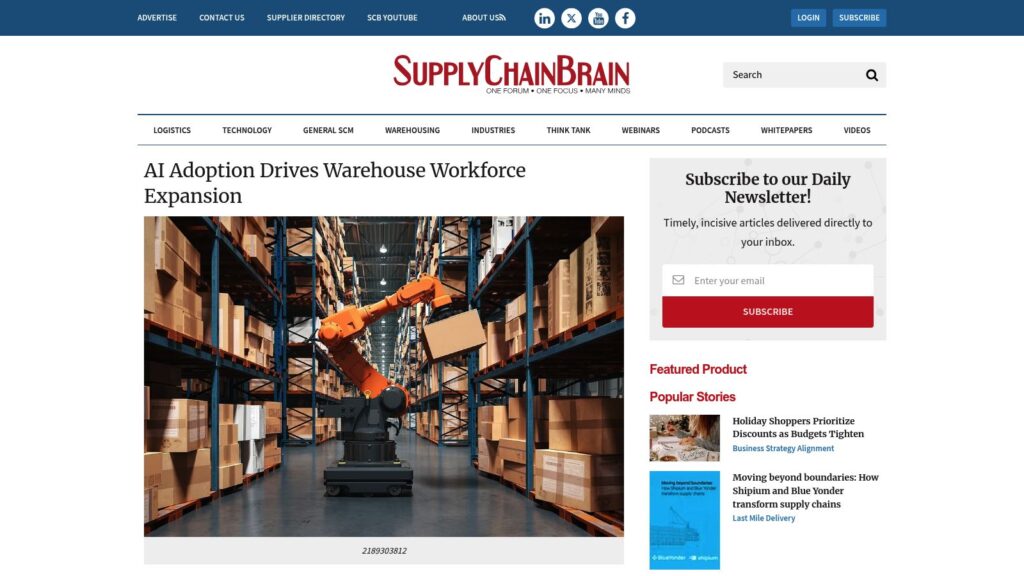
AI Adoption Drives Warehouse Workforce Expansion

AI adoption in logistics boosts warehouse workforce and productivity, report by Mecalux and MIT reveals. Over 50% of logistics leaders expanded workforce, with AI seen as a core productivity driver. 90% utilize AI, allocating 11%-30% of tech budgets, planning increases. Challenges include expertise and costs, but benefits include faster, smoother operations with a payback period of 2-3 years.

https://www.supplychainbrain.com/articles/42919-ai-adoption-drives-warehouse-workforce-expansion

Scroll to Top