leadership

AI Isn’t Failing, People Are Failing With AI

The article emphasizes that AI projects fail not due to the technology itself, but from improper application and lack of understanding. Success with tools like BERT and GPT relies on domain expertise and a structured approach to deployment, particularly in data-heavy industries like healthcare and finance. A risk-based framework is recommended for assessing AI applications. In summary, effective AI use hinges on comprehension of technology, data management, and strategic application.

https://www.cio.com/article/4135361/ai-isnt-failing-people-are-failing-with-ai.html

What CIOs Are Doing To Evolve Operating Models And Talent

CIOs are evolving IT operating models and talent due to legacy systems and cultural resistance. Key initiatives include: adopting platform operating models with joint business-tech accountability, strengthening architecture for informed decision-making, and rebalancing technology talent for AI integration. These moves are crucial for translating strategy into measurable business outcomes and demonstrate how operational and skill changes drive impact. Future insights will connect changes to board-level discussions on security and costs.

https://www.forrester.com/blogs/what-cios-are-doing-to-evolve-operating-models-and-talent/

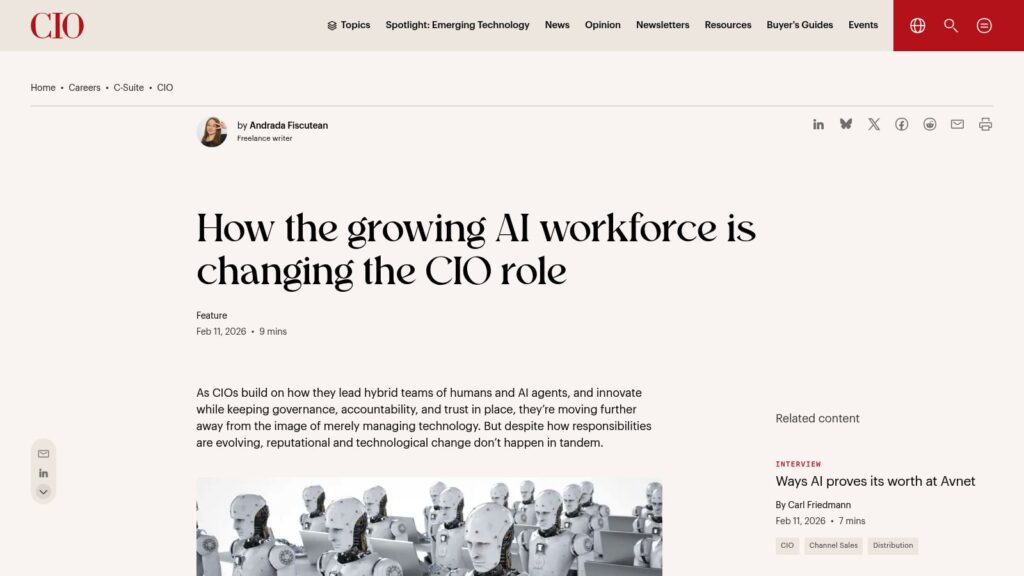
How the Growing AI Workforce Is Changing the CIO Role

CIOs are evolving from managing technology to orchestrating hybrid teams of humans and AI agents, as AI adoption grows in enterprises. While AI agents can automate tasks, CIOs must strategically decide their applications, focusing on well-defined, low-risk tasks. Measuring AI agents’ productivity should account for reliability and human capacity freed rather than just cost. CIOs face challenges like governance, risk management, and employee resistance while integrating AI, necessitating a shift in organizational culture and accountability frameworks. Beginning with small pilot projects and ensuring proper governance and monitoring are crucial for successful AI implementation.

https://www.cio.com/article/4126383/how-the-growing-ai-workforce-is-changing-the-cio-role.html

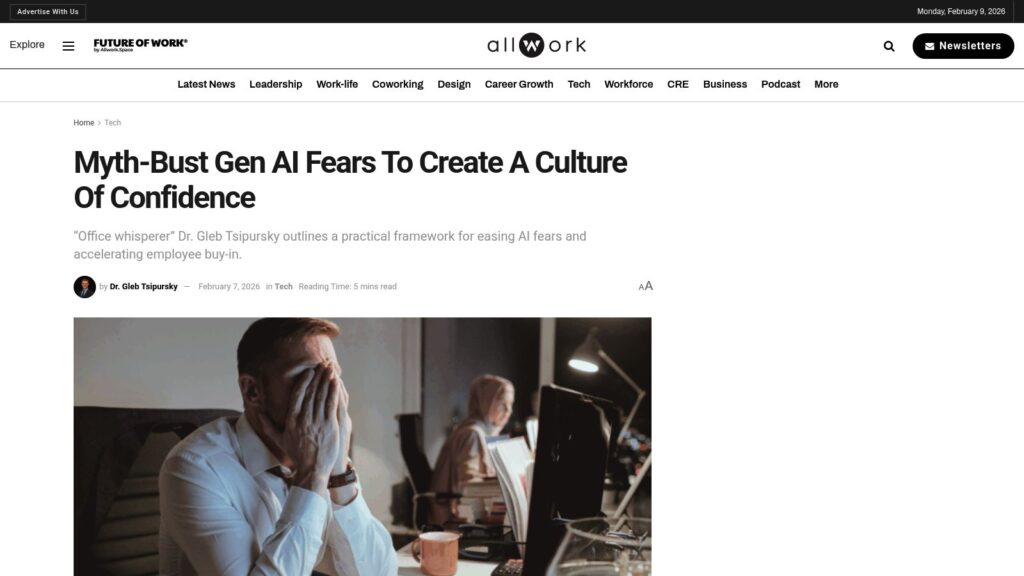
Myth-Bust Gen AI Fears To Create a Culture Of Confidence

The article outlines how organizations can reduce employees’ fear of generative AI (Gen AI) and foster confidence. It emphasizes education to clarify what Gen AI can and cannot do, transparent communication from leadership, and showcasing early successes to build trust. Practical steps include interactive workshops, accessible learning materials, open discussions about goals and concerns, and sharing measurable outcomes of AI tools. The overall focus is on transforming apprehension into understanding and embracing AI as a workplace aid. 

https://allwork.space/2026/02/myth-bust-gen-ai-fears-to-create-a-culture-of-confidence/

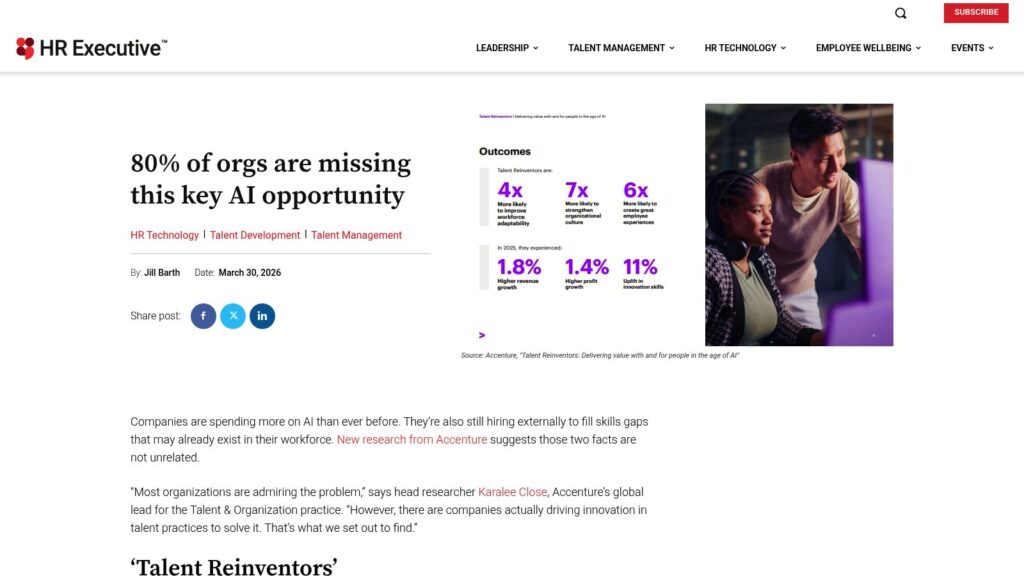
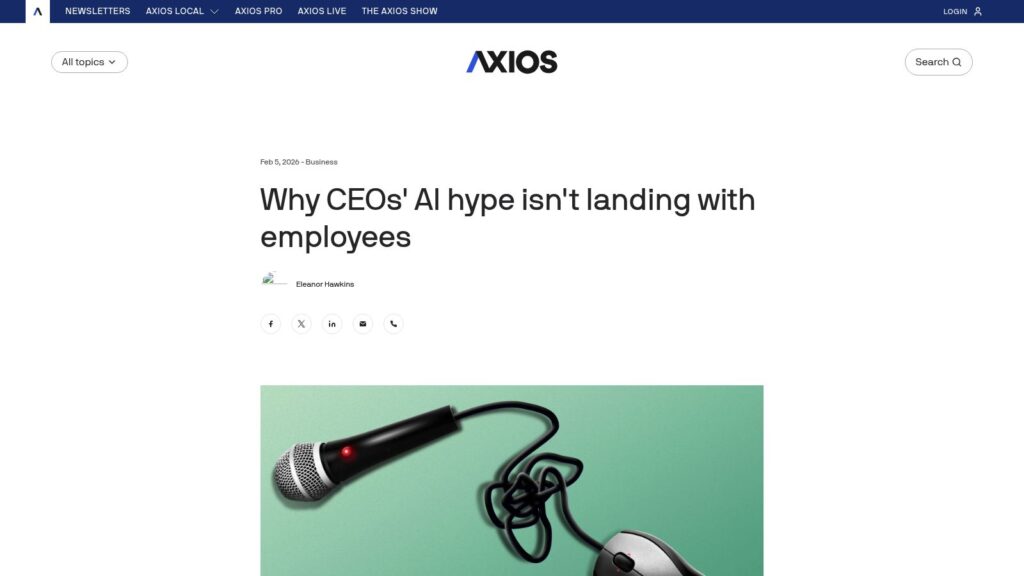
Why CEOs’ AI Hype Isn’t Landing With Employees

CEOs struggle to communicate AI benefits amid employee skepticism and unclear implementation, hindering productivity gains. Despite high investments, a study shows 95% of businesses see no AI return, with communication gaps and fears of job loss fueling resistance. Executives are urged to build trust and focus on AI training to bridge the divide, as poor messaging risks backlash in political spheres.

https://www.axios.com/2026/02/05/ai-adoption-messaging-gap

Klarna Tried to Replace Its Workforce With AI

Klarna’s attempt to replace workers with AI led to decreased customer satisfaction, revealing that simply automating tasks doesn’t improve service quality. Successful companies now focus on hybrid models where AI supports human workers rather than replacing them, enhancing efficiency by removing obstacles. This shift emphasizes collaboration between AI and people, highlighting the importance of understanding the unique strengths of humans in the workforce for better outcomes.

https://www.fastcompany.com/91468582/klarna-tried-to-replace-its-workforce-with-ai

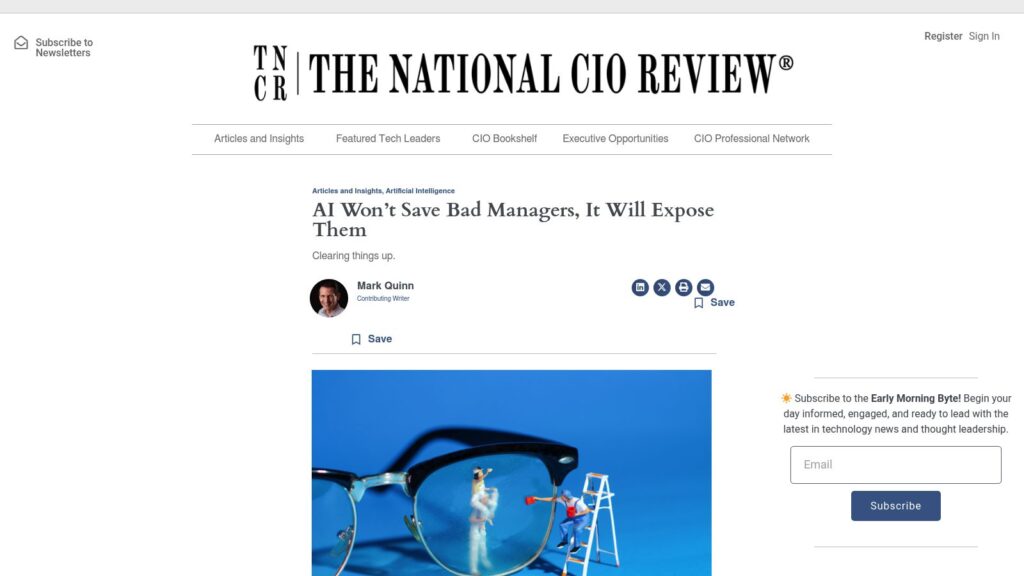
AI Won’t Save Bad Managers, It Will Expose Them

AI exposes bad managers by eliminating their safety net; poor guidance leads to failure. Effective management, not just technology, is crucial for AI success. Clear communication and responsibility are vital as AI cannot compensate for weak leadership. Companies must focus on training managers to leverage AI effectively, ensuring human oversight, and recognizing when tasks should remain human-led to avoid amplifying flaws.

https://nationalcioreview.com/articles-insights/ai-wont-save-bad-managers-it-will-expose-them/

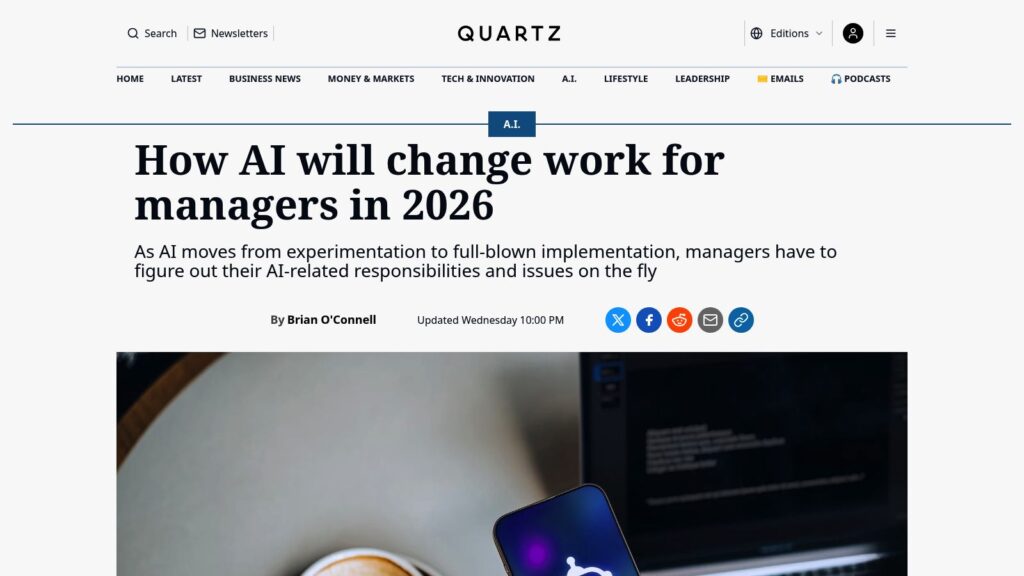
How AI Will Change Work for Managers in 2026

AI will transform managerial roles by 2026, necessitating adaptation to new responsibilities as companies implement AI in operations. Key benefits include improved scheduling, reduced admin tasks, and enhanced onboarding. While AI can streamline workflows, managers must supervise its use and maintain human oversight. Effective AI integration requires transparency and focus on alleviating workloads rather than replacing leadership roles. As AI becomes part of core functions, managers will need to redefine job scopes and focus on strategic leadership rather than routine tasks.

https://qz.com/ai-workplace-managers-2026

CIOs Keep Buying Tools. Workers Keep Burning Out. Here’s the Disconnect

CIOs are introducing more tools for digital transformation, but employees are experiencing burnout due to the rapid pace of change. Continuous updates and overlapping initiatives overwhelm teams, leading to stress and fatigue. The disconnect arises from a failure to balance technology adoption with human capacity to adapt. Effective CIOs are recognizing the need for better sequencing of changes, providing stabilization periods, and enhancing communication to support their teams through transformations. Addressing this disconnect is crucial for maintaining productivity and preventing burnout as modernization efforts persist.

https://www.cio.com/article/4111139/cios-keep-buying-tools-workers-keep-burning-out-heres-the-disconnect.html

AI Won’t Save Your Company, But Technology Leadership Will

AI’s rise in the workplace necessitates genuine differentiation over mere application. Companies must transition from superficial “AI-loving” to innovative use, as market consolidation looms. Many will face job loss, particularly early-career workers, while experienced staff can enhance productivity with AI. Leadership’s role is crucial in bridging the skill gap, fostering ethical AI use, and guiding employee adaptation.

https://www.inc.com/will-swarts/ai-wont-save-your-company-but-technology-leadership-will/91280923

2026 AI Trends

In 2026, organizations will increasingly integrate AI into their business strategies, focusing on how to use AI effectively rather than just deploying it. This will lead to the rise of AI-native departments in HR, procurement, and customer operations, where AI handles routine tasks, and humans focus on higher-value activities. Additionally, there will be a reduction in middle management roles as AI takes over routine tasks, and organizations will prioritize leaders who can effectively manage hybrid teams of humans and AI.

https://www.imd.org/ibyimd/artificial-intelligence/2026-ai-trends-what-leaders-need-to-know-to-stay-competitive/

Managers Are Unprepared to Lead a Human-agent Hybrid Workforce

Managers struggle to lead hybrid teams with AI agents, which complicates traditional management roles. As AI adoption rises, employees shift from execution to orchestration, requiring new leadership strategies. Leaders must balance agent skills with domain expertise, maintain collaboration, and pivot career development towards strategic thinking. Managers face identity challenges as technical skills become accessible, and they must adapt their approach to leadership amidst evolving work dynamics. Successful navigation of this transition is crucial for organizational efficiency and culture.

https://digiday.com/sponsored/managers-are-unprepared-to-lead-a-human-agent-hybrid-workforce/

Board Oversight Of AI-Driven Workforce Displacement

Boards must reassess oversight roles in response to AI-driven workforce changes, notably layoffs. Legal obligations exist mainly around financial disclosures and WARN Act compliance, but fiduciary responsibilities are emerging that emphasize the importance of human capital and company culture. Governing bodies are encouraged to consider AI’s impact on employees, aligning technology adoption with long-term corporate strategy rather than short-term cost-cutting. Ethical considerations also mandate directors to prioritize worker welfare and align with corporate values, while fostering management accountability in AI deployment decisions.

https://corpgov.law.harvard.edu/2025/12/18/board-oversight-of-ai-driven-workforce-displacement/

Fear of Losing Your Job Is No Way to Get Employees on Board With AI

Companies pushing AI adoption through fear are using the wrong motivator. Fear-driven mandates create performative compliance that limits growth, while open communication and collaboration unlock AI’s potential. Effective leadership redirects attention outward, fostering trust, creativity, and problem-solving, rather than inward fear and rigidity.

https://www.morningstar.com/news/marketwatch/20251218179/fear-of-losing-your-job-is-no-way-to-get-employees-on-board-with-ai

Scroll to Top